Review 2651: #NovNov25! The Buddha in the Attic

This is an unusual little book, which I read for Novellas in November. It is based on the experiences of Japanese women brought to California as brides in the early 20th century. It doesn’t have any detailed characters but instead treats the women as a disparate group and is written in first person plural.

The girls and women have never met their husbands. They have apparently been married by proxy and have letters from and photos of their husbands. But when their ship arrives, they don’t recognize them. Their husbands are twenty years older than their photos, and they are common laborers, not the bankers and professional men the women are expecting. The women have been brought there not to improve themselves but to provide sex and hard labor.

The novel follows the women in their many paths until World War II and the internment of almost all the West Coast Japanese residents. Somehow, despite its lack of distinct characters and plot, it builds. It makes you sympathize with the hard lives of these characters. It’s powerful.

Related Posts

Bread Givers

The Year of the Runaways

Silence

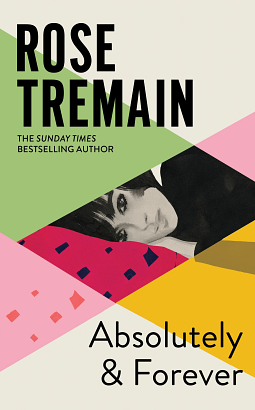
Review 2605: Absolutely & Forever

I have been on the fence about or even disliked some of Rose Tremain’s books, so I wasn’t really looking forward to reading Absolutely & Forever for my Walter Scott Prize Project. I especially wasn’t because I’m not that fond of coming-of-age novels in general. However, I found this little novella to be truly touching and insightful about human emotions. And the coming-of-age part is only the beginning.

It’s the late 1950s and Marianne is 15 years old. She has been in love with beautiful 18-year-old Simon Hurst for some time, and he finally pays attention to her the night of a friend’s party. He has just been given a new Morris Minor car, so he takes her for a ride and they have sex. Marianne says she will love him absolutely and forever.

I thought I knew where this was going, but it wasn’t. Simon and Marianne go off to their respective schools and plan to get married when they are older.

However, Simon fails his Oxford exam. Everyone is shocked, and the next thing Marianne knows, he has moved to Paris to be a writer. Marianne tries to buckle down to her French so that she can move there as soon as possible, but she is clearly not good at studying. Her parents tell her they are certainly not going to allow her to visit Simon in Paris when she is only 15.

Simon’s letters eventually fall off, and in the last one she gets the bad news. Simon has gotten his landlady’s daughter pregnant and married her.

The novella follows Marianne as she grows into womanhood, works at some jobs but seems to have little purpose in life. She marries her good friend Hugo (who I felt was a much better person than Simon). But she continues to love Simon.

The heart wants what it wants is the theme of this touching novel. And it tells the story beautifully, narrated by the distinctive voice of Marianne.

The book blurb hints at some secret, and it’s not very hard to guess. But that’s not the point. I found this book to be wise and deeply touching.

Related Posts

The Gustav Sonata

Merivel: A Man of His Time

Lessons in Chemistry

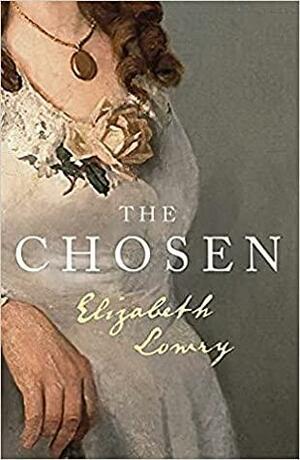
Review 2596: The Chosen

The Chosen, which I read for my Walter Scott project, is about the weeks after the death of Thomas Hardy’s wife, Emma, and also about the writing of Tess of the D’Urbervilles. Hardy is working in his study when the maid comes to ask him to go to Emma. Although she indicates there is some urgency, Hardy is oblivious and continues working for a while before going up to his wife’s rooms in the attic. When he arrives there, she is dead.

The aging Hardy plunges into guilt that is made worse when, a few days later, he finds her diaries, in which he reads that Emma was deeply unhappy in their marriage. As he reads the diaries, he relives his own memories of the same days, realizing he had no idea of how aloof he seemed to her and how oblivious.

This is not really a novel of plot but more of feelings and realizations. Lowry explains at the end of the novel that Hardy burned the diaries soon after he found them, but she did quote from Hardy’s work and from letters. Emma’s death apparently spurred a collection of poems.

Waiting in the wings is Hardy’s secretary, Florence Dugdale, who seems to expect to take Emma’s place (and eventually did). She cannot understand why, after telling her so many times how unhappy he was, Hardy can now only talk about Emma.

For Hardy fans, especially, this is an insightful and beautifully written novel. It makes me wish I had known more about Hardy’s life before I read Maugham’s Cakes and Ale and this book. Although I read Claire Tomalin’s biography, it was so long ago that I don’t remember what it said about his home life (although I said it was interesting in my review).

Related Posts

Cakes and Ale

Tess of the D’Urbervilles

Thomas Hardy

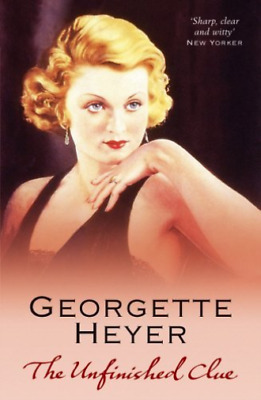
Review 2577: The Unfinished Clue

Georgette Heyer can write such likable characters, and I remember that for the first Heyer mystery I read, it was obvious who the murderer was because the person was the only character in the book, besides the victim, that I didn’t like. It didn’t matter, because it was fun to read anyway.

She isn’t so obvious about it in The Unfinished Clue, because there are several characters to dislike or feel neutral about. In fact, the title is more of a giveaway than the characters’ behavior, because it tells you what to focus on. If you can guess what it means, though, you get a gold star.

Dinah Fawcett arrives at her sister’s house to be met with an enraged brother-in-law. General Arthur Billington-Smith is often enraged, and he takes it out on his fragile second wife, Fay. This time, his son, Geoffrey, has become engaged and is bringing home his fiancée Lola de Silva, a cabaret dancer.

The house party consists of these people plus Arthur’s nephew, Captain Francis Billington-Smith, who wants a loan; Camilla Halliday, an attractive young woman who is letting Arthur take liberties in the hope of a generous gift; her jealous husband Basil; and Stephen Guest, a friend who is in love with Fay. Geoffrey turns out to be kind of a wimp and an idiot, and Lola completely self-absorbed.

Arthur rages throughout the weekend, which culminates in a stormy Monday morning. He tells Geoffrey he will cut him off if he marries Lola. Geoffrey goes to Lola vowing eternal love, and she tells him of course she can’t marry him if he doesn’t have any money. He storms off. Fay is lying down from a headache. There is a short visit by Mrs. Chudleigh, the vicar’s wife. Then Mrs. Twinings arrives, an old friend, to try to get Arthur to treat Geoffrey better, and she finds Arthur dead in his office, stabbed in the neck with a dagger from his desk. The crime boils down to where everyone was between 12:30 and 1. Only Dinah, who was on the terrace the whole time, has an alibi.

In most of Heyer’s mysteries, her detective team is Hannasyde and Hemingway, but in this novel the detective is Inspector Hardy. She hasn’t thought up Hannasyde and Heminway yet, I don’t think, but there’s another good reason why this book is different.

I was completely fooled by this mystery. I had some idea of the motive but was mistaken about the identity of the killer.

Georgette Heyer is just as gifted as Christie in creating vivid characters, and her mysteries tend to be a bit funny. In this case, Lola is a hoot. I had lots of fun reading this to take a break from A Century of Books.

Related Posts

Behold, Here’s Poison

A Christmas Party (Envious Casca)

They Found Him Dead

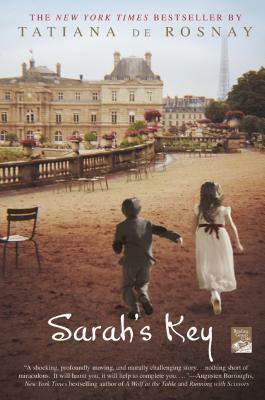
Review 2572: Sarah’s Key

In 1942, Sarah Starzynski is 10 years old, a Jewish child in Paris. There have been rumors of a raid on Jewish homes, but usually the French police take only the men. So, Sarah’s father hides in the basement while Sarah, her mother, and her four-year-old brother go to bed as usual.

But this time, the French police are there to take everyone. They don’t seem to know about her brother, so Sarah locks the little boy in his secret place, thinking she will come back soon and let him out. In the street, her mother has hysterics and screams her father’s name so that he comes out. All of them are taken to the Vélodrome d’Hiver, ultimate destination Auschwitz.

In 2002, Julia Jarmond, an American journalist who lives in Paris, is assigned to write an article about the 60th anniversary of the infamous roundup at Vel’ d’Hiv’, as the velodrome is known. Julia has never heard of it before. Aside from the ultimate destination, the Vel’ d’Hiv’ is known because, like with Hurricane Katrina, thousands of people, mostly women and children, were there for days without food, water, or sanitary facilities.

As part of her research, Julia asks French people if they know about this story. Most of them claim not to, but Julia learns from her father-in-law, Edoard, that the flat her husband Bertrand has been renovating became a possession of the family after the removal of its Jewish family on the night of the Vel’ d’Hiv’. In fact, that family was the Starzynskis.

The novel follows Sarah’s journey for a time, alternating with Julia’s story, as her personal life becomes entwined with her desire to find out what happened to the Starzynskis, particularly Sarah, who was not recorded as having died in Auschwitz. After about half the book, Sarah’s narrative stops.

I know I never read this book before, but some plot points seemed familiar, so perhaps I saw the movie. The plot was compelling enough, but I still had some issues with it, particularly that I couldn’t imagine that after a while a four-year-old child wouldn’t have made enough noise to be found in almost any apartment building.

I had more problems with the writing, though, particularly of Sarah’s sections, and the characterization. I think Sarah’s sections are written in a way to suggest childishness—the sentences are short, most of them in a subject-verb-object order that results in choppiness. Her reactions are naïve, much more so than I can imagine from any Jewish child of ten at that time and place. And ten-year-olds can have as complex thoughts as adults. She seemed, especially at first, more like a much younger child.

The writing is better for Julia’s parts, but there are still inapt word choices and no very strong use of language. It’s mediocre. For example, a glass of limoncello is described as “a beautiful yellow.” Ho-hum.

I felt the novel was interesting enough to finish, but just barely.

Related Posts

The Oppermanns

The Postcard

Suite Française

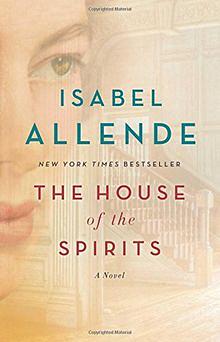
Review 2562: The House of the Spirits

The House of the Spirits fills another hole in my A Century of Books project, and although I believe I’ve read at least one book by Allende, it isn’t this one.

For a long time, you don’t have any sense of when this novel is set. Even when it mentions a big war in Europe, you’re not quite sure if it’s World War I or II. (It’s I.) It took a lot of attention to establish a time setting for this expansive, wandering account that, although generally written in chronological order, sometimes skips forward and sometimes backward. I finally figured out that the novel takes place from shortly before World War I until 1973.

Although the novel contains some information about previous generations, it concentrates mostly on Clara, her children, and her granddaughter Alba. It is narrated mostly by Clara and Alba, with short passages by Esteban Trueba, Clara’s husband.

Clara lives in the house of the spirits, where she can see and hear the wandering spirits and is herself clairvoyant. When Clara is still quite young, Esteban Trueba falls in love with her older, green-haired sister Rosa, and they become engaged. But Rose dies, and Trueba goes off to reclaim the family estate, ruined by his father. There, if he wasn’t one already, he becomes a brutal man with an uncontrollable temper.

Clara grows up in her eccentric family performing experiments in the supernatural with her mother and some of her friends. When Trueba returns years later, having accomplished his goal of making his estate the most prosperous in the area, he asks if the family has any more marriageable daughters. There is Clara.

The novel follows the couple’s story and that of its descendants, their eccentricities and fates, in a wandering way. It ends shortly after Chile’s brutal military coup in 1973.

This is an eccentric, enthralling novel. Although I am not usually a fan of magical realism, in this novel it seemed almost organic. I think once you start it, you just can’t help being pulled along.

Related Posts

In the Time of the Butterflies

Great House

The Ten Thousand Things

Review 2558: Reading Wales Month ’25! How Green Was My Valley

I didn’t intend to participate in Reading Wales Month ’25 this year, but when this novel fit into my A Century of Books project, I decided to fit it in for Reading Wales, too.

Such a lovely book this is, especially in the music of its language. It’s the story of the Morgans, a family of Welsh coal miners, told by one of its youngest members, Huw.

Huw is six when the novel begins. His family and those of the others in the valley are relatively prosperous, but there are signs that with the mine owners, profits are becoming more important than the lives of the men. Huw’s older brother Davy has been reading socialist literature and is talking about a union, but his father is against it.

It’s difficult to summarize this book because it’s full of family events, one of the first being Huw’s brother Ivor’s marriage to Bronwen. And there is the arrival of Mr. Gruffydd, the new preacher. But overarching everything for the men is the work, as pay gets lower and the valley begins experiencing periods of hunger and want.

I was as entranced by this novel as I ever was, the family so upright, god-fearing, and loyal, Huw’s experiences as he grows up. All the while, the fate of the valley is foreshadowed as Huw speaks from his 60s, returning just as his house is being destroyed by a mountain of slag.

It’s a real page-turner, not in terms of action, but for other reasons.

Related Posts

Germinal

That Lass O’Lowries

Country Dance

Review 2557: Cousin Rosamund

Cousin Rosamund is the third book in West’s Aubrey family series, and another was planned. I couldn’t tell when reading it, but apparently West died before finishing the second book, This Real Night, so it was finished from fragments and notes. Cousin Rosamund was assembled the same way, although West’s style was certainly captured.

The novel begins sometime after World War I. The three Aubrey girls, Rose, Mary, and Cordelia, are the only ones left of their immediate family, but they still have Nancy, their old neighbor; their beloved cousin Rosamund; and the folks at the pub on the river. Cordelia, always the odd girl out, has become less hostile since her marriage.

Cousin Rosamund comes to tell Rose and Mary that Nancy is getting married. Mary especially is upset that Nancy didn’t tell her herself, but Rosamund’s intercession, they see later, is needed so that they will not judge Oswald on sight, for he is gauche, awkward, unattractive, and a man-‘splainer. But he loves Nancy and she him, and that is all that counts.

Rose and Mary are now both successful and famous pianists, but neither is interested in marriage. Mary, in fact, seems to find the idea distasteful, although they are glad to see their friends happily married.

Inexplicably, Rosamund, who has been working as a nurse, marries one of her patients. The girls are all hurt not to be invited to the wedding, and once they meet the groom, they are horrified. His name is Nestor Ganymedios, and he is rich, extremely vulgar, ugly, and probably dishonest in his business dealings. Further, they see almost nothing of her after the marriage.

This novel is about marriage, which West examines in several incarnations. Unfortunately, it ends before we learn the explanation for Rosamund’s choice, but at least West’s intentions for the entire series are explained in the Afterword of my Penguin edition.

All of these novels are beautifully written and show a profound knowledge of music. The girls have such pure affection for the small number of people they love, yet the characters are realistically drawn.

One caveat: In this novel some characters express outdated ideas about homosexuality, and some homosexual characters in the book are not depicted positively, but it is not clear when she wrote this. The first book went to the publishers in 1956, at which point she said she planned three more, but though she finished most of the second, she seemed unable to finish this one. It ends about 1929, but her original plans were to encompass World War II.

Although it doesn’t fit the context of what I’ve discussed, I wanted to give just one quote because it’s so lucid and poetically spare. Rose has seemingly been disgusted with her long-time friend Oliver after he told her the story of his first marriage despite its end not being his fault. She is really fighting a battle with herself. She enters a room where he is.

He came toward me and I became rigid with disgust, it seemed certain that I must die when he touched me, but instead, of course, I lived.

Wow.

Related Posts

The Fountain Overflows

This Real Night

They Were Sisters

Review 2549: A Bend in the River

Salim is a young man of Indian descent who was born and raised on the east coast of Africa, at that time a cosmopolitan and wealthy area. Feeling the need for a life change, he buys a store in an unnamed Central African country (probably Congo) based on the stories his friend has told about the town. He makes the difficult journey there. It is the mid-20th century when African countries were throwing off their colonial rulers. He arrives to find the rebellion has destroyed the town.

Salim makes a life there, following a second rebellion, a boom and rebuilding, the reappearance of Europeans, and so on. However, he struggles with a sense of inertia and lack of identity.

This novel has been criticized for leaning toward colonialism. I’m not sure it does, but certainly it spends a lot of time looking at the characteristics of what Salim might call “bush Africans.” The new leader of the country is such a man, and at first, he seems to be a symbol of hope and prosperity, but eventually things change.

I was enthralled by the beginning of the book but not as interested as political issues emerged. There is a long section about an area called The Domain, sort of like the unoccupied cities the Russians and Chinese have built, that bored me. Also, there is a shocking scene when Salim attacks his lover.

Related Posts

Afterlives

The Promise

Things Fall Apart

Review 2545: This Real Night

This Real Night is the second book in West’s Aubrey family trilogy, which starts with The Fountain Overflows. I put The Fountain Overflows on my Top Ten list for last year, and this novel is just as good.

The novel begins just after the girls’ father leaves them. He is beloved by all, but he is a gambling addict who has lost all their money many times, and when he leaves, goes with a collection of jewels he had hidden from their mother. Since he left, their mother has sold some paintings that she pretended were worthless, so they, although nowhere near well off, are comparatively comfortable.

Their mother was once a famous concert pianist, and she has trained the twins, Rose and Mary, to become pianists. Soon they will start music school. Their older sister, Cordelia, who was convinced by a teacher that she was a talented violinist, has finally realized that she is not, but she decides she wants to become an assistant in an art gallery. She begins studying art history. Their brother Richard Quin is still a schoolboy.

Their household is expanded because their Aunt Constance and beloved cousin Rosamund have moved in. Constance’s husband, although wealthy, is so stingy that they can’t support their household, as he only spends money on his spiritualism hobby.

One advantage of their father’s absence is that they can continue their friendship with Mr. Morpurgo. He had been a great supporter of their father, hiring him to be an editor of his paper, for their father was a brilliant political writer. Like all of their father’s past supporters and friends, Mr. Morpurgo broke with him, probably over a series of unpaid debts.

The novel begins with a visit from a strained, ill-looking Mr. Morpurgo, lately returned from a trip abroad. It is Richard Quin and Rosamund who figure out that their father has died, probably a suicide, but they don’t tell anyone. Rose only learns after she overhears them talking sometime later.

The family story continues relating fairly mundane events, but they are made interesting by the vibrant narration and the perceptions of this highly intelligent and gifted family. They are also very loving with each other except for Cordelia, whom Rose thinks hates them all and who definitely processes information differently than the others. For example, they all deeply love Richard Quin, who is attractive, charismatic, and kind, but Cordelia thinks he is going to be a failure.

The family faces difficulties such as the girls’ sense that people, especially men, don’t like them, the problems of Aunt Lily, whose sister is serving time for murder, and the revelation by Rose’s new professor that she has been trained wrongly for her talents. They are a family you fall in love with. The novel ends at the beginning of World War I.

Related Posts

The Fountain Overflows

Family Roundabout

The Big Music