Review 2720: An Historical Mystery [A Murky Affair]

I think a friend gave me this book, or perhaps I bought it, because I occasionally buy old books, and this one is dated 1891. It is the 59th book in the series Balzac called La Comédie humaine.

The novel is based on a true incident. It begins in 1803 with Michu, a bailiff with an evil appearance who is feared by many and called a Judas to his previous employers. In reality, he has been working for them the whole time. His previous master, the Marquis de Simeuse, had been unable to secure his estate of Gondreville before it was taken from him and sold to Senator Malin, the current owner. The Marquis’s two young twin sons are in exile working for the return of the Bourbons. With them are the two sons of the D’Hauteserres, the guardians of young Mademoiselle Laurence de Cinq-Cygne, who, near the beginning of the novel, hides the four young men in a ruin in the middle of the forest.

The revolt is defeated, but the authorities are searching for the young men, and Laurence is under suspicion. Eventually the young men are able to get a pardon in exchange for their oath that they will not work against the regime.

The young men all go to live at Cinq-Cygne, where the two twins are both in love with Laurence. Laurence cannot choose between the new Marquis and his younger twin brother, however.

The young people are prideful and incautious, saying things in front of people that can be misunderstood. After the young men’s release, an old relative, Monsieur de Chargeboeuf, comes to warn them to stay away from Gondreville, as they have enemies and something is going on there. However, the young people are heedless. They have learned that Michu is in danger, so he sells his property prior to leaving, and the four young people and Michu spend the day in the forest retrieving the family fortune from where Michu has hidden it. On the last trip they ride too near Gondreville, which they tend to treat as their own property, and Laurence is seen.

Later, the young men are arrested, because while they were moving the money, five horsemen who look very much like them attacked Gondreville and kidnapped the Senator.

We know they are innocent, but the representatives of justice are prejudiced against them, and they have been foolhardy in their words and actions.

I didn’t really understand all the ramifications of the political situation but still found this novel really interesting. Although Napoleon, in a brief appearance, comes off fairly positively, Balzac is cynical about the honesty of government officials in general. He handles the trial with a good sense of suspense, although in the explanation of events that finally comes at the end, he takes some time to make the connection with the events of the novel.

Related Posts

Germinal

The Charterhouse of Parma

The Black Count: Glory, Revolution, Betrayal, and the Real Count of Monte Cristo

Review 2719: The Bewitching

Maybe this isn’t fair, but I make it a practice to write up every book I read, even if I don’t finish it. In this case, I didn’t get very far in at all.

I liked Moreno-Garcia’s Mexican Gothic well enough to finish it even though it was a slow starter and had a frankly ridiculous concept. (At least it was original.) However, it did maintain a suspenseful atmosphere. So, I picked up The Bewitching by impulse at the library.

This story, set in two time frames and two countries, is really a slow starter.

In 1998, Minerva is a graduate student at a New England university who is having trouble getting access to the information she needs about the life of horror writer Beatrice Tremblay for her Master’s thesis. (As a former graduate student in English, I would like to point out that biography is not a usual focus of literature theses.) Oh well, unexpectedly she gets a chance to talk to the woman who has the source material she needs.

In 1908 Mexico, Minerva’s grandmother Alba lives what she considers a provincial existence and is entranced by her sophisticated but apparently ne’er-do-well uncle.

This was such a slow starter, and I thought I could foresee at least part of silly Alba’s story. Each time the novel went back in time, her story kept slowing down whatever pace the more modern story managed to accumulate. I only made it about 50 pages but decided to quit when the narrative again slowed down to a slog. I generally am patient with slow-moving novels, especially if I’m being entertained in some way, but in this case, I just didn’t feel as if my patience was going to pay off.

Related Posts

Mexican Gothic

The Witching Tide

The Empusium

Review 2712: The Teutonic Knights

I don’t really remember what led me to read With Fire and Sword years ago. It is the first book of a trilogy by Henryk Sienkiewicz, a writer of historical fiction and Nobel Prize winner who was publishing around the turn of the 20th century. While I was reading that book, a friend who was born of Polish parents in England just after World War II told me that Sienkiewicz’s books were the books of her childhood, although they are certainly meant also for adults.

I found With Fire and Sword to be exciting and interesting and went on to read the whole trilogy, although my blog just has the review I wrote for Nancy Pearl‘s blog about the first book. And then just recently I came across a used copy of Sienkiewicz’s The Teutonic Knights, which he considered to be his best book.

You might think that a book entitled The Teutonic Knights would have them as heroes, but you would be wrong. In fact, although Sienkiewicz’s portrayal is more nuanced, many of them are quite dastardly.

The novel is set 150 years before With Fire and Sword, beginning in 1399. The two main characters, the knight Macko of Bodaniec and his young nephew and squire Zbyszko are returning from war in Lithuania against the Teutonic knights. The knights were invited into the Baltic area many years before to keep the Prussians in line, but since then they have expanded to an order with incredible power and have been making incursions on the neighboring areas of Poland and Lithuania, using as an excuse conversion to Christianity. The only problem with this is that Poland is already Christian and Lithuania has been converted as a result of the marriage of the Lithuanian King Jagiello with the Polish Queen Regnant Jadwiga. Teutonic knights who are beginning to see a loss of their purpose have been refusing to convert their neighbors, preferring to enslave them and take their property.

Macko and Zbyszko have stopped at an inn when likewise the entourage of Duchess Anna Danuto stops for a rest on the way to the royal birth of King Jagiello and Queen Jadwiga’s first child. In her train is a beautiful young girl, still a child at 12, Janusia, the daughter of Count Jurand of Spychow, a hated enemy of the Teutonic knights, who killed her mother. Young Zbyszko is so taken with her that he makes her a knightly vow to present her with three peacock feathers that Teutonic knights wear in their helmets, which means he has to fight them.

Macko and Zbyszko are invited to accompany the duchess, and as they approach Cracow, Zbyszko sees a knight wearing peacock feathers. Thinking God has answered his prayer to meet his vow, he dashes at the knight and is only stopped when a Polish knight breaks his lance, because the man is Kuno Lichtenstein, an envoy to the king. Attacking an envoy is punishable by death.

So, Zbyszko is imprisoned while various important people try to get him off, pleading his extreme youth and impetuosity. But Lichtenstein insists on his punishment, and King Jagiello feels he has no other option.

On the day of the execution, an old custom is invoked. Janusia throws her veil over Zbyszko and claims him as hers. This saves his life and engages them to be married.

Macko and Zbyszko finally make it home to Bogdaniec, which was destroyed before they left and their entire family killed. Zbyszko is only returning temporarily, intending to go meet his vow, while Macko has now enough spoils from war to begin returning the estate to prosperity. But now we meet Jagienka, the neighboring damsel, who is healthy and beautiful and can use a crossbow or kill a bear with the best of them. She was Zbyszko’s childhood friend, and now she falls in love with him. This made me very curious about what would happen, as Zbyszko is also attracted to her.

And I’m not going to say much more except that this novel, although 780 pages long, rattles along at a pretty good clip and features kidnappings, knightly deeds, dastardly acts, fights unto death, and climaxes with an enormous, exciting battle. In amongst the action, Sienkiewicz shows a great deal of knowledge about Medieval history, dress, and customs.

This is another page turner, and I have already put another book by Sienkiewicz on my next Classics Club List.

P. S. Sienkiewicz is most well-known for Quo Vadis, his novel about Christianity in Ancient Rome. This is just my opinion, but I think his Polish novels are a lot better.

Related Posts

With Fire and Sword

Quo Vadis

The Scottish Chiefs

Review 2709: The Town House

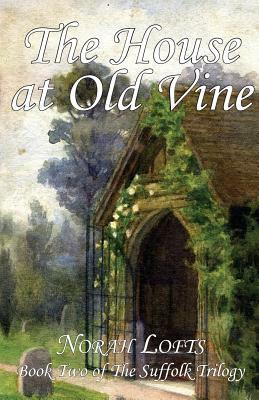
The Town House is the first book in Norah Lofts’ Suffolk Trilogy. Fairly early in the book, a 14th century serf, who later calls himself Martin Reed, escapes from his manor with the knowledge that if he can live in a walled city for a year and a day without being captured, he is free. With him is Kate, the young woman he intends to marry.

The novel follows three generations of Martin’s family. At first, everything he tries comes to nothing. Already trained as a smith by his father, he serves an extra year of apprenticeship only to have the guild decline to make him a member, which means he cannot be a smith. Hired by a carter and asked to privately shoe horses, his work is discovered and the guild attacks him and leaves him for dead. All these years, his family lives in abject poverty. It is not until he does a favor for the church that he finally gets an opportunity, but it is too late to save his family from tragedy.

The book is divided into five parts, from the point of view of different characters. The first is Martin himself. The second is Old Agnes, a homeless woman he takes as housekeeper after the tragedy. The third is Anne Blanchefleur, the young woman of good family but no fortune who marries Richard, the now wealthy Martin’s son. The fourth is Maude Reed, Martin’s granddaughter. The fifth is Nicholas Freeman, Martin’s secretary.

Although the beginning of this book is almost identical to that of Cathedral of the Sea (The Town House is written earlier), I was more involved in The Town House. Martin’s prosperity and home are built on tragedy and betrayal. This is a story of complex characters, many with deep faults. I found it interesting in both the story it told and in the background details about Medieval life, especially in the section narrated by Maude, who goes to live for a time in the household of a wealthy and noble cousin. I have already ordered the second book in this series.

Related Posts

Cathedral of the Sea

Here Was a Man

Lady Living Alone

Review 2704: #ReadingIrelandMonth26! Glorious Exploits

There seem to be lot of novels out recently that are set in the world of ancient history or myth. I have read a few of them, but it’s not really a time of interest for me. In fact, I am so ignorant of the Peloponnesian War that I thought it only involved Athens and Sparta. But it was a lot more widespread than I thought.

If it hadn’t been for my Walter Scott shortlist project, I wouldn’t have chosen this book to read. (For one thing, I find the cover off-putting.) And it didn’t start off very well for me. It is written completely in modern vernacular with an Irish accent, which I initially found grating. But I got used to it.

Lampo, our narrator, and Gelon are two mates, essentially layabouts. Lampo is 30 years old and still lives with his mother. They are Syracusans; it is 412 BC, a few years after the Athenians attacked Sicily. The Athenians were eventually beaten, and 7000 Athenian soldiers were imprisoned in the quarries of Syracuse, basically just left there.

Now Gelon decides to go to the quarry to feed the Athenians. He is a huge fan of the plays of Euripides, and he is afraid that with the defeat of Athens, Athenian culture will die out and Euripides’ work will be lost. So, he decides to put on a play using the Athenian soldiers for actors, paying them with food.

On the way into the quarry, Lampo and Gelon run into a grieving father, Biton, who has just beaten an Athenian to death and is working on his friend. Gelon talks Biton out of it, and this is when he announces his plan to direct Medea. They rescue the other Athenian, Paches, and Lampo decides he must be in the play. Much to Lampo’s astonishment, they manage to find funding for this project from a wealthy foreigner.

In the meantime, no-hoper Lampo has fallen in love with Lyra, a Lydian slave girl who works at his local bar. Her owner wants an exorbitant fee to sell her to Lampo so he can set her free, more money than he can hope to ever earn, but that’s what he vows to do. With these twin goals, Lampo begins to pull himself together.

“Riotously funny,” as the blurb calls it, this book is not, but I found Lennon to be a terrific storyteller. This novel is about the power of friendship, the importance of art, and personal loyalty. I would never have read it on my own, but it is rough, touching, and terrific.

Related Posts

The Last of the Wine

House of Names

The Silence of the Girls

Review 2698: Edenglassie

I’ve been on the lookout lately for books written by indigenous authors, so when I saw this book reviewed, I was intrigued. It’s set in Brisbane, Australia, in two time periods: 1840-55 and 2024.

In 2024, Eddie Blanket, an elderly Aboriginal woman, falls and injures herself in front of the Maritime Museum. In the hospital, she is treated by Doctor Johnny Newman. When he meets Eddie’s granddaughter, Winona, a feisty activist, he falls instantly in love. But to Winona, he looks too white. Though he claims to have Aboriginal ancestors, to marry her he must establish that they’re not related and also break down her prejudices.

In 1840-55, a young Aboriginal man, Mulanyin, is growing up south of Brisbane and watching its changes, with the incoming of more and more whites, in dismay. He decides he wants to own a whale boat, so he goes to work for Tom Petrie, an unusual young man from a prominent white family who seems to have spent time learning about the Aboriginal culture and learning the language. At the home of Tom’s parents, Mulanyin meets Nita, a servant of Mrs. Petrie who was rescued from traffickers as a little girl by Tom’s father. He falls in love with her.

But the couple live in difficult times, in which the Aboriginal people can be killed with impunity and massacres of whose families take place.

Although I found the subject matter of this novel interesting, especially because I know little of Australian history, I didn’t really get involved with any of these characters. It also took a long time to link the two stories, although the linkage could be partially guessed at. There was frequent use of slang Australian or maybe Aboriginal expressions and words—no glossary—and sometimes the implications of the dialogue weren’t clear to me even if I understood what was said.

That being said, I was very interested in the beliefs and mindset of the people, and I found the ending touching.

Related Posts

A Long Way from Home

The Sun Walks Down

Salt Creek

Review 2687: The Empusium: A Health Resort Horror Story

In terms of the horror story it’s labeled as, The Empusium may end like one, but it spends more time building up to its climax than on the horrible part. Or maybe horror is the attitudes toward women expressed by the men.

Mieczyslaw Woznicz is a very young Polish engineering student who arrives in a remote mountainous town in Silesia for treatment for tuberculosis in the early 20th century. He is staying in the guesthouse for gentlemen until he gets a place in the sanatorium. The guesthouse is run by Willi Opitz and his wife, but his wife dies almost immediately on Woznicz’s arrival.

I don’t know if it’s helpful from the beginning to understand what empusa are or not. I had to look it up. but from the beginning we are occasionally reminded that someone is watching everything. Still, this is something I tended to forget.

A lot of the novel deals with Woznicz’s sense of unfitness and inferiority, which has been enforced by his father’s constant expression of disappointment in him. But we also get to read lots of philosophical discussions among the men, which always end in misogyny.

Occasionally, readers are told a lot of bizarre folklore or visit some unusual site in the forest, and these incidents are leading up an annual fall event. Woznicz feels he has a shameful secret, but he’s going to learn more about himself by the end of the novel.

Tokarczuk is a writer whose books are totally different from each other. This one isn’t my favorite, but it is atmospheric and full of irony. It is said to share some characteristics, including plot points, with The Magic Mountain by Thomas Mann, a book I haven’t read.

Related Posts

Drive Your Plow Over the Bones of the Dead

Flights

The Books of Jacob

Review 2683: Hex

I actually read Hex for Novellas in November but somehow forgot to schedule it for November. Oh well.

It seems I have been reading the Darkland Tales series in order without even knowing it existed. I read the first, Rizzio by Denise Mina, because I usually read everything by her. Hex is the second.

Darkland Tales is a series of retellings of incidents in Scottish history, written by well-known Scottish writers. In this case, Hex is about the hanging of Geillis Duncan (not the Outlander Geillis Duncan) as a witch in 1591 Edinburgh.

The story begins with a witch from 2021 using a seance to visit Geillis in her cell the night before her execution. Iris, the real witch, is determined that Geillis will not spend her last night alone. Geillis is a young housemaid, a healer who has fallen afoul of her master’s plot to steal the inheritance of his wealthy sister-in-law.

This story interprets the witchcraft trials as misogyny, which they were, and so its two main characters express a great deal of the opposite. This work is symbolic and poetic, sometimes a little too abstract for me, but also angry. It’s powerful.

Related Posts

Luckenbooth

The Panopticon

Rizzio

Review 2681: A Registry of My Passage upon the Earth

A Registry of My Passage upon the Earth is a collection of short stories that I read for my Pulitzer Prize project. I sometimes have problems reading short stories, but I found most of these engrossing. Most of them were about scientific curiosity and the characters’ actual or potential legacy.

“Death of the Pugilist, or the Famous Battle of Jacob Burke & Blindman McGraw” is set during the early 19th century. It is about how a burly lad becomes a prize fighter. These were the days of no-holds-barred bare-knuckle fights.

Another historical story, “The Ecstasy of Alfred Russel Wallace,” is about an early collector of bug specimens who begins to draw conclusions similar to Darwin’s about the survival of the fittest. He writes to Darwin hoping for a scholarly exchange, but perhaps Darwin is worried about which of them thought of the theory first. This one has really beautiful prose.

“For the Union Dead” is a contemporary story about the narrator’s uncle, who became involved in Civil War re-enactments.

“The Second Doctor Service” is a letter to a medical journal from a 19th century man who begins having periods of blackouts and thinks another self is trying to take him over.

“The Miraculous Discovery of Psammetichus I” is based on a story by Herodotus. It’s a series of descriptions of experiments supposedly performed by a curious Pharoah, most of which involve having children raised by animals.

“On Growing Ferns and Other Plants in Glass Cases, in the Midst of the Smoke of London” is set in the 19th century during the height of the industrial revolution and major air pollution. A widow’s young son begins suffering from severe asthma, and the doctors fail to treat it successfully. She eventually gets a better idea.

“The Line Agent Pascal” is set in the 19th century South American jungle. Pascal is a telegraph operator who likes the isolation of his position but forms a sort of family with the other operators. There is one in particular whom he has never met but for whom he feels an affinity.

“On the Cause of Winds and Waves, &c” is a letter to her sister by a 19th century balloonist in France. Observing a strange phenomenon in the heavens, she is asked to report about it to the scientific Académie, but she doesn’t realize she has only been asked to be ridiculed.

“A Registry of My Passage upon the Earth” is a record by a man who has been incarcerated in an insane asylum but is probably OCD or on the spectrum instead of insane.

Most of these stories have some kind of uplifting ending. Maybe I enjoyed them so much because many of them felt like short historical novels. I liked them a lot.

Related Posts

North Woods

Not the End of the World

The Sidmouth Letters

Review 2672: Night Watch

This novel begins in 1874 with ConaLee, a thirteen-year-old girl in a wagon with her mother and a man she calls Papa. Her mother had twins three months before and has not been able to care for herself since, nor does she speak. On the journey, Papa tells ConaLee that he is not her father, that he has given away his children by her mother and sold everything. He is taking her mother to an asylum, where she is to say her mother is called Miss Janet and she is her servant. He drops them off at the gate and goes on, and they do what he tells them, only her mother soon begins to speak and care for herself.

Returning to 1864, we follow ConaLee’s father, a Union sharpshooter in the Civil War. He has hidden his family, his pregnant wife Eliza and the woman he considers his mother, Dearhbla, as high up on the West Virginia ridges as he can, hoping to keep them out of the war. He has been gone three years, but in the Wilderness battle, he is injured so badly by an explosion that he loses an eye and part of his brain—and his memory. Thus, when the war ends, he does not return home. And his family is left prey to Papa.

This novel contains quite a few mighty coincidences. One that gives nothing away is that Dearhbla, an Irish wise woman with second sight, travels to the hospital in Alexandria because she knows her son is there. They will not let her in because of an epidemic, so she gives the name he took when he went to war—for all of them are fugitives. But no one of that name is there, so she leaves. All the while, he is watching her from the window, with no idea that he knows her.

Despite the coincidences, I found this novel absolutely enthralling. It captures the chaos during and after war, the fear that doesn’t stop just because the war does. It is altogether a compelling story. I read it for my Pulitzer Prize project.

Related Posts

Varina

Shiloh

Neverhome