Review 2776: Land

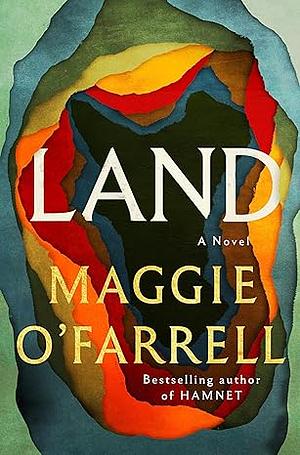
Although Land is mostly about one Irish family, it is also deeply involved with a piece of land, a peninsula that looks like part of the Dingle Peninsula. (Actually, it looks like the entire Dingle Peninsula, but the area described is too small.) Along with some history, O’Farrell bundles in some folklore.

It’s maybe ten or fifteen years after the last Irish famine. Densely populated areas are now barren, with most of the people dead or emigrated. Liam is 10 years old and feels he is too young to be helping his father Tomás with his surveying. His father is mostly a silent man, so Liam doesn’t know that as a boy, he rescued himself from the workhouse by putting himself forward for the same sort of job.

Liam is cold and tired. They are surveying a peninsula, and when Tomás sends him into a copse, he feels uncomfortable, even afraid, so he comes out and refuses to go back in. Tomás goes in himself and doesn’t emerge. When Liam goes in after him, he finds him altered, excited, talkative, delirious, draped with vegetation. He takes his father to the home of a widow where they’ve been staying, and his father continues to rave excitedly. The next thing Liam knows, Father Joseph is exorcizing his father, a brutal ceremony. It is at this point that the story returns to the far past and the history of the copse and of Tomás.

Tomás is back to being silent by the time the two return to their family in Dublin. He is not really functional, though, but stays in bed. His wife Phina is pregnant, and they have two girls, Enda and Rose. Phina is almost at her wit’s end when Tomás seems to rouse himself. The next thing she knows, he has spent all their money to lease a place near the copse on the peninsula.

There is a lot more to this family’s story, which is often tragic. It is certainly engrossing, and you come to care about most of the family members.

If I may hint at a spoiler, I was certainly shocked and had a hard time buying the departures of both Liam and Enda after a tragic event. It seemed so selfish. I actually had a hard time buying Liam’s determination to be a priest, especially after the treatment of his father.

However, this is a compelling story. Not only is O’Farrell a skillful writer, but she really knows how to draw us in.

Related Posts

Hamnet

The Marriage Portrait

The Vanishing Act of Esme Lennox

Review 2773: #RIPXXI! Benbecula

I accidentally started reading the Darkland Tales in order. These are books by prominent Scottish authors about various episodes in Scottish history. This time, I read #6, so I’ve skipped a few, but I also read this for my Walter Scott prize project and it fits for RIPXXI!

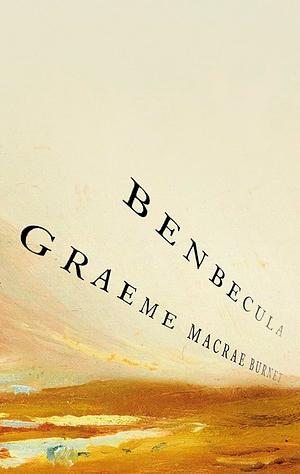
Benbecula is about an 1857 series of murders on Benbecula, a small Scottish island. It is narrated by Malcolm McPhee, the oldest brother of the murderer.

The McPhee family gets by earning a small amount harvesting seaweed. The mother spends all day tending the fire while the father is weak and can only do easy work but prefers life to be clash-free. The adult children are all unmarried. Marion is a hard worker but grim. John seems to be mentally challenged. Angus can manipulate people but can’t be controlled and is left to do what he wants. Malcolm is a bit of a bully.

Angus goes off to work for a while for a farmer, but after he returns, he’s subject to fits of uncontrollable rage and has to be restrained. After he disturbs everyone by wildly ringing the church bells, authorities recommend he be committed, but the McPhees can’t afford the fees. When a doctor examines him for involuntary committal, he seems perfectly rational.

We read this with dread, because we get plenty of warning about what’s coming, as Malcolm tells the story from some years later, living alone in the family house drinking and wallowing in his own filth. There are more mysteries ahead, though.

This novel is atmospheric despite being sparely written. It definitely left me with questions. There is an Afterword that accounts some of the facts of the case.

Related Posts

His Bloody Project

Hex

Rizzio

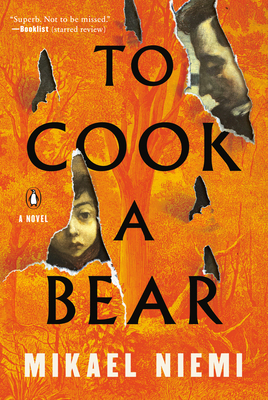
Review 2761: To Cook a Bear

Before I start my review, I want to mention a strange coincidence. The main character in this book is Pastor Laestadius, important to a historical religious revival in far northern Sweden and Finland, Sami territory. I thought the name sounded familiar, but it wasn’t his name I googled but “Old Apostolic Lutheran Church.” What I read was, “The Old Apostolic Lutheran Church of America is a Firstborn Laestadian-Evangelical Church in America.” Now, the reason I googled this topic is because when we moved to Southwestern Washington, we accidentally moved into one of two areas of the country that has lots of Old Apostolic Lutherans. In a mainly rural county that has mostly small churches, they have four large ones. Some coincidence, huh?

Enough of that.

Jussi is the narrator for most of the novel. He is a Sami young man whom Pastor Laestadius rescued from poverty and a wandering life as a boy and taught to read and write. He is devoted to the Pastor, but he is very shy and seldom speaks. He is in love with a girl named Maria but never speaks to her.

In this area of far northern Sweden, there is a strong social division in 1852. The better off speak Swedish while the common people speak Finnish. The Pastor is a leader in a return to a stricter religion, and he has been receiving complaints from the more prosperous parishioners because the poor ones tend to fall into exaltation during his sermons, which the more prosperous think is unseemly.

Jussi himself believes that by teaching him to read and write, the Pastor brought him into existence, but he has had a brutal childhood and struggles sometimes with the Pastor’s teachings.

Then a girl is found dead, mutilated. The Pastor is a botanist and is very observant. Although Sheriff Brahe insists the girl was mauled by a bear, the Pastor observes signs that she was raped and murdered and that the killer used a knife to fake bear scratches. But the Sheriff, a brute and a bully, doesn’t listen.

When a bear is found and killed, everyone relaxes, but the Pastor and Jussi are afraid there will be another death. And there is an attack. At a dance, Jussi gets up the nerve to ask Maria to dance, and she does. The next day, the village awakens to find that another girl, Jolina, was attacked. She is not dead, but she will not say what happened. Later, she is found dead, and the Sheriff insists she killed herself. The Pastor begins to suspect the Sheriff.

The Pastor applies fairly modern techniques of detection that no one else understands. For example, he compares the shavings from a pencil and knows about fingerprints. But who can he even take his evidence to?

This is a thoroughly absorbing story. Although the murder story is fictional, it also tells the story of a rebellion that is not fictional. In his Afterword, Niemi explains that he grew up near the site of Laestadius’s church and has always been fascinated by him.

Related Posts

Wolf Winter

In the Month of the Midnight Sun

The Voices Beyond

Review 2755: The Heart in Winter

Kevin Barry is certainly an evocative writer, but after reading my second book by him, I’m still not sure I like him. The Heart in Winter combines romance with brutality and some readers deserve a warning about foul language.

In 1891 Butte, Montana, the mines are booming, and the town is full of drunks and whores. Tom Rourke, a boyish Irish immigrant, spends his days helping a photographer or writing letters for illiterate miners and his nights drinking and doping. One day, mine captain Long Anthony Harrington comes in for a wedding photo of himself and his brand new wife, Polly. Their romance has been an exchange of letters, and Tom can tell that the wife dislikes her new husband. Tom is smitten.

Three weeks later, they put into action Tom’s poor excuse for a plan. While Polly’s husband is at work on the night shift, Tom will burn down the rooming house where he lives so that in the confusion he can steal the landlady’s money, and then they will steal a horse and escape to San Francisco. It’s turned toward winter, the perfect time to be traveling in the mountains. (I’m being ironic here.)

Of course, their plan fools no one, and the outraged Harrington hires three Cornishmen to track down the fugitives with the instructions to bring back Polly and do whatever they want to Tom. For their part, after a first burst of speed, Tom and Polly are honeymooning in someone’s cabin.

Of course, there’s a feeling of doom throughout the novel, and things don’t go very well for the couple. The novel is adventurous, with quirky characters, and gritty.

Another caveat, though. Barry seems to know nothing about what it would be like to travel in these mountains in winter. His inexperienced travelers would probably be dead in days.

I read this for my Walter Scott prize project.

Related Posts

Beatlebone

The Sisters Brothers

True Grit

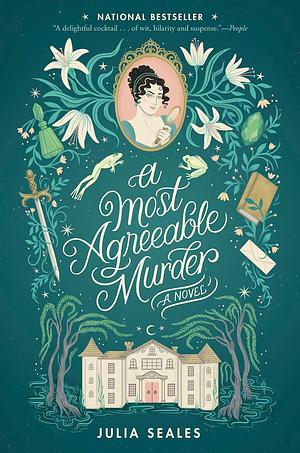
Review 2750: A Most Agreeable Murder

Julia Seales clearly had a good time writing this novel, which is absolutely silly and apparently a spoof of 19th century novels. It’s too bad, then, that she bothered so little to get the details right. It’s the second novel I’ve read recently that doesn’t bother with that, so why, I ask, place it in a historical context? Is this kind of laziness a trend?

Beatrice Steele has a secret. She is fascinated by crime and follows the exploits of Sir Huxley and his assistant, Inspector Vivek Drake, by stealing her father’s newspaper. She must hide this activity, because she lives in Swampshire, which has stern rules for the behavior of females.

The Steele family is preparing for a ball that evening at Stabmort Park, hereditary home of the Ashworths. A guest of honor is Edmund Croaksworth, a wealthy gentleman who was friends with Beatrice’s best friend Daniel Ashworth before the Croaksworths broke off the connection. Edmund’s father has died, and he is ready to resume the connection.

The Steele family is not only broke, but if they don’t produce a male heir before Mr. Steele dies, their property will go to their hated cousin, Martin Grub. So, Mrs. Steele’s hopes rest with her beautiful second daughter Louisa, who she thinks will fascinate Edmund Croaksworth into an immediate proposal. Beatrice herself assumes she will marry Daniel, but neither of them seems to be in a hurry.

I guess you can tell from the names that Seale’s sense of humor is not exactly subtle. She finally gets us to the ball while managing to get just about every detail of a 19th century ball wrong, including when soup would be available and how many guests a ball generally entails (hint—more than 16). There, Beatrice is surprised to recognize among the guests Inspector Vivek Drake—a person whom I had already guessed is to Sir Huxley as Laura Holt was to Remington Steele (that is, if you’re not old enough to remember, the real solver of the crimes), but Beatrice doesn’t believe that.

During the dance, Beatrice finds out Grub’s dastardly plan to have her father declared incompetent so that he can take the estate earlier, and since Mr. Steele is an idiot who is constantly playing practical jokes on people, this is a possibility.

Then Edmund Croaksworth is murdered, poisoned apparently during a card game that no one will admit playing. Inspector Drake is asked to solve the murder because the entire party is stranded in the house by a terrible storm. Beatrice is deputized to help him stay within the bounds of propriety.

I definitely didn’t share the author’s sense of humor here, although I might have had more patience with the novel if she could have been a little up on her subject. To successfully make fun of Victorian customs and manners, I think you have to know what they are first.

The mystery itself was all over the place, designed to get as many ridiculous details in as possible. Still, I at least finished the book.

Related Posts

Murder After Christmas

Beginning with a Bash

Babel: An Arcane History

Review 2736: Venetia

I’ve already reviewed Venetia for this blog, but my purchase of a new Folio Society copy seemed like a good excuse to reread it.

Venetia Lanyon has lived an isolated life, mostly with only her brother Aubrey for company. Her late father having refused her a London season when her aunt offered one, she has only attended a few local dances. However, she has two suitors—Edward Yardley, a worthy neighbor, and Oswald Denny, a quite young man who emulates Lord Byron in his careless dress and sulky manner. Venetia is interested in neither of them and plans to make a home for Aubrey, a studious teen with a bad hip, after her older brother Conway returns from the wars to take up his position as head of household.

But two incidents complicate this plan. One is her encounter with Lord Damerel, a neighbor she and her brothers called the Wicked Baron when they were children because of his unnamed crimes that made his family disown him when he was young.

Although Demerel, mistaking her for a village girl, offers her an insult, he is taken aback by her reaction, and she soon finds him to be a companion who shares her sense of humor. When he rescues Aubrey from a bad fall, the three of them begin a comfortable friendship.

Then strangers arrive. Without so much as a letter of warning, Conway has married a shy, biddable girl and sent her before him with her extremely unpleasant mother to establish his household.

Now, we’re set up for Heyer’s usual romance with lots of striking characters, a good deal of lively, funny dialogue, and an engaging, sparkling heroine with an unconventional mind.

Related Posts

The Grand Sophy

Sylvester, Or the Wicked Uncle

Frederica

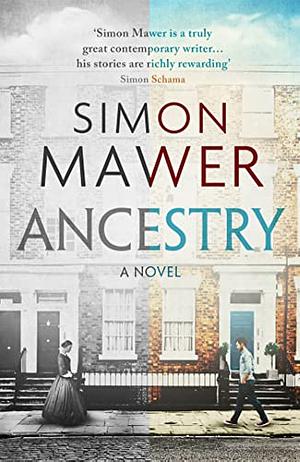
Review 2724: Ancestry

I wasn’t looking forward to reading Ancestry, because I haven’t really enjoyed either of the other books I’ve read by Simon Mawer. However, he keeps getting shortlisted for the Walter Scott Historical Fiction prize, which is one of my projects, so I keep having to read him.

For this novel, Mawer has tracked down records about his own family, going back four generations on both sides, and written a novel trying to make sense of what he found. I have to say that I found this idea interesting, although Mawer still managed to fit in a reference, not to labia, which seems to be a fascination, but to female pubic hair, which is about the same.

In the first half of the 19th century, Isaac Block is growing up on the Suffolk coast as a subsistence agricultural worker. However, as a young teenager, he gets an opportunity to go to sea and takes it. Later, as a young man on leave, he meets Naomi Lulham, a single mother lodging with his Uncle Isaac.

This story is interesting, but Mawer was obviously able to find out more about the Mawer side, because he spends a lot more time on the story of George Mawer, a corporal in the Queen’s 50th regiment, who marries an Irish girl, Ann Scanlon. This story leads up to and spends a great deal of time on the Crimean War.

I found a lot of the details about these people’s lives interesting, but with all of Mawer’s novels, apparently, there is such distance from the characters that I didn’t get that involved with them, again.

Related Posts

The Glass Room

Tightrope

The Voyage of the Narwhal

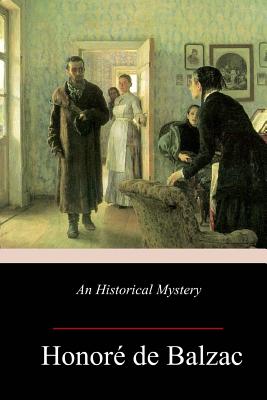
Review 2720: An Historical Mystery [A Murky Affair]

I think a friend gave me this book, or perhaps I bought it, because I occasionally buy old books, and this one is dated 1891. It is the 59th book in the series Balzac called La Comédie humaine.

The novel is based on a true incident. It begins in 1803 with Michu, a bailiff with an evil appearance who is feared by many and called a Judas to his previous employers. In reality, he has been working for them the whole time. His previous master, the Marquis de Simeuse, had been unable to secure his estate of Gondreville before it was taken from him and sold to Senator Malin, the current owner. The Marquis’s two young twin sons are in exile working for the return of the Bourbons. With them are the two sons of the D’Hauteserres, the guardians of young Mademoiselle Laurence de Cinq-Cygne, who, near the beginning of the novel, hides the four young men in a ruin in the middle of the forest.

The revolt is defeated, but the authorities are searching for the young men, and Laurence is under suspicion. Eventually the young men are able to get a pardon in exchange for their oath that they will not work against the regime.

The young men all go to live at Cinq-Cygne, where the two twins are both in love with Laurence. Laurence cannot choose between the new Marquis and his younger twin brother, however.

The young people are prideful and incautious, saying things in front of people that can be misunderstood. After the young men’s release, an old relative, Monsieur de Chargeboeuf, comes to warn them to stay away from Gondreville, as they have enemies and something is going on there. However, the young people are heedless. They have learned that Michu is in danger, so he sells his property prior to leaving, and the four young people and Michu spend the day in the forest retrieving the family fortune from where Michu has hidden it. On the last trip they ride too near Gondreville, which they tend to treat as their own property, and Laurence is seen.

Later, the young men are arrested, because while they were moving the money, five horsemen who look very much like them attacked Gondreville and kidnapped the Senator.

We know they are innocent, but the representatives of justice are prejudiced against them, and they have been foolhardy in their words and actions.

I didn’t really understand all the ramifications of the political situation but still found this novel really interesting. Although Napoleon, in a brief appearance, comes off fairly positively, Balzac is cynical about the honesty of government officials in general. He handles the trial with a good sense of suspense, although in the explanation of events that finally comes at the end, he takes some time to make the connection with the events of the novel.

Related Posts

Germinal

The Charterhouse of Parma

The Black Count: Glory, Revolution, Betrayal, and the Real Count of Monte Cristo

Review 2718: Who Would Have Thought It?

Who Would Have Thought It? is the first book written by a Mexican-American woman in English. And it is a spoof. Published in 1872, it ridicules the attitudes of New England puritans and mocks politics and religion in Civil War Washington, D. C.

It begins with two Presbyterian ministers, Rev. Mr. Hammerhard and Rev. Mr. Hackwell, on their way to the train station to pick up Dr. Norval, who is returning home after five years away on a geological expedition. The jokes these two tell seem oddly inappropriate, but we aren’t yet to know that they, especially Mr. Hackwell, are going to grow in importance and wealth through their chicanery.

Dr. Norval brings home a surprise—a ten-year-old Spanish girl he has rescued from a Southwestern native tribe. Although he tries to explain that her skin has been dyed black and that she is pure Spanish and wealthy and although Mrs. Norval is supposedly religious and an abolitionist, she insists on calling Lola names, like darkie, and treats her with abhorrence. She is also appalled that her husband has promised the girl’s dying mother to raise her as Catholic until her father can be found.

The Civil War breaks out soon, and Dr. Norval is forced to leave the country because although he supports the Union, his opinions get him in trouble with the government. By this time, Lola is almost grown and she and Julian Norval are in love. Dr. Norval has observed his wife’s attempts to get her hands on Lola’s fortune, so he makes Julian promise not to marry until he returns. Then he goes to Africa. During this time, for some reason or another, very little effort has been made to find Lola’s father.

While he is gone, the Norvals spend Lola’s money like crazy, only Mrs. Norval aware that it is not theirs. Mr. Hackwell has risen in the Union army principally through running away from battle, and when the family receives a report that Dr. Norval is dead, Hackwell is already romancing Mrs. Norval. But actually, he is after Lola, still very young but now beautiful and of course, rich.

There are some positive characters in this novel, including Dr. Norval, Julian, and Mattie Norval (Dr. Norval’s sister), and Lavinia and Isaac Sprig, Mrs. Norval’s siblings. But the two Reverends and the Cackle family, who all owe their success to early help from Dr. Norval, turn out to be first-class grifters, and Mrs. Norval is horrible.

This novel is melodramatic but also funny and zips along in a quite modern way. I started it thinking it was a doorstopper but finished it very quickly.

Related Posts

Turn, Magic Wheel

Libertie

Chenneville

Review 2707: #ReadingIrelandMonth26! Oscar Wilde

This book isn’t written by an Irishman, but since it is about an Irish writer, I think it qualifies for Reading Ireland Month. Thanks to Dean Street Press for providing this interesting biography of Oscar Wilde, originally published in 1976.

Oscar Wilde has always seemed to me a fascinating and tragic figure. He was well known for his wit and perfect sentences. I have often considered whether his remarks were studied, but contemporaries seemed to believe that they were all extemporaneous, which is amazing.

Sheridan Morley’s biography of Wilde is not the exhaustive kind that ends up submerged in trivial details. Instead, it is short, appears to be aimed at the general public, and provides just enough information along with a few quotes from his work or writings about him. It’s well written and moves along nicely.

I have read details of his disgrace before, but this novel deals a lot less harshly with Lord Alfred Douglas’s part in it. It makes a point that Wilde had been behaving recklessly, apparently under the impression that he was so popular he was untouchable.

Of course, Wilde’s trial and imprisonment are great travesties of British justice and losses to British literature. As he wrote in the years before the event four major comedies (the point made that they were the only major English comic plays written in the 100 years before), who knows how many other works—and what kind—he could have produced?

This is an enjoyable and interesting book about a man who was determined from a very young age to be either famous or infamous, so he said, and achieved both.

Related Posts

Victorian Fairy Tales

The Children’s Book

The New Life