Review 2744: Classics Club Spin Result! Our Mutual Friend

One of the pleasures for me in rereading some of Dickens’s more massive works is the plethora of characters and plots and the author’s skill in linking them all up. Our Mutual Friend is one of those books, and it was chosen from my list by the latest Classics Club spin.

The novel begins when Jesse Hexam, a waterman, and his daughter Lizzie fish a body out of the Thames. A sequel to this incident is related by Mortimer Lightwood, a man of law, at a party. He tells the story of a man named Harmon who became fabulously wealthy dealing in dust. He had two children. He threw off his daughter for marrying a man with no money, and when his son came from school to defend his sister, he threw him off, too. When Harmon dies, he leaves the lowest mound of dust to an old family servant, Mr. Boffin, and the rest to his son, John Harmon, as long as John marries the girl his father has chosen for him. The son is located after an absence of twelve years, but then he is drowned after returning, a body of a gentleman having been found with only Harmon’s card on his person.

Brought to identify the victim is a young man named Julian Handford, but he is unable to identify the body. When next we see this mysterious young man, he is called John Rokesmith and has soon offered himself as secretary to Mr. Boffin, the residual legatee to Harmon’s estate, now wealthy.

The Boffins are honest and unsuspecting people who, we learn, were the only comfort for John Harmon in his younger years. Since they have inherited John Harmon’s estate, they decide to offer a home to Bella Wilfer, the girl that the elder Harmon had picked out to be wife for his son, reasoning that they have deprived her of wealth. Our first meeting with Bella is not the best. She is both angry at being parceled out to be a wife for a man she never met without her consent and yet determined to marry money, because she is sick of being poor. The ubiquitous Mr. Rokesmith has taken a room at her parents’ house.

The Wilfer family comprise Mr. Wilfer, described as a cherub, with a generous and pleasant disposition; Mrs. Wilfer, a grand, bitter lady who terrifies her husband; Bella, a beautiful spoiled girl; and Lavinia, a little shrew. To her credit, though, Bella likes the unsophisticated Boffins and accepts their invitation.

This is just the beginning of a complex story that features a character with a secret identity; a murder; a man consumed by jealousy; the pursuit of a beautiful but socially inferior girl by an idle member of society; an attempted murder; betrayal by an employee; a selfish brother; an unselfish sister; a kind old Jewish man who suffers many insults; a doll’s dressmaker; and much more. This novel is so complex, but it features characters that you care about, characters that you hate, passages that make you laugh, others that bring a tear. In short—everything you expect from Dickens. Although not as well known as some of his novels, this is one of my favorites—after Bleak House and maybe tied with David Copperfield.

Related Books

David Copperfield

Bleak House

Dombey and Son

Review 2742: Precipice

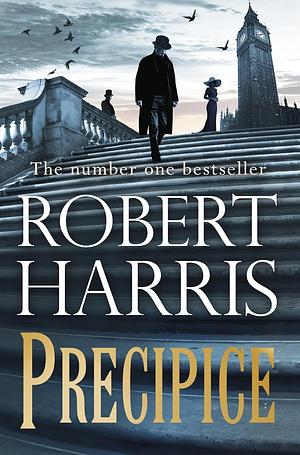
It’s the eve of the First World War, and Venetia Stanley (sharing the name of her famous ancestor, subject of the novel Viper Wine) is having an affair with Prime Minister Asquith, more than twice her age. Perhaps it’s not a sexual affair, but it is certainly an emotional one. Asquith is known for his relationships with young women, but this one seems to be more serious.

In an incident that seems unrelated to the rest of the novel for a while, Venetia decides to meet Asquith at a party instead of going on a pleasure cruise with the set she hangs out with. During the cruise, two young men drown as part of a bet. The investigation brings in the character Detective Sergeant Paul Deemer, who notices Venetia’s name on the guest list and calls on her to take her statement.

Periodically, we check in on Deemer as he is recruited into Intelligence after the war starts, his job to find German spies. But most of the time, the book follows the relationship between Venetia and Asquith, leaving me wondering when and how the characters would link up.

Asquith’s behavior is frankly shocking, especially during war. Riding around in his limo with Venetia, he shows her a confidential message and then wads it up and throws it out the window. He encloses confidential and even secret telegrams in his letters to her and asks her opinion. Some of these actions make her uncomfortable, and she doesn’t know what to do with his letters, locking them in a box. He writes her several times a day.

The stories finally begin to link up when Deemer is assigned to find out about several messages turned in by the public. The conclusions of the initial investigation end with Deemer assigned to intercept Venetia’s correspondence.

This is not the taut thriller that Harris often produces. I found it interesting but got a little tired of reading especially Asquith’s letters, which are cringingly romantic. As the affair continues, Asquith writes Venetia letters during cabinet meetings and seems more obsessed by her than concerned about the war. Venetia in turn begins trying to find a way to escape the relationship.

I had very little sympathy with him, although I began slowly to sympathize with Venetia. It was interesting to learn about politics of this period and this odd relationship, but this wasn’t one of my favorite Harris novels.

Related Posts

Munich

V2

Viper Wine

Review 2737: Author Unknown

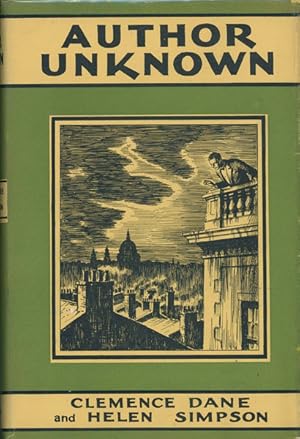
Horrie Pedlar is the first and only woman publisher in 1930s London, and this novel opens with the announcement of a party she’s giving for the re-emergence from exile of the writer Marmion Poole. His romantic peccadillos years before resulted in his leaving London, but Horrie thinks it’s about time he returned. At the party, he announces he has written his memoirs, always an issue with a mystery novel.

Horrie is pretty much beloved. Although a good businesswoman, she is generous and kind and has collected a lot of grateful and sincere friends and employees. But at the very beginning of the novel, she has a conversation with Gilda Bedenham, a recent employee, to tell her she’s not doing well at her job and she wants to reassign her. Gilda already feels an obligation to her and is prickly about it, so she quits, in fact walks off the job. Horrie then sends her young, bright PR man, Koko Fry, to check on her and maybe get her to come back.

Marmion Poole is attractive and dramatic. He is full of charisma and full of himself. The reaction to his announcement of a memoir upsets a lot of people, especially the husbands of the many women with whom he’s had affairs.

Horrie is thinking of retiring, going out while she’s still doing well. She wants to leave the company to be led by her right-hand man, James Savory, Koko, and Marmion Poole, a fact she tells Savory but not the others.

However, there are problems with Marmion. The office is receiving calls from society people who want to read the manuscript. Horrie has read it, though, and tells Marmion she won’t publish it. She thinks it’s vengeful and says he should take the high road or rewrite it as fiction.

This is an unusual mystery novel. No one is actually killed until almost 200 pages in, for one thing, and then it is Horrie, whom we have come to like. She is found in the courtyard below her apartment, and the inquest decides that she fell from the fire escape late at night coming in through the unlocked door there because she forgot her house key.

Another oddity is the presence of Sir John Saumarez, who solved the previous mystery by Dane and Simpson. He’s at the party and is around at the denoument, but does nothing to solve the crime, if there was one.

So, what is the novel doing in the first 200 pages? It’s taking its time introducing the characters and portraying the London literary scene and doing it masterfully. Dane and Simpson’s characters are complex and believable, and we like almost all of them.

Well, of course, Horrie was murdered, but who killed her? Was it someone who wanted her out of the company immediately? Was it someone she caught destroying Marmion Poole’s manuscript, the ashes of which were found nearby? Was it Gilda, who lost her job and is now engaged in a romance with Koko? Marmion sets a trap to find out.

I am really enjoying these books by Dane and Simpson. They are good writers with a flair for characterization and dialogue. It’s too bad there’s only one more. I hope I can find a copy. (Update: right now, the cheapest copy I can find of the third book is priced at more than $400. Yikes!)

Related Posts

Enter Sir John

Death of an Author

One by One They Disappeared

Review 2677: The Frozen People

I really enjoyed Griffiths’ Ruth Galloway series and have liked her Brighton and Harbinder Kauer books well enough, so I was interested in her new series. However, my interest dropped precipitously when on about page 3, I found it involved time travel.

Ali Dawson is a member of a cold case team dealing with top-secret experimental technology—time travel. She is preparing to travel back to 1850 London as part of an investigation requested by Isaac Templeton, a member of Parliament. He wants the team to try to clear the name of his ancestor, Cain Templeton, who was rumored to have murdered three women and belonged to a club the admission to which supposedly involved a dead body.

By coincidence, perhaps, Isaac is the boss of Ali’s son Finn.

Ali travels to 1850 in time to find Cain Templeton standing over the body of a dead woman in the rooming house he owns. He says he did not kill the girl but thinks an artist named Thomas Creek did. Ali is only supposed to be gone an hour, but when she returns to her pickup point, she isn’t picked up. She’s stuck in 1850.

Already I was having problems with this story. What kind of investigation is Ali supposed to conduct with a one-hour time limit? It’s a ridiculous idea.

With Finn having no word from Ali, he begins trying to find her. He discovers that Ali is on a mission originated by his boss and has an argument with him about it. The next day, Isaac is dead and Finn, who spent the evening drinking with Ali’s boss Geoff and the night passed out, is suspected of his murder. Ali returns from several days in 1850 to find him in trouble.

Besides the issue I mentioned, I had several more issues with this book by this time:

  • That the garbled explanation of time travel makes no sense
  • That Cain Templeton would invite Ali, a supposed respectable widow in 1850, to dine at his house alone
  • That Ali, supposedly tutored in Victorian habits and manners, would think it was okay to accept and assume his servants were her chaperones
  • That a winter day in 1850 London would have light skies instead of smoke-filled ones
  • That the British government would fund this project
  • That it would be thought acceptable to take a personal investigation on

The series is clearly set up to continue a plot line involving Thomas Creek and Cain Templeton. My disbelief having refused to suspend, I won’t be following it.

Related Posts

Bleeding Heart Yard

The Zig Zag Girl

The Crossing Places

Review 2663: The Hours Before Dawn

Boy, if you like a good thriller, this Celia Fremlin is terrific! I wonder why I never heard of her before. Since the summer before last, I had been trying to find a reasonably priced copy of her Uncle Paul. In May, another blogger told me she had found one, so I looked again and ended up with a set of three novels. One more to go!

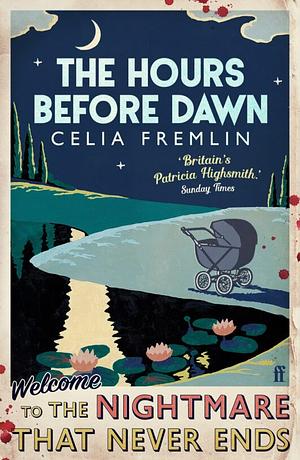
Louise is exhausted. She has a young baby, Michael, who won’t sleep through the night and two girls, ages six and eight. In with the times, her husband, Mark, isn’t much help and even complains about the baby and the untidy house. Louise also has some objectionable neighbors. Mrs. Philips, who shares a wall, complains every day about the noise her children make. Mrs. Hooper has a talent for roping Louise into things she doesn’t want to do, like taking care of her baby, Christine. Mrs. Morgan is always condoling with her and criticizing the others, but Louise knows she does the same with the others.

Louise and Mark have decided to rent a room on their top floor, but Louise is surprised when Mis Brandon shows up to take it. She looks too prosperous and respectable to need to rent someone’s room, and there is something intense about her. But she teaches school at a local primary and is too respectable for Louise to turn away.

Louise begins to have strange dreams, but there are also some odd events that occur, and Louise is so tired, she thinks she may be imagining things. Tony Hooper, a young boy, tells her Miss Brandon is a spy, because he saw her going through Mark’s desk as well as his own mother’s. Then one night Louise takes Michael out for a walk so as not to disturb Mrs. Philips and falls asleep on a park bench. When she awakens, Michael and his pram are gone. She goes to the police and incoherently tells them her story only to find Michael and his pram at home, the baby asleep in his bed.

Now she feels she is branded not just a poor housewife but a lunatic. Mark is angry with her because he thinks she is jealous of Miss Brandon on his behalf. But Louise is determined to investigate her lodger.

This is a terrific little thriller that builds suspense throughout and ends with a bang. I’m really enjoying these books.

Related Posts

Uncle Paul

Lady Living Alone

The Circular Staircase

Review 2642: #RIPXX! Bats in the Belfry

Bruce Attleton is a once-successful novelist married to the actress Sybilla Attleton. He has planned to meet up with his friend Neil Rockingham in Paris, but he doesn’t show up. When Rockingham finds that no one knows where Attleton is, he thinks of going to the police.

In the meantime, Robert Grenville, a journalist who wants to marry Attleton’s ward, Elizabeth Leigh, learns that a strange man with a beard named DeBrett might be blackmailing Attleton. He traces DeBrett to a weird studio with a tower, breaks in, and finds Attleton’s briefcase in the coal cellar.

Grenville goes to the police, and eventually they find a body plastered into what had been a niche in the wall. But the body has no head or hands, so is it Attleton or DeBrett, since both seem to be missing?

There’s no love lost between the Attletons, and both were unfaithful, so is that a motive for murder? Or has Attleton faked his own death? Did Grenville kill him since he was denying permission for him to marry Elizabeth? Or does it have something to do with his cousin, who recently died?

If this doesn’t sound complicated enough, the mystery gets more so as it continues. I guessed the motive, but the murderer was just one of many guesses.

I think I like Lorac’s rural mysteries better because of their atmosphere, although the studio is certainly creepy. Of course, Inspector Macdonald is going to solve the crime.

Related Posts

Checkmate to Murder

Murder by Matchlight

Post After Post-Mortem

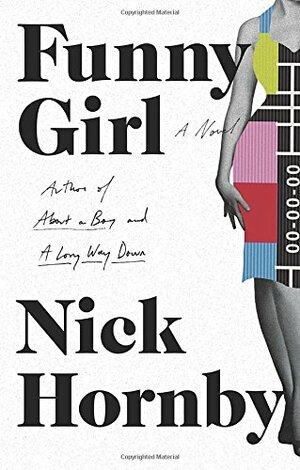
Review 2625: Funny Girl

I have enjoyed some of Nick Hornby’s books very much, particularly some of his early ones, and others not so much. I have been watching the series Funny Woman, though, and when I learned it was based on this book, I thought I’d read it.

It’s the Swinging 60s, and Barbara Parker wants to make people laugh. Her relatives encourage her to enter the Miss Blackpool competition in hopes it will keep her in Blackpool instead of leaving for London. She wins, but when she realizes she’s supposed to participate in activities for a year, she decides not to accept. Soon, she is in London.

The novel follows her as she looks for work and a roommate, and finally an agent. The agent is more interested in sending her for modeling gigs, but she wants to act, so she gets him to send her for auditions. After some failures, she is lucky enough to come upon the writing team of Tony Holmes and Bill Gardiner, their producer Dennis Maxwell Bishop, and actor Clive Richardson. They are working on a different project that they’re not happy with, but they are so charmed by Barbara (now calling herself Sophie Straw) that they decide to write a show for her. Sophie’s offbeat humor makes her a sensation and the show Barbara (and Jim) a success. (Ironically, her character has her true name.)

I didn’t think this book was particularly funny, but it’s still a fun read that is full of detail about early British TV comedies (much of which I wasn’t familiar with), the craziness of London in the 60s, and the progress of our ambitious but likable heroine. Toward the end, it takes a turn toward conventional romance, but the ending lends perspective to everything. Although Sophie is engaging, a lot of this novel hangs on the existing synergy between the members of that original team and what happens when it inevitably cools off. And, of course, the difficulties of a young woman trying to make it in show business.

Related Posts

State of the Union

Miss Iceland

Sweet Caress

Review 2619: Literary Wives! Novel About My Wife

Today is another review for the Literary Wives blogging club, in which we discuss the depiction of wives in fiction. If you have read the book, please participate by leaving comments on any of our blogs.

Be sure to read the reviews and comments of the other wives!

My Review

We learn that Tom’s wife Ann is dead, but we don’t know the cause for some time. Tom looks backward and forward along the length of their marriage trying to figure things out. Occasionally, there are scenes from a book manuscript he’s writing in which he tries to guess what happened in Fiji the weekend they got married.

Tom is a script writer, and Ann makes models of cancer patients’ body parts at a hospital. Feeling as if things are going well financially, they have bought a house in Hackney with a lot more space than in their flat. They love it, but when Tom’s job writing a script falls through because the producer leaves the field, he begins having trouble finding another job.

Ann comes home from work one day and tells Tom that she saw her stalker at work. Tom didn’t know she had a stalker, but she says she has spotted him in various places.

Ann is Australian, but she has lost her accent and doesn’t want to talk about her past. She also has a history with drugs that she doesn’t seem as secretive about.

It’s hard to explain what this book is about without giving away too much, although the blurb just goes ahead and gives away a major plot point. Let’s just say that the tension level rises as Ann becomes pregnant, Tom still can’t find a job, and Ann’s behavior becomes manic at times. Ann has secrets, but she’s not telling.

Without being a thriller but more an intense examination of a relationship, Perkins’ book skillfully builds up quite a bit of suspense. It liked it a lot.

What does this book say about wives or about the experience of being a wife?

Literary Wives logo

The relationship described here is so complex that it’s hard to answer that question. Or maybe Ann is complex and unknowable. At first, I was annoyed at this couple and their dismissive attitude to many people and things, but after a while I began to like them. Still, Tom doesn’t seem to notice that Ann’s behavior is getting more bizarre, that she keeps going after ant infestations, for example, when Tom doesn’t see any ants or staying up all night rearranging things into weird configurations. In the meantime, he is both spending money and worrying about debt. Both of them seem to be subject to compulsive behaviors.

Secrets seem to be a big problem. Although the two love each other, they both keep their secrets—Ann about her life in Australia and the events in Fiji, Tom about the state of his work, and the level of their debt. The culmination comes when she finds out the truth about another secret he’s keeping.

Related Posts

Euphoria

The Amateur Wife

Happenstance

Review 2613: The Bloater

I was so taken by Rosemary Tonks’ The Halt During the Chase that I looked for more by her. I found The Bloater.

Min is a married sound engineer whose husband is seldom home. She occupies herself with witty, frivolous conversations with her girlfriends and flirtations with her admirers. She has one admirer she finds disturbing, though, a large opera singer whom she finds disgusting and attractive at the same time. She talks endlessly with her other friends about whether she wants an affair with him, whom she refers to as the Bloater.

This novella is crammed with witty, sometimes cruel dialogue. It moves along very quickly and is beautifully written. At times, I wondered if Min really wanted to have an affair with anyone—or maybe she does.

When I was reading about this book, I learned that Tonks gave up a successful career and retreated into isolation. You would hardly believe this of the creator of such witty, vibrant characters.

Related Posts

The Halt During the Chase

Sing Me Who You Are

Sally on the Rocks

Review 2570: #1952 Club! Excellent Women

Entry #2 for the 1952 Club!

By “excellent women,” Pym seems to mean a type of English spinsters who occupy themselves with charity events and helping others, dress drably, and are taken for granted by men. That’s what Mildred Lathbury seems to think she is. She’s a clergyman’s daughter of limited means, mild-mannered and religious but observant of others’ characters while not wishing them any harm. In Excellent Women, she gets a surprising amount of attention from men, but then she’s always picking up after them.

Mildred lives upstairs of a vacant flat, and she’s curious about what her new neighbors will be like. She knows they’re named the Napiers by the sign at the doorbell. She meets Helena Napier on page 2, a young, stylish woman, and sees her around with a man, whom she assumes is her husband, Rockingham (known as Rocky). But he is not. He is Everard Bone, an anthropologist, and he and Helena, also an anthropologist, are writing a paper together. Rocky is off serving in Italy.

Mildred is good friends with Julian Malory, the vicar of her rather high church, and his sister Winifred. It is the expectation of several characters in the book that Julian will marry Mildred, but she doesn’t seem to expect it. Or does she? It’s hard to tell. Certainly, he is very friendly with her, but she thinks he is not the marrying kind.

Mildred meets Everard before she meets Rocky. Although he seems not to notice her at first, after a while he begins seeking her out. He is abrupt and serious, and she doesn’t think she likes him. Or does she? It’s hard to tell.

Once he shows up, Rocky is utterly charming and handsome. He is very friendly to Mildred and keeps popping up for tea. Mildred senses friction in the Napier home—well, she can hear them arguing. Rocky does all the cooking and cleaning in their home, because Helena is completely undomesticated. (She sounds like my kind of gal, even though she isn’t depicted particularly positively.) Mildred distrusts Rocky’s charm. She understands from Everard that Helena thinks she’s in love with him (Everard).

It being post-war London, it is still hard to find a place to live, so the Malorys decide to lease their upper floor. Soon, it is taken by Mrs. Gray, a beautiful clergyman’s widow. Mildred finds both Julian and Winifred transfixed by her, so she steers clear. It’s pretty evident what Mrs. Gray thinks Julian’s fate should be.

Mildred isn’t at all liberated. She is constantly cleaning up after men or doing ridiculously involved favors for Rocky and Helena, and all take her for granted. Yet, this is a lively, amusing social comedy. It is also a tale of the rapidly disappearing lives of upper- and middle-class English people.

Related Posts

The Camomile

Alice

My Brilliant Career