If I Gave the Award

Since I just reviewed Western Lane, that finishes my reading of the shortlist for the 2023 Booker Prize. This means it’s time for my feature, where I decide whether the judges got it right.

Although I was indifferent to a few of the books on this list, there were two that I liked so much it will be difficult to choose between them, and this year, most of the others were very good. As I often do, I’ll lead up to the best ones. All of the books chosen this time were very well written.

The book that resonated with me the least was Study for Obedience by Sarah Bernstein. It was mostly a character study of a very particular woman, one who is completely obedient to her brother. I said I felt like I was being psychologically tortured when I read it.

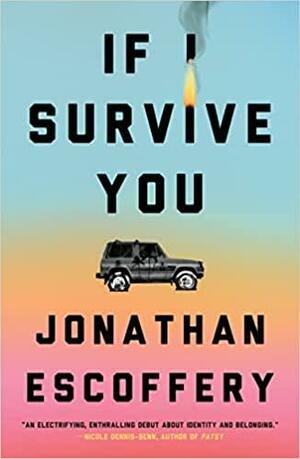
Although darkly funny at times, I found If I Survive You by Jonathan Escoffery also a bit whiny. It’s about a Jamaican-American young man trying to figure out his own identity and community in Southern Florida, but he keeps making really bad decisions.

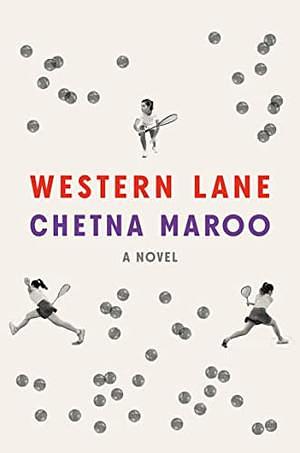
Western Lane by Chetna Maroo is about the grief of a family over the loss of their mother, which 11-year-old Gopi copes with by her success in playing squash. I found it touching and said it had floundering but sympathetic characters. So, here we are getting into more interesting territory.

I found the subject matter of This Other Eden by Paul Harding very interesting. The historical novel is based on a true event, when the State of Maine decided to evict several mixed-race families that had been living on an island since 1793. It’s no coincidence that this turn-of-the-20th-century event took place just after a Eugenics conference. Although I occasionally found Harding’s extended poetical metaphors annoying (and sometimes liked them), I found this novel to be touching. This is the first book in the shortlist that I read, way back in 2023, so unfortunately, I don’t remember it very well.

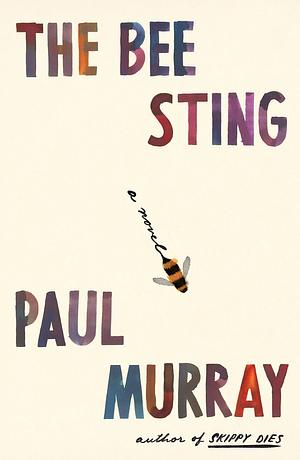
The last two novels each ended up on my Best of the Year lists in successive years that I read them. One is The Bee Sting by Paul Murray. It is a complex novel about the problems faced by a family. As it looks at the situations from each family member’s perspective in turn, family secrets are revealed. It’s hard to see from my description of this book just why I found it so good, but I was gripped from the start. I say that it is unexpectedly suspenseful in the last 50 pages and that the ending blew my mind (if only I could remember what it was).

I read Prophet Song by Paul Lynch a year earlier than The Bee Sting but remember it a little better. It’s the rare dystopian novel that I found absolutely gripping, about Ireland becoming a totalitarian state, which absolutely chimes in with current events. Prophet Song was the winner for this year. I’m thinking that for me, the choice between it and The Bee Sting is hard, as I describe both as gripping. I also say that Prophet Song has long, poetic sentences that create a sense of urgency. I guess it’s almost a tie for me between this book and The Bee Sting, but I’ll say that the judges got it right.
Review 2748: Western Lane

Eleven-year-old Gopi’s mother died a few months ago, and her father is finding it hard to cope with his grief and his daughters. On a visit to their aunt and uncle in Edinburgh, Aunt Ranjan remarks that the girls are running wild. Then she and Uncle Pavan suggest that he leave one of his daughters with them, since they cannot have children. Their father decides instead that they need something to occupy them, and he begins teaching them to play squash.

A lot of information about squash ensues. Gopi turns out to be good at the game, and she begins training at times with a boy named Ged.

The book deals with the girls’ grief over their mother’s death and with their father’s depression, as he begins missing work and spending most of his time at Western Lane, the exercise center. None of the girls are happy to see Papa getting closer with Ged’s mother.

This novel is full of inarticulate characters, so at times I wasn’t quite sure what was going on. But it is a touching, powerful story with floundering but sympathetic characters. The writing is fluid and vivid. I read this for my Booker Prize project.

Related Posts

Looking for Alaska

Levels of the Game

Open

Review 2722: If I Survive You

If I Survive You is the next-to-last book for my 2023 Booker Prize shortlist project. It is a novel of linked stories centered around Trelawny, a young man of Jamaican heritage, and his family.

This novel is about identity. First, racial identity, as Trelawny’s school friends try to fit him into the categories they’re familiar with in Miami. He looks like one of the Cuban kids but can’t speak Spanish. He’s too light to be black. And what language is his mother speaking, anyway? (It’s English.)

Then, it’s family. His parents split up when he’s still young, and his father takes his older brother, Delano. His father has always been awkward around him anyway, because Trelawny prefers reading to sports and has no friends. Much later, when he is living with his father after his mother returns to Jamaica, his father calls him “defective.”

Family is also an issue for his cousin, Cukie, whose father left when he was a child. Later, when Cukie is a teenager, his father begins to take him for the summer and he learns to catch lobster. He begins to believe he can do this for a living until he learns what kind of man his father really is.

And place is also a theme. Trelawny doesn’t feel at home in Miami, but he certainly doesn’t blend in at his midwestern college. After college, he bounces around between his father, his brother, and homelessness, but neither of his relatives seem to want him around. Then he becomes obsessed with buying the family home from his father even though it is falling apart.

This novel seems dire at times, but it is also darkly funny at times. It is probably autofiction and also slightly whiny. He certainly hasn’t grown up with any advantages except an education, but he also makes some spectacularly bad decisions.

By the way, most of the book is written in second person, but not second person addressing someone else as “you,” rather the narrator addressing himself. I got used to this, but I could see that it might be irritating.

Related Posts

Real Life

Memorial

Alligator & Other Stories

Review 2659: Study for Obedience

The unnamed narrator moves to another country, one she describes as a northern country of her family’s ancestors, to live with and be housekeeper to her recently divorced brother. She has been raised, she says, to curb her natural inclinations and be obedient. Certainly, her relationship with her brother looks more and more disturbing as the book progresses. For example, a point that comes out early on, she bathes and dresses her brother, who is not an invalid. Later, we learn that he insists she watch TV with both the sound and the subtitles off.

But how trustworthy a narrator is she? Her whole existence seems colored by a twisted view of life. For example, early on, she says that when she quit her job, her coworkers were so pleased to get rid of her that they gave her a big party. Well, isn’t that a tradition for a long-serving employee?

Her attitude is entirely negative—taking everything on herself. Despite being fluent in several languages, she is unable to learn the language of her new home. Almost immediately after her arrival, her brother departs for an unexplained reason, so she finds herself cut off, unable to make herself understood, with only a three-legged dog for company. She begins to sense that she’s being blamed for a series of agricultural disasters, as if she’s a witch. Since her Jewish ancestors were forced to leave this area during the war, she reads a lot into this.

Actually, she reads a lot into everything, tortuously examining every glance, every event. The book doesn’t really have a plot; it’s more about her exhaustive examinations of everything. If it hadn’t been so short, I would have quit reading it, because as another StoryGraph reader said, I felt like I was being psychologically tortured.

There is a turn to the book, but it just becomes more perverse. I read it for my Booker Project.

Related Posts

The Safekeep

The Weight of Ink

The Gustav Sonata

Review 2649: #NovNov25! Seascraper

I’m not quite sure what to make of this novella, which was longlisted for the Booker Prize but did not make the shortlist. It’s an atmospheric, closely observed story set in the 1950s that seems as if it is from an earlier time. I read it for Novellas in November.

Thomas Flatt is carrying on the difficult work followed by his grandfather, scraping the sea bottom at low tide for shrimp. He is the only man left doing this grueling job the old-fashioned way, with a horse and wagon, and the pickings are getting slimmer. He didn’t choose this path but was made to quit school to help his grandfather before he died. He lives with his demanding mother, but he has a secret desire to perform music at a local folk club.

One evening he comes home to find a stranger with his mother, an American named Edgar Acheson. He claims to be a movie director and produces as proof a cover of a movie magazine with a photo of his younger self. He wants to make a movie using the dismal fall sea as the setting, and he wants to pay Thomas, as an expert on the beach, to help him find locations. And indeed, the beach at low tide can be treacherous. He gives Thomas a check for £100, an astonishing amount, and arranges for him to take him with his horse and wagon that night.

And that’s pretty much all I want to say about the plot except that it holds surprises. Events happen that allow Thomas to explore feelings about the father he never met and to consider a new path for himself.

This novella was moody and minutely observes the details of Thomas’s exhausting job. It is the novella’s later events that leave me not knowing what to think about it.

Related Posts

The Horseman

The Unseen

The Rathbones

Review 2617: James

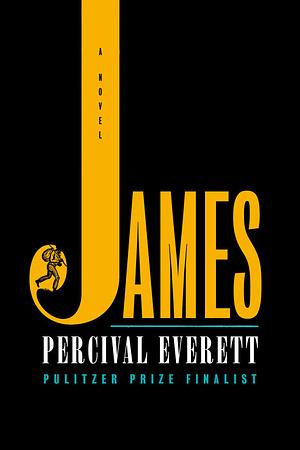
I read James for both my Booker Prize project and my Pulitzer Prize project, which it won. As most people know by now, it is a retelling of Twain’s Huckleberry Finn from the point of view of the slave Jim.

Aside from generally following the plot of the original novel about halfway, James lives in a world that is much more violent than Huck Finn ever had a clue about. Everett has taken a liberty and placed the novel in the 1860s instead of the 1830s or 40s, when the original is set. He also uses a striking conceit: when among themselves the black characters speak more correctly—and sometimes with erudition—than most of the white characters.

Jim—or James, as he prefers to be called—hears that Judge Thatcher is going to sell him away from his wife and daughter, so he escapes and hides on a small island on the Mississippi. Unfortunately for him, Huck Finn has heard that his dreaded father is in town, so he fakes his own death and runs away, ending up on the same island. James realizes right away that he will be blamed for Huck’s “death.”

The two stick together and encounter what Huck thinks of as adventures and James knows to be deadly peril. After all, a slave is lynched later in the book for being suspected of stealing the nub of a pencil from his master. That he did steal it to give to James is beside the point.

The book follows the same basic outlines as Huckleberry Finn until James gets away from the Duke and the Dauphin, but all of the situations are much more deadly. Eventually, James’s inner anger is set aflame.

Everett’s books are witty, but they are also very angry. And he has some surprises for us.

This novel is fast moving and really interesting. It shows facets of the “institution” of slavery in all its ugliness.

Related Posts

The Trees

Erasure

Incidents in the Life of a Slave Girl

Review 2610: Orbital

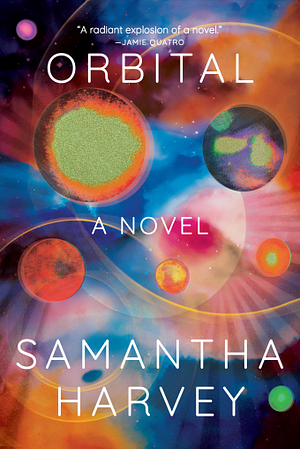
Orbital, the winner of last year’s Booker Prize, is unlike any novel I’ve ever read. I’m not even sure I would call it a novel.

It takes place over 24 hours in the International Space Station. It doesn’t have much of a plot or much characterization. It is mostly contemplative, examining the ideas Harvey imagines the astronauts might consider and making observations of her own.

There are six astronauts onboard—two Russian men, an English woman, a Japanese woman, an American man, and an Italian man. Two significant events are taking place that day outside the space station—a ship is headed to the moon and a super-typhoon is headed for the Philippines.

Pietro, the Italian astronaut, is worried about a Filipino family he and his wife befriended. Chie, the Japanese astronaut, has just heard that her mother died unexpectedly. Nell, the English astronaut, is worried about the growing distance between her own life and her husband’s in Ireland. Anton, one of the Russians, has realized he no longer loves his wife. But being so removed from the Earth simultaneously brings a love for the planet and a remove from it. The novel is about contemplation.

It is almost entirely descriptive, with very little dialogue. It is beautifully written, as it indulges in passages about the beauties of the earth.

For me, not a contemplative person, I could appreciate its qualities without being that engaged in it. That may be because I am interested in people. Miles up may be way too high for me.

Related Posts

The Western Wind

Dear Thief

Packing for Mars: The Curious Science of Life in the Void

If I Gave the Award

Having read all of the shortlisted books for the 2022 Booker Prize, I see that it is time for my feature in which I decide whether the judges got it right. For this year the choice is difficult for me because I didn’t like many of the books.

As I sometimes do, I’ll start with the book I liked least. That is Glory by NoViolet Bulawayo. Bulawayo’s intent was to explain events in the recent history of Zimbabwe, but her choice to make the characters animals did nothing for me. In fact, it made the characters flat. I also had little tolerance for all the religious and political speeches, and the book’s repetition. I did not finish this book after reading more than half of it.

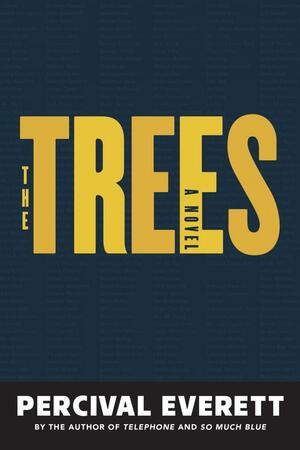
There was something strange to me also about the approach Percival Everett takes with The Trees. This novel is about the lynching of Black people that took place for centuries in the American South and in particular, the murder of Emmett Till. However, Everett makes it a mystery about some grotesque murders and creates Southern white characters who are almost caricatures of themselves. On reflection, for such a serious subject it seems to indicate an odd sense of humor.

The winner for this year was The Seven Moons of Maali Almeida, about a dead man who is trying to reveal photographs he has taken of the Sri Lankan civil war. I was very interested in the history of Sri Lanka, which is not a country I know about, but I didn’t enjoy his depiction of a grotesque afterlife. (The book reminded me a bit of the afterlife depicted in George Saunders’s Lincoln in the Bardo, although I found that book ultimately more touching.)

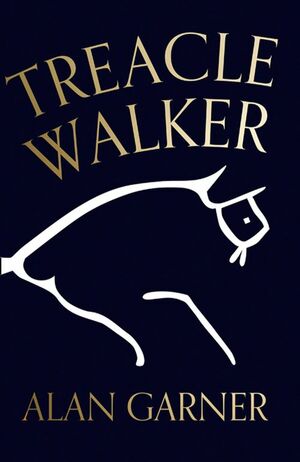
Alan Garner’s Treacle Walker is a fantasy novella about a boy left alone in an unusual world. It was interesting and imaginative, a fast read that resembled a fairy tale, but it didn’t do much for me.

I always like a book by Elizabeth Strout because of the writing and the gentleness with which she treats her characters. However, Oh, William!, about Lucy Barton’s ex-husband and his family secrets, seemed slight to me when compared to some of the other books.

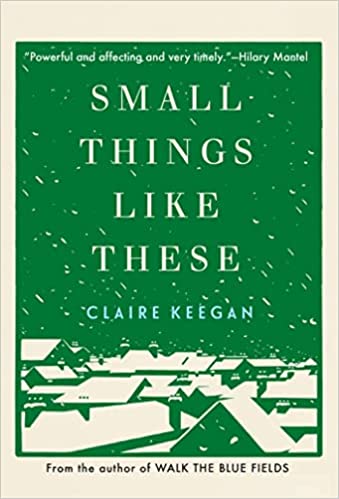
The book I enjoyed most for its writing and its theme was Small Things Like These by Claire Keegan, about the Magdalen laundries. Keegan is another excellent writer. I guess I’ll pick it for its beautiful, pared-down prose.

Review 2580: Treacle Walker

I read Treacle Walker for my Booker Prize project. It is an unusual novella that reads a bit like a fairy tale or myth.

Joseph Cappock is a young boy with a lazy eye who wears an eye patch and lives by himself. One day a rag and bone man named Treacle Walker comes to the door, and Joseph trades a pair of used pajamas and a bone for his choice of one thing in a box. He chooses a jar. Treacle Walker also gives him a stone.

When he leaves, Treacle Walker tells him to clean his front step with the stone. The stone turns the dirty step white.

Joseph finds that he sees different things with his good eye than he sees with his bad eye. One day he sees the characters in one of his favorite comic books climb out of a cel and disappear through a mirror in his room. Using the stone, Joseph finds he can go through the mirror himself.

This is an imaginative novel told in some kind of vernacular. I wasn’t always sure what was going on, but the telling was enjoyable.

Related Posts

Neverwhere

Sealskin

Under the Harrow

Review 2536: The Trees

The Trees is not a book for everyone. It is black satire, very dark, and it covers shameful events in American history that took place over centuries.

In Money, Mississippi, a dismal small town, a brutal murder occurs, or maybe two. A White man is found bound in barbed wire, his testicles removed. With him is the body of a Black man unknown to anyone in town, his hand wrapped around the testicles.

Shortly, the Black man’s body is stolen from the morgue and ends up at the scene of another murder, holding another White man’s testicles. Both White men are descendants of Granny C, an old lady who turns out to be the woman who claimed Emmett Till disrespected her, resulting in the famous lynching. Then Granny C is found dead.

And this is what the novel is about, in its sly, sometimes stereotyped (at least in the case of the White redneck characters), brutal way. It’s about the history of lynchings that continued in this country up until not that long ago (Wikipedia says, shockingly, 1981), thousands of them, mostly Black males, but also some women, as well as Chinese, Native Americans, and even one Japanese man.

The novel has a strange, sort of overdone anti-Southern humor that leads to additional gruesome scenes as two Black detectives from the Mississippi Bureau of Investigation come to investigate.

I read this novel for my Booker Prize project.

Related Posts

Chenneville

The Tilted World

The Warmth of Other Suns: The Epic Story of America’s Great Migration