Another short attempt at Book Serendipity

It’s been four months since my last Book Serendipity, and unlike Bookish Beck, I have only come up with a few more instances. Book serendipity is when the same topic or theme or something like that comes up in more than one book read around the same time, but since I am slower at catching these instances, I have expanded it to cross-media serendipity.

Here’s my only true book serendipity this time:

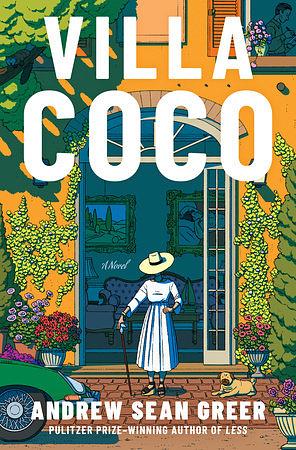
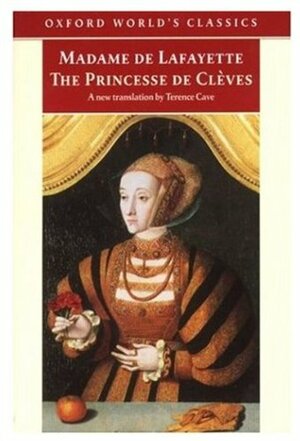
Reading about The Princess of Cleves by Madama de LaFayette in Villa Coco by Andrew Sean Greer when it is the next book on my pile.

The last two are cross-cultural and cross-media:

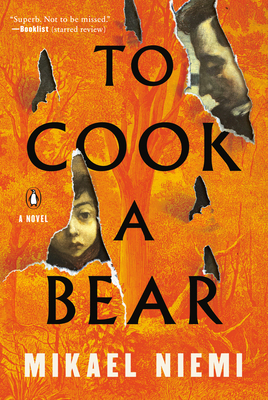
Reading a historical mystery (To Cook a Bear by Mikael Niemi) with the main character Pastor Laestidious, the founder of a religious movement in Sweden when I live in one of the two areas in the U. S. populated by many members of an obscure offshoot of that religion.

Here’s my cross-media reference:

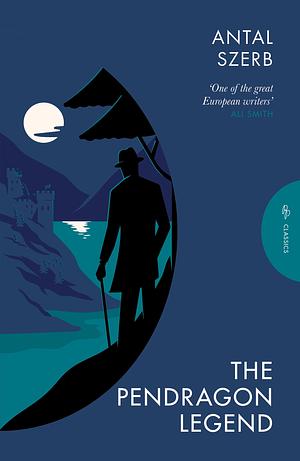
Mention of axolotls in The Pendragon Legend by Antal Szerb the day after them being an answer on Jeopardy.

Mid-Year Check-In

I’m copying Brona of This Reading Life, who got the idea from Calmgrove, and answering a few questions about my reading so far this year. I’m depending upon The Storygraph and WordPress’s Jetpack stats to help me with these stats. Here is the list of questions if you want to copy them and answer them yourself.

  1. How many books have you read so far this year?
  2. What’s your favorite book so far this year?
  3. What’s the most disappointing book you’ve read this year?
  4. What’s the most surprisingly good book you’ve read so far this year?
  5. What genre have you read most this year? 
  6. Name a new favourite author that you’ve discovered this year.
  7. What are your most anticipated end of 2026 new releases?
  8. Which post has been your most popular post (views, comments, engagement)?
  9. Which post would you like to see get more love?
  10. Is there a post, tag, meme, readalong by another blogger you’d like to highlight? Or any other bookish highlight you’d like to celebrate?

How many books have you read so far this year?

I’ve read 74 books as of Friday, July 10. That may sound like a lot, but I am behind my goal by about 10. (I have read 77 books as of today, Wednesday, but the rest of the stats are based on the Friday results, because I don’t have enough time this morning to figure everything out again.)

What’s your favorite book so far this year?

This is a tough one, even though I only have rated one book so far this year with five stars. That book is To Cook a Bear by Mikael Niemi, a mystery set in 19th century far northern Sweden. However, I just finished a book by Niall Williams, one of my favorite writers, Time of the Child, and even though I didn’t give it 5 stars, I really loved it. It is set in a small village in 1962 Ireland, and it is a sequel to This Is Happiness.

What’s the most disappointing book you’ve read so far?

Disappointing is a difficult word for me, because I usually don’t have a lot of expectations before I start reading, unless it is for a writer I really love. I purposefully don’t remind myself what a book is about or what people said about it before I start reading it. Although I have often read reviews to get it on my list in the first place, I usually don’t remember them by the time I start reading. But I have read some stinkers this year. I guess I’ll pick The Thief and the Dogs by Naguib Mafouz, which I read for the 1961 Club. I had already read his Cairo trilogy, and although I liked the first one best, I thought they were interesting. However, I really hated the characters in this novel.

What’s the most surprising good book you’ve read this year?

Surprising is also another word I’m having trouble with because of my lack of expectations. However, I did get a surprise with To Cook a Bear. The main character of this novel is a historical figure, Pastor Laestadius. It just happens that I inadvertently moved to a region that is full of people from the Old Apostolic Lutheran religion, which is an American offshoot of a Swedish sect based on his teachings. In the 19th century, members of this group were some of the original settlers in this region.

What genre have you read most this year?

Historical novels come in first this year, with a tie for second place between mysteries and literary fiction. I don’t know if The Storygraph is double-counting historical mysteries or not (answer: it is).

Name a new favorite author you’ve discovered this year

I’m interpreting this question to mean reading an author for the first time this year that I has become a favorite author. Unfortunately, almost all the books I liked best so far this year were by authors I have already read. The exception would be Mikael Niemi, mentioned above, but I have only read the one book by him, so maybe he’ll end up to be a favorite, maybe not.

What are your most anticipated end of 2026 new releases?

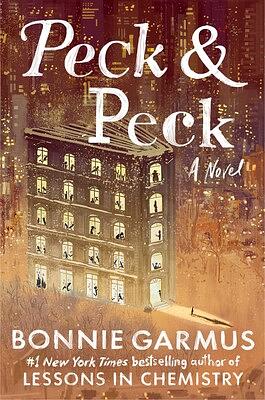
I am usually reading quite a bit behind the times, which means that I don’t really keep abreast of new releases but try to get them if they sound interesting when they come out. That being said, I already have a preorder out for Partita by Barbara Kingsolver. I’m looking forward to Country People by Daniel Mason, Agrippa by Robert Harris, Peck & Peck by Bonnie Garmus, and maybe The Radiance by Ayad Akhtar.

What post has been your most popular post?

I am depending upon Jetpack statistics for this answer, which don’t seem to be as good as the statistics I used to have on my dashboard, but they stopped working and the developers replaced them with this. It’s giving me some weird results. It says my most viewed day this year was January 8, 2026, which is a review of The Frozen People by Ellie Griffiths, but it is showing a suspiciously high number of views, about 1500. Since my usual number is more like a minimum of 150 a day up to around 300, 1500 is way out of whack. The stats also don’t allow me to limit the view for the most popular post to this year, so it is giving me a book from last year, in fact, a year and a half ago, and I don’t believe that one, either. (I also see that I have a suspiciously high number of views this year from China, Hong Kong, and Singapore, and I highly doubt that I’m that popular there, so I’m thinking, scraping.

If I look at the list of most popular posts and pages from forever, most of them are old ones. The only one I know of that was posted this year is 2026 Classics Club Questionnaire Answers, with 53 views, so that is a more likely answer to the question. However, this year my Authors page got over 1000 views. I don’t see anywhere that lists the post with the most comments, but I got 19 for my 14th Anniversary! Top Ten Books of the Year! post, so I think that’s a likely high point.
Which post would you like to see get more love?

Haha, I guess I’d like to feel that people are waiting every year “with bated breath” for my top ten.

Is there a post, tag, meme, readalong by another blogger you’d like to highlight? Or any other bookish highlight you’d like to celebrate?

I just want to say that FictionFan makes me laugh a lot, out loud.

If I Gave the Award

Since I just reviewed Western Lane, that finishes my reading of the shortlist for the 2023 Booker Prize. This means it’s time for my feature, where I decide whether the judges got it right.

Although I was indifferent to a few of the books on this list, there were two that I liked so much it will be difficult to choose between them, and this year, most of the others were very good. As I often do, I’ll lead up to the best ones. All of the books chosen this time were very well written.

The book that resonated with me the least was Study for Obedience by Sarah Bernstein. It was mostly a character study of a very particular woman, one who is completely obedient to her brother. I said I felt like I was being psychologically tortured when I read it.

Although darkly funny at times, I found If I Survive You by Jonathan Escoffery also a bit whiny. It’s about a Jamaican-American young man trying to figure out his own identity and community in Southern Florida, but he keeps making really bad decisions.

Western Lane by Chetna Maroo is about the grief of a family over the loss of their mother, which 11-year-old Gopi copes with by her success in playing squash. I found it touching and said it had floundering but sympathetic characters. So, here we are getting into more interesting territory.

I found the subject matter of This Other Eden by Paul Harding very interesting. The historical novel is based on a true event, when the State of Maine decided to evict several mixed-race families that had been living on an island since 1793. It’s no coincidence that this turn-of-the-20th-century event took place just after a Eugenics conference. Although I occasionally found Harding’s extended poetical metaphors annoying (and sometimes liked them), I found this novel to be touching. This is the first book in the shortlist that I read, way back in 2023, so unfortunately, I don’t remember it very well.

The last two novels each ended up on my Best of the Year lists in successive years that I read them. One is The Bee Sting by Paul Murray. It is a complex novel about the problems faced by a family. As it looks at the situations from each family member’s perspective in turn, family secrets are revealed. It’s hard to see from my description of this book just why I found it so good, but I was gripped from the start. I say that it is unexpectedly suspenseful in the last 50 pages and that the ending blew my mind (if only I could remember what it was).

I read Prophet Song by Paul Lynch a year earlier than The Bee Sting but remember it a little better. It’s the rare dystopian novel that I found absolutely gripping, about Ireland becoming a totalitarian state, which absolutely chimes in with current events. Prophet Song was the winner for this year. I’m thinking that for me, the choice between it and The Bee Sting is hard, as I describe both as gripping. I also say that Prophet Song has long, poetic sentences that create a sense of urgency. I guess it’s almost a tie for me between this book and The Bee Sting, but I’ll say that the judges got it right.

If I Gave the Award

With my review of Telephone, I’ve finished the shortlist for the 2021 Pulitzer Prize. Now it’s time for my feature where I decide if the judges got it right.

The Pulitzer is unusual, because there are usually only three or four books on the shortlist (although I prefer that to having lots and lots of books on the shortlist). For this year, there are three, a collection of short stories, most of them historical, a historical novel, and a contemporary novel, so they are hard to compare.

The winner was The Night Watchman by Louise Erdrich, a novel based on her grandfather’s work to save the Turtle Mountain Chippewa from being “emancipated” by the U. S. Congress (another attempt to abrogate treaties and steal land from the indigenous peoples) all the while working full-time as a night watchman. I felt that this tale was engrossing and that otherwise the novel was filled with interesting characters and subplots.

A Registry of My Passage on the Earth by Daniel Mason is a collection of short stories, many of them historical and some of them quirky, mostly about scientific curiosity or the characters’ perceived or actual potential. I liked them very much. Most of them had an optimistic tenor and felt like they were miniature historical novels.

Percival Everett’s Telephone is about a man’s obsession with helping others as an expression of his own grief over his daughter’s fatal illness. This is a novel that famously has three different versions. I was frustrated by the main character’s tendency to go rushing off on his Quixotic expeditions, trying to gain some kind of control but leaving his poor wife to deal with their dying daughter by herself.

I liked Everett’s book the least of the three but have a harder time deciding between the other two. But I guess, from the interest of its subject matter, I pick Erdrich’s novel. That means the judges got it right!

WWW Wednesday

It’s the first Wednesday of the month, so it’s time for WWW Wednesday, an idea I borrowed from David Chazan, The Chocolate Lady, who borrowed it from someone else. For this feature, I report

  • What I am reading now
  • What I just finished reading
  • What I intend to read next

This is something you can participate in, too, if you want, by leaving comments about what you’ve been reading or plan to read.

What I am reading now

Right now, I’m reading Monkey Boy by Francisco Goldman for my Pulitzer Prize project. Somewhere I read that it is nearly autofiction. I’m not familiar with Goldman’s history, but my impression is that it is entirely autofiction. So far, although well written, it is going slowly for me, as the narrator loops in and out from a present that seems to be set in the early 2000s back through his childhood and adolescence.

What I just finished reading

I thought I’d revisit a Georgette Heyer book that I haven’t read in a long time, The Great Roxhythe. It is one of Heyer’s earliest historical novels, not really a romance (maybe a bromance!), about a courtier in Charles II’s court. It reads like an early, less polished book compared to her later ones.

What I will read next

What I read next is always subject to change, but right now, it looks like it will be a book by Donal Ryan, Heart. Be at Peace. I enjoyed The Spinning Heart some years ago and always meant to get back to Ryan. Finally, I will. Also, it’s a novella, which right now is a good thing.

What are you reading now? Leave a comment and let me know!

If I Gave the Award

With my review of These Days, I’ve finished the shortlist for the 2023 Walter Scott Prize for Historical Fiction. So, it’s time for my feature in which I decide whether the judges got it right.

This time, the decision is difficult, because there are no books that stood out for me and also because it has been several years since I read some of the books. With the Walter Scott Prize, in particular, I often have to wait a while before the books become available in my library, if that ever happens. In this case, I finally was able to check out the last hold-out just recently.

Let’s start with the books I liked least. I am really not a fan of Simon Mawer. I always feel a great distance from his characters, plus I do not appreciate his apparent compulsion to mention certain female parts in every single book. This time, I found Ancestry, about his own ancestors, a little more interesting in subject matter, but I still noticed those same issues.

As for Adrian Duncan’s The Geometer Lobachevsky, about a Russian surveyor in 1950s Ireland who decides not to return to the Soviet Union, I acknowledged the book’s descriptive passages but said I felt meh about it. It doesn’t really have much of a plot but is more about day-to-day existence and the details of work.

I really didn’t like any of the characters in Robert Harris’s Act of Oblivion, about the hunt that begins after the Restoration for two men who signed the death warrant for Charles I. Harris’s recounting of brutal acts of war on both sides made me lose my usual preference for the Royalists. This book was interesting in its portrayal of the wildness of New England in the 17th century, though, as that’s where the two men go, with their pursuer behind them.

I found it hard to follow which narrator was speaking in I Am Not Your Eve by Devika Ponnanbalam. This book was about one of Paul Gauguin’s teenage Polynesian wives, not a very willing partner. Yes, I said one. Although I found some things in this book confusing and the viewpoint really foreign to me, it was more interesting to me than some of the others.

I think I liked the next two books about the same. They were both interesting and beautifully written. The Sun Walks Down by Fiona McFarlane is about a community searching for a lost boy in the 19th century Australian Outback. These Days by Lucy Caldwell is about a family caught up in the Belfast Blitz. It is the actual winner for 2023, and it’s a compelling read.

Although again, I didn’t think there were any stand-outs this year, the novel I liked best was The Chosen by Elizabeth Lowry, about the grief and guilt of Thomas Hardy after the death of his wife. Hardy has been oblivious to his wife’s unhappiness until he discovers her diary after her death.

This novel just runs better with my own interests as an admirer of Hardy’s work. So, I pick The Chosen. Nevertheless, These Days was my second-to-best choice, so the judges were at least in the ballpark.

WWW Wednesday!

It’s the first Wednesday of the month, so it’s time for WWW Wednesday, an idea I borrowed from David Chazan, The Chocolate Lady, who borrowed it from someone else. For this feature, I report

  • What I am reading now
  • What I just finished reading
  • What I intend to read next

This is something you can participate in, too, if you want, by leaving comments about what you’ve been reading or plan to read.

What I am reading now

I occasionally take a look at what Pushkin Press is offering. I’m not sure if I read about this book on someone’s blog or just found it on their lists. It’s The Pendragon Legend by Antal Szerb, a Hungarian writer, who published it originally in 1934. Although its title sounds suggestive of Arthurian legends, so far it seems to be a different Pendragon family. This novel is a spoof of English upper-class country life. Perhaps it’s part of the spoof that he would use such a name and the novel have nothing to do with what we expect!

What I just finished reading

I just finished the fifth installment of Ellis Peters’ Cadfael series, The Leper of Saint Giles. Although I have found this series interesting, I felt that this one was very familiar, the plot similar to two others in the series. It also didn’t have much of the historical background that I have been enjoying in the others. I plan to continue the series a bit farther but hope that Peters comes up with some new ideas.

What I will read next

This choice is always subject to change, but right now next in my stack is the second installment of Norah Lofts’ Suffolk Trilogy, The House at Old Vine. The first book ranged from 1401 to 1451, beginning with a serf who earns his freedom by escaping to a town and living there for a year. I see from a quick search that this next book begins in 1486.