Review 2748: Western Lane

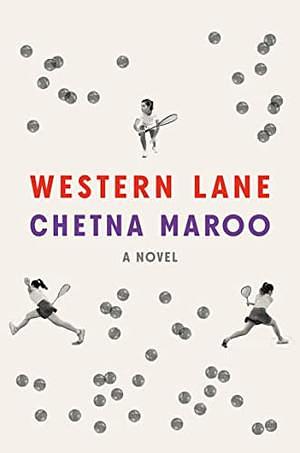
Eleven-year-old Gopi’s mother died a few months ago, and her father is finding it hard to cope with his grief and his daughters. On a visit to their aunt and uncle in Edinburgh, Aunt Ranjan remarks that the girls are running wild. Then she and Uncle Pavan suggest that he leave one of his daughters with them, since they cannot have children. Their father decides instead that they need something to occupy them, and he begins teaching them to play squash.

A lot of information about squash ensues. Gopi turns out to be good at the game, and she begins training at times with a boy named Ged.

The book deals with the girls’ grief over their mother’s death and with their father’s depression, as he begins missing work and spending most of his time at Western Lane, the exercise center. None of the girls are happy to see Papa getting closer with Ged’s mother.

This novel is full of inarticulate characters, so at times I wasn’t quite sure what was going on. But it is a touching, powerful story with floundering but sympathetic characters. The writing is fluid and vivid. I read this for my Booker Prize project.

Related Posts

Looking for Alaska

Levels of the Game

Open

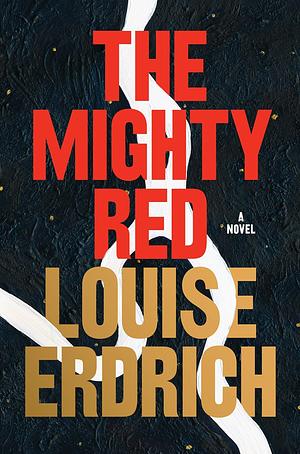
Review 2740: The Mighty Red

Louise Erdrich has written some fantastic books but also some that I didn’t like as well. Still, she is usually a good choice for something thoughtful and insightful. However, with this novel I had to have patience for the first hundred pages as it centered on a teenage love triangle, something I had zero interest in.

It’s 2008. Kismet Poe is an eighteen-year-old part-Ojibwe girl living in a farming community in North Dakota in the valley of the Red River of the North. Her mother, Crystal, is hard working and frugal, and Kismet is working as a waiter in a restaurant. Both of them are careful with money to make up for the extravagance of Martin, Kismet’s father, who brings in little money working in theater and spends most of it on expensive clothing and extravagances.

During the last year, Gary Geist, the son of Crystal’s well-off boss, has changed from making fun of Kismet to deciding he’s in love with her. They are sort of dating. Even though he was a big high-school football player and extremely popular and she was considered a geek, he’s decided he has to marry her. I found this courtship, in which he continually tries to wear her down, so wrong, especially because Gary bores Kismet.

In fact, Kismet prefers and is having sex with Hugo, whom she finds soft and comforting. But Hugo is just a kid at 16. Gary has his reasons for wanting to marry Kismet, and his mother Winnie does, too, and he finally manages to wear her down enough to sort of say yes. Then, as Winnie takes over the wedding completely, Kismet can’t find a way to get out of it.

Crystal knows she shouldn’t let Kismet marry Gary, but she’s having her own issues besides being totally exhausted. Martin has been handling the church renovation fund and doing well. But in 2008 there’s the huge downturn and the church fund starts losing money. Then Martin disappears, and Crystal learns that her house—her own house, which has been paid off—now has a mortgage fraudulently obtained and the church fund is gone.

Surrounding all of what’s going on is something that is not being discussed but has to do with an accident the year before, in which two of Gary’s posse were killed.

The book got more interesting after the wedding, but I never really was that involved with the characters. And frankly, I didn’t like either of Kismet’s love interests that much. I liked Gary’s friend Eric, who also cares about Kismet, a lot better.

The novel has themes about the treatment of the environment and the damage modern farming techniques have done to the soil. Hugo goes to work for oil frackers at one point and sees the countryside being turned into a moonscape.

I think maybe there was too much going on in this book, too many characters, too many themes, too many directions, to have it really grab me. And some of the revelations that come out at the very end of the book would have involved me more if I’d learned about them earlier.

Related Posts

The Round House

The Sentence

The Night Watchman

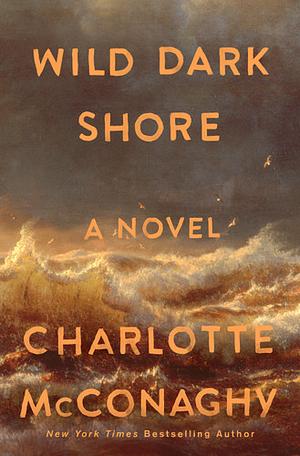
Review 2735: Wild Dark Shore

I have a fascination, at least in fiction, with islands and wild untamed places. That’s why Wild Dark Shore seemed like a great book for me.

A woman comes ashore, nearly drowned and badly injured, on a remote island south of Tasmania during a terrible storm. The island is only occupied by its caretaker, Dominic, and his three children. When she awakens, the woman, Rowan, claims she was not on the way there, but there is nowhere else she could have been going. Dominic feels she is lying. But Rowan thinks the family is hiding something.

Fairly quickly, we learn that Rowan is the wife of Hank, one of the scientists on the island. But Dominic tells her the scientists left the island, and someone wrecked all the comms (communication devices). The family and Rowan are trapped there without the ability to communicate until the next boat comes in eight weeks.

What Rowan doesn’t say is that she received a letter from Hank saying his life was in danger. Rowan can’t understand why he would have left the island without telling her.

Rowan begins to get to know and love the island, which is teeming with wildlife, and the family. There is Raffi, 18, a young man with a reading problem who plays the violin and likes to record whale songs; Fen, 17, who is fascinated by the seals and spends most of her time with them. She seems haunted, though, and won’t spend the night in the lighthouse where the family lives. Then there is Orly, a brilliant boy who loves botany but is still a nine-year-old. Dominic, a widower, still hears his wife and feels her near him.

Rowan learns that the reason the scientists left is that sea levels are rising and the seed bank on the island, an important repository of millions of seeds, is being shut down. Dominic is packing the seeds that are to be removed when the ship comes, but many will be lost. Rowan can’t understand why Hank, who was in charge of the seed bank, would have left.

This novel is terrific. It has all the things I look for in a really good book—an involving story, interesting characters, a palpable sense of setting, and a strong evocation of emotion. I loved it.

Related Posts

Pocket Atlas of Remote Islands

Wolfe Island

Island

Review 2722: If I Survive You

If I Survive You is the next-to-last book for my 2023 Booker Prize shortlist project. It is a novel of linked stories centered around Trelawny, a young man of Jamaican heritage, and his family.

This novel is about identity. First, racial identity, as Trelawny’s school friends try to fit him into the categories they’re familiar with in Miami. He looks like one of the Cuban kids but can’t speak Spanish. He’s too light to be black. And what language is his mother speaking, anyway? (It’s English.)

Then, it’s family. His parents split up when he’s still young, and his father takes his older brother, Delano. His father has always been awkward around him anyway, because Trelawny prefers reading to sports and has no friends. Much later, when he is living with his father after his mother returns to Jamaica, his father calls him “defective.”

Family is also an issue for his cousin, Cukie, whose father left when he was a child. Later, when Cukie is a teenager, his father begins to take him for the summer and he learns to catch lobster. He begins to believe he can do this for a living until he learns what kind of man his father really is.

And place is also a theme. Trelawny doesn’t feel at home in Miami, but he certainly doesn’t blend in at his midwestern college. After college, he bounces around between his father, his brother, and homelessness, but neither of his relatives seem to want him around. Then he becomes obsessed with buying the family home from his father even though it is falling apart.

This novel seems dire at times, but it is also darkly funny at times. It is probably autofiction and also slightly whiny. He certainly hasn’t grown up with any advantages except an education, but he also makes some spectacularly bad decisions.

By the way, most of the book is written in second person, but not second person addressing someone else as “you,” rather the narrator addressing himself. I got used to this, but I could see that it might be irritating.

Related Posts

Real Life

Memorial

Alligator & Other Stories

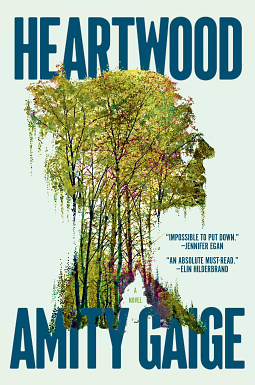
Review 2710: Heartwood

Hiker Valerie Gillis has vanished in the Maine woods while hiking the Appalachian Trail. She has failed to check in with her husband at the agreed-upon location for a few days before he reports her missing, because she has often been late. Did Valerie wander off the trail or has something else happened?

This story is narrated from the viewpoints of several characters. Valerie herself is keeping a journal that eventually reveals what happened. Lieutenant Bev Miller is the game warden in charge of the search. Santo is a black New Yorker who was Valerie’s hiking buddy on part of the trek. Finally, there is Lena, a retired wheelchair-bound scientist who sees something online that helps the search.

This novel is interesting on several fronts. Readers get to know these main characters very well and feel affection for some of them. There is a lot of detail about the wildness of the Maine forests and how searches are conducted. And the tension mounts as the search continues well beyond the usual time it takes to find someone. The book is fairly hard to put down.

Finally, it has a touching ending.

Related Posts

The Berry Pickers

This Other Eden

A Walk in the Woods

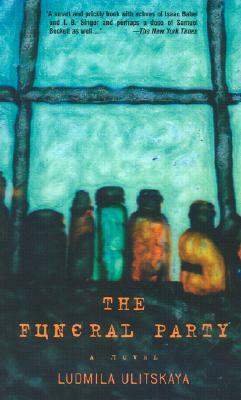
Review 2705: The Funeral Party

I don’t often get gifts of books anymore, so I was delighted to receive this novella at Christmas.

Alik, a charismatic Russian emigree artist, is dying in his New York City loft apartment. He has been overwhelmed by a mysterious complaint that has robbed him of his muscle control, limb by limb. Soon his diaphragm muscles will stop working and he’ll suffocate.

Surrounding him are his friends, people from all walks of life, from several countries, but mostly Russians. It’s 1991, a very hot summer. As Alik is dying, we learn about the people there, how they met Alik, and what he has meant to them.

Irina, Alik’s old school friend, is a circus performer turned lawyer who is suing a gallery for not returning some of Alik’s paintings after a show. Her teenage daughter has developed an immediate affinity for Alik.

Nina, Alik’s slightly dim partner, has been convinced by a healer that her cures for Alik will only work if he is baptized. Alik is an atheist, but he was raised Jewish, so he tells her he will only see the Russian Orthodox priest if he can see a rabbi, too. When they arrive at the same time, it makes for an interesting encounter.

Now I get to talk about book blurbs again, because one quote on the book calls the novel “riotously funny.” It is so not riotous that it makes me wonder about the NY Times reviewer that supposedly wrote that. I agree more with the quote from The New Yorker, which refers to its “quiet humor.”

During the novel the attempted coup against Mikhael Gorbachev takes place, and the Russians are glued to the TV. It made me wonder what they would think about the situation in Russian today.

I liked this novel, which is more about its characters than its plot. It explores some ideas about love, death, and identity while minutely observing life in a more bohemian neighborhood (Chelsea) of Manhattan.

Related Posts

The Gathering

& Sons

4321

Review 2698: Edenglassie

I’ve been on the lookout lately for books written by indigenous authors, so when I saw this book reviewed, I was intrigued. It’s set in Brisbane, Australia, in two time periods: 1840-55 and 2024.

In 2024, Eddie Blanket, an elderly Aboriginal woman, falls and injures herself in front of the Maritime Museum. In the hospital, she is treated by Doctor Johnny Newman. When he meets Eddie’s granddaughter, Winona, a feisty activist, he falls instantly in love. But to Winona, he looks too white. Though he claims to have Aboriginal ancestors, to marry her he must establish that they’re not related and also break down her prejudices.

In 1840-55, a young Aboriginal man, Mulanyin, is growing up south of Brisbane and watching its changes, with the incoming of more and more whites, in dismay. He decides he wants to own a whale boat, so he goes to work for Tom Petrie, an unusual young man from a prominent white family who seems to have spent time learning about the Aboriginal culture and learning the language. At the home of Tom’s parents, Mulanyin meets Nita, a servant of Mrs. Petrie who was rescued from traffickers as a little girl by Tom’s father. He falls in love with her.

But the couple live in difficult times, in which the Aboriginal people can be killed with impunity and massacres of whose families take place.

Although I found the subject matter of this novel interesting, especially because I know little of Australian history, I didn’t really get involved with any of these characters. It also took a long time to link the two stories, although the linkage could be partially guessed at. There was frequent use of slang Australian or maybe Aboriginal expressions and words—no glossary—and sometimes the implications of the dialogue weren’t clear to me even if I understood what was said.

That being said, I was very interested in the beliefs and mindset of the people, and I found the ending touching.

Related Posts

A Long Way from Home

The Sun Walks Down

Salt Creek

Review 2681: A Registry of My Passage upon the Earth

A Registry of My Passage upon the Earth is a collection of short stories that I read for my Pulitzer Prize project. I sometimes have problems reading short stories, but I found most of these engrossing. Most of them were about scientific curiosity and the characters’ actual or potential legacy.

“Death of the Pugilist, or the Famous Battle of Jacob Burke & Blindman McGraw” is set during the early 19th century. It is about how a burly lad becomes a prize fighter. These were the days of no-holds-barred bare-knuckle fights.

Another historical story, “The Ecstasy of Alfred Russel Wallace,” is about an early collector of bug specimens who begins to draw conclusions similar to Darwin’s about the survival of the fittest. He writes to Darwin hoping for a scholarly exchange, but perhaps Darwin is worried about which of them thought of the theory first. This one has really beautiful prose.

“For the Union Dead” is a contemporary story about the narrator’s uncle, who became involved in Civil War re-enactments.

“The Second Doctor Service” is a letter to a medical journal from a 19th century man who begins having periods of blackouts and thinks another self is trying to take him over.

“The Miraculous Discovery of Psammetichus I” is based on a story by Herodotus. It’s a series of descriptions of experiments supposedly performed by a curious Pharoah, most of which involve having children raised by animals.

“On Growing Ferns and Other Plants in Glass Cases, in the Midst of the Smoke of London” is set in the 19th century during the height of the industrial revolution and major air pollution. A widow’s young son begins suffering from severe asthma, and the doctors fail to treat it successfully. She eventually gets a better idea.

“The Line Agent Pascal” is set in the 19th century South American jungle. Pascal is a telegraph operator who likes the isolation of his position but forms a sort of family with the other operators. There is one in particular whom he has never met but for whom he feels an affinity.

“On the Cause of Winds and Waves, &c” is a letter to her sister by a 19th century balloonist in France. Observing a strange phenomenon in the heavens, she is asked to report about it to the scientific Académie, but she doesn’t realize she has only been asked to be ridiculed.

“A Registry of My Passage upon the Earth” is a record by a man who has been incarcerated in an insane asylum but is probably OCD or on the spectrum instead of insane.

Most of these stories have some kind of uplifting ending. Maybe I enjoyed them so much because many of them felt like short historical novels. I liked them a lot.

Related Posts

North Woods

Not the End of the World

The Sidmouth Letters

Review 2674: Long Island

Long Island is Colm Tóibín’s sequel to Brooklyn. Twenty years have passed, and Eilis is the mother of two nearly grown children, Rosella and Larry.

A man comes to the door one morning and tells Eilis that her husband Tony has made his wife pregnant. He tells her that he won’t have the child in his house, and when it is born, he’s bringing it to her. When Eilis talks to Tony, she says she won’t have the baby in her house. No one consults her, but she learns that her mother-in-law plans to raise the child. Eilis doesn’t want this either, because she lives in a small cul-de-sac next to the homes of her in-laws. For the last 20 years, everything has been about Tony’s Italian family, and no one has shown any curiosity about Ireland at all.

Eilis decides to fly to Ireland to see her mother and decide what to do. Her children will follow in a few weeks.

To understand what happens in Ireland, it helps to know how Brooklyn ended, so if you haven’t read it and plan to, you might want to stop here.

Twenty years before, Eilis flew back to Ireland for her sister’s funeral and stayed for the summer. She had already married Tony, but for some reason that I can’t remember, they kept it a secret. In Ireland, which Eilis didn’t want to leave in the first place, she met Jim Farrell. He was close to asking her to marry him when she fled back to New York.

Jim has remained single, but lately he has been seeing Nancy Sheridan, Eilis’s best friend, and they have decided to get married, but they are keeping it a secret until after her daughter Miriam’s wedding. Eilis returns confused about what to do about the situation at home. She wants to talk to Jim, but sees no way to do it for a while. She knows nothing about Nancy. When she finally sees Jim, the spark is still there.

I was a little frustrated with these people and their secrets, which cause all the problems. There’s Tony’s secret and the fact that he won’t discuss it with Eilis but figures the situation out with his family instead, showing just how much of an outsider Eilis is. There’s Eilis and Tony’s original secret marriage, which created the situation with Jim. Then there’s the secret engagement.

If you like your stories all settled and wrapped up in a bow, this may not be the book for you. I can handle some ambiguity, though, so I liked it very much, although maybe not as much as I liked Brooklyn.

Just as a side point, Tóibín throws in an appearance by Nora Webster from a prior book, a character I understand is based on his own mother.

Related Posts

Brooklyn

Nora Webster

The Heather Blazing

Review 2659: Study for Obedience

The unnamed narrator moves to another country, one she describes as a northern country of her family’s ancestors, to live with and be housekeeper to her recently divorced brother. She has been raised, she says, to curb her natural inclinations and be obedient. Certainly, her relationship with her brother looks more and more disturbing as the book progresses. For example, a point that comes out early on, she bathes and dresses her brother, who is not an invalid. Later, we learn that he insists she watch TV with both the sound and the subtitles off.

But how trustworthy a narrator is she? Her whole existence seems colored by a twisted view of life. For example, early on, she says that when she quit her job, her coworkers were so pleased to get rid of her that they gave her a big party. Well, isn’t that a tradition for a long-serving employee?

Her attitude is entirely negative—taking everything on herself. Despite being fluent in several languages, she is unable to learn the language of her new home. Almost immediately after her arrival, her brother departs for an unexplained reason, so she finds herself cut off, unable to make herself understood, with only a three-legged dog for company. She begins to sense that she’s being blamed for a series of agricultural disasters, as if she’s a witch. Since her Jewish ancestors were forced to leave this area during the war, she reads a lot into this.

Actually, she reads a lot into everything, tortuously examining every glance, every event. The book doesn’t really have a plot; it’s more about her exhaustive examinations of everything. If it hadn’t been so short, I would have quit reading it, because as another StoryGraph reader said, I felt like I was being psychologically tortured.

There is a turn to the book, but it just becomes more perverse. I read it for my Booker Project.

Related Posts

The Safekeep

The Weight of Ink

The Gustav Sonata