Review 2757: The Hollow

For the weekend, relatives are gathering at The Hollow, the home of Lord and Lady Angkatell. Midge Hardcastle is already there. She’s a pleasant girl who works an unpleasant job as a clerk in a dress shop rather than depend on or borrow from her relatives. As a child, she and her cousins spent their summers at Ainswick, Lucy Angkatell’s hereditary estate, but it was entailed and now belongs to another cousin, Edward Angkatell. Midge loves Edward and Ainswick, but Edward loves another cousin, Henrietta Savernake.

Henrietta has not left town for the Hollow yet, because she is working on a sculpture. Her cousin John Christow is finishing his work at his doctor’s practice before he leaves for The Hollow with his wife, Gerda. Gerda worships her husband but at the same time seems terrified of doing anything that displeases him. John is described as a person with good looks and charisma who is about to make a breakthrough on an important medical discovery. He is also having an affair with Henrietta. The other visitor that weekend is David Angkatell, a young man in the throes of university superiority.

Once they have all arrived, a neighbor thrusts her way into an evening gathering. She is Veronica Gray, a famous actress and an old fiancée of John Christow whom he hasn’t seen in 15 years. She has made the excuse of needing matches to interrupt their evening. John Christow has recently been dwelling on the time they spent together, so he sees her home and does not return until 3 AM.

In his absence, John finds that Veronica assumes he will drop everything and return with her to Hollywood, but he suddenly sees her for the grasping and selfish woman she is and refuses.

The next day, new neighbor Hercule Poirot comes over for lunch and finds what he first assumes is a tasteless tableau set up to greet him. John Christow is lying bleeding by the pool, and Gerda, who is regarded by everyone as slow, is holding a gun. At the same moment, Henrietta, Edward, and Lady Angkatell appear from different directions. John, dying, says Henrietta’s name. Henrietta attempts to take the gun from Gerda, and it is dropped into the pool.

Inspector Grange is inclined to believe that Gerda killed John, but Gerda says she found him and picked up the gun. Poirot thinks things are more complicated than they appear, and as it turns out, the gun Gerda found is not the one that killed her husband.

This is a situation with lots of undercurrents. Lucy Angkatell is outwardly warm and scatty but perhaps ruthless. Poirot begins to believe that the family knows who the murderer is.

The biggest problem I had with this novel isn’t to do with the mystery so much as the veneration everyone has for John Christow, who may have been a great doctor but was also completely selfish and oblivious to what others were feeling. Maybe Christie was drawing an accurate sketch of a particular type of person, but why are all these women in love with him?

However, the mystery was difficult. I had my eye on one character, but I was wrong. If a mystery writer can fool me, that’s all to the good. As usual, Christie’s characterization is excellent.

Related Posts

Sparkling Cyanide

Appointment with Death

The Mirror Crack’d from Side to Side

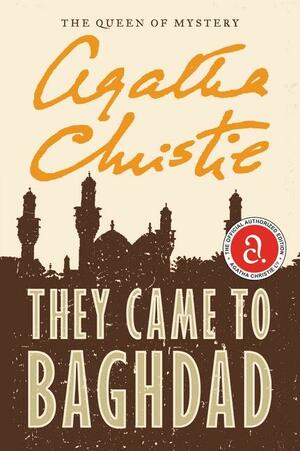
Review 2752: They Came to Baghdad

British officials are awaiting the arrival of their man Carmichael in Baghdad. He is being sought after everywhere as others try to capture him before he can pass on important information leading up to the summit meeting that includes the President of the United States and the Premier of the USSR.

But then we return to London and the activities of two women. The mysterious Anna Scheele is being followed, while Victoria Jones is being fired from her job as a stenographer/typist.

In Covent Garden Victoria meets a young man named Edward and is immediately smitten, but he says he is leaving for a job in Baghdad the next day. Victoria decides she must go to Baghdad, but she has no money. She ends up taking a job to help a woman on her way to Iraq who has broken her arm.

Once in Baghdad, Victoria realizes she doesn’t know how to find Edward. She doesn’t even know his last name. Then, in her hotel room at night, a bleeding man dressed as an Arab breaks in and asks her to hide him. She puts him behind her pillows in her bed while a policeman searches her room, but when she uncovers him, he is almost dead. He whispers some words and dies. This is Carmichael, who has made it all the way to Baghdad only to be ambushed.

Mr. Dakin, a British official, appears almost immediately but is dismayed when he learns Carmichael is dead. He is forced to explain a bit of what is going on. Since Victoria is going to a charity called The Olive Tree to find Edward, and this place seems to Dakin to be a focus of activity, he asks Victoria to keep her eyes open. He also asks her to look for evidence of Anna Scheele.

The big plot in this book is a silly one, but I found it otherwise a lot more entertaining than Christie’s other espionage-based novels. It includes exotic scenery, kidnapping, and murders, an engaging heroine, and some interesting descriptions of the area and of archaeological digs.

Related Posts

The Man in the Brown Suit

Passenger to Frankfurt

Destination Unknown

Review 2668: The Pale Horse

When an elderly priest is summoned to a woman’s deathbed, she tells him about some wickedness. We readers aren’t told what it is but that she has a list of names. When the priest leaves the deathbed to walk home, he is attacked and killed and his pockets rifled. But because he has a hole in his pocket, he put the list of names in his shoe, so it ends up in the hands of Inspector Lejeune.

Mark Easterbrooke is out one night when he witnesses an altercation between two women, one of them Tommy Tuckerton. A few days later he sees an announcement of her death. Later, a girl he knows makes a strange reference to a place called The Pale Horse, and when he visits a friend, he learns it is the name of the home of two old ladies, supposedly witches. One of them claims the other can predict who is going to die.

Mark begins to put together some odd ideas, which he discusses with Inspector Lejeune, and there he learns of the list. He can identify three names on it, all of whom are of dead people, including Tommy Tuckerton, who had been an heiress, and Lady Hesketh-Dubois, his own godmother. He begins to believe that a murder-for-hire scheme is afoot, and he enlists a friend, Ginger Corrigan, to pretend to be his ex-wife, who wishes he was dead.

This is a pretty far-fetched but entertaining story—and it was perfect for the season when I read it in October. Christie fooled me completely on the identity of the mastermind behind the plot.

Related Posts

The Secret of Chimneys

Sad Cypress

By the Pricking of My Thumbs

Review 2639: #1925Club! #RIPXX! #HYH25! The Secret of Chimneys

My second book for the 1925 Club is The Secret of Chimneys. I usually don’t enjoy Christie’s political mysteries as much, but this one is a romp. It’s got everything—a missing jewel, impersonations and secret identities, secret passages, an arch-criminal, Italian gangsters, kidnapping, and Balkan assassinations.

In Zimbabwe, Anthony Cade is leading a bunch of old ladies on a guided tour when he runs into Jimmy McGrath, an old friend. Jimmy is about to depart on a gold-mining expedition, so he asks Anthony to do two favors for him. Jimmy once saved the life of Count Stylptitch, prime minister of Herzoslavakia, and the Count had his memoirs shipped to Jimmy after his death with a promise of £1000 if he gets them to the publisher before a specific date. Jimmy offers Anthony a cut if he will take them to England for him. Jimmy also came by a collection of letters that someone has kept with the idea of blackmailing the writer. He wants to return them so that the writer, Virginia Revel, addressing the letter from Chimneys, will feel safe. Anthony takes on both tasks and returns to England, traveling under Jimmy’s name.

It turns out that lots of parties want the memoirs. England is about to help the heir to the throne of Herzoslavakia, Prince Michael, ascend to the throne after a period of anarchy. As a friend to the monarchy, England will get an important oil concession. But perhaps the memoirs say something embarrassing about Prince Michael. Anthony is approached by Baron Lolopretjzyl asking to buy them. Anthony refuses. Then he hands them on to a man who says he’s a representative of the publisher.

Next thing he knows, the Italian waiter at his hotel has stolen the packet of letters, along with the newspaper clipping he found about Virginia Revel. He goes to see her and gets to her house just after she discovers the body of the Italian waiter in her study. She explains that he had come the day before and even though she knew the letters weren’t hers, she gave him some money just to see what it would feel like and told him to come back the next day. She is due at Chimneys, so Anthony disposes of the body for her and follows her.

The reluctant Lord Caterham and his daughter Bundle, who also appear in The Seven Dials Mystery, are entertaining important political guests at Chimneys—Prince Michael and Count Lolopretjzyl; the millionaire Herman Isaacstein, who is involved in the oil deal; Mr. Fish, an American collector of books; and Virginia. Anthony arrives late at night and approaches the house only to hear a gun shot. The next morning, Prince Michael is found dead. Inspector Battle has been summoned, and Anthony recognizes the prince as the man he handed the manuscript to. Anthony’s boot prints have been found outside, so he has some explaining to do.

And in all this, I forgot about the jewel, the Koh-i-noor, which King Nicholas last had at Chimneys and hid somewhere before he returned to Herzoslavakia and was killed.

The novel has two engaging protagonists in Anthony and Virginia and is lots of fun. There are several characters in disguise, and although I guessed the identity of one of them as soon as I heard of that person, the others fooled me. I also didn’t guess at all who killed Prince Michael.

This is a ridiculously unlikely but entertaining early book by Christie. Note, though, that there are several anti-Semitic comments as unfortunately isn’t unusual for the time.

Related Posts

The Seven Dials Mystery

The Secret Adversary

Destination Unknown

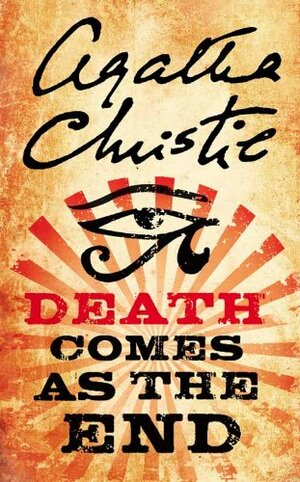
Review 2592: Death Comes As the End

I have been trying to pick off Agatha Christie’s books I haven’t read without looking to see what they are about. So, I was surprised by this one. At first, I thought maybe the ancient Egyptian setting was the introduction to a more modern mystery, but then I realized it wasn’t.

Renisenb has returned with her young daughter to her father’s house on the lower Nile, her husband having died. At first, it seems as if everything is the same. Her father, Imhotep, a property owner and priest, is still watchful of his own authority and eager to have control of everything. Her oldest brother, Yahmose, is still dutiful and careful of Imhotep’s interests—his wife Satipy thinks too much so and nags him to be more assertive. Satipy argues with her sister-in-law Kait over precedence one moment, and they giggle together the next. Kait’s husband Sobek, the younger brother, is still full of big ideas and wasteful of his father’s money. Renisenb’s orphaned nephew Ipy is still young but disrespectful and spoiled by Imhotep. Esa, the grandmother, is frail but sharp.

Renisenb still cannot bring herself to like Henet, the servile but sneaking servant, and she still feels comfortable with Hori, her father’s main scribe. However, when she tells Hori that everything is still the same, he warns her that it is not.

Imhotep goes off on a business trip, and when he comes back he has brought two people—a young concubine named Nofret and a secondary scribe named Kamini, who claims some relationship to the family. It becomes clear that Nofret is malicious and means to make trouble. Almost immediately, she has problems with the two sisters-in-law. Renisenb tries to be friendly to her but feels she dislikes her.

Nofret begins to succeed in dividing Imhotep from his two sons. Imhotep, angry about an incident, threatens to send the sons and their families away. The next thing they know, Nofret is dead, having fallen from the cliff path that goes to the tomb Imhotep is responsible for keeping.

The two sisters-in-law suddenly change behavior. Satipy, formerly shrewish, becomes timid and withdrawn. Kait becomes more forceful. Renisenb and Hori wonder if Nofret’s death was an accident.

The next event seems clearly not an accident. The two brothers are poisoned after drinking some wine. Sobek, having drunk more, dies.

Renisenb, Esa, and Hori get together to try to figure out who the murderer is, but there are more evil events to come.

Christie doesn’t offer many hints to figure out the murderer, and I didn’t guess the solution. However, I also didn’t find this novel as interesting as some of the others. Perhaps Christie was trying a change of pace or just wanting to write something that reflected what she learned on her archaeological digs. Still, it worked almost wholly on an understanding of the characters rather than any real clues.

Related Posts

Death on the Nile

Alexandria

Cleopatra: A Life

Review 2569: #1952Club! Mrs. McGinty’s Dead

It’s time for the 1952 Club, for which participants review books written in 1952 on the same week. What would a year club set between the 1930s and the 1960s be without an Agatha Christie? So, this book became one of my choices for the 1952 Club, especially good because I hadn’t read it before.

However, first, as usual, I have a list of the books I’ve reviewed previously that were written in 1952:

And now for my review.

Hercule Poirot is retired, and the days are passing slowly. So, he is happy to look into a case for an old acquaintance, Inspector Spence. An old cleaning lady was apparently murdered for her savings by her lodger. All the evidence points that way, and the lodger was found guilty. But Inspector Spence isn’t satisfied that he did it, and there is little time to investigate before he is hung.

So, Poirot journeys to a small village—only four houses and a post office. He meets a few people and seems to be getting nowhere when a chance remark gives him an idea. Mrs. McGinty had purchased ink at the post office, which meant she intended to write a letter, and she was so unaccustomed to writing letters that she had no ink. Who was she writing to?

Going back to look through some of her things, he finds a newspaper with an article ripped out. When he finds the paper at the archive, he sees the article is a “Where are they now?” piece about females connected with four infamous crimes, with old photos from 20 years before. He reckons that Mrs. McGinty, in her work as a cleaner, saw one of those photos at the home of a regular client. Someone in the village has a relationship with one of those women, but what kind of relationship? The field broadens as he considers. Is it the woman herself? A relative or spouse? With the range in age of the original females, the woman could now be anywhere from her 30s to her 50s.

And that was the problem. There are too many people in this book, many of them suspects, and Christie didn’t do her usual job of making them instantly specific. I couldn’t keep track of them by their names. The only distinctive villager at first is Maureen Summerhayes, Poirot’s incompetent hostess, who can’t cook and is completely disorganized, but I soon thought of her as Maureen, so that by the time there was a reference to Mr. Summerhayes, I had forgotten he was Maureen’s husband.

Fairly early on, Poirot meets his old friend the author, Ariadne Oliver. She is staying with the playwright Robin Upward while they try to adapt one of her books for the theater. Mrs. Upward is another of Mrs. McGinty’s clients, and thus a suspect.

I never thought of the murderer as a suspect, but I also felt I wasn’t given much of a reason to. I just didn’t think this was one of Christie’s best.

I was also struck by how little any of Mrs. McGinty’s clients cared that she was dead. There’s some real classism going on here (including the idea that she had to buy ink because she never wrote any letters; even if it happened to be true; anyone might have to buy ink).

Related Posts

The Mirror Crack’d from Side to Side

Sparkling Cyanide

Sad Cypress

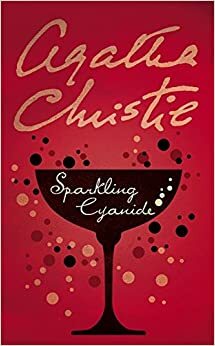
Review 2529: Sparkling Cyanide

This novel begins in an unusual way for Christie, with sections on six people, each of whom had a motive to kill Rosemary Barton. There’s her younger sister, Iris Marie, who would inherit a fortune. There’s her husband George’s secretary, Ruth Lansing, who would like to take her place. There’s Anthony Browne, whose secret Rosemary has discovered, that he is really Tony Morelli. There’s Stephen Faraday, whose career as a policeman will be finished if his wife learns of his affair with Rosemary. There’s Sandra Faraday, who already knows about the affair. Finally, there’s her husband, George Barton, who also knows about the affair. Almost a year ago, these six were together at a party when Rosemary suddenly died from cyanide poisoning.

Rosemary’s death was ruled a suicide. Now, nearly a year later, someone has mailed George letters saying that Rosemary was murdered, so George decides to set a trap by reconvening the same people at the same table. But first, he asks in his friend, Colonel Race. Race things it’s a foolish idea, and it is—for George dies that night, also poisoned.

Colonel Race teams up with Inspector Kemp to try to figure out what happened. Was Rosemary poisoned? Who wrote the letters? How could anyone have poisoned George without touching his drink?

I don’t think the approach used in this novel was very successful. The writing seemed oddly static. It is only when we leave the character bios that the novel snaps back to life, with Christie’s usual clever dialogue and interesting action. Then, it’s quite good and makes you forget the first part.

Related Posts

The Mirror Crack’d from Side to Side
The Man in the Brown Suit

Death on the Nile

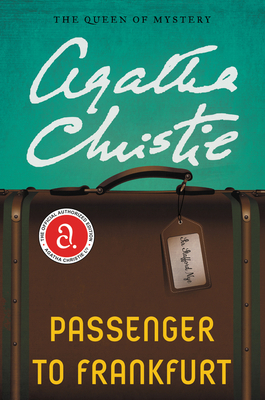
Review 2490: #1970Club AND RIPXIX! Passenger to Frankfurt

Usually, when an Agatha Christie books pops up as a possibility for the biyearly club reads, I am happy to choose it, especially if I haven’t read it before. This year, in looking for books for the 1970 Club (and also for #RIPXIX), I saw Passenger to Frankfurt, one of Christie’s stand-alone espionage novels. Unfortunately, it was not one of her best.

Sir Stafford Nye is a young mid-level diplomat often distrusted by his peers because of eccentric dress and a certain sarcastic sense of humor. He is returning from a trip to Malaya when his plane, bound for Geneva, is rerouted to Frankfurt and thence to London.

In the Frankfurt airport lounge, he is approached by a young woman asking him for help. She tells him that if the plane had landed in Geneva, she would be safe, but since it is going to London, she’ll be killed. She bears a certain resemblance to him. She asks if he will leave the burnoose he’s been wearing with his passport in it and allow himself to be drugged. She will cut her hair and use his passport, and he will wake up long after the plane has landed in London and claim he was robbed. And he agrees.

Back in London, he places an ad hoping to meet her and she ends up sitting next to him during a concert. He is carefully brought into a mission—one that she is already working—by some government officials who are alarmed about a plot that is rousing the youth worldwide to violence and anarchy. Nye travels with the girl, who has many names but might be Countess Renata Zerkowski, to view a Hitler-like rally headed by a young man referred to as the Young Siegfried. He is just a figurehead, but the officials want to find out who is in charge.

The plot of this novel is so ridiculous that I barely had any patience with it. But worse, there is hardly any action, just a bunch of meetings. Once Nye is recruited, we see him traveling with Renata and then he disappears about 2/3 of the way through, only to reappear at the end. The only real action takes place in one page at the end of the novel. This one is pretty much a stinker. The only interesting character is Nye’s elderly aunt, Lady Matilda Cleckheaton.

Related Posts

Destination Unknown

The Man in the Brown Suit

N or M?

Review 2461: Agatha Christie: An Elusive Woman

I usually take much longer to read a work of nonfiction vs. fiction—up to a week as opposed to two or three days—but such was the power and readability of historian Lucy Worsley’s prose that I was astonished to finish this book one day after I started it. Of course, many people may want to know about the days Christie was missing, and she deals with that, but there is much more.

Christie lived an interesting life, and Worsley tells us about it, from the pampered, loved child of wealthy parents, to the loss of her father and the family fortune when she was 11, the World War I nursing and dispensary work, the ill-planned marriage to Archie Christie, and so on. Worsley’s main message is that Christie understood people to hide their actual selves and she presented her own masks, as well as evolved during her life into different personas. That was why she presented as shy when she had a lot of self-confidence, why she said little about her disappearance, why she told everyone she was a housewife rather than an author, and so on.

I’m fairly sure I have already read a biography of Christie, but this one was much more interesting. It is written in a lively style but looks thoughtfully at some of the problems posed by other writer’s remarks, and is thoroughly documented.

Related Posts

Agatha: The Real Life of Agatha Christie

Jane Austen at Home

The Secret Rooms

Review 2451: Endless Night

Mike Rogers is a wanderer who moves from job to job, never seeming to amount to much. But he has a taste for finer things. One thing he wants is to have an architect he’s met build a house at Gipsys’s Acres, but even though the property is going cheap because of the curse on it, he can’t afford it.

He goes up to look at the property one day and meets Ellie Guteman. She is a young, wealthy heiress who has slipped her leash from trustees who keep her so protected that she never has any fun. With the help of her companion, Greta, she contiues to see Mike, and they daydream about buying Gipsy’s Acres and building their dream house. Eventually, they decide to get married on the day she turns 21. (Here’s some book serendipity, a concept coined by Bookish Beck, two books within a week that have houses being built that may turn out to be haunted. The other is The House Next Door.)

All goes well until they move into Gipsy’s Acres. Ellie keeps meeting Mrs. Lee, an old gypsy woman who warns her of danger. Someone throws a stone through the window. Even though Ellie’s relatives are American, they show up for visits, and they are not very nice. And Ellie has offered Greta a place to live. Lots of people seem not to like Greta, including Mike.

The novel is narrated by Mike, who seems disarmingly straightforward. However, there is a lot going on under the surface, and Mike is an unreliable narrator.

Although I guessed what was going on fairly early, that didn’t ruin my appreciation of how Christie slowly builds suspense. Then, at the very end, the novel took a turn I didn’t expect. Note that gypsies don’t fare well in the comments of characters.

Related Posts

They Do It with Mirrors

Taken at the Flood

Murder at the Vicarage