Review 2743: These Days

These Days is the last book I had to read for the 2023 Walter Scott prize shortlist, and boy, it made me feel uninformed. Of course, I knew about the bombing of England during World War II, but I had no idea that Belfast suffered similar bombings. But of course, I realized, that’s where they built the ships.

The book blurb makes it sound like this book is only about two sisters, Emma and Audrey, but it also spends time with their mother Florence and their younger brother Philip. Audrey is engaged to be married, to Richard Graham, a doctor who works at the hospital with her doctor father. Emma has volunteered to serve in a first aid station. Florence has been somewhat detached as a wife and mother, still grieving her first love, who died during World War I. Philip is just being 13.

It’s April 1941, and so far, things have been quiet. Emma has befriended an older woman named Sylvia, and they fall into an affair. For her part, Audrey doesn’t seem particularly excited about Richard or being married, more like she’s trying to convince herself.

Then one night when Richard and Audrey are at a dance, the attack comes full force. Richard has to go to the hospital, so Audrey finds herself in a shelter all night. Emma has been with Sylvia and has just turned back toward the first aid station when she is knocked unconscious by a blast. Florence and Philip spend the night huddled in a shelter.

The devastation is terrific. Whole neighborhoods are gone and hundreds of people are injured, killed, or missing. And this is the first of four major attacks.

This was certainly an eye-opening book for me. We have long associated Belfast with sectarian violence, but there was none of that in this novel, just a common fear of the Belfast Blitz. Earlier in the book, a transfer to Audrey’s job from England remarks at how much easier it is there to get decent food and goods. Well, that changes.
Related Posts

The Secret Guests

A Chelsea Concerto

Spam Tomorrow

Review 2742: Precipice

It’s the eve of the First World War, and Venetia Stanley (sharing the name of her famous ancestor, subject of the novel Viper Wine) is having an affair with Prime Minister Asquith, more than twice her age. Perhaps it’s not a sexual affair, but it is certainly an emotional one. Asquith is known for his relationships with young women, but this one seems to be more serious.

In an incident that seems unrelated to the rest of the novel for a while, Venetia decides to meet Asquith at a party instead of going on a pleasure cruise with the set she hangs out with. During the cruise, two young men drown as part of a bet. The investigation brings in the character Detective Sergeant Paul Deemer, who notices Venetia’s name on the guest list and calls on her to take her statement.

Periodically, we check in on Deemer as he is recruited into Intelligence after the war starts, his job to find German spies. But most of the time, the book follows the relationship between Venetia and Asquith, leaving me wondering when and how the characters would link up.

Asquith’s behavior is frankly shocking, especially during war. Riding around in his limo with Venetia, he shows her a confidential message and then wads it up and throws it out the window. He encloses confidential and even secret telegrams in his letters to her and asks her opinion. Some of these actions make her uncomfortable, and she doesn’t know what to do with his letters, locking them in a box. He writes her several times a day.

The stories finally begin to link up when Deemer is assigned to find out about several messages turned in by the public. The conclusions of the initial investigation end with Deemer assigned to intercept Venetia’s correspondence.

This is not the taut thriller that Harris often produces. I found it interesting but got a little tired of reading especially Asquith’s letters, which are cringingly romantic. As the affair continues, Asquith writes Venetia letters during cabinet meetings and seems more obsessed by her than concerned about the war. Venetia in turn begins trying to find a way to escape the relationship.

I had very little sympathy with him, although I began slowly to sympathize with Venetia. It was interesting to learn about politics of this period and this odd relationship, but this wasn’t one of my favorite Harris novels.

Related Posts

Munich

V2

Viper Wine

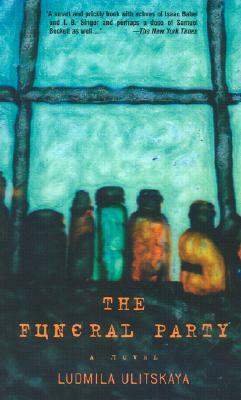
Review 2705: The Funeral Party

I don’t often get gifts of books anymore, so I was delighted to receive this novella at Christmas.

Alik, a charismatic Russian emigree artist, is dying in his New York City loft apartment. He has been overwhelmed by a mysterious complaint that has robbed him of his muscle control, limb by limb. Soon his diaphragm muscles will stop working and he’ll suffocate.

Surrounding him are his friends, people from all walks of life, from several countries, but mostly Russians. It’s 1991, a very hot summer. As Alik is dying, we learn about the people there, how they met Alik, and what he has meant to them.

Irina, Alik’s old school friend, is a circus performer turned lawyer who is suing a gallery for not returning some of Alik’s paintings after a show. Her teenage daughter has developed an immediate affinity for Alik.

Nina, Alik’s slightly dim partner, has been convinced by a healer that her cures for Alik will only work if he is baptized. Alik is an atheist, but he was raised Jewish, so he tells her he will only see the Russian Orthodox priest if he can see a rabbi, too. When they arrive at the same time, it makes for an interesting encounter.

Now I get to talk about book blurbs again, because one quote on the book calls the novel “riotously funny.” It is so not riotous that it makes me wonder about the NY Times reviewer that supposedly wrote that. I agree more with the quote from The New Yorker, which refers to its “quiet humor.”

During the novel the attempted coup against Mikhael Gorbachev takes place, and the Russians are glued to the TV. It made me wonder what they would think about the situation in Russian today.

I liked this novel, which is more about its characters than its plot. It explores some ideas about love, death, and identity while minutely observing life in a more bohemian neighborhood (Chelsea) of Manhattan.

Related Posts

The Gathering

& Sons

4321

Review 2697: Literary Wives! Mrs. Bridge

Today is another review for the Literary Wives blogging club, in which we discuss the depiction of wives in fiction. If you have read the book, please participate by leaving comments on any of our blogs.

Be sure to read the reviews and comments of the other wives!

We’re also welcoming a new member to our club, although she just joined, so she may not be reviewing today’s book. Our new member is Marianne of Let’s Read! You can see her bio on my Literary Wives page (link above).

My Review

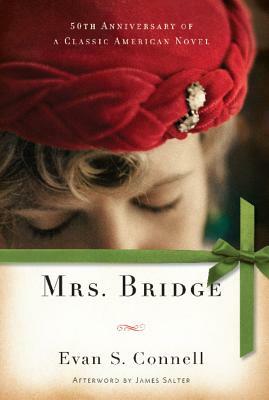
For its time, Mrs. Bridge was an unusual novel, especially in its structure. It is narrated in short chunks or chapters, 117 of them and most no longer than a page. Most of them document seemingly trivial incidents, but all together, they create a detailed picture of the characters and their relationships. Nothing much seems to happen except the conduct of a certain kind of life.

Mrs. Bridge marries and moves to Kansas City. Her husband is determined to provide well for his family, and the result is that he is always working, hardly ever at home. He is successful. Soon, Mrs. Bridge is a society matron with three children, a woman very conventional and concerned with appearances and “proper” behavior, not one to face ugliness. She has servants and not much to do.

Two of her three children react against her overconcern with propriety and perhaps her lack of a sense of humor. She constantly picks on her son Doug for basically being a boy—being unconcerned with his appearance and not very worried about any of her corrections. Her oldest daughter, Ruth, just goes her own way.

Mrs. Bridge has occasionally had intentions to read more or learn Spanish or take painting lessons—improve herself—but aside from buying the tools, nothing much comes of this. Eventually she faces middle age and an empty nest and wonders what has happened to her life.

I grew up 20 to 30 years later than this novel, but I remember this same kind of life for suburban matrons, even with housework and children and no servants—the lack of mental stimulation and a feeling of lack of purpose. I found this novel sad but interesting.

What does this book say about wives or about the experience of being a wife?

Literary Wives logo

Most of the information about Mrs. Bridge’s marriage is implied, since we see so little of Mr. Bridge. He is definitely in charge of the family. Mrs. Bridge does everything he tells her to, including placing her vote. Yet she seems to feel that her role is to correct the children constantly over minor things—many of which would never bother Mr. Bridge. He often seems stern, yet he seems to have a better relationship with the children than she does, and we have indications that he cares about her, only his way to show it is to buy her things. A few times she shows a sexual longing that he doesn’t seem to return. Not much affection is shown, but I believe it is felt. Whether it’s stronger than that as time goes on is not clear. Basically, the two have defined roles and they keep to them without much questioning.

Really, you have to feel sorry for Mrs. Bridge, who seems to feel vaguely that she is leading a sterile life, but it’s what everyone else of that social stratum is doing, too.

Related Posts

The Home-Maker

The Bell Jar

Gilead

Review 2687: The Empusium: A Health Resort Horror Story

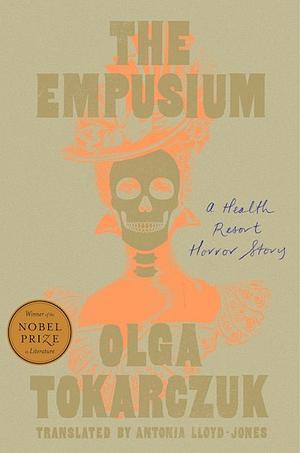
In terms of the horror story it’s labeled as, The Empusium may end like one, but it spends more time building up to its climax than on the horrible part. Or maybe horror is the attitudes toward women expressed by the men.

Mieczyslaw Woznicz is a very young Polish engineering student who arrives in a remote mountainous town in Silesia for treatment for tuberculosis in the early 20th century. He is staying in the guesthouse for gentlemen until he gets a place in the sanatorium. The guesthouse is run by Willi Opitz and his wife, but his wife dies almost immediately on Woznicz’s arrival.

I don’t know if it’s helpful from the beginning to understand what empusa are or not. I had to look it up. but from the beginning we are occasionally reminded that someone is watching everything. Still, this is something I tended to forget.

A lot of the novel deals with Woznicz’s sense of unfitness and inferiority, which has been enforced by his father’s constant expression of disappointment in him. But we also get to read lots of philosophical discussions among the men, which always end in misogyny.

Occasionally, readers are told a lot of bizarre folklore or visit some unusual site in the forest, and these incidents are leading up an annual fall event. Woznicz feels he has a shameful secret, but he’s going to learn more about himself by the end of the novel.

Tokarczuk is a writer whose books are totally different from each other. This one isn’t my favorite, but it is atmospheric and full of irony. It is said to share some characteristics, including plot points, with The Magic Mountain by Thomas Mann, a book I haven’t read.

Related Posts

Drive Your Plow Over the Bones of the Dead

Flights

The Books of Jacob

Review 2671: The Hazelbourne Ladies Motorcycle and Flying Club

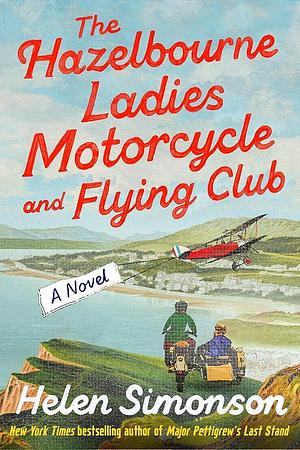
Constance Haverhill has an uncertain future post-World War I. She and her mother helped out her mother’s school friend, Lady Mercer, for years, and she took them in after the death of Constance’s father, a farmer. However, now that her mother has died, Lady Mercer has made it clear there is no place for her. She is giving her the summer as a companion to her mother, Mrs. Fog, who is recovering from serious illness at a seaside resort. A problem is that, with the end of the war, young men are returning to the work force, so young women are losing their jobs.

In the lobby of the hotel, Constance encounters Poppy Wirral, who runs her own business transporting people around the seaside town in the sidecars of motorcycles. She has ridden there to meet her mother, Lady Wirral, for lunch, but she has forgotten to bring proper dress. Constance ends up lending her a skirt, and Poppy invites her to lunch with her mother and brother, Harris, an ex-RAF pilot who lost a leg in the war.

It’s obvious from the beginning where the relationship between Constance and Harris will go, although there are impediments. Most of the novel is about the remaining effects of the war, particularly upon women and disabled soldiers. Harris, for example, tries to get work as a flight instructor and failing that, a promised job in his late father’s bank, but everyone just assumes he can take up the job of running his estate. But the estate needs money. Poppy has been employing only women motorcyclists in her transport business, but then she is told that a new law by the labor board will require her to employ only men. Constance, although she ran the Mercer estate during the war, faces sex discrimination and worse when she tries to find a job as an accountant or bookkeeper.

Of course, the problem with all this is the predictable romantic finish. It’s all very well to write a book protesting the problems of women trying to make a living, but that message is undercut somewhat when the heroine’s problems are all going to be solved by marriage. (I don’t think this is going to be a surprise for anyone, so I didn’t warn about spoilers.) I commented on this same thought in a recent review of a contemporary novel from the same period.

Another theme is snobbishness and racism, as embodied by Lady Mercer and her daughter’s fiancé, an American named Percival Allerton. It was actually hard for me to imagine that a man in the diplomatic services would behave the way he does. Part of this theme involves Mrs. Fog’s reunion with old school friends, Mathilde de Champney and her brother Simon. Mrs. Fog’s family has repeatedly separated her from them, as they are of mixed blood.

Another thread in this theme concerns Mr. Pendra, an Indian representative of one of the states of India, whom Constance and the Wirrals befriend.

My final criticism hints around at a spoiler. Harris’s and Constance’s insipient romance is disturbed by the intervention of a spiteful character. However, this problem is resolved in about two pages, and then (spoiler, really!) Constance gets to run into his arms for that blissful finish. Only if it was me, after what happened, he’d have a lot more ‘splainin’ to do.

Related Posts

The Summer before the War

Major Pettigrew’s Last Stand

The Lie

Review 2651: #NovNov25! The Buddha in the Attic

This is an unusual little book, which I read for Novellas in November. It is based on the experiences of Japanese women brought to California as brides in the early 20th century. It doesn’t have any detailed characters but instead treats the women as a disparate group and is written in first person plural.

The girls and women have never met their husbands. They have apparently been married by proxy and have letters from and photos of their husbands. But when their ship arrives, they don’t recognize them. Their husbands are twenty years older than their photos, and they are common laborers, not the bankers and professional men the women are expecting. The women have been brought there not to improve themselves but to provide sex and hard labor.

The novel follows the women in their many paths until World War II and the internment of almost all the West Coast Japanese residents. Somehow, despite its lack of distinct characters and plot, it builds. It makes you sympathize with the hard lives of these characters. It’s powerful.

Related Posts

Bread Givers

The Year of the Runaways

Silence

Review 2605: Absolutely & Forever

I have been on the fence about or even disliked some of Rose Tremain’s books, so I wasn’t really looking forward to reading Absolutely & Forever for my Walter Scott Prize Project. I especially wasn’t because I’m not that fond of coming-of-age novels in general. However, I found this little novella to be truly touching and insightful about human emotions. And the coming-of-age part is only the beginning.

It’s the late 1950s and Marianne is 15 years old. She has been in love with beautiful 18-year-old Simon Hurst for some time, and he finally pays attention to her the night of a friend’s party. He has just been given a new Morris Minor car, so he takes her for a ride and they have sex. Marianne says she will love him absolutely and forever.

I thought I knew where this was going, but it wasn’t. Simon and Marianne go off to their respective schools and plan to get married when they are older.

However, Simon fails his Oxford exam. Everyone is shocked, and the next thing Marianne knows, he has moved to Paris to be a writer. Marianne tries to buckle down to her French so that she can move there as soon as possible, but she is clearly not good at studying. Her parents tell her they are certainly not going to allow her to visit Simon in Paris when she is only 15.

Simon’s letters eventually fall off, and in the last one she gets the bad news. Simon has gotten his landlady’s daughter pregnant and married her.

The novella follows Marianne as she grows into womanhood, works at some jobs but seems to have little purpose in life. She marries her good friend Hugo (who I felt was a much better person than Simon). But she continues to love Simon.

The heart wants what it wants is the theme of this touching novel. And it tells the story beautifully, narrated by the distinctive voice of Marianne.

The book blurb hints at some secret, and it’s not very hard to guess. But that’s not the point. I found this book to be wise and deeply touching.

Related Posts

The Gustav Sonata

Merivel: A Man of His Time

Lessons in Chemistry

Review 2596: The Chosen

The Chosen, which I read for my Walter Scott project, is about the weeks after the death of Thomas Hardy’s wife, Emma, and also about the writing of Tess of the D’Urbervilles. Hardy is working in his study when the maid comes to ask him to go to Emma. Although she indicates there is some urgency, Hardy is oblivious and continues working for a while before going up to his wife’s rooms in the attic. When he arrives there, she is dead.

The aging Hardy plunges into guilt that is made worse when, a few days later, he finds her diaries, in which he reads that Emma was deeply unhappy in their marriage. As he reads the diaries, he relives his own memories of the same days, realizing he had no idea of how aloof he seemed to her and how oblivious.

This is not really a novel of plot but more of feelings and realizations. Lowry explains at the end of the novel that Hardy burned the diaries soon after he found them, but she did quote from Hardy’s work and from letters. Emma’s death apparently spurred a collection of poems.

Waiting in the wings is Hardy’s secretary, Florence Dugdale, who seems to expect to take Emma’s place (and eventually did). She cannot understand why, after telling her so many times how unhappy he was, Hardy can now only talk about Emma.

For Hardy fans, especially, this is an insightful and beautifully written novel. It makes me wish I had known more about Hardy’s life before I read Maugham’s Cakes and Ale and this book. Although I read Claire Tomalin’s biography, it was so long ago that I don’t remember what it said about his home life (although I said it was interesting in my review).

Related Posts

Cakes and Ale

Tess of the D’Urbervilles

Thomas Hardy

Review 2577: The Unfinished Clue

Georgette Heyer can write such likable characters, and I remember that for the first Heyer mystery I read, it was obvious who the murderer was because the person was the only character in the book, besides the victim, that I didn’t like. It didn’t matter, because it was fun to read anyway.

She isn’t so obvious about it in The Unfinished Clue, because there are several characters to dislike or feel neutral about. In fact, the title is more of a giveaway than the characters’ behavior, because it tells you what to focus on. If you can guess what it means, though, you get a gold star.

Dinah Fawcett arrives at her sister’s house to be met with an enraged brother-in-law. General Arthur Billington-Smith is often enraged, and he takes it out on his fragile second wife, Fay. This time, his son, Geoffrey, has become engaged and is bringing home his fiancée Lola de Silva, a cabaret dancer.

The house party consists of these people plus Arthur’s nephew, Captain Francis Billington-Smith, who wants a loan; Camilla Halliday, an attractive young woman who is letting Arthur take liberties in the hope of a generous gift; her jealous husband Basil; and Stephen Guest, a friend who is in love with Fay. Geoffrey turns out to be kind of a wimp and an idiot, and Lola completely self-absorbed.

Arthur rages throughout the weekend, which culminates in a stormy Monday morning. He tells Geoffrey he will cut him off if he marries Lola. Geoffrey goes to Lola vowing eternal love, and she tells him of course she can’t marry him if he doesn’t have any money. He storms off. Fay is lying down from a headache. There is a short visit by Mrs. Chudleigh, the vicar’s wife. Then Mrs. Twinings arrives, an old friend, to try to get Arthur to treat Geoffrey better, and she finds Arthur dead in his office, stabbed in the neck with a dagger from his desk. The crime boils down to where everyone was between 12:30 and 1. Only Dinah, who was on the terrace the whole time, has an alibi.

In most of Heyer’s mysteries, her detective team is Hannasyde and Hemingway, but in this novel the detective is Inspector Hardy. She hasn’t thought up Hannasyde and Heminway yet, I don’t think, but there’s another good reason why this book is different.

I was completely fooled by this mystery. I had some idea of the motive but was mistaken about the identity of the killer.

Georgette Heyer is just as gifted as Christie in creating vivid characters, and her mysteries tend to be a bit funny. In this case, Lola is a hoot. I had lots of fun reading this to take a break from A Century of Books.

Related Posts

Behold, Here’s Poison

A Christmas Party (Envious Casca)

They Found Him Dead