
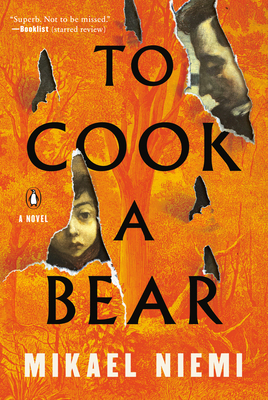
Before I start my review, I want to mention a strange coincidence. The main character in this book is Pastor Laestadius, important to a historical religious revival in far northern Sweden and Finland, Sami territory. I thought the name sounded familiar, but it wasn’t his name I googled but “Old Apostolic Lutheran Church.” What I read was, “The Old Apostolic Lutheran Church of America is a Firstborn Laestadian-Evangelical Church in America.” Now, the reason I googled this topic is because when we moved to Southwestern Washington, we accidentally moved into one of two areas of the country that has lots of Old Apostolic Lutherans. In a mainly rural county that has mostly small churches, they have four large ones. Some coincidence, huh?
Enough of that.
Jussi is the narrator for most of the novel. He is a Sami young man whom Pastor Laestadius rescued from poverty and a wandering life as a boy and taught to read and write. He is devoted to the Pastor, but he is very shy and seldom speaks. He is in love with a girl named Maria but never speaks to her.
In this area of far northern Sweden, there is a strong social division in 1852. The better off speak Swedish while the common people speak Finnish. The Pastor is a leader in a return to a stricter religion, and he has been receiving complaints from the more prosperous parishioners because the poor ones tend to fall into exaltation during his sermons, which the more prosperous think is unseemly.
Jussi himself believes that by teaching him to read and write, the Pastor brought him into existence, but he has had a brutal childhood and struggles sometimes with the Pastor’s teachings.
Then a girl is found dead, mutilated. The Pastor is a botanist and is very observant. Although Sheriff Brahe insists the girl was mauled by a bear, the Pastor observes signs that she was raped and murdered and that the killer used a knife to fake bear scratches. But the Sheriff, a brute and a bully, doesn’t listen.
When a bear is found and killed, everyone relaxes, but the Pastor and Jussi are afraid there will be another death. And there is an attack. At a dance, Jussi gets up the nerve to ask Maria to dance, and she does. The next day, the village awakens to find that another girl, Jolina, was attacked. She is not dead, but she will not say what happened. Later, she is found dead, and the Sheriff insists she killed herself. The Pastor begins to suspect the Sheriff.
The Pastor applies fairly modern techniques of detection that no one else understands. For example, he compares the shavings from a pencil and knows about fingerprints. But who can he even take his evidence to?
This is a thoroughly absorbing story. Although the murder story is fictional, it also tells the story of a rebellion that is not fictional. In his Afterword, Niemi explains that he grew up near the site of Laestadius’s church and has always been fascinated by him.


Glad you enjoyed this one! I had never heard of Laestadius or his church, so had to rely on wikipedia for info – it’s a coincidence indeed that you’re surrounded by them! I loved all the stuff about Jussi learning to read, and the musings on the importance of reading to the advancement of the Sami.
Yes, I think it was genius to have a Sami narrator. I don’t really know much about the church. They’re kind of mysterious.
It’s kind of funny, because there are so many of them around here that I think they get an exaggerated idea of their place in the world. But then, hardly any of them ever move anywhere else.
Ha, some of our extreme Presbyterian sects are like that, especially the ones on the islands where they’re quite cut off. But with the advent of tourism and people moving into the areas, I think they’re struggling to keep their stranglehold.
Yes, that’s a big coincidence! It sounds like an interesting book. I don’t think I’ve read many books set in Sweden.
Yes, it was interesting.
love the sound of this one, your coincidence, and the discussion here!
Great! It’s a good one!
That’s an interesting coincidence for sure!
Thanks for sharing your review with the Historical Fiction Reading Challenge!
Thanks for posting!