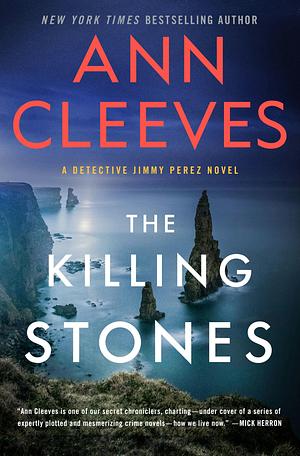
Review 2662: The Killing Stones

Ann Cleeves retired the Jimmy Perez series a while back, so I was delighted to hear she had brought him back. He has moved from the Shetland Islands to the Orkneys—with a milder climate and more pastoral scenery—and lives with his partner and boss, Willow, and their three-year-old son, James. Oh, and it’s the Christmas season. What better time for a mystery than Christmas?

Willow is away from their home on the mainland island when Jimmy gets an urgent call to Westray Island. His good friend Archie Stout, whom he was raised with, is missing. Archie’s wife Vaila says he was on his way to meet pals at the pub but never got there, a concern with Jimmy as there was a big storm that night. Jimmy finds Archie at an old archaeological dig, where his head has been mashed by one of the Westray story stones—two Neolithic stones with Viking inscriptions that Archie’s father helped discover and interpret. Unfortunately, because of the storm, evidence is thin.

Willow takes Jimmy off the lead because he’s too close to the victim and leads the case herself, even though she is on maternity leave and a few weeks out from having their baby. Jimmy returns home to follow up leads on the mainland. They find that Archie was upset because, since his father Magnus’s death, he has found his notebooks showing that Magnus, a self-educated farmer, did most of the work on the Westray stones even though Tony Johnson, a professor who visited occasionally, had taken all the credit, a discovery which launched Tony’s career. Tony and his wife were on the island the day of the murder. But there are other leads, including Archie’s possible affair with his wife’s ex-friend Rosalie Gruman.

Jimmy, following up on the mainland with anyone who had been on Westray the night Archie was killed, has been trying to talk to George Riley, a schoolteacher. But before he can meet him, George is also found dead, killed with the second stone. Jimmy finds out that George was writing a children’s book about the discovery of the stones that alleges Johnson stole Magnus Stout’s work.

If I have any criticism of this book, which moves right along and is certainly perplexing, it’s that Cleeves provides almost no information that could lead readers to the killer until the very end. However, she does a great job at misdirection. I’m not really sure what I think of Willow, who does a lot of the investigating in this one. She appeared in several previous books, but I still don’t have much sense of her.
Related Posts

Wild Fire

Cold Earth

Too Good to Be True

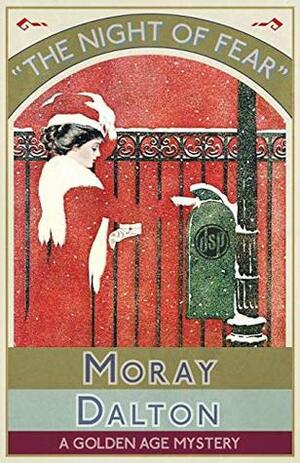
Review 2590: The Night of Fear

At a Christmas house party with the staff dismissed to attend a party in the village, the guests play a game of hide and seek. The host, George Tunbridge, and Julian Haviland, a young guest, wait for 20 minutes after the lights have been turned off at the main and then are supposed to look for those in hiding. However, before they begin to do that, another guest, a blind man named Hugh Darrow, comes running out in a panic. He has discovered the bloody body of another guest, the famous writer Edgar Stallard.

Sergeant Lane has Inspector Collier of Scotland Yard staying with him as a guest, and he is happy to bring him along on the case. Suicide being ruled out because of the absence of a weapon, and no forced entry discovered, the police feel the murderer must be one of the guests.

Aside from George Tunbridge and his wife, who is so shaken she takes immediately to her bed, the guests are Sir Eustace Tunbridge, a pompous older man engaged to a beautiful young Diana Storey; Mrs. Storey, Diana’s grandmother, who went to bed early; Ruth Clare, a young woman who it becomes clear is in love with Hugh Darrow; and a bunch of young people, including Angela Haviland, who were hiding together and are so alibied. Even George and Julian are without an alibi, as they stood on either side of a screen as they waited.

Unfortunately, the Chief Constable is offended to find Collier on the scene, and he is asked to report back to London. That leaves Sergeant Lane to investigate by himself for a day. The next morning, he is found unconscious from a gas leak in his room. Collier is convinced that he was on to something, but his notes have been ripped from his notebook. Collier’s replacement, Inspector Purley, arrives and comes down heavily on everyone then concludes that the murderer was Hugh Darrow, who had a grudge against Stallard and didn’t tell anyone that his blindness was cured from the shock of discovering the body. In making this decision, Purley is ignoring some clues—that despite typing at all hours, Stallard appears to have left no notes or manuscript in his room and that Sergeant Lane is poisoned in the hospital after Darrow is arrested.

To help with the defense, Collier recommends a private investigator, Mr. Glide. When Sergeant Lane is poisoned, he is unable to speak but writes a clue on a piece of paper.

This novel wasn’t quite as zippy as Dalton’s first one and had a little too much recap of the evidence, but it was still fun to read and fairly baffling. It looks to me as though Mr. Glide might become a recurring character. I’m looking forward to the next one.

I received this book from the publisher in exchange for a free and fair review.

Related Posts

One by One They Disappeared

A Christmas Pary

The Christmas Card Crime and Other Stories

Review 2171: Stories for Christmas and the Festive Season

Although May is an odd time to review a collection of Christmas stories, I didn’t receive a copy of this book until much after the season. This entertaining collection is ordered by when the story occurs during the festive season and includes works by women published during the 20th century. Some of the authors are well known and others are only remembered now for a specific work. The introduction by Simon Thomas discusses each story in turn and tells something interesting about it.

The first story, “The Turkey Season” by Alice Munro, provides insight into a side of the holidays we may not have considered, factory workers processing turkeys. As usual, Munro is a masterly storyteller.

Some of the stories are amusing, such as “This Year It Will Be Different” by Maeve Binchey, about a housewife who goes on strike during the holidays, or “Skating” by Cornelia Otis Skinner, about a woman’s attempt to learn ice-skating. Others start out amusing but have a deeper meaning, for example, “The Christmas Pageant” by Barbara Robinson, about what happens when “the worst children in the world” get involved in the pageant or “Christmas in a Bavarian Village,” which subtly foreshadows World War II.

I especially liked “The Little Christmas Tree” by Stella Gibbons, about how a solitary woman’s Christmas plans are changed with the arrival of some children and “The Christmas Present” by Richmal Crompton, about an unusual gift passed down in the family from mother to daughter. The book finishes with a sprightly monologue by a black maid in “On Leavin’ Notes” by Alice Childers.

I received this book from the publishers in exchange for a free and fair review.

Related Posts

The Mistletoe Murder and Other Stories

A Christmas Carol

A Christmas Party

Review 1762: The Christmas Wish

Last year, I saw pictures from The Christmas Wish on TV and thought they were so beautiful that I bought a copy of the book. This little children’s story is illustrated with photos, some of which have been doctored to create the effects. This book is written by Lori Evert, and the photography is by Per Breiehagen.

Anja is a little girl who wants to be Santa’s helper for Christmas. So, after doing her chores and helping out a neighbor, she puts on her skis and heads north. On the way, she is helped by a cardinal, a draft horse, a musk ox, a polar bear, and a reindeer, each giving way to the next as she goes farther north.

The little girl is dressed in a traditional Norwegian outfit, and the photos are just wonderful. The story is simple but sweet. This is a book that could be passed down as a family heirloom.

Snow

Premlata and the Festival of Lights

Red Knit Cap Girl