
Today is another review for the Literary Wives blogging club, in which we discuss the depiction of wives in fiction. If you have read the book, please participate by leaving comments on any of our blogs.
Be sure to read the reviews and comments of the other wives!
- Becky of Aidanvale
- Kate of booksaremyfavoriteandbest
- Marianne of Let’s Read!
- Rebecca of Bookish Beck
This month we’re saying goodbye to Naomi of Consumed By Ink, who has been a member of the club for a long time. Good luck, Naomi!
My Review
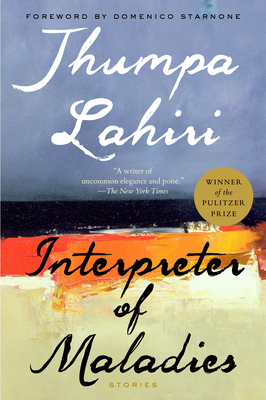
Interpreter of Maladies is a collection of short stories mostly about Indian or Pakistani immigrants but a few about residents in India. Only a few of the stories seem suitable for our discussion purposes in Literary Wives.
In “A Temporary Matter,” married couple Shoba and Shukumar deal with the consequences to their marriage of the death of their baby in a premature birth. During a Boston winter, the city announces planned power outages in their neighborhood. They find that they are able to talk in the darkness lit by candlelight.
In “When Mr. Pirzada Came to Dinner” a woman remembers a man from Dacca who lost everything in the war for Bangladesh. He has had no contact for some time with his wife and daughters. Ten-year-old Lilia’s parents invite him to dinner every night, and then they watch the news.
The “Interpreter of Maladies” is an English-speaking tour guide taking Mr. and Mrs. Das and their children around an area of India. Although they look Indian, they act and dress like American tourists, and Mr. Kapasi learns they were born in America. When Mrs. Das learns Mr. Kapasi also works as an interpreter of Gujarati in a doctor’s office, she seems to misunderstand his function.
“A Real Durwan” is the story of Boori Ma, who lives in a storage room on the roof of an apartment building and sweeps the stairs. She speaks of a better life before the Partition, but disaster strikes when her quilts are ruined in a storm. This story seems to be about the incomprehension of the better off for the difficulties of the very poor.
Back in the States again, Laxmi tells her friend Miranda about her cousin’s problems in “Sexy.” Her cousin’s husband has met another woman and is leaving her. Miranda has kept secret her affair with a married Indian man named Dev, but her encounter with Laxmi’s cousin’s young son makes her re-evaluate her affair.
In “Mrs. Sen’s,” young Eliot stays with Mrs. Sen after school every day. She is having a hard time adjusting to life in the U. S., especially the isolation and difficulties shopping because she doesn’t drive.
Twinkle keeps discovering gaudy religious artifacts in the house she and Sanjeev have bought—statues and large pictures of Jesus and shrines in the yard in “This Blessed House.” `She thinks they’re hilarious and puts them on display. He thinks they should dispose of them because they’re not Christians and worries about what people will think. Sanjeev is a very successful management type who has married after short acquaintance because it’s time. But he is disturbed by Twinkle’s outgoing personality. A house-warming party helps him look at her another way.
Another roof dweller in India is the subject of “The Treatment of Bibi Haldar,” a woman who suffers from seizures. After charms and homeopathic remedies fail to heal her, one practitioner recommends marriage. But her brother and sister-in-law don’t want to spend the money to marry her off and she is eventually forced to live in the rooftop shed because her sister-in-law is afraid her condition is contagious.
In “The Third and Final Continent,” an Indian man marries before taking a job in an MIT library in 1964. The summer before his wife arrives, he takes a room in the house of a 100-year-old woman.
What does this book say about wives or about the experience of being a wife?
Actually, when the story is about marriage, it is more often from the point of view of the husband. Only a few of these stories lend themselves to our usual discussion, and anyway in Lahiri’s stories, more things are implied than stated. But certainly the isolation immigrants experience in the States is a common theme of much of her work, and that isolation often reflects itself in the characters’ marriages.
In “A Temporary Matter,” the marriage of Shukumar and Shoba was apparently a love match, and now it is foundering because of the death of their baby in a premature birth. When the two begin talking by candlelight, Shukumar seems to be hoping they can become closer again, but Shuba is leading up to something else. Noticeable in this story is Shukumar’s incomprehension.
The glimpse that Mr. Kapasi gets into the Das’s marriage in “Interpreter of Maladies” isn’t one he wants, but why does Mrs. Das confide in him in the first place? This story is more, though, about Mr. Kapasi’s lack of understanding of the type of person Mrs. Das is.
“This Blessed House” is about a newly married couple trying to understand each other, or more particularly, Sanjeev’s lack of understanding of Twinkle. I have noticed that Lahiri often works from the man’s point of view when observing marriage, and she does so again here. Sanjeev is so worried about what other people think that it takes a party at his house, in which his guests clearly like and admire his wife, for him to start to appreciate her qualities.

In “The Third and Final Continent,” the unnamed narrator has married Mala, a woman he hardly knows. When she arrives from India, it is his relationship with old Mrs. Croft that brings out her first smile.
Culture shock and isolation are big themes in Lahiri’s literature, and many of the marriages she examines seem to be filled with incomprehension and more isolation. But not all. In her looks at marriage, she seems to be saying we’re all strangers to each other and some of us can bridge the gap while others cannot.

