Review 1412: Classics Club Spin Review! The Wise Virgins

The novel selected for me by the latest Classics Club Spin is The Wise Virgins by Leonard Woolf. This semi-autobiographical novel is partially about the courtship of Leonard and Virginia Woolf, in the characters of Harry Davis and Camilla Lawrence.

Harry and his family have just moved to the London suburb of Richstead and are shortly befriended by the Garland family, which has four unmarried daughters. Harry is disdainful of life in Richstead and of the fates of the spinster daughters, given up to good works or golf and tennis. The youngest daughter, Gwen, is naïve and gives undue weight to his discontented utterances. He amuses himself by giving her books and plays to read of Dostoevsky and Shaw.

In his art class, Harry is drawn to Camilla Lawrence, a cool beauty. When she invites him home, he finds it one of ideas and stimulating conversation. Camilla has suitors, but she is less interested in marriage than in a quest for self-fulfillment. She is repeatedly alleged to be passionless.

This novel was considered somewhat shocking in its time but was notable for examining the fates of conventional young women in Edwardian England. Harry is not a likable hero nor is Camilla very knowable. I personally did not like their glib and superior dismissal of whole classes of people. I always imagine the Bloomsbury circle snidely sniping at everyone else (and behind each other’s backs), and this novel didn’t make me rethink that idea.

This is probably taking the novel out of its time, but simply the continual reference to unmarried women by Harry as virgins irritated me to no end. He is so superior and supercilious. The introduction to the book says that “virgin” was synonymous with unmarried woman to Edwardians, but clearly for Harry there’s a sneer involved. One article I read calls Harry a truth-teller, but some of the things he says seem only designed to stir people up and make him seem more like eighteen than twenty-eight. Also uncomfortable for modern readers is the antisemitism that is accepted unquestioned by Harry and his family, who are Jewish.

Finally, there are lots of references to talking in this book, and for people who are looking for a purpose in life besides marriage and other predictable fates, they aren’t doing much actual acting. I think Woolf is pointing that out, though, by the chapter headings.

Related Posts

Mrs. Dalloway

To the Lighthouse

Flush: A Biography

Review 1408: Love Is Blind

Although generally speaking, I love William Boyd, I should have known better than to read a book named Love Is Blind. Even from the title, I could tell it was about a man who falls in love with a woman who is trouble, a plot that I hate. Although men love to write books upon this subject, most of the women incarcerated in the United States are there because of a man. Of course, it happens for both sexes, but a man enthralled by a lethal siren is the least of it and, for me, not interesting.

In 1894 Edinburgh, Brody Moncur is a piano tuner of significant skills. He is offered a position of assistant manager in his company’s Paris office which he takes, determined to get away from his controlling father.

In a promotional effort, Brody makes a deal with John Kilbarron, a famous pianist, to play only his company’s pianos. Soon, he has fallen in love with Lika, Kilbarron’s mistress, who is an opera singer. They begin an affair, and his life becomes a series of efforts to win her away safely from Kilbarron.

Disturbingly, we get very little sense of what Lika is like as a person. She serves pretty much as Boyd’s MacGuffin. The novel just focuses on Brody’s obsession and its consequences. It’s obvious that Lika has her secrets, and to me, it was even obvious what the major one was.

As well written as it is, I simply didn’t enjoy the theme of this book. As with Boyd’s other recent books, it takes in a sweep of history and visits many places while it meanders to its denouement.

Related Posts

Sweet Caress

Euphoria

The True Heart

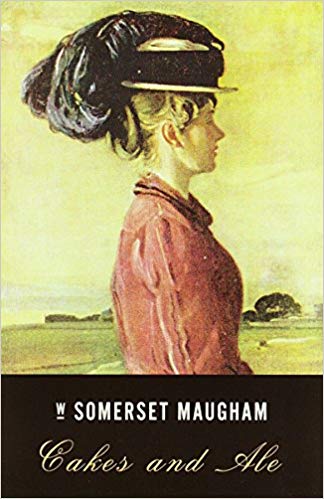
Review 1405: Cakes and Ale – #1930Club

I previously read only one book by Somerset Maugham, The Razor’s Edge. Frankly, I did not enjoy that book about two frightful people tormenting each other.

That was a long time ago, though. So, when I saw Cakes and Ale listed under books published in 1930, I thought, Why not give the guy and another chance and read it for the 1930 Club?

Another book I have already reviewed for 1930 is As I Lay Dying by William Faulkner.

* * *

William Ashenden, a moderately successful writer, unexpectedly hears from Roy Kear, another writer. Although Kear is a perfectly pleasant fellow, Ashenden knows he wouldn’t be hearing from him unless he wanted something. But Kear doesn’t come directly to the point.

Around the same time, Ashenden receives an invitation from Mrs. Driffield, the widow of Ted Driffield, widely considered Britain’s most important late Victorian novelist. He ignores this summons as he doesn’t know Mrs. Driffield. Finally, Kear admits he wants to pick Ashenden’s brain. He is writing an authorized biography of Driffield, and Ashenden knew Driffield and his first wife, Rosie, when Ashenden was a young man. Rosie was a beautiful, vibrant force of nature who was massively unfaithful to Driffield. The second Mrs. Driffield has dragged Ted into respectability and is concerned for his legacy. She wants Kear to leave Rosie out of the biography even though Driffield’s most important work was written during their marriage.

This novel about class snobbery is also a character study of an unusual woman. Because of Rosie’s promiscuity, the novel was highly controversial in its time. I wondered whether Ted Driffield was supposed to be Thomas Hardy and found out that others had supposed that at the time, although Maugham denied it. He did admit that Kear was modeled after Horace Walpole, however.

I enjoyed this novel and am willing to give Maugham another trial. The movie of The Painted Veil that came out a few years ago was beautiful, so I may try it next.

Related Posts

Tess of the D’Urbervilles

Consequences

Someone At a Distance

Review 1404: All’s Well That Ends Well

Although All’s Well That Ends Well is grouped with Shakespeare’s comedies, the introduction to my edition says that, like Measure for Measure, it is a problem play. I wasn’t sure what that meant, but Wikipedia says it applies to ambiguity and a shift in tone between darkness and light.

The actions in this play by Count Bertram bear many resemblances to those of Shakespeare’s patron, the Earl of Southhampton, who was made to marry a girl he didn’t want. Helena, the ward of the Countess of Rousillon, is the daughter of a physician and so is inferior in position—or at least he thinks so—to Count Bertram, the Countess’s son. Yet, she is in love with him.

When the Count goes to the court of France, Helena follows. The King is deathly ill, and she offers him a cure of her father’s. He agrees, if it works, to marry her to the single lord of her choosing.

Of course, the cure works, and she chooses Count Bertram. Forced to marry her, the young man leaves for war in Italy vowing never to consummate the marriage.

Frankly, this later play is not one of Shakespeare’s best. Its main theme is the disagreement between young and old, as everyone in the play who is older thinks Bertram is an idiot to reject such a virtuous, lovely bride, and also the part that status plays in marriage as opposed to character. The play has no rolling speeches, however, and pretty much just gets down to doing its job.

From the modern viewpoint, it’s fairly easy to see why this play isn’t presented as often as others. I read it before I went to see it at the Oregon Shakespeare Festival. Mainly, Count Bertram is pretty despicable despite his change of heart at the end. First, he rejects Helena just because of her social status, even though she is beloved by his mother and the King. Later, he attempts to seduce a virtuous Italian girl of good family, Diana, even promising to marry her despite being already married. When she pursues him to France, he lies about her, saying she is a camp bawd. What a great guy. Obviously, all would be well if Helena didn’t end up with him at the end, at least for Helena. But that’s the 21st century view.

Related Posts

Antony and Cleopatra

Othello

Macbeth

Review 1394: Mothering Sunday

Best of Ten!
It’s a warm day in the spring of 1924, Mothering Sunday, a day when servants are released from their duties to visit their mothers. Jane Fairchild is a young maid in the home of the Nivenses, but she has no mother. She plans to curl up with a good book until she receives a phone call from her long-time lover.

Her lover is Paul Sheringham, the only son left after World War I to a neighborhood family. Although he is to be married in two weeks, he sets up a tryst with Jane in his own home while his parents and the servants are out.

Jane is to revisit these hours spent with her lover for the rest of her life. For something happens that afternoon that changes the course of her life.

This is a remarkable novel. It is very short, but it somehow covers the course of Jane’s entire life while minutely examining one scene, the meeting with her lover. It touches on every action and word, considers them from several sides just as the mind does as it re-examines an event. At the same time, it examines what qualities make a writer and what a writer attempts to do when writing. This is an excellent novel I read for my Walter Scott Prize project.

Related Posts

Toby’s Room

C

Solace


Review 1380: Literary Wives! Ties

Today is another review for the Literary Wives blogging club, in which we discuss the depiction of wives in fiction. If you have read the book, please participate by leaving comments on any of our blogs. Be sure to read the reviews and comments of the other wives!

We are sorry that Emily of The Bookshelf of Emily J. has left our group because of her many commitments. We’re going to miss her!

Eva of Paperback Princess
Lynn of Smoke and Mirrors
Naomi of Consumed By Ink

* * *

Ties is a very short novel divided into three parts. It is about a marriage, but moreso, it is about how a period of infidelity in that marriage affects everyone in this small family. Part I consists of letters written by the wife, Vanda, after her husband leaves her. Part II is narrated by the husband 40 years after they reconcile. Part III is from the point of view of their two children.

Initially, I was sympathetic to Vanda. After all, her husband leaves her with almost no warning and then neglects her and her children for several years, refusing to discuss their situation and too busy being happy with his girlfriend. His explanations for the affair are laden with sophism. Where did this idea come from, repeated twice, that it’s bad to resist impulses? It’s the 70’s, but come on. However, Vanda’s tone in the letters is too insistent, too strident.

An old man, Aldo is forced to revisit this period in their lives after a break-in. Cleaning up, he finds Vanda’s letters and reads them again. He sees his old affair with Lidia as a bid for freedom that was defeated out of guilt. After he and his wife reunited, she used his unhappiness to beat him and make him submissive. Worse, from the children’s point of view, she removed his role of father from the family.

This book was obviously written by a man.

Throughout the book are themes of boxes or being boxed in versus freedom and themes of cheating or being cheated.

What does this book say about wives or about the experience of being a wife?

We understand that Vanda and Aldo were happy and content for some years, although for a few years before the breakup, they were less so. But in this book we only see Vanda as a shrew. Of course, there is reason for her to be unhappy when her husband leaves her and the children with nothing and then avoids them for years. Still, she carries her reactions to an extreme, especially after they reunite.

For his part, Aldo seems to see her and their children as a trap. Interesting, how some men seem to forget they actually participated in having children. Once he has left them, he prefers to think only of Lidia. Later in life, he’s been downtrodden for so long, yet he sees Lidia once a year and secretly keeps photos of her in a box.

Jhumpa Lahiri, in her introduction, says the novel is about creating and destroying. To me, it is just about destroying. Aldo was happy with Lidia but didn’t have the courage to stay with her. At the same time, he destroyed what seemed to be a happy marriage with Vanda in the worst possible way, by deserting his family. When he comes back out of guilt, the two of them create an even worse mess.


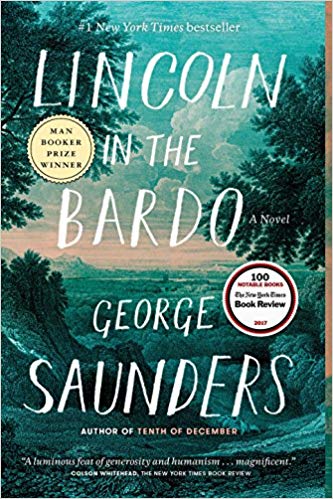
Review 1377: Lincoln in the Bardo

The title Lincoln in the Bardo is the first tip-off that this book is unusual, for it refers to a Tibetan concept of immediate life after death. The novel is set in a graveyard after the death of Abraham Lincoln’s son, Willy, and is narrated by a host of ghosts who don’t know they are dead and are clinging to their worldly concerns. It is also moved along by quotations, some real, some fictitious, by accounts of the time, letters, and historical accounts.

The ghosts in the graveyard are grotesqueries who physically manifest the obsessions they had in life. The two most important ghosts in the novel, for example, are Hans Vollman, who sports an enormous erect penis because he died before he could consummate his marriage; and Roger Bevins III, whose sensual nature is indicated by his multiple eyes, noses, and hands. Okay, this can be comic. It is certainly an amusing idea. But after a while, I began to miss the subtle humor that seems to have deserted us in recent years.

The thrust of the plot is that children aren’t meant to linger in the Bardo or terrible things happen to them. However, Lincoln arrives early in the novel to visit his son in his grief, and he says he will return. Vollman, Bevins, and their friend, the Reverend Everly Thomas, become determined to help Willy leave, and to do so they must get Lincoln to return to the tomb and release him.

This novel is wildly original. Aside from the characteristics I’ve mentioned, it is written more like a screenplay than a novel. It also resonates deeply in its themes of grief, Lincoln’s worries about the war, and the concerns of life affecting the afterlife. Still, I was repelled by how crude and crass it is at times. I also felt that the novel was much longer than it needed to be. You get the idea about the ghosts fairly quickly, but the supernatural chatter becomes boring after a while.

I read this for my Booker Prize project.

Related Posts

Team of Rivals: The Political Genius of Abraham Lincoln

The Second Mrs. Hockaday

Days Without End

Review 1368: Owls Do Cry

It’s obvious that Owls Do Cry was written by a poet. The writing is beautiful, but since I am not very good at poetry, I have to admit that I didn’t always understand what was going on.

The Withers family lives in a small town in southern New Zealand. They are very poor, and the children are called dirty at school and subjected to humiliations. They like to go to the town dump to look for treasures.

At 12, the oldest girl, Francie, must quit school to do housework for a wealthier family in town. Toby, the only son, is subject to epileptic fits. Mr. Withers verbally abuses his wife. Then one day there is a terrible accident, and Francie is killed. Some time later, Daphne is hospitalized in a mental hospital, just as Frame herself was.

The novel skips forward 25 years to the 1950’s. Mr. Withers is retired, and Toby is now the bully of the household. Daphne is still hospitalized, and Theresa, the youngest daughter, has married and moved away.

Janet Frame was the first writer to tackle the subject of mental institutions. This novel is harrowing and occasionally satiric. However, I often couldn’t follow the poetic passages. I read this for my Classics Club list.

Related Posts

The Bone People

The Luminaries

The Rehearsal

Review 1364: Madame de Treymes

If you have read Edith Wharton’s The Age of Innocence, the situation in her novella, Madame de Treymes, will seem familiar. As Madame de Treymes was written before The Age of Innocence, perhaps Wharton was trying out some ideas in this novella that she developed more fully in the later novel.

John Durham is in love with Madame de Malrive. He knew her as Fanny Frisbee in their younger days in New York, but now she is separated from her husband and has a young child. He proposes to her, expressing himself willing to adapt to any conditions she may make, but she says her husband’s family will never agree to a divorce. She has used her leverage because of her husband’s dissolute life to keep her son and does not want to jeopardize her custody.

Fanny says that the family never explicitly states its intentions, and she never knows what they are going to do. Her sister-in-law, Madame de Treymes, seems to be sympathetic, however, and she asks John to try to discover from her the family’s intentions.

Durham arranges a meeting with Madame and is first inclined not to believe the stories he’s heard about her. However, the meeting goes badly wrong.

This novella is about the inability of the aristocratic French and the Americans of the same class to comprehend each other. A misunderstanding on both sides results in unforeseen circumstances. This novella is subtle and more of a character study than a plotted piece, about the gulf between two very different cultures. I read this interesting novella for my Classics Club list.

Related Posts

The Age of Innocence

Obscure Destinies

Someone At a Distance

Review 1360: Abide with Me

Cover for Abide with MeElizabeth Strout is known for her compassionate explorations of true-to-life characters. Set in the late 1950’s, Abide with Me explores the states of mind of Tyler Caskey, a troubled minister, and his congregation.

Tyler is in mourning for his wife, who passed away from cancer. His mother has insisted on caring for his youngest daughter, Jeanne, while his five-year-old daughter, Katherine, lives with him.

Tyler is afraid he has lost his relationship with God. He is performing his duties without joy or inspiration. Katherine is having troubles in Kindergarten, because her teacher can’t understand that she is grieving. Aside from this, Tyler only feels comfortable talking to his housekeeper, Connie, and rumors are beginning to go around.

Misunderstandings divide the minister from his congregation. Strout builds tension as the pressures upon the minister build.

This is another insightful and touching novel by Strout. In some ways, it reminded me of Gilead by Marilynne Robinson, except that it doesn’t require as much erudition to understand it.

Related Posts

My Name Is Lucy Barton

Anything Is Possible

Gilead