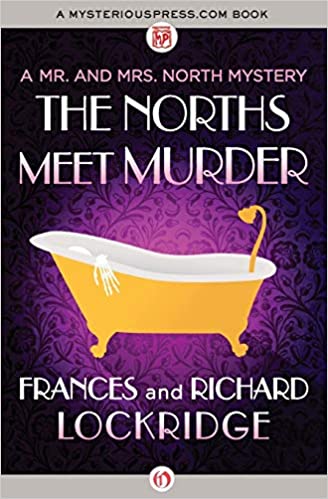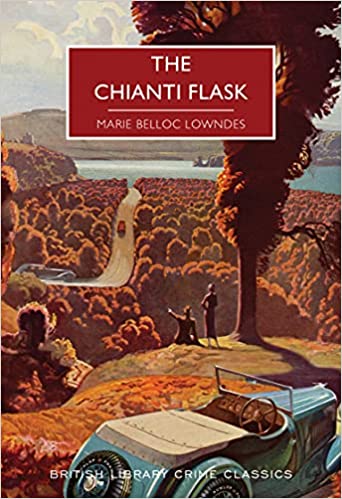
Review 1688: The Chianti Flask

Did she or didn’t she is only part of the concern of this psychological drama that is more of an apres-crime novel. Or was it a crime?

The novel begins with Laura Dousland on trial for the murder of her much older husband. But whether he was murdered or committed suicide is really the question. It all seems to hinge on a missing Chianti flask that the police think may have been used to deliver the poison. Laura says they were out of Chianti, but their Italian servant says a Chianti flask was on the table during dinner. A search for the flask finds nothing.

Laura is found not guilty but is overwhelmed by the attention she continues to get. She has been left nearly penniless with only a gloomy and poorly maintained house to sell, as Fordish Dousland notoriously only spent money on his own interests and his income was only for his life. All the money Laura saved during her years as a governess was spent trying to maintain the household and feed them.

Laura just wants to be left alone after the trial, but her well-meaning but insistent ex-employer, Mrs. Hayward, thinks Laura would be better off engaged in society. Left ill from imprisonment, Laura begins to get worse.

Dr. Mark Scrutton, whom Laura knew slightly before the trial, makes it his business to get her out of the Hayward’s home and into an isolated seaside cottage owned by his family. But soon there is another conflict when Scrutton tells her he is in love with her.

The Chianti Flask is an effective psychological novel that really gripped me. I got so caught up in the couple’s difficulties because of Laura’s notoriety that I almost forgot I was reading a mystery.

I received this book from the publishers in exchange for a free and fair review.

Related Posts

Murder in the Mill-Race

The Murder of My Aunt

The Iron Clew

Review 1683: The Chalk Pit

Forensic anthropologist Ruth Galloway is asked to look at some human bones that were discovered in old chalk mining tunnels below Norwich. Although at first glance she believes they may be medieval, they also show signs of having been boiled. Tests show them to be more modern, perhaps 10 years old or less.

Around the same time, a homeless man named Eddie visits DCI Harry Nelson because he is worried about his friend Babs, who has not been around for two weeks. As the team asks around for Babs, Judy talks to another homeless man named Bilbo, who says Babs may have gone underground. Within a day Eddie is found stabbed to death in front of the police station and Bilbo has disappeared.

The team’s attention is taken away from these events by the disappearance of Sam Foster-Jones, a suburban housewife who vanished from her home after someone came to the door, leaving her four small children alone. Nelson has a feeling that this disappearance is related to that of Babs and the deaths of Eddie and Bilbo.

This series, always entertaining, has improved steadily, especially in regard to the difficulty of guessing the solution. Ruth remains a likable character, and I still enjoy all the secondary characters in the series.

Related Posts

A Dying Fall

The Outcast Dead

The Woman in Blue

Review 1680: The Darkest Evening

During a blizzard just before the winter solstice, Vera Stanhope misses a turn on the way home and encounters a car off the road with its door open. Inside is a baby. Vera realizes she is near the drive to her cousin Janet Stanhope’s stately home, so she takes the baby and goes to the house.

Once Vera has established that neither the Stanhopes nor their housekeeper Dorothy knows who the child is, she summons Holly to open up a case. Then Neil Heslop, the tenant farmer, comes in to inform them that he’s found a dead woman in the snow.

The woman, Lorna Falstoner, has been brutally struck in the head. She is established as the baby’s mother, but no one knows what she is doing on the property. She is unmarried, and the team can find no one who knows the identity of the baby’s father. Vera becomes convinced that finding this information will lead them to the killer.

With its frozen setting, The Darkest Evening is atmospheric and mysterious. I had no idea of the identity of the murderer. Cleeves is becoming a master of the red herring.

Related Posts

The Seagull

The Moth Catcher

Harbour Street

Review 1663: The Woman in Blue

Elly Griffiths is getting much better at fooling me than she was in the first few Ruth Galloway books, so that is all to the good.

Ruth’s friend Cathbad is house- and cat-sitting in Walsingham when the cat gets out one night and runs into the cemetery. There, Cathbad sees a young blond woman wearing a blue cloak. He is about to offer help when the cat trips him up and the woman disappears. The next morning she is found strangled.

That day Ruth has an appointment to meet Hilary, an old school friend, for lunch in Walsingham. She is astonished to find that her friend has become a priest. Hilary shows her some threatening letters she’s received, apparently because she’s a female priest.

When Ruth gives DCI Nelson the letters, he seems inclined to think they might be connected to the murder. A few nights later, the women priests, who are attending a conference, go out to dinner, a dinner to which Ruth is invited. Afterwards, one of them is found strangled.

Although Ruth uncovers a clue, she is not directly involved in the solution of the murders. That’s okay, though, because Griffiths has created an ensemble cast of strong characters. If Ruth isn’t out there sleuthing in every book, Griffiths gets around the problem of the unlikelihood of an amateur sleuth being involved in so many murders. The Ruth Galloway series continues to be interesting and engaging.

Related Posts

The Ghost Fields

The Outcast Dead

A Dying Fall

Review 1659: The Less Dead

When Margo gets in touch with her birth family, her Aunt Nikki, Nikki tells Margo that her mother, Susan, was a prostitute and a junkie who was murdered in an alley at 19. Then she tells Margo she knows who did it and tries to get her to help find evidence. She is asking Margo to break the law and endanger her position as a medical doctor. Margo is horrified by the story and the request and gets away as fast as she can. What she doesn’t know is that meeting Nikki has brought her to the attention of Susan’s murderer. Soon, she has received a threatening letter like the ones Nikki has been getting.

Although set in the gritty neighborhoods of Glasgow like most of Mina’s fiction, The Less Dead is less grim than her earlier work, populated by likable characters such as Margo’s ex-boyfriend Joe and her bestie Lilah, as well as, eventually, Nikki and her friends. It is definitely creepy, though, and a satisfying thriller. Mina always knows how to spin a tale.

Related Posts

Conviction

The Red Road

Gods and Beasts

Review 1649: The Hoarder (aka Mr. Flood’s Last Resort)

Best of Ten!
Let me just start out by saying I hate the trend of changing the name of a book from the British edition to the U. S. edition. In this case, I got caught out buying both versions of this novel just because I didn’t realize they were the same. I loved this novel, but I don’t need two copies of it. If they are going to do this, the least they could do is warn us in really big letters on the cover.

____________________________

As with Things in Jars, it took a bit of time before I plunged myself into the eccentric world of The Hoarder. But when I did, I was all in.

Maud Drennan is a care worker whose job it is to feed the difficult Cathal Flood and attempt to make some headway in cleaning his house, for the old man is a hoarder. There are odd rumors surrounding Flood, not only about his recent behavior—he is supposed to have tried to brain carer Sam Hebden with a hurley—but also about his past—his wife died after falling down the stairs.

Maud herself is a little eccentric. She is followed around by the ghosts of saints, particularly St. Dymphna and St. Valentine, and her best friend is Renata, an agoraphobic transgender woman with an elaborate wardrobe. It is Renata who suggests that perhaps it was Cathal Flood who pushed his wife down the stairs.

Certainly, something is going on, because Maud is approached by Gabriel Flood, Cathal’s son, who is looking for something in the house. Then, Renata and Maud discover that Gabriel had a sister, Maggie, who disappeared as a teenager. Maud’s sister, we learn, also disappeared, so Maud becomes immersed in an investigation and attempts to search the blocked-off portions of Cathal Flood’s house.

This novel is a bit gothic, a bit funny, a bit haunting, and Kidd’s writing is brilliant. Love this one. Need more.

Related Posts

Things in Jars

The Vet’s Daughter

The Rathbones

Review 1646: The 1936 Club! The ABC Murders

Of course, you must pick an Agatha Christie for the 1936 Club, and my choice was The ABC Murders. In this novel, it appears at first as if Christie is telling us everything but motive. However, she has some tricks up her sleeve as usual.

Captain Hastings returns from South America to find Hercule Poirot retired but still taking the occasional case. Soon, one arrives in the form of a letter, which challenges Poirot and tells him to look for news from Andover on a particular date. On that date, an old woman named Mrs. Ascher is killed by being bludgeoned over the head. On the counter is an ABC map.

The next letter refers to Bexhill-on-Sea. On the specified date, Betty Barnard is strangled on the beach and an ABC is found underneath her body.

In between entries from Captain Hastings’ journal, we briefly follow a man named Alexander Bonaparte Cust.

Round about page 75, I got an inkling about something that might be happening, and I was right. But the whole picture was more complicated than I guessed.

This wasn’t my favorite Christie. For one thing, the solution was just too complicated. For another, I didn’t feel as if Christie’s characterizations were as rich as usual.

Related Posts

Appointment with Death

By the Pricking of My Thumbs

Murder at the Vicarage

Review 1639: The Ghost Fields

Detective Harry Nelson calls forensic archaeologist Ruth Galloway when a bulldozer at a housing development digs up an American World War II airplane. In the plane is a dead man. Ruth is fairly sure the body was moved there, because its state indicates it was buried in different soil. Oh, and the man was shot in the head.

The American Air Force identifies the body through dental records as Fred Blackstock. The problem with that is that Fred was reported missing from a flight over the channel, in a different plane.

The investigative team finds that Fred’s brother George is still alive, although slightly dotty. His other brother, Lewis, returned from a Japanese prison camp with PTSD and eventually disappeared and is presumed dead. George lives in a desolate family mansion with his son George and George’s wife Sally. Their grown children are Chaz, a pig farmer, and Cass, an actress.

Ruth hears that her friend Frank, a TV historian, will be returning to the U. K. to film a show about Fred. Her feelings are mixed because they haven’t been in touch for a while.

A memorial service for Fred brings his daughter Nell and her family from the United States. During the reception, Ruth finds a likely disturbed area with the right soil in the family pet cemetery and believes it may be Fred’s original burial place. Ruth and another guest also spot a mysterious stranger on the grounds of the house.

I had some inklings about some of the threads of this mystery but ultimately did not guess the truth. It remains another perplexing mystery and thriller by Griffiths and satisfactorily advances the course of Ruth’s private life. My only fear about the series is that Griffiths seems to be advancing it at about two years in the characters’ lives per year in real life, which could result in a premature end of the series because of Ruth’s old age.

Related Posts

The Outcast Dead

A Dying Fall

A Room Full of Bones

Review 1630: Scot & Soda

I love Catriona McPherson’s creepy psychological thrillers mostly set in small Scottish villages, and I like her Dandy McGilver mysteries set in the early 20th century, but I wasn’t that enamored with the first of her Last Ditch mysteries, set in present-day Northern California. However, I thought I’d give the second one a try before giving up.

One of the jokes of this series is a Scottish woman as fish out of water. That woman is Lexie Campbell, a therapist. She and her friends from the Last Ditch Motel are on the houseboat she inherited in the last book having a Halloween party. When Lexie tries to haul up the beer she has been cooling in the water, up comes a corpse with a wig and tam on its head. Lexie also spots a ring on his finger.

Detective Mike Rankinson is not exactly Lexie’s friend, so after Lexie has a brain wave when she reads a newspaper story about a horse having its tail cut off, Mike isn’t very receptive. Lexie thinks the events remind her of the poem “Tam O’Shanter.” In pursuit of this idea, she and some friends visit a derelict farm that has a burial mound in it, and they find some women’s clothing with blood on it.

The hallmarks of this series are Lexie’s tiffs with the police, the plethora of eccentric friends, and the confusing myriad of clues. One of the things I like about McPherson’s other books is the atmosphere of small Scottish villages, with some eccentric characters but ones that are mostly believable. In this series, McPherson has tried to create the same atmosphere with the eccentric inhabitants of the Last Ditch Motel. First, there are so many of them that I can’t keep them straight. Second, this doesn’t really work in a big city setting, even in California. Finally, I find her making mistakes about the American side of things, having her characters say things Americans wouldn’t say, for example. I think I won’t be reading more of this series.

Related Posts

Scot Free

As She Left It

Strangers at the Gate

Review 1619: The Outcast Dead

Elly Griffiths has always been good with characterization, but her mysteries are getting harder to solve, too. So, all is good with the series so far.

Forensic archaeologist Ruth Galloway is working on a TV series after her discovery during the excavation of castle grounds of a skeleton that may belong to “Mother Hook,” a Victorian childminder who was famously executed for murdering the children in her care. The show’s historian, Frank Barker, believes, however, that Jemima Green may have actually been innocent.

For Inspector Nelson’s part, he and his team are investigating the death of Liz Donaldson’s baby son. Her two other sons died as babies, but the deaths were found to be from natural causes. Something feels off about this one, though, and the forensics team finds indications of smothering.

The Donaldson case isn’t going very well when the baby of another couple disappears. This time, the police find a note saying that the baby is with the Childminder. Then another child disappears.

This time, I figured this one out about the time that one of the detectives did. Griffiths’ novels are always atmospheric and entertaining, and I continue to be interested in the characters.

Related Posts

A Dying Fall

A Room Full of Bones

The House at Sea’s End