Review 2641: #1925 Club! #HYH25! Bread Givers

The last book I selected for the 1925 Club is Bread Givers. It is the mostly autobiographical novel about poor Jewish immigrants living in New York.

The novel opens with the Smolinsky family not having enough money for the rent. Reb Smolinsky spends all of his time studying the Torah and depends on his wife and daughters to support him. Bessie, the oldest daughter, earns the most and willingly hands over every penny to her family, but she is getting a little old to attract a husband. Mashah, the beautiful next sister, takes all her money to spend on finery, buying a new trinket when her family doesn’t have enough money to eat. Fania, the third sister, is still fairly young. Sara, the narrator, is only ten, but she goes out to buy some herring and then sells it on the street for twice as much, coming back with the rent and enough for some food. The father, of course, gets all the good parts of the food and any meat. After this incident, the family takes in lodgers and begins to do better.

Sara begins to form her own opinion of her father and their lives through the experiences of her mother and sisters. Her father takes any extra money for his charities and clubs, so her mother never has anything nice.

Bessie gets a boyfriend. Berel Bernstein is a hard-working tailor who plans to open his own shop and wants to marry Bessie because she is a hard worker and will make a good wife. So, he is willing to overlook the absence of a dowry. But their father tells Berel he wants money from him to make up for losing Bessie’s wages. He says he must have new clothes for the wedding, never mentioning a dress for Bessie. Berel doesn’t accept this or their father’s hostile attitude and leaves angrily. Weeks later, Bessie hears he is engaged to another girl. The light goes out of her.

Then Mashah begins to behave in a less selfish way. It turns out she is in love, with concert pianist Jacob Novak. Jacob is supported by a wealthy father, and when Mr. Novak comes to meet the family, it’s clear that he views them like dirt under his feet. Jacob doesn’t have the courage to stand up to him. He eventually returns, but Mashah has lost her faith in him and in love, so she sends him away.

Then Fania falls in love with Morris Lipkin, a journalist and poet. But the holy Reb Smolinsky thinks Lipkin isn’t good enough. After a big argument with his family about how he’s been driving off his daughters’ suitors, he claims he can find them better husbands. He brings home a flashy diamond merchant on the night Lipkin comes to ask for Fania in marriage and ignores Lipkin, who then leaves.
Like everything her father does, his matches end in unhappiness for his daughters. Sara begins to hate him and decides her life will not depend on a man. She is working in a box factory, but she decides she is going to college to become a teacher. And at every step she has to navigate a different foreign culture.

Written in the vernacular, this novel is a personal story of struggle against poverty and ignorance. Of course, Sara’s family think that education isn’t for women, but only submission to a husband is. I found this work really gripping. I read it in one day. My Persea Books edition is illustrated by photos from a film based on Yezierska’s short stories.
Related Posts

Brooklyn

Americanah

The Weight of Ink

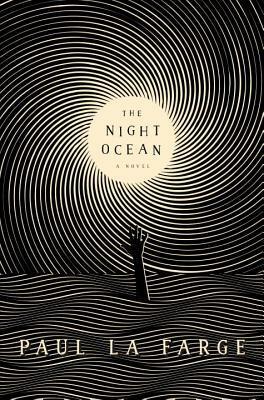
Review 2608: The Night Ocean

At first, I thought this novel was going to be about H. P. Lovecraft. Then, I thought it was a sort of homage to 30s and 40s science fiction and horror writers. But having finished it, I don’t know quite how to describe it.

Marina Willett’s husband Charlie is missing or dead. A writer of insightful profiles, Charlie began working on one of H. P. Lovecraft. During his research, he became interested in the story of a book purportedly written by Lovecraft’s much-younger deceased friend Robert Barlow that alleged a homosexual affair. This book was debunked as a fraud perpetrated by Lovecraft fan L. C. Spinks. However, Charlie becomes convinced after visiting Spinks that he is actually Barlow, having faked his own death and taken Spinks’ identity. He publishes a book telling this story and immediately becomes a literary celebrity.

But then, evidence comes out about facts that are incorrect, and Charlie himself is believed to have perpetrated a fraud. After checking himself into a mental hospital, he disappears, his clothes found next to a lake.

Marina is not satisfied. She decides to revisit the research that Charlie conducted, in the hopes of figuring out what happened. Since the last thing he did before checking into the hospital was revisit Spinks, Marina goes to see him.

Most of the rest of the novel becomes a series of stories beginning with Spinks’ first interview with Charlie. These stories name-drop 30s and 40s science fiction and horror writers and other prominent figures like crazy. This technique of the strange tale is one familiar to horror readers and a nod to Lovecraft.

If I were a bigger Lovecraft fan, I’d probably recognize more allusions besides the obvious ones—his fanboy-cum-writers themselves dropping his made-up words into their conversations, for example.

I think that Lovecraft fans will appreciate this novel more than I did, but the novel leaves Lovecraft behind about halfway through, and becomes more about Barlow. Myself, I got a little tired of the structure of story after story.

The novel is ultimately about identity, search for community, and reinvention.

Related Posts

The Annotated H. P. Lovecraft: Beyond Arkham

The Dark Fantastic

Melmoth

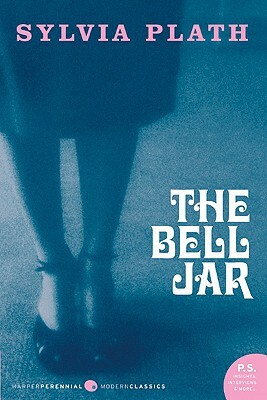
Review 2531: The Bell Jar

I’ve meant to read The Bell Jar for years, so when I saw it would fill a hole in my A Century of Books project, I got it from the library. I was also interested in it after reading the biographical fiction Euphoria, about Sylvia Plath and her husband, Ted Hughes.

In 1953, Esther Greenwood has earned an opportunity from a major fashion magazine, an internship with a group of other girls in New York. At first, she studiously applies herself to her assignments, but she becomes distracted by her fascination with Doreen, who seems more worldly than the other girls. She is tempted out by endless partying until Doreen gets a boyfriend and Esther has several unfortunate encounters with men.

She returns home from her internship suddenly adrift. She has not been accepted into a writing program, she doesn’t want to live with her mother, and none of the careers she can think of are appealing. Everything seems gray and uninteresting.

Of course, this is the story of Esther’s fall into mental illness, wrapped up in her inability to see a path for herself aside from marriage, which she clearly fears.

The novel is clearly based on Plath’s own experiences. It is clearly and vividly written and looks deep into the psyche.

Related Posts

Euphoria

Song of a Captive Bird

My Brilliant Career

Review 2454: The Shutter of Snow

The Shutter of Snow is a remarkable work. It is Emily Holmes Coleman’s only novel, written after she was interred in a mental hospital for postpartum psychosis. As you can imagine, therapy in the 1920s was not sophisticated.

Sometimes Marthe Gail believes she is God, sometimes Jesus Christ. She thinks her husband and the doctors are keeping her baby away from her, or maybe she didn’t have a baby. Or maybe he is dead.

She is injected in her spine, wrapped in sheets and submerged in water for hours. Imprisoned under a canvas sheet with only a hole for her face.

She makes improvements and is moved to a freer ward, gets in a fight with a patient or hangs like a monkey from pipes or dances naked through the ward and is moved back. She begs to see her husband but then is angry with him when he comes.

Her story is told from her own point of view, which is sometimes angry, sometimes hallucinogenic, sometimes filled with humor. The writing style does not break out speech from thought, so it is occasionally briefly confusing, but propels the reader along with it.

Related Posts

Down Below

Turtles All the Way Down

Zelda

Review 2440: Literary Wives! Recipe for a Perfect Wife

Today is another review for the Literary Wives blogging club, in which we discuss the depiction of wives in fiction. If you have read the book, please participate by leaving comments on any of our blogs.

Be sure to read the reviews and comments of the other wives!

This month we welcome a new member, Kate of booksaremyfavoriteandbest!

My Review

In the present time, Alice Hale has no desire to move to the suburbs, but she finds herself doing so anyway, pushed along by her husband’s desire for a family and a white picket fence. Since she lost her job, she doesn’t feel as if she has as much say in the marriage. This situation is made worse because she told Nate she quit because she wanted to write a novel. Actually, she was fired after a stupid indiscretion, and she hasn’t written a word.

In the 1950s, Nellie Murdoch and her husband have moved into the same house that Alice and Nate buy later. She slowly begins to recognize that her husband, Richard, is controlling. Her culture tells her that this is her fault, but then he begins to be abusive.

Trying to adjust to having the whole day on her hands, Alice begins learning to garden and discovers a cookbook that belonged to Nellie’s mother. She begins cooking recipes from it. For his part, Nate is pressuring her to get pregnant, but she can’t bring herself to tell him she is not ready.

I was somewhat interested in the fates of these two women, but I was much more sympathetic to Nellie than to Alice, who seemed to be creating a lot of her own problems. Overall, though, I felt the novel was okay but nothing special. I had the biggest reaction to the revolting quotes from the old marriage manuals that headed each chapter.

What does this book say about wives or about the experience of being a wife?

These are two marriages with serious problems. The marriage of Nellie and Richard is more straightforward. Nellie does everything she can to be a good wife and housekeeper, as defined by the 50s (although to my memory things were starting to open up about then). However, Richard is an abuser and a philanderer. There isn’t much she can do about this except decide to leave him. She chooses another way, and I think we’re supposed to think her solution is fitting, but I didn’t. I don’t want to reveal it, but since she said she had the resources to leave, I think she should have done that.

I don’t see much hope for Alice and Nate, either. Alice pretty much lies her way through three-quarters of the book, some of the lies seeming totally unnecessary. On the other hand, Nate keeps stepping over the line in his desire to have a child and later exhibits some behavior that is much worse, supposedly done out of concern. (It seems to me that some guys think that if a wife isn’t working, she has no say in her own future.) But Alice doesn’t object, so although he should know he’s being too pushy (they seldom do), he doesn’t, and she doesn’t tell him.

By the end of the novel, Alice has found herself, but although there is some resolution, I foresee eventual resentments. Of course, Nate’s underhanded dealings toward the end of the novel are fairly unforgivable.

Finally, I don’t know what to think about Alice’s slowly turning herself into a replica of a 1950s housewife. Her excuse of “research” is nonsense. It seems like a such a step backwards. Certainly wives are still dealing with some of the same problems they’ve always had, but why go back? And why behave like a 50s housewife, which is sort of what she does until the end.

I know this book is supposed to be funny, but it seemed to be hitting some sore points for me, so I didn’t find it so.

Related Posts

The World’s Wife

How to Be a Good Wife

The Amateur Marriage

Review 2293: A Haunting on the Hill

I haven’t read a book by Elizabeth Hand in a while, but as I remember, the two I read involved the supernatural. That probably makes this homage to Shirley Jackson’s The Haunting of Hill House a natural fit for her.

Holly has recently won a grant that allows her to take leave from her school-teaching job for a semester and work on a play she’s written. She and her partner Nisa are celebrating by spending the weekend in a B & B in upstate New York when Holly goes for a drive and comes upon Hill House.

Holly decides that the mansion would make a perfect place to workshop and rehearse her play. She is barely able to afford it, and the rental agreement comes with all kinds of relinquishments of liability.

Holly assembles her small cast at the house. There is Nisa, who has written some haunting songs for the play and is going to perform them; Amanda Greer, an older actress who will play the main character, a woman who was burned as a witch in the 17th century; and Holly’s best friend Stevie, who will play a dog/Satan and do the sound. Although Amanda used to be a name, all of them have been struggling for success.

The house makes Nisa and Stevie uncomfortable, and odd things happen right away, but Holly is too obsessed with her play to pay them much heed. And she has spent too much of her money to back out.

Nisa is resentful, because Holly always talks about her play and seems to be jealous when attention is paid to the music. Also, Holly doesn’t know, but Nisa has slept with Stevie repeatedly. Amanda hasn’t worked much since her costar fell to his death from a catwalk while arguing with her. She is inclined to think the others are mocking her. Stevie is a fragile soul who struggles with drug and sex addictions.

At first there are just the huge black hares outside and sounds that might be talking. But each character experiences odd things that he or she dismisses. As the tension builds, it becomes clear that they need to leave.

This is a creepy novel, although not as creepy as the original. But it’s involving and sometimes scary.

Related Posts

Wylding Hall

Mortal Love

The Bird’s Nest

Review 2226: Dust Tracks on a Road

Dust Tracks on a Road is Zora Neale Hurston’s lively memoir, which I read for my Classics Club list.

Hurston was raised in what was essentially in the wilderness at the time in Eatonville, Florida, the first town in the country, she alleges, founded and run by Black people. She was an energetic and imaginative child, and though her family was poor, she seemed to have an idyllic childhood (if you don’t count being whipped, and she didn’t) until her mother died when she was nine. (Other accounts say four, but she says nine.) Not long thereafter, her father remarried and her stepmother soon ran her and her older brother out of the house. (If, when I read Their Eyes Were Watching God, I had realized she was writing about the founding of Eatonville, I think I would have paid more attention to the information about the town.)

I found it interesting that Hurston had a series of visions as a child and that all of them came true. The first was her mother’s death, the second years of wandering from home to home. Having to go to work at an early age cut into her schooling, but such was her determination to get it that after trying to earn enough at various jobs, she finally just returned to high school, ending up with degrees in anthropology and ethnography from Howard and Barnard Universities.

Hurston relates her life in a lively way with lots of anecdotes, folk stories, and even songs and poetry. Although many of the recollections of her earlier life are very particular, the closer the memoir gets to when she was writing it, the more general it becomes, so we don’t find out much after her first ethnographic studies and novels are completed. Instead, Hurston finishes with a series of discursions on her opinions, which I found less interesting than the story of her childhood and young adulthood.

Related Posts

I Know Why the Caged Bird Sings

Kill ‘Em and Leave: Searching for James Brown and the American Soul

The Yellow House

Review 2130: The Cartographers

Seven years ago, Nell Young was on her way to her dream job after interning in the Cartography Department at the New York Public Library. Her father, the head of the department, had hinted that a position was hers. In her excitement, she went down into the archives hoping to make a big discovery. This action initiated the Junk Box incident, after which she found herself fired and unemployable. Eventually, she got a job finding and copying maps for decorative purposes. She hasn’t spoken to her father since.

Suddenly, she receives a call from Swann, a former co-worker, telling her that her father was found dead in his office. She goes there to talk to the police. The death appears natural, but they are looking into it. When she is sitting at her father’s desk, she surreptitiously presses a button for a secret drawer and finds a portfolio. Returning home, she finds a map in the portfolio—not just a map but the one that appeared to be worthless when she originally found it in the Junk Box seven years ago, an ordinary road map from 1930.

When Nell looks the map up, she finds that every other copy of it has either been destroyed or stolen. It appears to be valuable on the dark web, but prospective searchers are warned to beware of a mysterious group called The Cartographers.

If you read my blog, you probably know I have a tricky relationship with magical realism. Suffice it to say that I found this novel most interesting before the magic came in, which it did in a obvious way at about page 150.

But I even had some problems with the realistic parts—in particular, that scholars of cartography would take seriously the idea of the Dream Atlas, not to mention the subsequent project.

Another problem was the shift in narration. Most of the book is in third person, but several chapters revealing secrets from the past are narrated by various friends of Nell’s parents. First, multiple narrators need to sound like different people. Shepherd’s do not. Second, the style of third-person narration is different from speaking. Shepherd’s is not.

I guess readers who go into this novel just as an adventure story and don’t look at it too closely will enjoy it most.

Related Posts

A Tale for the Time Being

Galore

Little, Big

Review 2012: Mohawk

The town of Mohawk, New York, seems very similar to Empire Falls, the setting of another Russo novel. It’s another rustbelt town on the skids supported by the leather industry, which is now being found responsible for polluting the town. Of Russo’s works, it is these tales of ordinary people in rustbelt towns that I think are best.

This novel centers mostly around one extended family but with plenty of auxiliary characters. Dallas Younger is a feckless, unreliable but kind mechanic divorced from Anne, who has moved back to Mohawk from New York largely because she’s in love with Dan Wood, the wheelchair-bound husband of her cousin. Anne’s father, Mather Grouse, is known for his upright life, but he has a secret involving Wild Bill Gaffney, a mentally handicapped young man who was in love with Anne when they were in high school.

Russo’s characters are flawed but mostly likable and fully realized. This novel has a complex plot that is masterfully handled. The novel skips from 1967, when Anne’s son Randall is unhappily attending middle school in Mohawk, trying to avoid a group of bullies and purposefully scoring a bit low on his homework because it doesn’t do to be so smart, to 1971 when he is 18, has quit college, and is avoiding the draft.

For a long time, I avoided reading Russo’s novels because they sounded depressing. They are not. Instead, they demonstrate a warm understanding of and fondness for human nature. This novel sustains me in my belief that his rustbelt novels are his best.

Related Posts

Empire Falls

Everybody’s Fool

Bridge of Sighs

Review 1857: Murder Out of Turn

Murder Out of Turn is the second of the Mr. and Mrs. North mysteries, which were extremely popular in the 40s and 50s.

Pam and Jerry North have invited their friend Lieutenant Bill Wiegand to their cabin on a lake in northeastern New York State. When he arrives, he finds quite a social group of vacationers finishing up a tennis tournament and then having a party. Wiegand walks one of the women home from the party at night and gets lost on the way back. When he is near the cabin with the partiers, he comes across the body of Helen Wilson, whose throat has been cut. Early the next morning, there is a fire in the cabin of Jean Corbin, killing her.

Having called in the state troopers and the Bureau of Criminal Identification, Wiegand finds Lieutenant Heimrich asking for his help. One of the difficulties for the police is not knowing which murder was intended. Everyone is surprised that anyone would want to murder Helen, although Jean is another story. So, did Jean witness something about Helen’s murder or did Helen about Jean’s? When he investigates further, Wiegand can only find one person who might want to hurt Helen, Dorian Hunt, whose father was tried for fraud. Helen, Hunt’s secretary, reluctantly testified against him. On the other hand, there are several people who may have wanted to kill Jean, jealous wives and coworkers and men she had dumped.

I’m not sure I enjoyed this novel as much as the first one, although it was okay. For me, there were too many details and not enough characterization. The Norths frankly don’t do much to solve the mystery, just get involved in some chases. Having Wiegand fall for a woman who hates cops was a little interesting.

Related Posts

The Norths Meet Murder

The Mystery of the Peacock’s Eye

The White Cottage Mystery