
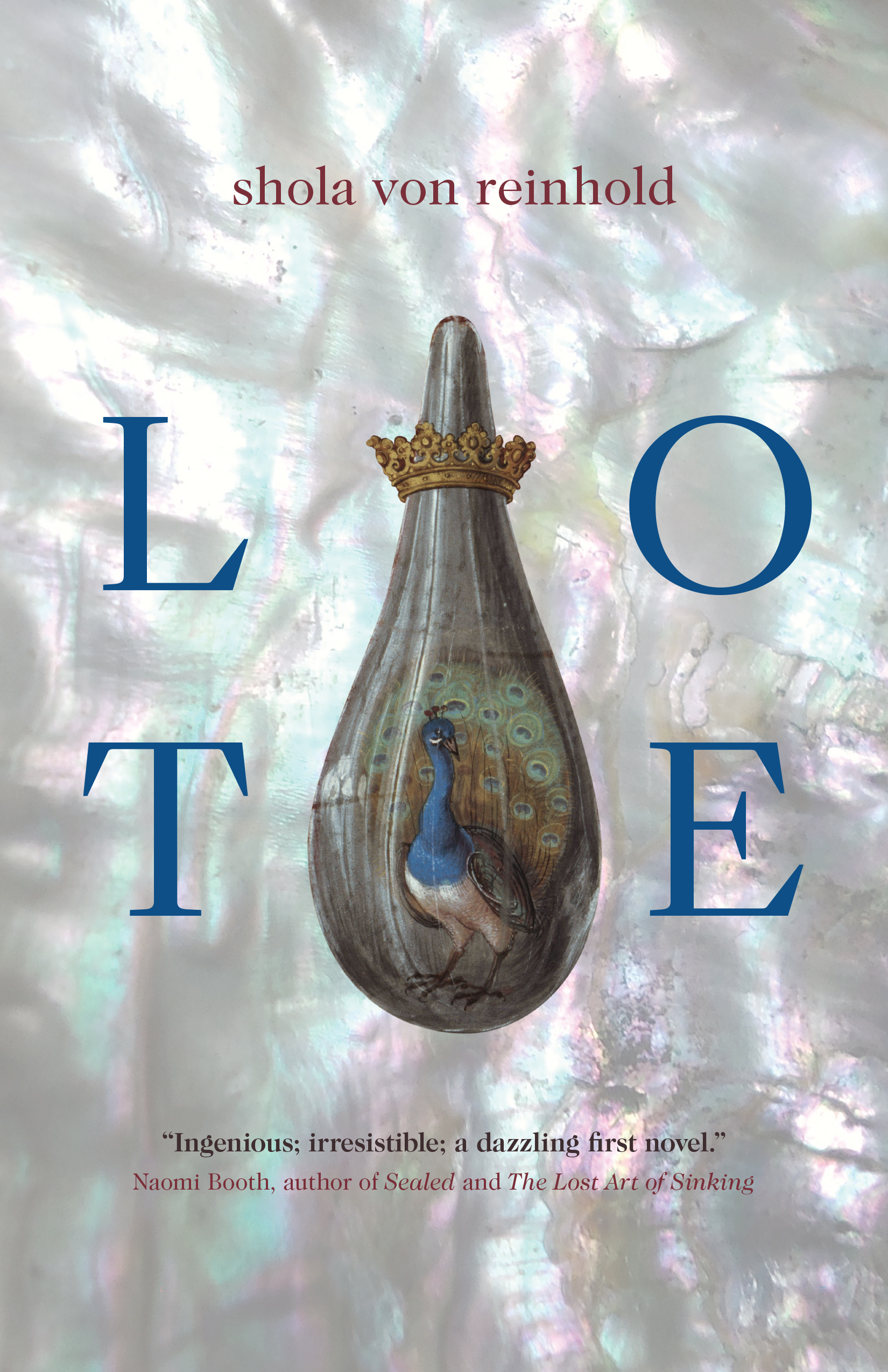
This is a very unusual book, and von Reinhold has created an unusual protagonist in Mathilda.
Mathilda worships beauty, a particular baroque, florid kind of beauty. Black, gay, and from a poor background, she is trying to work her way into higher echelons of society to live an opulent life. She periodically becomes obsessed with different figures from the 20s and 30s, Black artists in the periphery of the Bloomsbury Circle, and doesn’t so much research them as immerse herself in them. She calls them her Transfixions. The latest is a Black poet named Hermia Druitt.
Because Mathilda does not always earn her money honestly, she has to sometimes change her identity. She’s been staying in a vacant flat of a friend who is away when her host returns and meets neighbors who know her as Sadie. She has just lost a job at an archive because it wasn’t an official position. She needs somewhere to live and some money, so she thoughtlessly applies for an artists residency that she sees is located in Dun, a town in Europe where Hermia lived. To her surprise, she gets it.
When she arrives in Dun, she finds the town enchanting but the residency dire. The other residents seem to be uniformly drab, so much so that at first she fears she has unwittingly applied for a business residency. They always carry around textbooks written in incomprehensible jargon and speak in that jargon. Mathilda continues her search for evidence of Hermia while pretending to do her work on the residency.
Behind the bemusing and sometimes funny portrait, von Reinhold has a serious theme—the erasure of Black European culture from the public consciousness. A good deal of Hermia’s story is told by excerpts from Mathilda’s Bible, a book called Black Modernisms. Sometimes this novel was a bit esoteric for me, but it was always interesting. I read it for my James Tait Black project.

 What? Me Read?
I really enjoyed this book, it was imaginative and beautifully written, but I didn’t like the implication that the world needed fabulous butterfly people, who shouldn’t have to be bothered with the burden of working or contributing to society in any way other than floating about being fabulous butterflies, and that it was the duty of the rest of us poor dull mortals to provide for them. For me, that was a sour note in what was otherwise a quite remarkable book.
I didn’t take that implication. After all, the woman she was transfixed on was a poet.
That’s interesting, amazing how we all can find different things in the same book!
Yes, that’s true.