Review 2441: Real Life

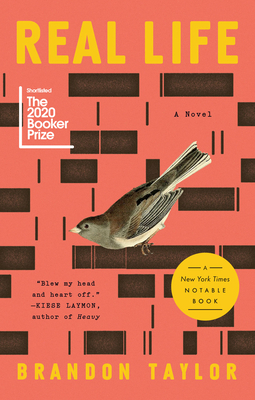
Almost from the beginning of this novel, I was struck by how morose it seemed. Yet I couldn’t quite figure out why it seemed so much more dour than novels with similar stories, like A Little Life or Shuggie Bain. Both of the main characters in these novels are White, while Wallace, the main character of Real Life, is Black, but is that the difference? It doesn’t seem like it should be.

Wallace is the only Black student in a graduate biochemistry program at an unnamed Midwestern university that is probably the University of Wisconsin at Madison. He has been having problems in his program. His supervising professor, Simone, seems to disapprove of him, and he has been blamed for the carelessness of another student, Dana. Simone seems to think Dana is a star. Later in the novel, Dana makes a racist remark to him and then reports him as being a misogynist.

Wallace and his fellow graduate students seem to be working toward their degrees expecting real life to begin once they get them. Wallace, though, is considering how much he wishes to continue despite knowing the degree is his best chance to succeed, as a Black queer man from a poor family.

Wallace has a group of friends he hangs out with, but they are all White and he doesn’t really feel he fits in with them. He is attracted to Miller but doesn’t even know if Miller likes him.

This novel minutely documents a few days in Wallace’s life. The writing is detailed, whether describing Wallace’s experiment, which has been contaminated, perhaps intentionally by Dana, or a character’s eating habits, or a gay sex scene. Wallace faces quite a few slights and insults in just three days, but he doesn’t really defend himself or point them out. He feels he is trying to fit in, but he keeps himself removed from everything, including his friends, by always saying everything is fine, even when it’s clearly not. I felt frustrated several times by his refusal to tell his side of the story or stand up for himself.

I also didn’t understand the violence in his eventual sexual relationship with Miller (who insists he is not gay). In fact, I often didn’t understand characters’ interactions with each other.

Although I believe this novel ended on a slightly more positive note (or did it? it was certainly ironic), it seemed in some ways that Wallace makes things more difficult for himself. Also, although he certainly faces incidents of racism, he also often makes broad judgments about White people, including his friends. I personally also do not enjoy explicit sex scenes, but that’s just me. I read this novel for my Booker Prize project.
Related Posts

A Little Life

Shuggie Bain

To Paradise

WWW Wednesday

I got this idea from The Chocolate Lady, and it’s turned out to be a bit different and fun, so I’ll continue with it.

The idea is to talk about what you’re reading now, what you just read, and what you plan to read. If you’d like to do that, too, please leave a comment.

What Am I Reading Now?

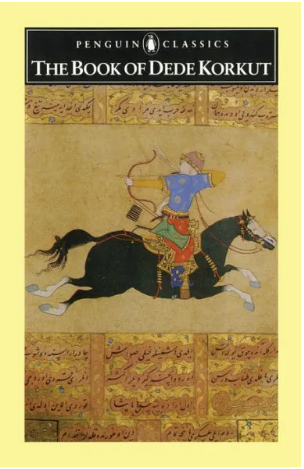
I just started reading The Book of Dede Korkut, an anonymous 14th- or 15th-century work that calls on Turkish tales from much earlier than that. When I make up my Classics Club list, I try to find very early works to put on it, and this one surfaced last time. I am just reading the third of twelve tales, supposedly written or drawn together by the shaman and bard Dede Korkut, and so far, like with most early tales, there’s a whole lot of smiting going on.

What Did I Just Finish Reading?

In celebration of the revival of Dean Street Press’s Furrowed Middlebrow imprint, I just read The House Opposite by Barbara Noble. From 1943, this novel does the best I’ve ever read of conveying what it was like to live in London during the blitz. It’s about a friendship between neighbors that starts out as indifference and even enmity.

What Will I Probably Read Next?

Unless something drastic happens, the next book on my list is Deep Beneath Us by Catriona McPherson. Although McPherson has several series going, my favorites are her stand-alone thrillers. They are sort of cozy thrillers, if that’s not an oxymoron, usually set in rural Scotland. Whenever one is going to be published, I always purchase it pre-publication. This one just arrived last week.

What about you? Have you read any of these? Do they seem tempting?

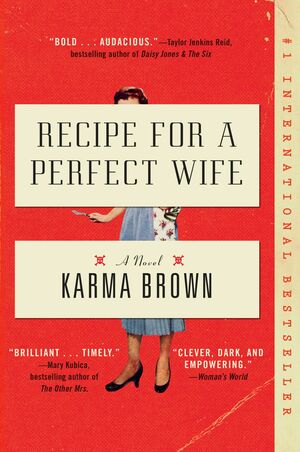
Review 2440: Literary Wives! Recipe for a Perfect Wife

Today is another review for the Literary Wives blogging club, in which we discuss the depiction of wives in fiction. If you have read the book, please participate by leaving comments on any of our blogs.

Be sure to read the reviews and comments of the other wives!

This month we welcome a new member, Kate of booksaremyfavoriteandbest!

My Review

In the present time, Alice Hale has no desire to move to the suburbs, but she finds herself doing so anyway, pushed along by her husband’s desire for a family and a white picket fence. Since she lost her job, she doesn’t feel as if she has as much say in the marriage. This situation is made worse because she told Nate she quit because she wanted to write a novel. Actually, she was fired after a stupid indiscretion, and she hasn’t written a word.

In the 1950s, Nellie Murdoch and her husband have moved into the same house that Alice and Nate buy later. She slowly begins to recognize that her husband, Richard, is controlling. Her culture tells her that this is her fault, but then he begins to be abusive.

Trying to adjust to having the whole day on her hands, Alice begins learning to garden and discovers a cookbook that belonged to Nellie’s mother. She begins cooking recipes from it. For his part, Nate is pressuring her to get pregnant, but she can’t bring herself to tell him she is not ready.

I was somewhat interested in the fates of these two women, but I was much more sympathetic to Nellie than to Alice, who seemed to be creating a lot of her own problems. Overall, though, I felt the novel was okay but nothing special. I had the biggest reaction to the revolting quotes from the old marriage manuals that headed each chapter.

What does this book say about wives or about the experience of being a wife?

These are two marriages with serious problems. The marriage of Nellie and Richard is more straightforward. Nellie does everything she can to be a good wife and housekeeper, as defined by the 50s (although to my memory things were starting to open up about then). However, Richard is an abuser and a philanderer. There isn’t much she can do about this except decide to leave him. She chooses another way, and I think we’re supposed to think her solution is fitting, but I didn’t. I don’t want to reveal it, but since she said she had the resources to leave, I think she should have done that.

I don’t see much hope for Alice and Nate, either. Alice pretty much lies her way through three-quarters of the book, some of the lies seeming totally unnecessary. On the other hand, Nate keeps stepping over the line in his desire to have a child and later exhibits some behavior that is much worse, supposedly done out of concern. (It seems to me that some guys think that if a wife isn’t working, she has no say in her own future.) But Alice doesn’t object, so although he should know he’s being too pushy (they seldom do), he doesn’t, and she doesn’t tell him.

By the end of the novel, Alice has found herself, but although there is some resolution, I foresee eventual resentments. Of course, Nate’s underhanded dealings toward the end of the novel are fairly unforgivable.

Finally, I don’t know what to think about Alice’s slowly turning herself into a replica of a 1950s housewife. Her excuse of “research” is nonsense. It seems like a such a step backwards. Certainly wives are still dealing with some of the same problems they’ve always had, but why go back? And why behave like a 50s housewife, which is sort of what she does until the end.

I know this book is supposed to be funny, but it seemed to be hitting some sore points for me, so I didn’t find it so.

Related Posts

The World’s Wife

How to Be a Good Wife

The Amateur Marriage