A Century of Books! How Am I Doing? FINAL Report

I’m done! I finished the last book on April 27th!

In January 2024, I foolishly decided to join Simon Thomas’s Century of Book Challenge, even though I knew that reading 100 books, one for each year in a century, from 1925-2024, would be tough because last year I only read 169. So, how am I doing? I was trying to finish by the end of December, but I clearly didn’t make it.

There are no longer any holes in my project. If you want to see the details, see my Century of Books page.

  • 1925-1934: complete!
  • 1935-1944: complete!
  • 1945-1954: complete!
  • 1955-1964: complete!
  • 1965-1974: complete!
  • 1975-1984: complete!
  • 1985-1994: complete!
  • 1995–2004: complete!
  • 2005-2014: complete!
  • 2015-2024: complete!

Between March 28 and April 27, I read the following books. The ones for this project are listed in bold:

  • Lady Living Alone by Norah Lofts for 1945
  • Lies and Sorcery by Elsa Morante for 1948
  • Lanark by Alasdair Gray for 1981
  • Luckier Than Most by David Tomlinson for 1990
  • A Short History of Nearly Everything by Bill Bryson for 2003
  • Walk the Blue Fields by Claire Keegan for 2007
  • Bluebird, Bluebird by Attica Locke for 2017
  • Treacle Walker by Alan Garner for 2021
  • Clear by Carys Davies for 2024
  • Murder at Gulls Nest by Jess Kidd for 2025

Yes, beginning in April, I only had three more books to go, and they nearly killed me! Reviews to come.

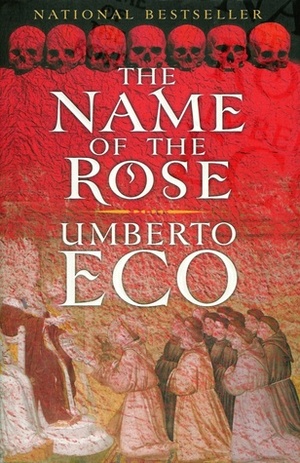
Review 2573: The Name of the Rose

Adso of Melk, an elderly monk, feeling he is nearing his death, leaves this manuscript that tells, for the first time, the events of 1327 in an Italian abbey.

It’s been a long time since I read this book, so I remembered more vividly the movie version, which concentrates on the mystery aspects of the novel. But the novel is more about the religious and political upheavals of the time.

As a Benedictine novice, Adso travels into Italy with a learned Franciscan monk, William of Baskerville from Hibernia. William has been asked to mediate an important meeting between two factions of monks—the Franciscans and other Minorite sects who believe in the vow of poverty and are aligned with the French King, and other sects who think the vow is heretical and follow the Pope in Avignon.

Once they arrive at the magnificent abbey high on a mountaintop, the Abbott, Abo, asks William to look into another issue that has recently occurred. Adelmo of Otranto, an illuminator from the scriptorium, has been found dead on the slope below the abbey’s Aedificium, a fortified building that contains the kitchen, the scriptorium above it, and the library above that. It’s not clear whether Adelmo jumped or had help, and Abo wants William to figure out what happened, preferably before others arrive for the meeting. William quickly ascertains that Adelmo must have fallen from the library, but he learns that only the librarian is allowed in the library, a man named Malachy.

Although William has been denied access to the library by Abo, he soon figures out that there is a way to get into it besides the locked entrance. After a visit to the scriptorium, where William and Adso inspect Adelmo’s work area and meet some of the monks, another monk is found dead, Venantius, a Greek scholar. This makes William surer that the deaths have something to do with the library.

He and Adso sneak into the library at night. It is a labyrinth. Moreover, they disturb someone who runs away and are almost poisoned by the air in one of the rooms.

More monks associated with the library die, and William becomes convinced that they are dying because of a secret book. He and Adso must learn the secrets of the library, and William comes to believe that the murders are related to the history of the monastery.

I have concentrated on the mystery, too, but there’s a lot more going on in this book. It is concerned with the conflict between Louis of France and the illegitimate Holy Roman Emperor, between two popes, and the then recent history of the Inquisition against certain heretical religious groups. It has several learned debates, in which the monks disagree about what seem, to the modern eye, to be obscure and trivial issues. And it fully shows the superstitions of even the most learned of men (except William) and the pit of fear that was life in this monastery.

Although the novel seems straightforward, there is a lot more going on. To me, Eco seems to be mocking the beliefs of the church at times—some of the learned disputes make such ridiculous statements (believed at the time) that I couldn’t help laughing. And I couldn’t help noticing that at least two of the characters’ names, William of Baskerville and Adelmo of Otranto, hearken back to previous mystery and gothic fiction.

A New York Times reviewer from 1980 asserts that the entire novel refers to the time when it was written (the 1970s, I assume), so obviously he also found second meanings and playfulness in the novel.

The novel moves you along despite several learned discourses. The medieval mind also seems to like lists, and I have to admit skipping through several of those. This is at once a challenging and compelling read.

Related Posts

Mistress of the Art of Death

Dissolution

A Morbid Taste for Bones

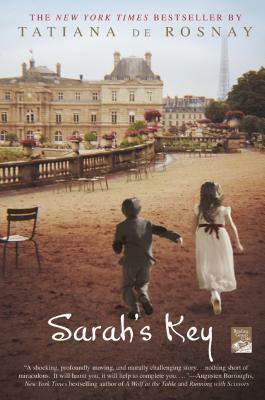
Review 2572: Sarah’s Key

In 1942, Sarah Starzynski is 10 years old, a Jewish child in Paris. There have been rumors of a raid on Jewish homes, but usually the French police take only the men. So, Sarah’s father hides in the basement while Sarah, her mother, and her four-year-old brother go to bed as usual.

But this time, the French police are there to take everyone. They don’t seem to know about her brother, so Sarah locks the little boy in his secret place, thinking she will come back soon and let him out. In the street, her mother has hysterics and screams her father’s name so that he comes out. All of them are taken to the Vélodrome d’Hiver, ultimate destination Auschwitz.

In 2002, Julia Jarmond, an American journalist who lives in Paris, is assigned to write an article about the 60th anniversary of the infamous roundup at Vel’ d’Hiv’, as the velodrome is known. Julia has never heard of it before. Aside from the ultimate destination, the Vel’ d’Hiv’ is known because, like with Hurricane Katrina, thousands of people, mostly women and children, were there for days without food, water, or sanitary facilities.

As part of her research, Julia asks French people if they know about this story. Most of them claim not to, but Julia learns from her father-in-law, Edoard, that the flat her husband Bertrand has been renovating became a possession of the family after the removal of its Jewish family on the night of the Vel’ d’Hiv’. In fact, that family was the Starzynskis.

The novel follows Sarah’s journey for a time, alternating with Julia’s story, as her personal life becomes entwined with her desire to find out what happened to the Starzynskis, particularly Sarah, who was not recorded as having died in Auschwitz. After about half the book, Sarah’s narrative stops.

I know I never read this book before, but some plot points seemed familiar, so perhaps I saw the movie. The plot was compelling enough, but I still had some issues with it, particularly that I couldn’t imagine that after a while a four-year-old child wouldn’t have made enough noise to be found in almost any apartment building.

I had more problems with the writing, though, particularly of Sarah’s sections, and the characterization. I think Sarah’s sections are written in a way to suggest childishness—the sentences are short, most of them in a subject-verb-object order that results in choppiness. Her reactions are naïve, much more so than I can imagine from any Jewish child of ten at that time and place. And ten-year-olds can have as complex thoughts as adults. She seemed, especially at first, more like a much younger child.

The writing is better for Julia’s parts, but there are still inapt word choices and no very strong use of language. It’s mediocre. For example, a glass of limoncello is described as “a beautiful yellow.” Ho-hum.

I felt the novel was interesting enough to finish, but just barely.

Related Posts

The Oppermanns

The Postcard

Suite Française

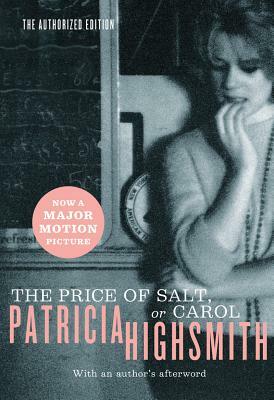
Review 2571: #1952 Club! The Price of Salt

Here we go with my last entry this year for the 1952 Club!

If you’re accustomed to Patricia Highsmith’s suspense novels, like the Ripley novels or Strangers on a Train, The Price of Salt may be a big change of pace. The W. W. Norton and Company edition I read tries to slant it more in that direction by using phrases like “sexual obsession” and “stalking” on the cover, but it’s not like that.

Therese Belivet is unhappy in her life. She is a set designer who can’t find a job, so she has taken a temporary Christmas-season job with a large department store. She hates that job. She dates a man who wants to marry her—Richard—but she doesn’t want to marry him, even though she likes him.

Then one day at work she sees a beautiful blonde woman about 10 or 15 years older than herself. She is immediately struck by her. After she sells her a doll, she puts a little thank you note into the package to be delivered, not signing it but using her employee number. To her surprise, the woman, Carol Aird, calls her at the store.

They begin a hesitant friendship, with Carol often picking her up to spend the night at her house. She lives alone because she is divorcing her husband, who is trying to get custody of their daughter. Therese, who is madly in love with Carol, can’t figure out how Carol feels, as she is cold at times.

Professionally, things are looking up a little for Therese. She gets a short-term job doing sets for an off-Broadway play and has the attention of a major director. Things are getting rocky with Richard, though, and she can’t figure out the situation with Carol. Then Carol invites her to accompany her on a cross-country driving trip.

If this book wasn’t written in 1952 or was about a man and woman, it would more or less be a standard romance with the entanglement of a 50s divorce. However, because of when it was published, it was a daring novel, especially for the United States. (I have read other similar books from English writers, published earlier.) Like many of Highsmith’s books, I wasn’t drawn to any of her characters, but I have never thought Highsmith cared about that kind of thing, in fact, may have preferred protagonists that readers don’t like.

I don’t know what I feel about it. I guess I admire Highsmith’s courage in writing it but otherwise felt sort of meh about it.

Related Posts

After Sappho

Nightwood

LOTE

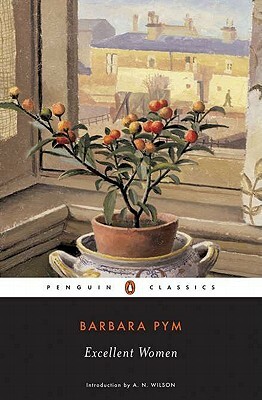
Review 2570: #1952 Club! Excellent Women

Entry #2 for the 1952 Club!

By “excellent women,” Pym seems to mean a type of English spinsters who occupy themselves with charity events and helping others, dress drably, and are taken for granted by men. That’s what Mildred Lathbury seems to think she is. She’s a clergyman’s daughter of limited means, mild-mannered and religious but observant of others’ characters while not wishing them any harm. In Excellent Women, she gets a surprising amount of attention from men, but then she’s always picking up after them.

Mildred lives upstairs of a vacant flat, and she’s curious about what her new neighbors will be like. She knows they’re named the Napiers by the sign at the doorbell. She meets Helena Napier on page 2, a young, stylish woman, and sees her around with a man, whom she assumes is her husband, Rockingham (known as Rocky). But he is not. He is Everard Bone, an anthropologist, and he and Helena, also an anthropologist, are writing a paper together. Rocky is off serving in Italy.

Mildred is good friends with Julian Malory, the vicar of her rather high church, and his sister Winifred. It is the expectation of several characters in the book that Julian will marry Mildred, but she doesn’t seem to expect it. Or does she? It’s hard to tell. Certainly, he is very friendly with her, but she thinks he is not the marrying kind.

Mildred meets Everard before she meets Rocky. Although he seems not to notice her at first, after a while he begins seeking her out. He is abrupt and serious, and she doesn’t think she likes him. Or does she? It’s hard to tell.

Once he shows up, Rocky is utterly charming and handsome. He is very friendly to Mildred and keeps popping up for tea. Mildred senses friction in the Napier home—well, she can hear them arguing. Rocky does all the cooking and cleaning in their home, because Helena is completely undomesticated. (She sounds like my kind of gal, even though she isn’t depicted particularly positively.) Mildred distrusts Rocky’s charm. She understands from Everard that Helena thinks she’s in love with him (Everard).

It being post-war London, it is still hard to find a place to live, so the Malorys decide to lease their upper floor. Soon, it is taken by Mrs. Gray, a beautiful clergyman’s widow. Mildred finds both Julian and Winifred transfixed by her, so she steers clear. It’s pretty evident what Mrs. Gray thinks Julian’s fate should be.

Mildred isn’t at all liberated. She is constantly cleaning up after men or doing ridiculously involved favors for Rocky and Helena, and all take her for granted. Yet, this is a lively, amusing social comedy. It is also a tale of the rapidly disappearing lives of upper- and middle-class English people.

Related Posts

The Camomile

Alice

My Brilliant Career

Review 2569: #1952Club! Mrs. McGinty’s Dead

It’s time for the 1952 Club, for which participants review books written in 1952 on the same week. What would a year club set between the 1930s and the 1960s be without an Agatha Christie? So, this book became one of my choices for the 1952 Club, especially good because I hadn’t read it before.

However, first, as usual, I have a list of the books I’ve reviewed previously that were written in 1952:

And now for my review.

Hercule Poirot is retired, and the days are passing slowly. So, he is happy to look into a case for an old acquaintance, Inspector Spence. An old cleaning lady was apparently murdered for her savings by her lodger. All the evidence points that way, and the lodger was found guilty. But Inspector Spence isn’t satisfied that he did it, and there is little time to investigate before he is hung.

So, Poirot journeys to a small village—only four houses and a post office. He meets a few people and seems to be getting nowhere when a chance remark gives him an idea. Mrs. McGinty had purchased ink at the post office, which meant she intended to write a letter, and she was so unaccustomed to writing letters that she had no ink. Who was she writing to?

Going back to look through some of her things, he finds a newspaper with an article ripped out. When he finds the paper at the archive, he sees the article is a “Where are they now?” piece about females connected with four infamous crimes, with old photos from 20 years before. He reckons that Mrs. McGinty, in her work as a cleaner, saw one of those photos at the home of a regular client. Someone in the village has a relationship with one of those women, but what kind of relationship? The field broadens as he considers. Is it the woman herself? A relative or spouse? With the range in age of the original females, the woman could now be anywhere from her 30s to her 50s.

And that was the problem. There are too many people in this book, many of them suspects, and Christie didn’t do her usual job of making them instantly specific. I couldn’t keep track of them by their names. The only distinctive villager at first is Maureen Summerhayes, Poirot’s incompetent hostess, who can’t cook and is completely disorganized, but I soon thought of her as Maureen, so that by the time there was a reference to Mr. Summerhayes, I had forgotten he was Maureen’s husband.

Fairly early on, Poirot meets his old friend the author, Ariadne Oliver. She is staying with the playwright Robin Upward while they try to adapt one of her books for the theater. Mrs. Upward is another of Mrs. McGinty’s clients, and thus a suspect.

I never thought of the murderer as a suspect, but I also felt I wasn’t given much of a reason to. I just didn’t think this was one of Christie’s best.

I was also struck by how little any of Mrs. McGinty’s clients cared that she was dead. There’s some real classism going on here (including the idea that she had to buy ink because she never wrote any letters; even if it happened to be true; anyone might have to buy ink).

Related Posts

The Mirror Crack’d from Side to Side

Sparkling Cyanide

Sad Cypress

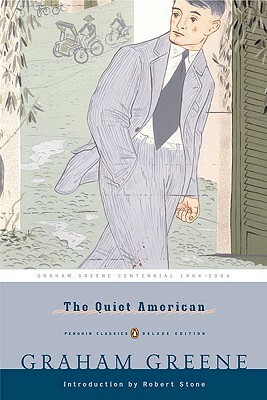
Review 2568: The Quiet American

I long ago saw the movie version of The Quiet American starring Michael Caine and Brendan Frasier, but I couldn’t remember the details. I need to read more Greene, so when this book filled a hole in my A Century of Books project, I found a copy.

The narrator, Thomas Fowler, is an aging British reporter in Saigon, a cynical, world-weary man. The time setting is the early 1950s, when it was the French fighting the Communists in Vietnam. Fowler has lived a long time in Vietnam and has a young mistress named Phuong whom he cares for more than he admits.

At the beginning of the novel, he learns that an American, Alden Pyle, is dead. Then the story backtracks to his meeting with Pyle, a young naïve man who has just arrived in the country. Fowler catches on fairly quickly that Pyle has no real understanding of the country or its people but some half-baked ideas about Vietnam based on a book by an author who spent one week in the country. However, Pyle is not receptive to other ideas (until it’s too late).

Fowler invites Pyle to his home, where he meets Phuong. Very quickly, Pyle decides that he is in love with Phuong and tells Fowler he can make a better life for her, so he will court her but not behind Fowler’s back. He seems to have no conception that this may be painful for Fowler.

Fowler is married, so he cannot marry Phuong, but he writes a letter to his wife asking for a divorce—a request he’s fairly sure will be denied. At about the same time, he receives notice that he has been promoted and should return to London, but all he wants is to stay in Saigon with Phuong. He writes asking to stay.

He knows, though, that Phuong, although she cares for him, is probably ultimately going to be practical and take the young man who can marry her—egged on by her older sister, who has always thought Phuong could do better.

With this situation between them, Fowler begins hearing rumors about Pyle’s activities in Vietnam.

There are some suspenseful passages in this story, but what Greene does even better is get into the motivations of his characters. Of course, all the Americans in the novel are clueless oafs (except Pyle, who is clueless but not an oaf), and the women are disregarded. Phuong’s sister has more of a personality than Phuong does, and in one passage, Greene has Fowler basically say to Pyle that Phuong doesn’t think. (All she does in her own time is dance, visit her sister, and read movie magazines.)

If you can get past these caveats, this is a really good, suspenseful and psychological novel. None of the characters are particularly likable, but at some points you feel a lot of sympathy for Fowler.

Related Posts

The Lotus Eaters

Lyndon Johnson and the American Dream

Perfume River

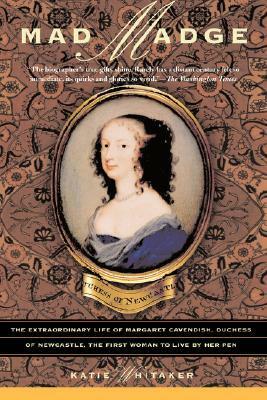
Review 2567: Mad Madge: The Extraordinary Life of Margaret Cavendish, Duchess of Newcastle

Before reading Margaret the First for Novellas in November, I had never heard of Margaret Cavendish, which is interesting because I have a master’s degree in English Literature. But that all falls into place once you read Whitaker’s epilogue to this biography.

In fact, Margaret was the first woman to publish prolifically and publicly, as opposed to having writings privately printed and distributed or, more likely at the time, including a poem or two in her husband’s writings.

Margaret Lucas, according to her own writings, was determined to be famous. Unfortunately, she was very shy. She wrote even from a girl, what she called her fancies, and commented that her mind was full of ideas.

The Lucases were a prominent Royalist family. Margaret was still fairly young when she left home to be a lady in waiting for Queen Henrietta Maria at the court of Charles I. Margaret wasn’t very good at this job, because her shyness made her seem standoffish.

The English Civil War broke out, and first the court moved to Oxford, but eventually it had to move overseas. There, Margaret met William Cavendish, fully 30 years her senior, who had valiantly fought on the Royalist side but eventually left when things seemed hopeless. At the time, he was the Marquis of Newcastle. The couple married, despite having little income, William’s estates having been taken by Parliament, and most of his money gone to the Royalist cause. However, it was in William’s house that Margaret got what she had long sought, the opportunity to meet and discuss issues with men of note and with philosophers and scientists.

Margaret began writing prolifically—plays, poems, essays on philosophy and science. Once she published, many people supposed that her works were actually written by her husband.

Eventually, she became one of the first female literary celebrities, and her name was known throughout Europe. In the epilogue, though, we learn that not too long after her death, critics began to disparage her work, and she was almost lost to history. We learn that the nickname of “Mad Madge” was bestowed on her centuries after her death (and repeated by Virginia Woolf). I looked at my own 1985 Norton Anthology of Literature by Women, and despite her prolixity, they only included one page by her and perpetuated the story of her strangeness, which apparently was based only on her original clothing, designed by herself, and her odd social behavior (not speaking much).

Although this material is undoubtedly interesting, I think that Whitaker falls over the too much/not enough detail line that I find plagues a lot of biographical writing. Whitaker falls over on the “too much” side, synopsizing every section of every work Margaret wrote, quoting every person of note who respected Margaret’s work, describing details of every house she lived in, and so on. This got a little tedious when it continued for pages, although now, having read the epilogue, I see why Whitaker felt that she needed to prove that in her lifetime, Margaret was a famous and respected figure with very early feminist leanings.

Related Posts

Margaret the First

Georgiana, Duchess of Devonshire

Queen Anne: The Politics of Passion

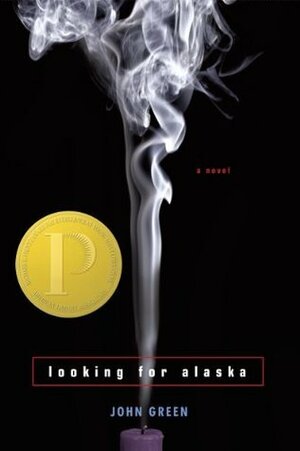
Review 2566: Looking for Alaska

The few John Green books I’ve read are aimed at teenagers (although some are excellent adult reading) and address, fairly subtly, an issue. For Looking for Alaska, it’s death and grief.

Sixteen-year-old Miles is miserable in his school. He has no friends, and the level of education is fairly low, so he convinces his parents to send him to a boarding school in Alabama that his father attended. He is hoping this change will initiate what he calls the Great Perhaps.

He is lucky enough to pull as his roommate a stocky kid named Chip (aka The Colonel). The Colonel is at first dubious of him until some other students overdo it with the initiation for new students. The custom is to haul Miles off in the middle of the night and drop him into the lake, but because The Colonel and his friends have lately pranked them, one of them wraps Miles up in duct tape and then they drop him in the lake. He is in danger of drowning, but he manages to float himself to shore and then get the tape off.

The Colonel is outraged by this prank because it was so dangerous. He has a running feud with the Weekday Warriors, rich kids who board there but return home every weekend to their parents’ homes in Birmingham. It was some of those kids who duct-taped Miles because of his association with The Colonel.

The Colonel nicknames Miles “Pudge” because he’s so skinny and introduces him to his friends, a Japanese boy named Takumi and a girl named Alaska. Miles is immediately smitten by Alaska, a cool girl but with an unstable temperament, usually out-going and dare-devilish but sometimes hysterically unhappy.

The group pals around, teaches Miles to smoke and drink and get into trouble, but they also take studying and grades seriously, especially The Colonel, who is on a scholarship and comes from a very poor home.

Then one of the friends dies.

For once, I thought Green got a little of this wrong. Some of the friends’ reactions didn’t read true, or maybe they did and I just don’t know teenagers. For example, throughout the novel, Miles is fascinated by the last words of famous people, so much so that he reads a lot of biographies. When the friend dies, he is upset, but he regrets he didn’t get to hear the friend’s last words. He is supposedly devastated by the death and blaming himself, so that seems like a flippant reaction, but Green mentions it twice.

Otherwise, Green does his usual masterly job of gaining your sympathy for his characters and presenting them with a difficult situation. He writes well, avoiding that stereotypical “teenage voice” that so many adult authors use; has a good sense of humor; and is good at depicting believable teenagers.

Related Posts

The Fault in Our Stars

Turtles All the Way Down

Tell the Wolves I’m Home