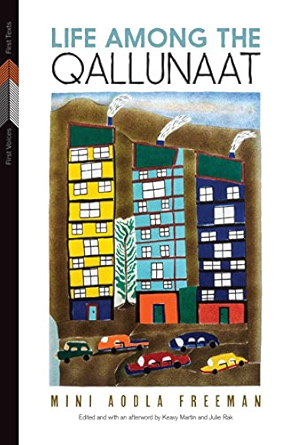
The Best Book for this period is Life Among the Qallunaat by Mini Aodla Freeman!
Reviews, reviews, and more reviews

The Best Book for this period is Life Among the Qallunaat by Mini Aodla Freeman!
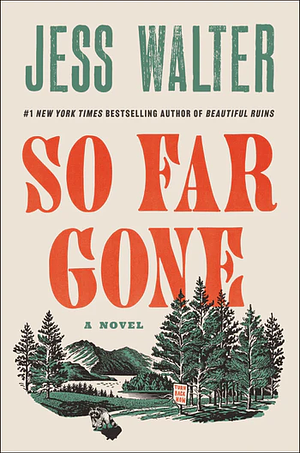
Rhys Kinnick has been leading a relatively isolated life for seven years. Back then, he lost his job as a journalist, was dumped by his girlfriend, and at a Thanksgiving dinner at his daughter’s house, got into such a big dispute with his ultra-religious, conspiracy theorist son-in-law that Bethany said she never wanted to see him again. At that point, he decided the world had no more use for him, so he moved to his grandfather’s off-the-grid shack in Eastern Washington.
But now, he finds three people on his front porch. Anna Gaines, Bethany’s neighbor from Spokane, has brought him his grandchildren—14-year-old Leah and 7-year-old Asher. Apparently, Bethany left home for somewhere unspecified, leaving instructions with Anna that if her husband, Shane, left to try to find her, she should bring the kids to her father.
Given their rocky relationship, Rhys is surprised. He has only seen his daughter and her kids once since their falling out, during Covid, when Bethany came to visit for a few minutes.
Asher is worried about missing a chess tournament, so Rhys drives the kids into Spokane, where they find out they got the date wrong. But two big thugs appear, saying that Shane has asked them to pick up the kids and bring them back. Rhys has already learned that there is a plan in Shane’s religious group to betroth 14-year-old Leah to the pastor’s son, so he is reluctant to agree. When he tries to come along or get them to agree to call Shane, one of the men hits him in the head with a black jack.
Rhys is now determined to get the kids back, because Bethany entrusted them to him. His ex-girlfriend Lucy hooks him up with ex-cop turned P. I., Chuck Littlefield, who traces them to the Rampart, a religious compound in Northern Idaho. Rhys and Chuck set off to bring them back.
This description makes the novel sound like a thriller, but although it certainly is full of action, it’s really about Rhys trying to pull his life together and recognize his responsibilities to his family. It is also about the dangers of extremist thinking, which really strikes a chord within me these days.
I see that Walter has written quite a few more books than I have read. I need to catch up, because I always enjoy his books, and the three I’ve read have all been completely different from each other.

I hadn’t heard of Jessie Redmon Fauset before, but according to the Preface of my Quite Literally Books copy, she was one of the most prolific writers of the Harlem Renaissance. Her novels were later critiqued for centering on the Black middle class, labeled as “bad fairytales,” a problem that doesn’t seem to have been resolved since then, if I can go by Percival Everett’s Erasure.
Angela and Virginia Murray are two sisters living in Philadelphia at the beginning of this novel. Their working-class parents have worked hard to purchase their house and provide them a comfortable life. Jinny appreciates this and loves her life, but Angela doesn’t want a life like they have. Unlike, Jinny, she looks White, and the only situations in which she has been made uncomfortable have been when White people discovered she was a Negro, to use the novel’s own terminology.
As young adults, the sisters lose both parents and inherit the house. Angela decides to sell her half to Jinny and study art in New York City, where no one knows her and she can pass as White. She wants to meet someone with money, so she can lead a carefree life. Girls just want to have fun.
In her art class, she meets Anthony from Brazil. She is drawn to him, but he is very poor, and when he asks her if she could live a poor life to be with someone, she says no. Then she meets Roger, a wealthy young man from a good family. He pursues her, and she comes to believe she can get him to propose. Unfortunately, she is being naïve and doesn’t seem to understand that he has no intention of marrying her, as she does not have the right social and economic background. She also ignores signs of racial bigotry.
But this book isn’t just about Angela’s relationships with men. It’s about the compromises and deceits involved in Angela’s decisions. It’s about her development from a selfish young girl to a woman who has learned empathy. It’s about what should underlie one’s life decisions. And it’s about the insidiousness of racism. It’s another time, so be prepared for some nasty attitudes that were okay at the time to express.
I didn’t like Angela for quite some time—she’s too cold and calculating, too selfish. But through strife, she learns to understand the feelings of others. I enjoyed this book very much.
I want to thank the new imprint, Quite Literally Books, for sending me the beautiful package that contained this book, in exchange for a free and fair review.
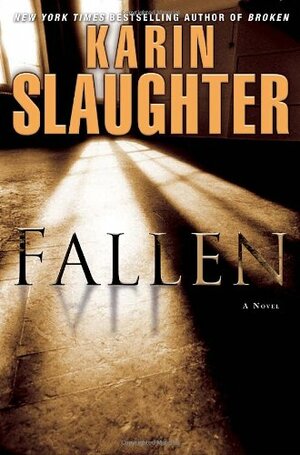
When Will Trent’s partner Faith Mitchell goes to her mother’s house to pick up her baby, Emma, she can see something is wrong. Loud music is playing inside and there is blood on the door handle. When she goes to the shed to get her mother’s gun, the gun is gone and the baby is locked inside.
Entering the house, she finds a dead man in the laundry room. She is forced to shoot a man in the bedroom and another one threatening the neighbor’s kids in the next yard. Her mother is gone.
Faith can’t be on the case, but Will and his boss Amanda Wagner have different ideas about what’s going on. Amanda is sure the incident has to do with gang activity, as Evelyn Mitchell used to be in charge of the narcotics squad. But Will can’t help thinking it may have to do with the case he investigated against her squad for skimming drug money. Evelyn was not prosecuted like the others but retired. Will has always thought she was guilty, and a large amount of money has never been found.
On the personal side, his relationship with Sara Linton is heating up just as his wife Angie has reappeared after months of absence.
This novel is the fifth in the Will Trent series and is full of action. I like Will, but I am thinking of stopping, and I have several reasons for that. One is his relationship with Sara Linton. She was apparently a main character from a previous series, and Slaughter has brought her into this one slowly, starting with the third book. My problem with her is that Slaughter hasn’t really bothered much with developing her character, having presumably developed it in the previous series, and I haven’t read the previous series. Plus, we haven’t seen much of Angie at all in the series, but in this book she is so horrible that you can’t imagine anyone staying with her. I think Slaughter is just using her as a device. Also, a little romance in this kind of novel is okay, but there’s an awful lot of emphasis on it in this book.

Finally, this took longer to occur to me than it should have, but this is Atlanta, Georgia, yet all of the principal characters in this novel are White, except for the bad guys. I had some difficulty in my brief bit of research finding data for 2011, the publication date of the book, but Atlanta is about 50% Black in population. The GBI doesn’t publicize its statistics, but the current demographics of the APD exactly meet the percentage of Black people in the community. Back in 2011, the APD was about 30% Black, and in 2010 there were about a third more Black people than White people in the city (statistics may be different for the greater Atlanta area). Yet, there’s not a single Black or Hispanic main character in this book. The TV series has taken care of this by making Will Hispanic and both his boss and partner Black. In fact, the only main White characters are a much nicer Angie and Angie’s partner Ormewood (no Sara).
So, is Slaughter a bigot or writing for what she thinks her audience wants? (2011 isn’t that long ago.) I was also irked by how Faith has spent two books not eating when she is having trouble with her diabetes. Come on! In any case, with Sara moving in and this belated realization, I’m moving out. Let me add, though, that Slaughter writes a truly suspenseful, exciting book.
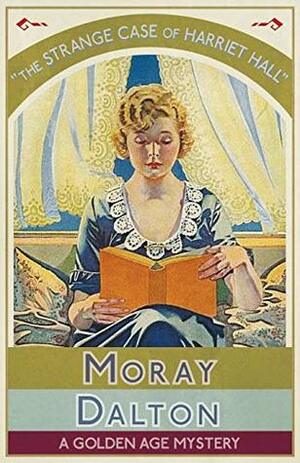
Since the beginning of September, I have looked for info about Readers Imbibing Peril, which I have participated in for years, since I couldn’t remember whether it started in September and went through October or started in October and went through November. Since I couldn’t find anything, I assumed it started in October. Well, it’s too bad that it actually started in September, because I missed marking three other mysteries for the challenge. It is usually advertised through Instagram, which I don’t use much.
So, despite this being my fourth book to qualify, it’s going to count as my first.
Well, there certainly are surprises in this book!
Amy Steer is a young woman looking for work, a necessity made worse by the empty state of her pockets and her landlady’s demands to raise her rent. She is looking through the want ads when she spots an ad looking for relatives of her father. She never knew her father, but she answers the ad and makes an appointment.
She meets a disturbing but seemingly kind woman who says she is Harriet Hall, Amy’s aunt. She says she is staying in a house in the country owned by friends and invites Amy to stay. She even gives Amy £100 to spend on nicer clothing.
On Monday, the day she is expected, nicely dressed Amy is on the train to her aunt’s. She meets a pleasant young man named Tony Dene who is getting off at the same station. They are getting along just fine until Amy tells him about Aunt Hall. Then he abruptly leaves the car. No one picks Amy up, so she is forced to walk five miles to Harriet Hall’s cottage, finding no one home. But the door is unlocked, so she stays.
The Denes lived with their uncle until he died the year before. Then Mary Dene, Tony’s mother, inherited everything and bought a property in the country. But soon Harriet Hall appeared. Mary has told her three children that Harriet is an old friend fallen on hard times. She lets Harriet live in the cottage rent-free, but Harriet comes over every day to sponge or take something. Tony and his sister Mollie hate her, but Lavvy, who is engaged to marry Sir Miles Lennor, only cares about her wedding.
Amy stays in the cottage Monday night, but Harriet never appears. Tony, who feels bad about abandoning her, drops by with his sister’s dog, and the dog’s barking at an old well in the back of the house causes Tony to remove the top. Inside the well is a body.
Tony calls the police, but once the body is identified as Harriet Hall and the police understand the relationship between her and the Denes, Tony is a suspect. He has no alibi because instead of driving home from the train station, he drove around aimlessly for hours.
Scotland Yard Inspector Collier is called in fairly quickly. Although more evidence comes out against Tony, Collier is reluctant to charge him. Then there is a shocking discovery followed by another death.
If Amy is supposed to be our heroine, we see remarkably little of her, spending more time with the Denes. However, she does get to be in peril.
There’s a little bit of a cheat here, as a person of interest doesn’t appear until page 150. But overall, we’re having so much fun we don’t care. Dalton’s books are well written and move along at a brisk pace. Some aspects of this one were obvious, but for 1936 the book seems fairly avant-garde.
I received this book from the publishers in exchange for a free and fair review.
Life Among the Qallunaat is a memoir by Mini Aodla Freeman, an Inuit woman who became a translator and eventually a playwright, poet, and author, and respected elder of her people. This memoir begins when, at nineteen, she went to work as a translator in Ottawa, but then it returns to the events of her childhood and ends with her departure to Ottawa.
Mini was born on Cape Hope Island on James Bay, in what is now Nunavut. Aside from the nomadic nature of her family’s Inuit life, when she became older, she had many experiences away from her family. She was sent to school after her mother died at such a young age that she was the smallest child and was picked on by the others at the instigation of her cousin. Unlike the other children, she was not picked up by her family at the end of the year, so one of the teachers took her home. Then her father came to get her during the next term, and her family kept her home for the next year. Despite obstacles, she managed to finish eighth grade and did some schoolwork beyond that.
At 15 or 16, she helped out at the infirmary of her school and was encouraged to study nursing, so she did that for a while and later was hospitalized for tuberculosis. Yet after recovering, she stayed at the hospital doing nursing duties. During the stay in the hospital, she was called on to translate, because she spoke her dialect of Inuit as well as Cree, French, and eventually English. She lived with a family as a nanny for about a year but left after that same cousin made trouble for her. Instead, she took a job as a laundress at a school for a while, but she found it mentally unstimulating, so she switched jobs with a school house mistress who found it impossible to control her charges, a situation Mini had no trouble with.
This book is fascinating not only because of the details of Mini’s life but also for her explanations of Inuit customs and the differences between her people’s ways of thinking and behaving and our own. It is simply written, touching at times, and definitely an adventure to read. I believe I put this book on my list after last year’s Nonfiction November.
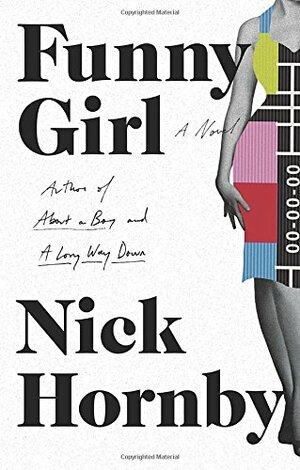
I have enjoyed some of Nick Hornby’s books very much, particularly some of his early ones, and others not so much. I have been watching the series Funny Woman, though, and when I learned it was based on this book, I thought I’d read it.
It’s the Swinging 60s, and Barbara Parker wants to make people laugh. Her relatives encourage her to enter the Miss Blackpool competition in hopes it will keep her in Blackpool instead of leaving for London. She wins, but when she realizes she’s supposed to participate in activities for a year, she decides not to accept. Soon, she is in London.
The novel follows her as she looks for work and a roommate, and finally an agent. The agent is more interested in sending her for modeling gigs, but she wants to act, so she gets him to send her for auditions. After some failures, she is lucky enough to come upon the writing team of Tony Holmes and Bill Gardiner, their producer Dennis Maxwell Bishop, and actor Clive Richardson. They are working on a different project that they’re not happy with, but they are so charmed by Barbara (now calling herself Sophie Straw) that they decide to write a show for her. Sophie’s offbeat humor makes her a sensation and the show Barbara (and Jim) a success. (Ironically, her character has her true name.)
I didn’t think this book was particularly funny, but it’s still a fun read that is full of detail about early British TV comedies (much of which I wasn’t familiar with), the craziness of London in the 60s, and the progress of our ambitious but likable heroine. Toward the end, it takes a turn toward conventional romance, but the ending lends perspective to everything. Although Sophie is engaging, a lot of this novel hangs on the existing synergy between the members of that original team and what happens when it inevitably cools off. And, of course, the difficulties of a young woman trying to make it in show business.
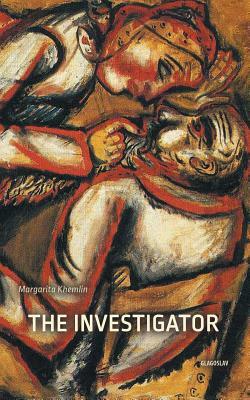
Contemporary writer Margarita Khemlin has set this story in 1950s Soviet Ukraine, when reverberations from World War II were still going on.
Police Captain Mikhael Ivanovich Tsupkoy unusually gets the case of the murder of a Jewish woman, Lilia Vorobeichik, who has been stabbed with a knife. The situation is unusual because the protocol for a serious crime is to call in a criminal investigator. However, Tsupkoy is able to wrap the case up immediately because Lilia’s boyfriend, Roman Nikoleyeivich Moiseenko, confesses immediately. When he commits suicide in jail, the case is closed.
Later, Tsupkoy catches a glimpse of someone who he thinks is the dead woman. He returns to her house to find her twin sister, Eva, living there. She and another woman are making matzo, which apparently was illegal at the time, but they claim it’s for feeding the chickens. When he does a recheck the next day, he meets a dressmaker, Polina Lvovna Laevskaya. Tsupkoy becomes interested in what’s going on and seems to be still investigating the case.
Because his friend, Jewish veteran Evsey Gutin, knows everyone in the Jewish community in town, Tsupkoy goes to visit him and his wife Belka to ask Evsey about a name he’s come across. Shortly thereafter, when Tsupkoy is on vacation, he learns that Evsey committed suicide.
I found Tsupkoy’s investigation to be confusing, because he keeps returning to the same large group of people to eke out one more fact. In retrospect, it’s hard to reconstruct the order of things. One important point, though, is that after Polina Laevskaya makes allegations that the investigation into Lilia’s death was perfunctory, she begins spreading rumors designed to ruin Tsupkoy’s reputation. People who previously trusted him begin to avoid him.
This novel seemed rather messy structurally. For one thing, I would have loved to see a list of characters like used to be included at the beginning of many Russian novels, because there are lots of them, and they are referred to inconsistently, sometimes by last name, sometimes by first, but more often by a nickname, and hardly ever by their patronymics, as used to be the case. Also, the later investigation, admittedly not official, seems haphazard. Fairly early on, I had an idea who the murderer might be, and although I doubted myself and didn’t come up with an alternative, I was right.
There often seemed to be something going on in the conversation that was unspoken and that I didn’t understand. Maybe that was because of the times and location. Certainly, there is a lot of tension between the Communist ideals and the realities of the Jewish comrades, as what Tsupkov calls Jewish nationalism (which just refers to their traditions, apparently) is illegal. Ethnic groups are supposed to assimilate—and this fact is important to the plot.
Finally, the motive only comes out in the last few pages, and it’s ambiguous and seems weak. If it had been developed a little more, it might have been stronger, but that may have been difficult to do without revealing the killer.
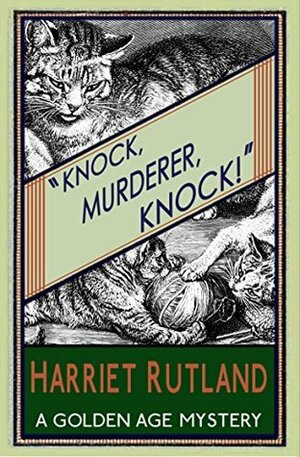
The mostly elderly occupants of the Presteignton Hydro spa resort like nothing better than to gossip about the other guests. Lately, they’ve had fuel for their fire by the arrival of beautiful Miss Blake, who dares to wear makeup, shorts, and backless evening gowns (this is 1938). Their tongues are wagging even more with the advent of Sir Humphrey Chervil, assuming a connection because he is young and handsome, even if they hardly talk to one another.
All the men at the resort like Miss Blake, but none of the women do. Nurse Hawkins has her eye on Admiral Urwin, so she certainly doesn’t like Miss Blake seeking him out. Even Mrs. Napier, who spends a lot of time falling down on purpose to get attention, thinks Miss Blake is a floozy.
On the night of an entertainment, Sir Humphrey spends some time with Miss Blake, staying up late talking in the drawing room. The next day she is found dead in the same room, a knitting needle plunged through her skull.
Inspector Palk locks onto Sir Humphrey when he finds he went into Miss Blake’s room instead of escorting her to the door. His fate is sealed when her jewels are found in his closet.
However, a few days later, after young Winnie Marston was seen canoodling with her father’s chauffeur, she is also found dead of the same cause. Inspector Palk still thinks he has the right man for the first murder and wants to arrest the chauffeur for the second—until he finds out he has actually married Winnie.
Mr. Winkley appears on the scene after Winnie’s death. He says his hobby is murder and talks everyone into staging a re-enactment of the first crime—the one supposedly solved. But who is Mr. Winkley, anyway?
Although I found this novel entertaining enough, it doesn’t spend a lot of time on characterization (which is common for the time)—usually just giving the characters some defining trait—and it wasn’t enough for me. I kept getting the little old ladies mixed up and even confused the Admiral and the Colonel. Plus, in one instance Rutland only brings in a character right before killing him off, even though he’s been there all along. Still, the novel was fun, except the last chapter where everything is explained, which I felt was an anticlimax.
I received this book from the published in exchange for a free and fair review.
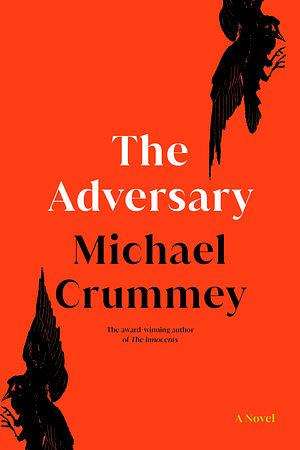
The Adversary is a powerful book, about a 19th century Newfoundland community and the feud that affects everyone. It is a brutal story about brutal people.
The novel begins at a wedding. Abe Strapp, the son of the richest man in town, is due to marry Anna Morels, the daughter of a powerful man from further down the coast. This match was made by Abe’s father in the hopes it would steady Abe, who is a vicious coward and bully. But there is an objection. The Widow Caines brings forward her servant, Imogen Purchase, claiming she is pregnant after being raped by Abe. Mr. Morels removes his daughter, and the Widow suggests Abe marry Imogen instead. Strapp and the Widow clearly hate each other, and it is with surprise that we learn they are brother and sister.
The Widow’s hatred stems from watching her brother being spoiled and given anything he wanted. While she had a head for business and worked for years at her father’s side, the business went to Abe when he died. Before that, he arranged his daughter’s marriage with Caines, a wealthy old man. She married him but split with her father. Upon her husband’s death, she took to wearing men’s clothes and running his business.
Abe has an employee and godfather, Beadle Clinch, who tries to keep him from his worst excesses. He is revolted by the Widow’s daring to dress like a man and run a business. So, even though he is supposed to be a religious man, he connives with Abe to try to bring her down. Despite appearances, he is the adversary. One of the things he does is to get Abe made a magistrate, hoping that will bring him a sense of responsibility. Instead, with two henchmen the Beadle put with him to restrain him, he runs rampant. Almost immediately, he murders a man for having signed a statement against him. Nothing happens to him.
For a long time, I was sympathetic to the Widow, thinking she was being misrepresented because she was different. There are some innocent people in town, but they are pulled into the maelstrom of this feud. And the Widow turns out to be as bad as her brother.
The novel is written more like a chronicle of the town, so that many of the characters are one-sided. The most developed are the two siblings, whose feud affects everyone. But even without the hatred for his sister, Abe is a vile person indeed, and his antics affect a lot of people.
Book reviews of mainly modern & contemporary fiction
Writer and Historian
There is nothing more satisfying than reading a book while sipping a hot cup of tea.
A historical fiction book blog
Emerging as an artist
Liz Dexter muses on freelancing, reading, and running ...
For mostly adult, literary, fiction; focusing on historical, contemporary, biographical, and women.
"Well, there’s so much to read, and I’m so far behind." Wallace Stegner
Read to live and live to read
A bookish blog (mostly) about women writers of the nineteenth and twentieth centuries
A Celebration of Russian Literature
Reading: it's personal
Based in Romania, reading all over the world. Mostly fiction, some memoires and a little bit of poetry.
Adam Burgess
"Vivre le livre!"
"History is a vast early warning system." Norman Cousins
Scottish Book Blogger
"She had read novels while other people perused the Sunday papers" - Mary Elizabeth Braddon
A word after a word after a word is power. --Margaret Atwood
Books • Opera • Art • History
FOR DISCERNING READERS
Your online source for Jane Austen and her legacy
A Community of Classics Lovers
A blog about Irish books, writers, writing and everything in between.
 What? Me Read?