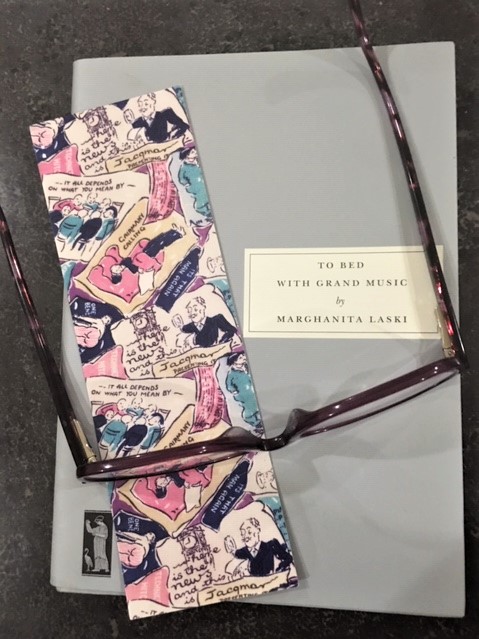
The Classics Club has announced another spin. How do the spins work? I pick 20 books from my Classics Club list and number them. On October 17, the club picks a number, and that’s the book I will read before December 12, the deadline for this spin. So, here is my list for this spin. This time, I haven’t picked any of the difficult books on my list:
The Castle of Otranto by Horace Walpole
The Mayor’s Wife by Anna Katherine Green
The Black Arrow by Robert Louis Stevenson
Rhododendron Pie by Margery Sharp
The Grand Sophy by Georgette Heyer
Grand Hotel by Vicki Baum
Merkland, A Story of Scottish Life by Margaret Oliphant
When I was selecting a book to read for the 1976 Club, I realized I had read only one book by Gore Vidal and that so long ago I could barely remember it. So, I picked 1876.
Vidal’s sometime-narrator Charles Schuyler is returning to America after almost a lifetime in Europe, where he was documenting European events for the American press. He is accompanied by his daughter Emma, the widowed Princess d’Agrigente. Their circumstances are dire. Schuyler’s fortune was wiped out in the Panic of ’73, and when d’Agrigento died unexpectedly, Schuyler was shocked to find that the Prince’s debts exceeded his fortune. So, Schuyler has come back to America with two goals—to help get Governor Tilden elected as President in the next election so that he will be granted a post and to find a wealthy husband for his daughter.
They first return to New York. It is the Gilded Age, and they are at once drawn into the opulent but vulgar world of robber barons, the Astors and others, who now that they are loaded are trying to become the heads of society. Vidal uses this section to draw sketches and repeat gossip about many of these figures. The first section of the novel reminded me very much of Edith Wharton’s The Age of Innocence. I recognized some characters, although here they go by their real names.
I was about 100 pages into this social whirl, observed with a great deal of snark, when I began to wonder where the plot of the novel was. It eventually emerged, with almost creaking slowness, as the events of the election of 1876, told with a great deal of bias.
Now, I’m not an expert on this period, but I recently read Ron Chernow’s biography of President Grant. In it, he made the point that Grant’s ruined reputation was partially a result of the number of Southern historians who predominated from the post-Civil War years up well past World War II. Well, Vidal has certainly read them, for he does his best to continue trashing Grant. Governor Tilden is running as a Democrat, but not once do his characters mention, for example, the dire results for the South if a Democrat was elected that year. At this time, Federal troops were still posted in the South because people—particularly black men—were still being murdered years after the war. Vidal glancingly mentions but shrugs off suggestions that people were being “discouraged” from voting Republican and says that Grant dispatched troops to some Southern cities to meddle with the vote. Grant sent troops to avoid more deaths and to allow people to vote the way they wanted to. In any case, the result of the election for the South was the same, because the Republican candidate, Rutherford Hayes, promised the removal of troops from the South to get more votes, thus ending Reconstruction and setting the South back years in its recovery and in civil rights.
The 1876 election was stolen from Tilden, and the story of it might have been interesting if more impartially handled. Instead, Vidal makes Tilden the only honest politician in a country riddled with corruption (it was, but I doubt Tilden was the only honest man) and plays down the skullduggery engaged in by the Democrats.
Further, there are too many characters in this novel to keep track of and they are too lightly characterized. Vidal seems more interested in relating scandalous tidbits and making up epigrams.
Then there’s the description on the novel cover, which should have tipped me off about how I was going to feel about it. I know that authors don’t write the blurbs, but it’s he that calls his historical novels “Narratives of Empire.” Now there’s a guy who takes himself seriously. The cover says, “With their broad canvas and large cast of fictional and historical characters, the novels in this series present a panorama of the American political and imperial experience as interpreted by one of its most worldy, knowing, and ironic observers.” Oh, man.
With the 1976 Club looming, I picked out some books to read for October that were published in 1976. Sleeping Murder also qualifies for RIP XVI! As usual, on this first post I’m also listing anything else I’ve reviewed published in 1976. As far as I know, there are only two:
Newlywed Gwenda Reed is house hunting along the south coast of England for herself and her husband Giles, both newly arrived from New Zealand. When she comes across a house in Dillmouth, she immediately feels at home there, although she experiences a fleeting panic on the stairs. Nevertheless, she buys the home.
Gwenda is residing in it to oversee updates to the house when she begins to experience something odd. She expects the stairs down from the terrace to be in one place but they are in another. When workmen remove some bushes where she thinks the steps should be, they find the stairs used to be there. Similarly, she keeps trying to walk through the wall in the dining room where she thinks there should be a doorway. When the workmen examine the wall, they say it had a door there. She imagines a particular wallpaper in what used to be the nursery, and when a blocked cupboard in that room is opened, she sees that wallpaper inside.
Gwenda is most upset because she’s had a vision of a woman dead at the bottom of the stairs and realized it was Helen. But she has no idea who Helen is. Feeling confused, she decides to consult friends in London. Accompanying the group out for the evening is her friends’ aunt, Miss Jane Marple. After she explains what’s been happening, Miss Marple says she should find out if she ever lived in England as a child.
Inquiries find that Gwenda lived in the house when she was three. At the time, her father had a second wife named Helen. But Helen supposedly ran off with another man. Gwenda and Giles find that Helen’s half brother, Dr. Kennedy, still lives in the area. He has some letters that she sent right after she left but hasn’t heard from her since.
Gwenda and Giles begin to believe that Helen was murdered. Did Gwenda’s father kill his wife, or did someone else?
It was hard for me to judge whether this was a difficult mystery, because I vividly remembered a TV production of it. However, knowing the identity of the killer made me appreciate how skillfully Christie salts in the clues without giving too much away. The characters are clearly defined, and Miss Marple is at her cleverest.
Effi Briest is sort of a German version of Madame Bovary. It seems that the last half of the 19th century was a big time for novels about unfaithful wives. However, whereas Anna Karenina was a call for improvement in women’s rights on this issue, Effi Briest seems to accept the unfairness of the laws and societal mores. Nevertheless, I liked this novel more than Madame Bovary, which is more of a character study of a stupid woman.
Effi is only sixteen when the Baron von Instetten, an old suitor of her mother, comes calling. Within an hour, he proposes marriage and is accepted. The Baron is a civil servant, and after their marriage, he takes her home to a seaside village in upper Pomerania. The house is dark and depressing and reputedly haunted. Society is limited, and Effi, who is a gay person who likes to enjoy herself, finds only one congenial inhabitant, the local chemist. The women she has to socialize with are commonplace or spiteful. Effi feels neglected and unhappy.
After the birth of her daughter, the Crampases arrive. Major Crampas is an old schoolfriend of the Baron and a known womanizer. (I wonder if his name’s resemblance to Krampus is a coincidence, considering the Germanic origins of that character.) Although she tries to avoid it, Effi is drawn into an affair with him. When her husband gets a posting to Berlin, though, she is happy to leave and put it behind her. But it is not behind her at all.
I liked the character of Effi very much, but she is the only one in this novel who is fully drawn. The others just seem like placeholders for their actions, except for Rollo the dog. Also, the harsh reactions of everyone when they find out about the affair, even though it is long over with, seem even more extreme than Karenin’s in Anna Karenina.
Even though this novel is 20 years more recent than Anna Karenina, having been published in 1895, it has a much more rigid and judgmental message despite Effi being a sympathetic character. As a person, I liked Effi better than silly Emma Bovary or naïve Anna Karenina, but I found the novel a bit punitive. Fontane was reacting in it to a story he heard of a similar event in which he was struck by the lack of surprise or dismay expressed by society at the harsh treatment of the woman involved, so he is combining an approach to our sympathy with Realism in this novel.
Micah Mortimer grew up in chaotic conditions, so he structures his week carefully and keeps his basement apartment neat. He lives there rent-free in exchange for maintaining the building and has his own tech business.
He has been dating Cass for three years. When she is caught with a cat in her apartment, she worries that she’ll be evicted, but Micah does not understand her hints to invite her to live with him. The same day, Brink, the teenage son of his old girlfriend, comes by. His mother has never told him about his father, so Brink thinks he is Micah. Micah knows that isn’t possible, but he focuses on trying to get Brink to call his mother, who doesn’t know where he is.
Micah extends Brink an invitation to spend the night, but that backfires. For Cass interprets this invitation as a pre-emptive move to avoid having to invite her to move in, so she breaks up with him.
This novel is a touching character study about a man who is kind and thoughtful but needs to loosen up a bit and get a clue. I’ve recently rediscovered Anne Tyler and have been reading more of her.
Thanks so much to all those who commented on the fourth book in the series, August Folly. I’m sure it was a relief for those not on Team Tony. People who made comments or posted reviews were
So, far, three of the first four books have been rereads for me, but I am pleased that the October book, Summer Half, is another one I haven’t read before. I’m sorry to give everyone a late start on this one. If I had noticed the announce date was so far into the month, I would have wrapped up August Folly earlier. I will be posting my review of Summer Half on Friday, October 29. I hope some of you will join me. Happy reading! And here’s our little badge.
Here’s another book for RIP XVI, although a cozy one.
People in the town of Otterbridge are shocked when the body of Dorothea Cassidy, the vicar’s wife, is found murdered in the park. Most of the people in town loved her, she was so vibrant and enthusiastic.
Inspector Ramsey and Sergeant Hunter are having difficulty retracing her movements on the day before. Almost everyone who saw her is lying in some way. Old Walter Tanner found her car in his driveway that morning, and only he admits to disliking her, saying she was constantly after him to approve of changes she wanted to make to the church.
The Inspector Ramsey books are one of Cleeves’s earlier series. I have read all of her Vera Stanhope and Jimmy Perez books and a couple of stand-alones. Although this one has a clever premise, it feels less polished than the others. Cleeves often lets readers know some of what her suspects are thinking, but information about them is introduced naturally in the other books, for example, in conversations between characters. Here, we no sooner meet a character than we are told several facts about the person, a device which seemed clumsy to me. Also, character development seems quite a bit sketchier.
From his birth and continuing through his adolescence, Edward Feathers was abandoned or taken away from every person he loved. As an adult, he was a still, stiff man unable to love.
After the death of his wife, Betty, Sir Edward, or Old Filth as he is known in the world of law where he is a prominent lawyer, begins re-examining the events of his past. He also makes attempts to connect with people important to him, but these attempts are abortive. Slowly, all the things he has never spoken of are revealed.
Written in sterling prose, Old Filth is a mesmerizing story about the Raj Orphans, children who were shipped to England at an early age from the Far East. The novel is touching and completely gripping. And for those who loved it like I did, hooray! It’s the first of a trilogy.
It’s time for our reviews of August Folly, the fourth book in Angela Thirkell’s Barsetshire series. I just reviewed this book last April, so I’ll link back to my original review for most of my comments and the plot synopsis. My post covers some other observations I have after my reread.
First, I was struck by Thirkell’s depiction of Richard Tebbins, because it is so typical of adolescent behavior. His mother adores him to the neglect of his (more deserving) sister Margaret, but of course he is embarrassed by everything his parents do and then feels guilty about his rudeness to them. His passion for Mrs. Dean is absurd but, I think, very true to the behavior of an infatuated youth, and he finally begins to grow up later in the novel.
Of the two love affairs, the novel concentrates more on the one between Margaret and Laurence Dean, but I was more interested in the one between Charles Fanshawe and the much younger Helen Dean.
There are lots of comic characters in this novel. The managing Mrs. Palmer is almost unbearable at times (as is the fussing Mrs. Tebbins), but both of them show other sides. And that’s what I like about Thirkell. She creates some hilarious characters, but most of them, except perhaps Moxon, the curate, show other, more sympathetic sides, or the humor is gentle, not mocking. I wasn’t much taken with the conversations between the donkey and the cat, but that’s a minor criticism and a very small part of the book.