Classics Club Spin #40!

It’s time for another Classics Club spin! How does it work? You post a numbered list of 20 of the titles from your Classics Club list. The club picks a number, and that determines which book you read before the end of the spin.

If you want to participate, post your list before Sunday, February 16, and read the book and post your review by Sunday, April 11. That gives you two months to read the book. If you’re not a member of the club, all you have to do is post a list of 50-100 classic books you would like to read and set a deadline for yourself. Then sign up for the club at the Classics Club blog site. If you are having a hard time thinking of that many classic books, the reviews on our website or the Big Book List will help.

And here’s my list, with repeats, because I have fewer than 20 titles left to read:

  1. Les Misérables by Victor Hugo
  2. Love’s Labour’s Lost by William Shakespeare
  3. The Passenger by Ulrich Alexander Boschwitz
  4. Incidents in the Life of a Slave Girl by Harriet Jacobs
  5. Tis Pity She’s a Whore by John Ford
  6. The Methods of Lady Walderhurst by Frances Hodgson Burnett
  7. The Deepening Stream by Dorothy Canfield Fisher
  8. Cecilia, Memoirs of an Heiress by Frances Burney
  9. Our Mutual Friend by Charles Dickens
  10. The Princess of Cleves by Madame de La Fayette
  11. The Three Musketeers by Alexandre Dumas
  12. The Tavern Knight by Rafael Sabatini 
  13. The Passenger by Ulrich Alexander Boschwitz
  14. Love’s Labour’s Lost by William Shakespeare
  15. Incidents in the Life of a Slave Girl by Harriet Jacobs
  16. The Tavern Knight by Rafael Sabatini 
  17. Tis Pity She’s a Whore by John Ford
  18. Our Mutual Friend by Charles Dickens
  19. The Methods of Lady Walderhurst by Frances Hodgson Burnett
  20. The Deepening Stream by Dorothy Canfield Fisher

I’ve got some hefty ones in there, and I have been reading a series of tomes, so I hope I get one of the shorter ones!
Review 2540: Elizabeth and Essex

Years ago, I read Lytton Strachey’s Eminent Victorians and found it both informative and entertaining—full of scandalous information about some of the Victorian age’s most prominent citizens. I was hoping for something similar from this book, but it is a little more serious, although Strachey gets some zingers in.

The book is the 1928 version of history written for the general public. There are a very few footnotes and a couple of pages of bibliography at the end. It is written in Lytton’s liquid, sometimes sardonic style.

This book is about Queen Elizabeth and her last favorite, Robert Devereaux, Earl of Essex. He was more than 30 years younger than she and the stepson of her earlier favorite, Robert Dudley, Earl of Leicester. Elizabeth’s relationships with her favorites, at least with this one, seemed more like volatile love affairs than anything else, with fulsome compliments expected and fiery spats, which usually resulted in Essex stomping out and being forgiven after an apology. In fact, considering her own temper, I’m surprised that Elizabeth put up with him, because he certainly treated her less respectfully than he would if his sovereign was a man.

You have to get used to Strachey, because he starts out right away by making assertions about Elizabeth’s character without giving examples or showing how he is right, as a modern historian would do. And his depiction seems pretty sexist. Over time, he demonstrates some of these characteristics, though. Still, Elizabeth’s main problem with Essex seemed to be that he didn’t behave as if she was his sovereign. I think he had an inherent assumption that he was superior because he was a man, not surprising in that time.

Without going into all the details of the story, which Strachey labels “tragic,” I’ll say that it boils down to temperaments. Essex was proud and fiery, and he valued his family name. He had poor judgement about who to take advice from and was actually incapable of taking any that involved caution and circumspection. He was brave in battle and pictured himself as a great war commander, but he was not. In fact, he seemed to me like a charismatic, well-liked bear of little brain. But he wrote wonderful letters.

Strachey clearly didn’t like Sir Walter Raleigh, but I don’t know why. He just hinted around about him. According to Strachey, no one liked him.

Essex was a loyal friend to many, among them Francis Bacon. It was Bacon’s Machievellian advice that Essex was unable to follow. Despite Essex having supported him for several positions, Bacon did his best to put the nail in Essex’s coffin when he was tried for treason.

This is an interesting book and even though Essex seemed to me like a spoiled baby most of the time, I saw by the end that indeed it was a tragic story.

Related Posts

The Marriage Game

Hunting the Falcon: Henry VIII and Anne Boleyn and the Marriage That Shook Europe

Mary Boleyn

Review 2539: A Morbid Taste for Bones

I didn’t really like the Cadfael series on TV, and I thought I had read at least one book long ago and decided not to pursue it. However, I saw that the first book filled a hole in my A Century of Books project, so I thought I’d give it another try. Now, I’m not sure I ever read any, because this book is pretty good!

In 1137, Brother Cadfael is a Welsh monk in a Benedictine order in Shrewsbury. He has led an exciting life, but now a quiet one taking care of the monastery garden suits him. He has two young assistants. Brother Columbanus is from a family of high Norman blood who seems almost too devout and eager to please. Brother John is practical and full of mischief.

Brother Columbanus is stricken with something that seems like epilepsy, so Prior Robert, an ambitious, proud man, suggests sending him to the Shrine of Saint Winifred in nearby Wales. When Brother Columbanus is miraculously cured, Prior Robert suggests that what the order needs are some relics, and Saint Winfred’s bones may answer the case.

Although Prior Robert wouldn’t normally include Cadfael in his expedition to get the bones, he needs him as a translator. Brother Columbanus is allowed to go as the subject of the miraculous healing, and Brother John offers to take care of the livestock. After getting permission from the Welsh authorities to remove the bones, the party encounters opposition from Rhisiart, the major landowner in the area, and thus from the rest of the locals.

Prior Robert meets with Rhisiart to try to talk him around, but he mishandles this discussion badly by trying to bribe him. They schedule a second meeting, but Rhisiart never arrives. Once they learn he left home for the meeting and never returned, everyone goes out to look for him. They find him shot in the chest with an arrow that belongs to Engelard, a Saxon boy who wants to marry Sioned, Rhisiart’s only child and his heir.

Suspicion immediately focuses on Engelard, but to Cadfael that doesn’t make sense. Even though Rhisiart opposed the marriage, he has treated Engelard like a son since he arrived, in a country where you usually must belong to a family to get work.

Does the murder have to do with the marriage? with Sioned? a love triangle? the monk’s expedition?

I enjoyed this mystery. It seems well-researched and is written with a wry sense of humor. Although I did guess the murderer, Peters tricked me enough to move my guess to two other people before I returned to my original suspect just about the time Cadfael did.

Related Posts

A Murderous Procession

Grave Goods

The Serpent’s Tale

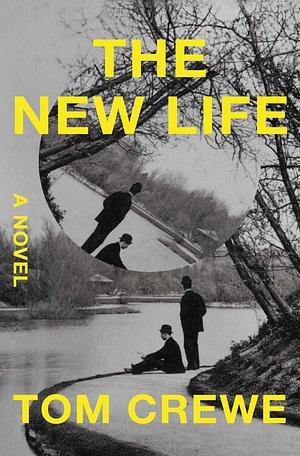
Review 2538: The New Life

The New Life was a slow read for me. It took me almost a week, which is unusual for me with fiction. I read it for my Walter Scott Prize project.

The novel is loosely based on two men, John Addington Symonds and Havelock Ellis, who in the early 1890s wrote a book together. When I looked them up, it didn’t seem as if it was very loosely based—Crewe gives his characters almost identical names. But then I realized it is set after Symonds’ death in order to bring in the trial of Oscar Wilde.

John Addington is a gay man who is married and has three grown daughters. He is known for writing about a vast array of subjects. Henry Ellis is an idealistic, naïve younger man, a doctor. He marries a good friend, Edith, and their intention is to lead the way to the New Life. I wasn’t exactly sure what that entailed, but at minimum it seems to be that spouses are equal partners. Unfortunately for Henry, they never discussed the sexual side of marriage. He thought there would be consummation; Edith, a lesbian, did not. So, Henry continues a virgin with a fascination for the subject of sex. They live separately, and soon Edith has a new friend, Angelica.

Henry wishes to make a scientific study of sex and publish the results, and since he knows some gay friends, referred to at that time as “inverts,” he decides to start with them, having a theory that rather than an illness or perversion, inversion is natural. He decides to invite John Addington to join him in his project, not because he thinks he is gay, but because of his reputation as a writer about various topics.

John has been getting more tired of keeping his secret as an invert. He has confessed to his wife and occasionally has brought a man home for sex, an action that I thought was breathtakingly cruel. Now he meets Frank, a much younger, lower-class man who wants to be his friend. When John sees Henry’s proposal, he thinks such a project will change people’s ideas about inversion so that he can be free to do what he wants.

The men write the book and begin looking for a publisher. However, just at that time, Oscar Wilde is found guilty of inversion and is sentenced to jail. The backlash is such that the two fear their work is unpublishable.

If you are not a fan of graphic sex scenes, this won’t be the book for you, especially the first few hundred pages. The novel opens, for example, with a very explicit and detailed wet dream. I am not really a fan of explicit sex scenes in novels, so I found the first half of the novel hard going, despite it being well written and having vivid descriptions of life in Victorian London. (It has a wonderful description of a day that is so smoggy no one can see where they’re going.)

The novel picked up for me after the book, entitled Sexual Inversion, is published and the police go after a bookseller for selling indecent material, their book. Then it becomes about the reactions of the various characters once there is a threat to their own lives.

Related Posts

After Sappho

Murmur

The Children’s Book

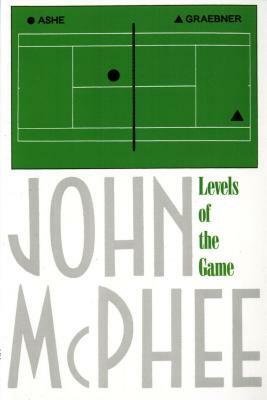
Review 2537: Levels of the Game

Although John McPhee is best known for his work in the 1960s through 1990s, he is still going at 93. He is known for being a pioneer in a style of writing called “creative nonfiction” or “literary journalism.” Years ago, I read his four-volume work Annals of the Former World, about the geology of the United States, basically the formation through time of various areas of the country, which was absolutely fascinating. Later I picked up a copy of his Coming into the Country, about homesteaders in the wilds of Alaska in the 1970s. So, when I saw he had written a book that could fill a hole in my A Century of Books project, I got it.

Levels of the Game is not really my subject matter. It cleverly combines a play-by-play description of a tennis game at Forest Hills in 1968 with profiles of the players. This is an amateur game between Arthur Ashe and Clark Graebner. Although I used to watch tennis a bit when Ashe was further along in his career, I couldn’t really follow the subtleties of the play-by-play that well. I’m sure for tennis lovers it might have been climactic.

Ashe at the time was the only Black player of the U. S. circuit, and there were no others following behind. A lot of what McPhee says in his profile is interesting and a lot is dated. Coming up, Ashe ran into situations where he was barred from clubs. Yes, it was still like that.

If you’re a sports fan, particularly of tennis, you’ll probably get more out of this book than I did. Still, I didn’t really understand the important place Ashe holds in the game until I read this book.

P. S. The description of Ashe, who at the time was a lieutenant at West Point, putting on love beads to go on a date, cracked me up.

Related Posts

Open: An Autobiography

Coming into the Country

Annals of the Former World: Basin and Range

WWW Wednesday!

It’s the first Wednesday of the month, so it’s time for WWW Wednesday, an idea I borrowed from David Chazan, The Chocolate Lady, who borrowed it from someone else. For this feature, I report

  • What I am reading now
  • What I just finished reading
  • What I intend to read next

This is something you can participate in, too, if you want, by leaving comments about what you’ve been reading.

What I Am Reading Now

Actually, at this writing I haven’t started it, but by the time this is posted tomorrow, I’ll be in the midst of September by Rosamunde Pilcher. I already checked this book out once from the library, to fill the 1990 gap in my A Century of Books project, but I knew I wasn’t going to finish one of the four library books I checked out, and unfortunately, chose one of the others to be the last one I read. Unfortunately, because it turned out someone else had put a hold on this one. But now I have it back. I haven’t read anything by Rosamunde Pilcher except The Shell Seekers, years and years ago, so I’m curious.

What I Just Finished Reading

I finally got to read Lessons in Chemistry by Bonnie Garmus for my Literary Wives club. It has been sitting on my pile for over a year, waiting for its turn to come up for the club. I enjoyed it very much. Review coming at our next club meeting, Monday, March 3!

What I’ll Be Reading Next

I was glad to get a little heaviness break by reading the above two books (although September is very long), because I made the mistake of putting my books for A Century of Books into a pile by length, shortest first, in an effort to get as many read as possible before the end of last year. (Obviously, I haven’t met my goal for this project.) The result is that the heftiest are all waiting for me. And I haven’t yet found a book for every year. I have four more years to find books for and some books on hold at the library that are taking a long time to get here. Anyway, my next book falls into the middling hefty category, both in length and seriousness. It’s Angle of Repose by Wallace Stegner. It’s been a long, long time since I read any Stegner, and I’m not sure if this was one that I read or not, way back then.

Of course, my reading plans sometimes get thrown off. They did in January, when I suddenly decided to reread Sense and Sensibility for ReadingAusten25 instead of How Green Was My Valley, and that could happen this time, too, if some of those books that I’ve had on hold for ages arrive from the library.

What about you? What have you been reading or plan to read next?

Review 2536: The Trees

The Trees is not a book for everyone. It is black satire, very dark, and it covers shameful events in American history that took place over centuries.

In Money, Mississippi, a dismal small town, a brutal murder occurs, or maybe two. A White man is found bound in barbed wire, his testicles removed. With him is the body of a Black man unknown to anyone in town, his hand wrapped around the testicles.

Shortly, the Black man’s body is stolen from the morgue and ends up at the scene of another murder, holding another White man’s testicles. Both White men are descendants of Granny C, an old lady who turns out to be the woman who claimed Emmett Till disrespected her, resulting in the famous lynching. Then Granny C is found dead.

And this is what the novel is about, in its sly, sometimes stereotyped (at least in the case of the White redneck characters), brutal way. It’s about the history of lynchings that continued in this country up until not that long ago (Wikipedia says, shockingly, 1981), thousands of them, mostly Black males, but also some women, as well as Chinese, Native Americans, and even one Japanese man.

The novel has a strange, sort of overdone anti-Southern humor that leads to additional gruesome scenes as two Black detectives from the Mississippi Bureau of Investigation come to investigate.

I read this novel for my Booker Prize project.

Related Posts

Chenneville

The Tilted World

The Warmth of Other Suns: The Epic Story of America’s Great Migration

Review 2535: A Death in Summer

A Death in Summer is the fourth of Black’s series about Quirke, an Irish pathologist in the 1950s who helps his friend Inspector Hackett in some investigations. Although these are interesting mysteries, I’m beginning to be irritated by the cliché of Quirke’s drinking problem. This is the second book in a row where Quirke dries out or is already dried out at the beginning and then falls off the wagon.

Wealthy and powerful Richard Jewell is found dead in his home office. It is supposed to look like he committed suicide by blowing his head off with his shotgun, but it is obvious to both Quirke and Hackett that the man wouldn’t be still holding the gun if he had done it himself.

Jewell’s sister Dannie was at home as were some servants, but no one heard the shot. Mrs. Jewell, a French woman, says she arrived home after the house manager discovered the body. Françoise thinks her husband’s only enemy is another wealthy man, a Canadian named Carlton Sumners. Quirke attended university with both these wealthy men.

At this point, I began to wonder if Quirke was related to Inspector Morse (apparently the TV version only), because he immediately falls in love with Françoise, dumps his friend Isabel, and begins to have an affair with F. And by the way, you wonder how these male authors think, because the way Black describes Quirke, you wouldn’t think an elegant, wealthy Frenchwoman would want to jump into bed with him.

Quirke invites his assistant, David Sinclair, to dinner with his daughter Phoebe. Although both resent what they see as a clumsy attempt to pair them up, they begin seeing each other. David is a friend of Dannie Jewell, quite a disturbed young woman, and through him Phoebe meets Dannie.

As in a previous case, Quirke is warned off his investigations by a thug, Costigan. In the previous instance, when Quirke ignored him, he was badly beaten. This time, Sinclair begins receiving threatening phone calls.

Of course, there is a big secret that I personally didn’t find hard to guess once some of the pieces were in place. I might read the last book, but I am not sure if I will. Black is an excellent writer, but to have Quirke behave so stupidly in this one turned me off a little.

Related Posts

Elegy for April

The Silver Swan

Christine Falls

Review 2534: #ReadingAusten25! Sense and Sensibility

My original intention for ReadingAusten25 was to reread only the books I hadn’t reviewed yet. But I can’t resist Austen, so here I am reviewing Sense and Sensibility. I am not going to repeat my review of 2022, though, so you can find it here. Instead, I thought I’d look at whether the book struck me differently this time and a little at Claire Tomalin’s point of view (the wobble), as cited by Brona.

It did strike me differently. Although Elinor is still my favorite of the two sisters, they both struck me more extremely this time. Marianne seemed like a true modern teenager, not as much for her reactions to Willoughby but more in her sulking (call it what it is), her rudeness to various kind characters whom she thinks ill-bred, and so on. But the thing is, 16 in the early 19th century meant she was supposed to be an adult, or almost. (Of course, she is also under the influence of the Romantic movement in art, literature, and music.)

As for Elinor, sometimes I felt she carried her comments a little too far, into preachiness. I got a little tired of her dissections of other people’s behavior.

I also appreciate the wit of the novel more. Although I always find Austen witty, she has drawn us some priceless characters and written quite a few zingers.

I am not so sure about Tomalin’s “wobble.” I looked for it but didn’t find much evidence for it unless you count Elinor’s dash out of the room after she finds out Edward isn’t married. I’d like to hear if anyone was struck differently. I remember not agreeing with some of Tomalin’s interpretations when I read her biography of Austen.

Related Posts

Jane Austen: A Life

Jane Austen at Home

Persuasion

Review 2533: The Stone Angel

When I was looking for books to fill a hole in my A Century of Books project, I found this one. I thought I had read a book by Laurence before, but apparently not. The Stone Angel is the first in her Manawaka series.

Hagar Shipley is 90 years old. She is a proud, tough woman who has never expressed any of her gentler feelings. Now she finds that her son Marvin and his wife Doris are thinking she needs to move to a senior home. She understands this idea as greed for her home and possessions, although that is not the case. She is fighting the idea as best she can.

Hagar, though, is prone to falling and has memory lapses. In between the scenes from her current life, she returns in her memory to important events and tragedies in her life.

Hagar is not a pleasant person, but Laurence makes us interested in her and manages to make us understand and even sympathize sometimes with this complex character.

Related Posts

The Night Stages

Fifth Business

The Northern Lights