
 This week’s Best Book is Troubles by J. G. Farrell!
Author: whatmeread
Day 515: Robinson Crusoe
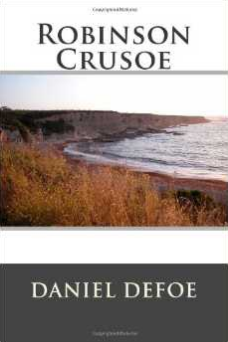 Here I am with my third review for the Classics Club. Robinson Crusoe is a difficult novel for the modern reader. It is one of the earliest novels and as such lacks some of the characteristics we associate with the form. It has no chapters—just a few breaks here and there—little dialogue, minimal characterization, and a primitive plot structure. If you think of the novel as a children’s story, you are wrong (although when I was looking for a cover for this article, I saw that it is marketed as such).
In fact, the story that has made several exciting movies is related in a mundane manner with little notion of building suspense and would probably bore most kids silly. Instead, Crusoe’s novel is an expression of the importance of self-reliance and an assertion of Defoe’s religious faith.
The story is familiar, although I was surprised by just how much happens before the famous shipwreck and after the rescue. As a young man, Robinson Crusoe is in a position where he could live a good life at home. His father urges him to be content, but he determines to be a sailor. He makes several voyages, ending in Brazil, where he accumulates property and an estate. But he is not satisfied to stay at home. He takes on an errand from neighbors to travel back to Europe for business, and that is when he is shipwrecked.
The rest of the novel is about his efforts to survive and make himself a home, his religious musings, and (after years of being alone) his encounters with other people. As I mentioned before, none of the characters are fully realized. In fact, aside from Crusoe, only Friday even has a name. Everyone else is just called by his station. (I say “his,” because there are no female characters.)
Modern readers may also have problems with such issues as racism or sexism in the novel (sexism only in the sense that Defoe ignores women—he mentions a few, but they are clearly unimportant). I don’t think that works should be judged outside the standards of their time, though. By the standards of his own time, Crusoe probably treats Friday pretty well.
The only other novel I have read by Defoe is Moll Flanders, which has the advantage of being bawdy. I think the way to approach this novel is not as an adventure story but as an example of an early novel and as a story about self-reliance.
Day 514: The Vanishing Point
 I’ve found the last few Val McDermid novels I’ve read disappointing, and The Vanishing Point is no exception. First, it begins by using a contrivance that is not at all successful.
Stephanie Harker’s adoptive son Jimmy is kidnapped from the secure area of O’Hare Airport while she is in the full body scanner. After an initial frantic period of activity, she sits down with FBI agent Vivian McKuras to tell the long tale of how she became Jimmy’s guardian.
Even though this story is necessary to understand the novel, its context within a police interview during a search for a missing child is not at all convincing. I doubt very many police interviews consist of one person talking for hours without any questions from the police. Then there is the issue of how McKuras can lead the investigation if she is interviewing Stephanie all night long. Presenting this information as a series of flashbacks would have taken care of the problem. This is an unusual misjudgment for McDermid.
The bulk of the novel centers around Stephanie’s relationship with Scarlett Higgins, a reality TV star who hires Stephanie to ghostwrite a memoir for her. Although Scarlett maintains a persona of a dumb blonde, Stephanie quickly realizes that Scarlett is a lot smarter than she seems and grows to like her. Stephanie becomes involved in Scarlett’s life, her marriage to a popular D.J., and all the difficulties of her celebrity.
When Scarlett dies of cancer, she leaves her young son Jimmy to Stephanie’s care. The story is long and complicated but doesn’t turn up many suspects in the kidnapping except Stephanie’s own stalker ex-boyfriend Pete. In fact, the novel gets fairly involving and does a good job of leading its readers down the garden path for quite some time.
I won’t give away the ending, but it is so completely far-fetched that it left me gasping. Despite its rough beginning, McDermid as ever writes a gripping novel, but this one ends up in the stratosphere.
Day 513: Fatal Journey: The Final Expedition of Henry Hudson
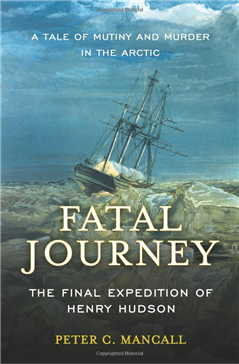 Given that little is known about the final voyage of Henry Hudson, Fatal Journey‘s tag line (A Tale of Mutiny and Murder in the Arctic) seems to promise more than it can deliver. In fact, I often felt that history and anthropology professor Mancall padded this short book’s content with whatever came to hand.
Hudson’s final voyage to try to find the fabled Northwest Passage ended in 1611 in James Bay. He and his men had been forced to spend a brutal winter there, and now that the ice was starting to melt, Hudson was trying to decide whether to press on or return to England. At that point, some of his men mutinied and set Hudson, his son, and other crew members adrift in a small boat. They were never seen again. The only evidence of their fate is from the testimony of the surviving mutineers, who claimed that the engineers of the mutiny all died on the way home.
Mancall’s book looks at Hudson’s other voyages in more detail and describes in a matter-of-fact, undramatic way the hardships of the final journey. He also fills in a lot of information about other voyages of exploration, maritime law, just about anything sea-related. This approach is sometimes interesting, sometimes frustrating, as when he starts out the chapter about the mutineers’ trial with ten pages on the history of the crown’s attitude toward piracy.
For the most part, I felt that the book could be replaced by a long, more interesting magazine article. Hudson hardly appears in this book and we hear nothing directly from him. So, I was especially bothered by the author’s conclusions that Hudson’s fate was due to his own hubris.
Day 512: Troubles
Best Book of the Week!
It is the summer of 1919. Major Brendan Archer has just left the hospital after his experiences in the trenches of France. When on leave in 1916, he met Angela Spencer. Although he has no recollection of having asked her to marry him, she has ever since then written him exhaustive letters signed “Your loving fiancée.” Determined to find out if he is engaged, the Major travels to the Majestic, Angela’s family hotel in County Wicklow, Ireland.
Troubles is about the decline of the once powerful Anglo-Irish aristocracy. Nothing symbolizes this decline quite as effectively as the state of the Majestic. Once a grand resort hotel, the Majestic is now the crumbling permanent home for a handful of old ladies who knew it from their heyday.
The Palm Court is so overgrown that it gets more and more difficult to find the chairs. No staff is visible when Archer checks in, and he is finally vaguely shown around by Ripon, Angela’s brother, who urges him to pick a room. When Archer retires, he finds his bed has no sheets, and his investigation of a sickly smell leads to the discovery of a sheep’s head in a pot in his room. Most frustrating, though, is that he can find no opportunity to speak to Angela, who shortly after his arrival shuts herself up in her room.
Major Archer soon finds himself drawn into the activities and personalities of the household. Angela’s father Edward seems unconcerned about the increasing decrepitude of the house. He occupies himself with projects such as raising piglets in the squash court or conducting bizarre experiments in “biological research.” He is most concerned with preventing Ripon from marrying the daughter of a merchant, whom Ripon has made pregnant. Edward’s objection? She is Catholic.
It is the time leading up to the partition of Ireland, with events that 40 years later will result in The Troubles. To Edward’s way of thinking, along with most of his class, those who want independence from Britain are nothing but hooligans. He refuses to recognize that his impoverished and desperate tenants have legitimate grievances.
The growing sense of dissolution both in Ireland and—periodically interjected by newspaper articles—in other parts of the British Empire keeps the novel from being simply a comedy such as Cold Comfort Farm. That, and Farrell’s writing style of cool and precise satire. As poor Major Archer bumbles in a well-meaning way through the political briars and Edward becomes more detached from reality, the Majestic slides perceptibly into ruin.
This is another book from my Classics Club list.
Day 511: The Storied Life of A. J. Fikry
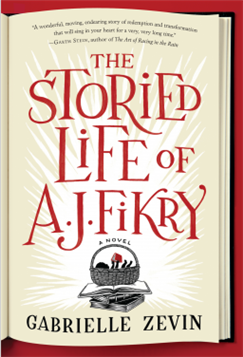 I dislike publicity that compares books by new authors to established, popular books, because the comparison is so often misleading. I’ve seen The Storied Life of A. J. Fikry compared to The Guernsey Literary and Potato Peel Society. The similarities are a certain lightness of tone, the presence of book clubs, and the setting on an island. Otherwise, there is no comparison between the novels. I should add that I didn’t have much of an opinion of “Guernsey.” I like this novel much better, but the comparison almost made me decide not to try it.
A. J. Fikry is a recently widowed bookstore owner when the novel begins. He is normally somewhat of a curmudgeon, but he is also having difficulty coping with his wife Nic’s death. The book actually begins with Amelia Loman, the new account manager for Knightley Press, who has made the trip from the mainland to meet with him. He has forgotten their appointment and refuses to discuss any of the books on the winter list.
Aside from his wife’s death, things are not going well for A. J. He is drinking too much. Without Nic around he’s doing a poor job of managing the store. Then one night when he forgets to lock up his only rare book because he’s been drinking, it is stolen. He had planned to use the book as his nest egg after he drove the book store out of business, but the police can find no trace of it.
After A. J.’s book is stolen, he decides there is no point in locking up the store. When he comes back from a run, he finds a toddler in his store with a note from the child’s mother saying she wants Maya to be raised around books. It is the beginning of the weekend, so A. J. agrees to take care of Maya until social services can come out to the island on Monday. You may guess that by the end of the weekend, he does not want to give the little girl up and his life is changed.
Zevin writes in a breezy third person. Partly because of the style, this novel seems to be the type that will be full of quirky characters, but it isn’t really, just nice ones who seem realistic.
Each chapter begins with a commentary on a short story, which A. J. has written for Maya. Zevin also inserts the occasional literary allusion or joke. One playful element is the reuse of names from works of literature. In a more extended joke, Amelia disappears from the book for quite awhile after the first chapter, so that when A. J. says this
You know the kind of book I’m talking about, right? The kind of hotshot literary fiction that, like, follows some unimportant supporting character for a bit so it looks all Faulkneresque and expansive.
we think the book is being self-referential. But Amelia returns and becomes an important character.
 I liked this novel. It deals playfully with literature if that appeals to you, but I just plain liked the characters. The novel is occasionally amusing and ultimately touching. It is both intelligently written and light in touch.
Best Book of the Week!
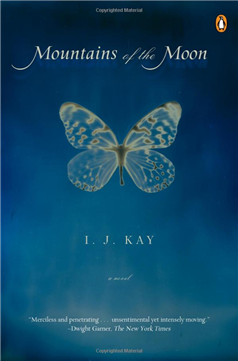 This week’s Best Book is Mountains of the Moon by I. J. Kay!
Day 510: Red Knit Cap Girl
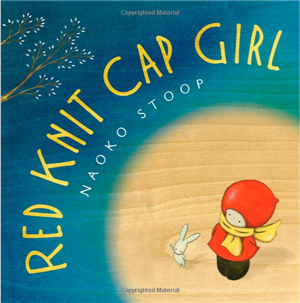 Red Knit Cap Girl is interested in all the plants and animals in the forest. But she is most interested in getting to know the moon.
She asks her animal friends how she can get close enough to talk to the moon. Apparently, Mr. Owl knows. Accompanied by her friend White Bunny, Red Knit Cap Girl goes to visit Mr. Owl and find out how to talk to the moon.
The illustrations for this picture book are simple and cute. The background makes them look as though they are drawn on wood.
Small children will probably enjoy this simple story. Perhaps it is not as interesting for their parents, but it is a nice, gentle tale.

Day 509: Mountains of the Moon
Best Book of the Week!
It will be difficult for me to put into words how unusual Mountains of the Moon is. The novel is about a woman’s act of creating herself despite a past that is nearly crippling, but its unusual quality is primarily in the style of narration.
At the beginning of the novel, Louise Adler is 31 and newly out of prison. She is doing what she can to make a fresh start, fixing up her dreary apartment, trying to find any kind of job.
The story shifts to when Lulu is a little girl. Brought up with her grandfather’s stories of the Mountains of the Moon, she pretends she is a Masai warrior, dressed in a bright strip of cloth and holding her spear on a perch high above the neighborhood.
Her home life is difficult. She loves her older brother Pip, but he is sent away to live with his father because of “disloyalty” to his mother. Her verbally abusive mother keeps her out of school and makes her stay up all night listening to her talk. Her physically abusive father is often away with his other family. When Baby Grady arrives, he is left to Lulu’s care much of the time, but she adores him.
This portrait of the imaginative little Lulu is charming, but fear always lurks around the edges of her world. We know something goes wrong for her, but Kay spins the story out by interleaving it with the present one. A third story line returns to when Louise is 21 and learning to deal blackjack at a casino. At that time, she becomes fatefully involved with a girl named Gwen and her friends.
Louise is a woman of many names and identities. As a child she plays gleefully with language, gobbling up new words but only saying parts of the ones she knows. As an adult she finally begins trying to make sense of herself as a person.
This novel is sometimes brutal and harrowing, other times endearing. Its narrative style reminds me a bit of that of The Bone People.We like Louise/Lulu and we want her to succeed, but there are secrets in store. This story is one of an unforgettable character.
Day 508: Conversations with Myself
 I was deeply disappointed with Conversations with Myself, which reads as if it was thrown together by people who don’t know much about publishing or the interests of readers. It was assembled from notes, diary extracts, letters, and interviews, probably without much interaction with the man himself. (Although it is solely credited to Mandela, it is fairly obvious from some of the notes that it was put together by committee.)
Context is one of the biggest problems with the book, that and organization. Perhaps some attempt was made to order the excerpts by subject or time. It is hard to tell. But except for short notes about where the information came from, no effort is made to explain the context of the excerpts. It is as if the editors of the book are assuming that its readers are intimately familiar with the events in Mandela’s life. He makes a journey, for example, and writes about it in his diary, but there is no introduction about the journey’s purpose.
One of the first things I encountered on beginning to read (besides three typos on the first two pages) was a note that an entry was from a letter to a particular person. The back of the book includes an alphabetical list with descriptions of some of the people mentioned. Naturally, I wanted to understand who Mandela was writing to. But the name was not listed.
Even if it had been listed, the information there is written like an abbreviated biographical dictionary or business résumé—in partial sentences, listing the person’s work positions, accomplishments, imprisonments, with lots of acronyms. When I am reading a book like this, I want to know the person’s relationship to Mandela. I want to read a blurb that gives me some sense of the person. I want to know if someone was Mandela’s friend for many years or a trusted colleague. As an extreme example, sandwiched between Winnie Mandela’s employment history and memberships in various organizations is the bald statement “Married to Nelson Mandela, 1958-96 (separated 1992).” That’s it for Winnie.
Let’s not forget the acronyms and organizations. Between my early attempts to look up names and acronyms in the back and the little information gleaned from doing so, I soon gave up referring to that list. As an example of the type of information offered, the African National Congress is explained in terms of its founding date, the dates it was banned, and its current status. But why was it formed? What are its goals? What has it achieved? Of course, I have heard of it for years, but I really don’t know much about it. Again, context.
This book could have been effective and interesting with more attempts to organize the material, write more informative introductions, and rework the appendix. Instead, it is simply confusing, with a few gems of thoughtful prose. I wish I had read The Long Walk to Freedom instead.

