Review 2493: Dostoevsky Read-a-Thon: Devils, or The Possessed

I haven’t felt as if I had the time to fully participate in Russophile Reads’ Dostoevsky Read-a-Thon, but my original plan was to read some of the shorter works. (That’s boiling down to The Gambler.) I have already read all the long ones and reviewed a couple of them already, and I didn’t think I had time to read any more. Well, that was the plan.

I could not remember Devils at all. For some reason, I got it into my head that it was about the same length as Notes from Underground, a relatively short work. So, I put a hold on it at the library. It already had four holds on it, which is unusual for my local library, and surprising. After a while, when only one hold had been released, I realized I wasn’t going to get it in time to read it for the project, so I began looking for a copy of it. That was when I discovered that Devils was once known as The Possessed, which I had in my own library (which means I have actually read it. I don’t put books on the shelves until I’ve read them). The newer editions of this book are all called Devils or Demons, apparently a preferred version of Dostoevsky’s title. And I have a Modern Library edition of the old Constance Garnett translation, which was all that was available years ago for most of the classic Russian translations (now considered inferior). And, of course, it’s more than 700 pages long with very small type. But I plunged in.
So, finally I get to my review. Let me say first that my spelling of names might seem eccentric now (especially Nikolay instead of Nikolai, which is much closer to the correct pronunciation), but since I reread the Constance Garnett translation, I am using her spelling.

The Introduction to my Modern Library edition of The Possessed says that although Dostoevsky thought he was a progressive, he wrote the book out of fear of nihilism and revolution. Until some events toward the end of the book, though, it’s hard to take the activities of the radical characters seriously.

The novel starts with two respected members of a provincial town. Stepan Trofimovich Verhovensky is a highly regarded scholar. However, for 20 years he’s been living under the patronage of wealthy and forceful Varvara Petrovna Stavrogin, supposedly writing a book but accomplishing nothing. He’s not exactly a parasite but rather an impractical, unworldly intellectual who has never had to take care of himself. He does manage to spend a lot of her money, but lately she’s been drawing in the expenses.

The action gets started (sort of) by the not quite simultaneous arrival of these two characters’ respective sons, Nikolay Vsyevolodovich Stavrogin (usually referred to just as Stavrogin) and Pyotr Stepanovich Verhovensky. Stavrogin is a sulky, charismatic young man who left years ago as a student and may be involved with a group of nihilists in town. He is also quite the womanizer, for we learn that both of Varvara Petrovna’s young friends, Liziveta Nikolaevna and the more dependent Darya Pavlovna, were involved with him during a visit to Switzerland. Pyotr Stepanovich has been gone even longer, as his father took no interest in him when he was a child and sent him away to be raised. He doesn’t seem important at first but turns out to be the catalyst for most of the action. He seems frivolous but is madly lying to and manipulating people for his own ends.

Both Stavrogin and another character named Shatov have become disillusioned with the revolutionary group that a group of the characters belong to, but Shatov, who has been running an illegal printing press, has asked to quit. Pytor Stepanovich has as one his goals, aside from sowing general confusion, to convince his group of five cell members that Shatov means to betray them, because he wants them to kill him. Pyotr Stepanovich, we learn, is an informer himself but also wants to avenge an insult by Shatov, who spat in his face back in Switzerland. Stavrogin doesn’t seem any more devoted to the cause, but Pyotr Stepanovich has secret plans for him. (There’s another character Pyotr Stepanovich wants vengeance against, and that’s his foolish father, Stepan Trofimovich.)

For quite a while, Dostoevsky seems to be setting us a farce, Stepan Trofimovich’s behavior is so clueless and absurd, the social machinations and gossip in the town are so ridiculous, and the radicals’ attempts to sow confusion are so silly. But violence kicks off thanks to the activities of Pytor Stepanovich.

Frankly, although I believe that Dostoevsky had a radical youth, his depictions of their meetings and their statements of belief seemed absurd. But I am no expert on on 19th century radicalism.

Everyone is in a frenzy at usual with Dostoevsky, and frankly, I had a hard time tolerating the many long, rambling speeches, whether of a religious or nihilistic subject. (And the nihilists, as well as others, sure seem to spend a lot of time talking about God.) This book was so long that by the end, when Dostoevsky has knocked off half the main characters, I was just skimming. Not my favorite of his works.

However, I was lucky enough, while poking around on the web, to find a multi-part article by Elif Batuman (author of The Possessed: Adventures with Russian Books and the People Who Read Them) about attending a 12-hour-long production of The Possessed in Italian on Governor’s Island. The first part is called “My 12-Hour Blind Date, with Dostoevsky,” and if you want to read all the parts, there are links to them, published by The Paris Review. It’s hilarious.

Related Posts

The Idiot

The Brothers Karamazov

The Gambler

Review 2492: #RIPXIX! The Witching Tide

In 1645, Martha is a mute middle-aged serving woman who has worked for the Crozier family since her master Kit was a baby. She is also a midwife and healer, who at the beginning of the novel is called out to help with a difficult birth. She takes along the young housemaid, Prissy, who is learning to be a midwife.

The birth doesn’t go well. The baby is born with a deformed nose and mouth that wouldn’t allow him to live, and the mother is bleeding too much. The baby soon dies.

Martha and Prissy return to taking care of their own difficult mistress, Agnes, Kit’s upper-class wife, who is heavily pregnant. However, everyone soon hears that a witch master has come to their town, and Prissy is one of the first to be taken.

It is Martha who actually has a poppet, given to her by her mother. Martha doesn’t really know how to use it, but she feels she should have been taken instead of Prissy, as Prissy is of course being blamed for the deformed baby.

In his attempts to free Prissy, Kit arranges for Martha to be one of the women who examines the accused for witch marks, hoping Martha can help her. But marks are found on Prissy, and Martha can do nothing. Prissy is one of the first to be hanged.

Others have doubted whether Martha isn’t a witch herself, and Martha is torn between fear and guilt. Soon, many of the women are accused, along with the community’s innocent, naïve young minister.

This novel evokes a constant feeling of dread. In addition, it is unsparing in its descriptions of the conditions of the time. It is also fully aware of the underlying misogyny of the witch trials. I think it qualifies for RIPXIX!

Related Posts

The Witches: Salem, 1692

The Mercies

Corrag

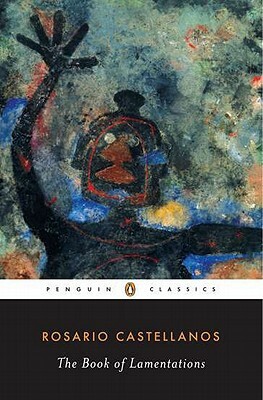
Review 2491: The Book of Lamentations

When I put this novel on my Classics Club list, I was looking for a few classics written originally in a foreign language. So, I chose this novel without knowing much about it.

It is set in Chiapas, a remote state in the far south of Mexico. At first, you might think it is set in the 19th century, but it is actually set in the 1930s, at a time when Mexico began to exact reforms that would return portions of the wealthy ranches to the native population.

One of the first images that indicates the treatment of the native population is that of travelers sitting in chairs that are strapped to Indians, who carry the people through the mountains. (I’m using the term “Indian” because the book does.) The Introduction says that Castellanos experienced this as a child.

I was confused at first, because the novel starts out with one group of people only to switch to another and another before bringing their stories together.

Although other characters are introduced first, the action starts with Marcela, a young native girl, traveling into the city of Cuidad Real to sell pots. She is told by a Ladina woman to bring the pots to her house. What she doesn’t know is that Doña Mercedes is a procuratress, and Mercela ends up being raped by Don Leonardo Cifuentes, who likes them young.

Returning home, she is rebuffed by her parents until she is taken under the wing of Catalina Díaz Puilgir, an ilol (sort of a sorceress) and her husband Pedro González Winiktón. She is made to marry Catalina’s brother Lorenzo, a man of limited intellect, and eventually has a child. And that’s all we see of her until much later.

Suddenly we switch to Cuidad Real and the lives of the Ladino characters. Leonardo Cifuentes, a wealthy rancher, is married to Isabel and probably murdered her first husband. Her daughter, Idolina, has taken to her bed since her father’s death. Leonardo has been courting a newcomer to town, Julia Acevedo, the supposed wife of Fernando Ulloa, the engineer who has been sent by the government to survey the ranches in preparation for the land reforms.

So far, Julia has avoided Cifuentes’s advances and made friends with his daughter. Her attempts, however, to be accepted by the rest of the Ladinas in the upper classes are unsuccessful. Instead of staying properly at home, she walks around town with her red hair flowing, earning her the nickname “La Alazana.”

The real issue in the novel is the land reform, which the ranchers oppose. However, an excuse for violent action comes when Catalina finds a cave with ancient stone figures in it. She gains a large following among the Indians by falling into trances in the cave and making utterances. The ranchers use the excuse of the large gatherings to claim that the Indians are planning a revolt. And violence eventually follows.

The novel is acerbically written, with no totally likable characters but with sympathy for the Mayan outcasts, who don’t really understand what is going on most of the time. They don’t understand the language or the mode of thought of the Ladinos, and when questioned later by authorities, since they don’t understand the questions, they just answer yes or no at random.

This novel was difficult to read. It wasn’t just the subject matter but more how the novel would jump to a new set of characters and tell a lot about them only to have them vanish for many pages. I may have also had problems because I was on vacation and then sick while trying to read it. But I was determined to finish it, and did. Although the novel is sympathetic to the native peoples of the area, to the modern eye it is also patronizing.

Related Posts

Mexican Gothic

The Bridge of the Gods

Black Narcissus

Another Classics Club Spin! #39

It seems like we just had a Classics Club Spin, and now it’s time for another one. How does it work? If you have posted a Classics Club list, select 20 books from it and post a numbered list of those books before Sunday, October 20. On that day, the club will announce a number, which determines which book from the list you will read first. The challenge is to read that book by December 18.

So, here is my list:

  1. The Passenger by Ulrich Alexander Boschwitz
  2. Incidents in the Life of a Slave Girl by Harriet Jacobs
  3. Hero and Leander by Christopher Marlowe
  4. Our Mutual Friend by Charles Dickens
  5. Les Misérables by Victor Hugo
  6. The Tavern Knight by Rafael Sabatini
  7. The Three Musketeers by Alexandre Dumas
  8. Love’s Labour’s Lost by William Shakespeare
  9. The Princess of Cleves by Madame de La Fayette
  10. The Methods of Lady Walderhurst by Frances Hodgson Burnett
  11. The Book of Lamentations by Rosario Castellanos
  12. Tis Pity She’s a Whore by John Ford
  13. Cecilia, Memoirs of an Heiress by Frances Burney
  14. The Passenger by Ulrich Alexander Boschwitz
  15. Incidents in the Life of a Slave Girl by Harriet Jacobs
  16. Hero and Leander by Christopher Marlowe
  17. The Tavern Knight by Rafael Sabatini
  18. The Three Musketeers by Alexandre Dumas
  19. Love’s Labour’s Lost by William Shakespeare
  20. The Methods of Lady Walderhurst by Frances Hodgson Burnett

I only have 13 books left on my list, so I had to repeat some. I am really slammed for November, what with Novellas in November and Nonfiction November, so I am hoping for one of the shorter books on the list. Wish me luck!

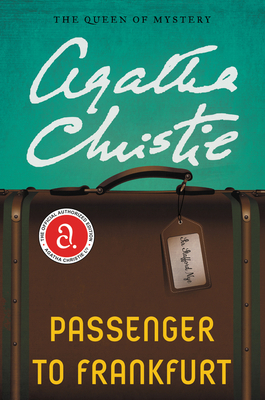
Review 2490: #1970Club AND RIPXIX! Passenger to Frankfurt

Usually, when an Agatha Christie books pops up as a possibility for the biyearly club reads, I am happy to choose it, especially if I haven’t read it before. This year, in looking for books for the 1970 Club (and also for #RIPXIX), I saw Passenger to Frankfurt, one of Christie’s stand-alone espionage novels. Unfortunately, it was not one of her best.

Sir Stafford Nye is a young mid-level diplomat often distrusted by his peers because of eccentric dress and a certain sarcastic sense of humor. He is returning from a trip to Malaya when his plane, bound for Geneva, is rerouted to Frankfurt and thence to London.

In the Frankfurt airport lounge, he is approached by a young woman asking him for help. She tells him that if the plane had landed in Geneva, she would be safe, but since it is going to London, she’ll be killed. She bears a certain resemblance to him. She asks if he will leave the burnoose he’s been wearing with his passport in it and allow himself to be drugged. She will cut her hair and use his passport, and he will wake up long after the plane has landed in London and claim he was robbed. And he agrees.

Back in London, he places an ad hoping to meet her and she ends up sitting next to him during a concert. He is carefully brought into a mission—one that she is already working—by some government officials who are alarmed about a plot that is rousing the youth worldwide to violence and anarchy. Nye travels with the girl, who has many names but might be Countess Renata Zerkowski, to view a Hitler-like rally headed by a young man referred to as the Young Siegfried. He is just a figurehead, but the officials want to find out who is in charge.

The plot of this novel is so ridiculous that I barely had any patience with it. But worse, there is hardly any action, just a bunch of meetings. Once Nye is recruited, we see him traveling with Renata and then he disappears about 2/3 of the way through, only to reappear at the end. The only real action takes place in one page at the end of the novel. This one is pretty much a stinker. The only interesting character is Nye’s elderly aunt, Lady Matilda Cleckheaton.

Related Posts

Destination Unknown

The Man in the Brown Suit

N or M?

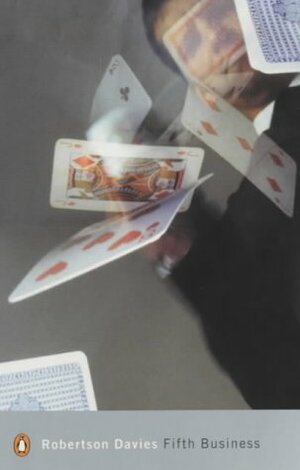
Review 2489: #1970Club! Fifth Business

I have long meant to read something by Robertson Davies, so when I saw that Fifth Business qualified for the 1970 Club, I got hold of a copy. This novel is Davies’ fourth book and the first in his Deptford Trilogy.

In the 1910s, Dunstable (later called Dunstan or Dunny) Ramsey is ten years old when a snowball thrown by Percy Boyd Staunton locks his fate with that of Staunton and two other people. Dunny knows that Staunton, who is rich and a bit of a bully, is planning to hit him with the snowball, so he gets behind Reverend Amasa Dempster and his young, pregnant wife for protection. Staunton throws the snowball anyway and hits Mrs. Dempster in the head. She has a kind of hysterical fit, goes into premature labor, and gives birth to Paul, who has to be tended carefully to keep him from dying. This work is done by Dunny’s mother. Mrs. Dempster is not quite all there after this experience. Dunny’s guilt at having tried to use the Dempsters as a shield leads him to a lifelong connection with Mrs. Dempster and a more sporadic one with Paul.

Dunstan begins with this story in telling his headmaster about his life, because he feels diminished by the speech about him made at his retirement party. He claims to be fifth business, a theater and opera term used of a character who does not seem important but is required for the plot to work.

I found this novel fascinating, because it goes on, telling the events in Dunstan’s life in an interesting and entertaining way, but you wonder where it’s going. Then, in a breathtaking last few pages, Davies ties together all the major events and principal characters. Warning to everyone: the book reflects misogynistic tendencies, not a surprise for the earlier time setting of the book, beginning before World War I and continuing after World War II (or for 1970, for that matter). But what a book!

Related Posts

The Northern Lights

The Bird Artist

Road Ends

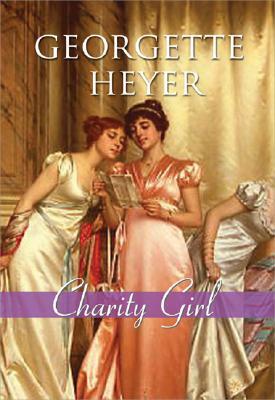
Review 2488: #1970Club! Charity Girl

Georgette Heyer is always a pleasure, and I was delighted to reread this one for the 1970 Club. As usual, on my first post for the club, here is a list of some other books from 1970 that I have reviewed:

Now for my review.

While visiting friends in the country, Viscount Desford goes to a party to see the latest beauty. He notices someone watching the party from upstairs. Thinking that she’s a child, he speaks to her, only to find she is older, a naïve relative who has been taken in out of charity.

The next day on his way to London, he finds the girl, Cherry Steane, on the road, running away from her aunt. Desford tries to talk her into returning, but she has been treated as a drudge and accused of trying to attract Desford to herself away from her beautiful cousin. He finally agrees to take her to her grandfather’s house in London, but upon arriving there, finds the house shut up.

Desford tries to think where he can take Cherry without ruining her reputation. His parents’ house is out of the question, not only because his father is suffering from a gout attack but also because Lord Desford despises both Wilfred Steane, Cherry’s father, who disappeared without paying her school fees, and Steane’s father.

Desford decides to take her to his best friend, Henrietta Silverdale. At one point, Lord Desford tried to arrange a marriage between Desford and Henrietta, but both refused. However, when Desford brings Cherry in, Henrietta feels pangs, fearing he may be attracted to her.

This novel features one of Heyer’s romping plots, with Desford encountering a slew of memorable characters while he tries to find a place for Cherry.

Related Posts

Arabella

Sprig Muslin

Cotillion

Review 2487: The Heaven and Earth Grocery Store

In 1930s Pottstown, Pennsylvania, the Jewish residents are beginning to move away from the Chicken Hill neighborhood where they’ve always lived with their Black neighbors. But Chona Ludlow refuses to leave the Heaven and Earth Grocery Store that her father established even though her husband Moshe would like to live in a neighborhood where the streets aren’t muddy and there is running water and sewage.

Chona is beloved by most of her neighbors for her kindness. She runs a tab for anyone who needs it and hands out marbles and small toys to the neighborhood children.

There is always some kind of trouble on Chicken Hill. Chona herself constantly writes letters to city officials complaining of unfairness to various Jewish or Black residents. But trouble from higher up arrives when Moshe’s trusted friend and employee, Nate Timblin, and his wife Addie take in his 12-year-old deaf nephew Dodo, whose parents have died. The trouble starts when Dodo stays out of school because he can’t hear the instruction and is being mocked. Officials decide to institutionalize him by placing him in a horrible insane asylum called Pennhurst under the assumption that since he can’t hear, he’s an idiot.

Nate, who is Black, asks Moshe if he will hide Dodo at the store. So Dodo moves in and helps out at the store and hides in the cellar if the authorities come by. But word gets out that Chona is hiding Dodo.

A combination of criminal and tragic events result in Dodo being caught. Can he be rescued from forces against him, including the racist Doc Roberts, a prominent member of society and also of the Ku Klux Klan?

McBride tells a great story, peopled with lots of colorful characters. There’s a lot going on in Chicken Hill, and it makes for fun and sometimes touching reading.

Related Posts

The Good Lord Bird

Kill ‘Em and Leave: Searching for James Brown and the American Soul

All Aunt Hagar’s Children

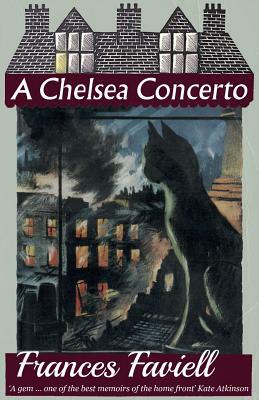
Review 2486: A Chelsea Concerto

A Chelsea Concerto is Frances Faviell’s memoir of the Blitz. Although I have now read several memoirs and novels set during this time, this one is remarkable for its integration of war news and its detailed descriptions of air attacks and their results. Faviell lived in Chelsea during the Blitz—an area that was very hard hit—and the book ends with a massive bombing of the area.

The book begins before the official war, with Faviell getting involved with working with Belgian refugees because of her ability to speak several languages. It continues to follow events of the war and the Blitz. It’s so detailed as to indicate that Faviell must have notes or diaries to refer to, as the memoir was not published until 1959. The descriptions of damage caused by the bombings is very vivid.

Unfortunately, Faviell often assumes knowledge on the part of readers that they may not have, either because it was common knowledge at the time or that it was so familiar to her that she didn’t think it needed explaining. This problem includes unexplained abbreviations, people identified only by name with little context, and at the end of the book, a mysterious reference to some event three years after the events of the memoir.

Also, there are lots of people mentioned in the book but characterization of only a few of them. This led me sometimes to be confused about who they were.

Related Posts

Table Two

The House Opposite

Spam Tomorrow