Review 2513: Classics Club Spin Result! Hero and Leander: Not!

I made a mistake when I put Hero and Leander on my Classics Club list. I wanted to add a play by Marlowe, and I picked it out from a list of his works without realizing it was a long poem. Why I didn’t pick one of his plays from a volume of four that I already had, I don’t know. What I know is that long poems and I don’t get along, especially ones laden with classical illusions.

But I tried. Leander, a beautiful virginal youth, sees Hero, a nymph who has vowed to Venus to keep her virginity. They fall in love. He woos her but she is reluctant. She finally gives in. He leaves but decides to marry her.

The poem is divided into six “sestiads.” I got about halfway through the fourth one—about halfway through the poem—when I realized I had stopped knowing what was going on. I tried several times but Marlowe just seemed to be babbling on about various deities. I finally stopped.

Reading this made me remember a college paper I wrote about whether Shakespeare really wrote Shakespeare. The assumption made by people who thought he didn’t was the classist idea that he wasn’t educated enough to have such a vocabulary, but this idea reflected a lack of knowledge of Elizabethan society. He was the son of the mayor of Stratford, which didn’t put him in the first ranks of society but made his family provincial but important. True, he had no university education, but he was clearly an autodidact who was fascinated with words. And he was educated enough to be a tutor when young to a prominent family. There are contemporary references to him, and he suffered some flak for not having been at Eton or Oxford.

But just reading the various contenders’ work (of which Marlowe was one despite having died well before the end of Shakespeare’s career) told me that there was no resemblance between his style and others’. His was much more sophisticated and flowing. It’s that iambic pentameter and that word play. And all I have to say is, Roland Emmerich may know a lot about film, but he knows nothing about literature.

My apologies if I made any mistakes. This is all from my memory.

Related Posts

Edward II

Antony and Cleopatra

King Lear

Review 2512: Dean Street December! The Dancing Bear

The rate I’m knocking out books for my A Century of Books project has been slow lately because first I was reading books for Novellas in November (some of which also qualified for ACoB), and I also wanted to read at least a few books for Dean Street December. And I don’t know what I was thinking, but I also put several books for my other projects on my library reserve list, and they have arrived. I must be crazy! Anyway, I read The Dancing Bear for Dean Street.

Although The Dancing Bear is set in time after Faviell’s A Chelsea Concerto, it is actually her first memoir. It covers her time in post-World War II Berlin, where her husband was part of the Occupation. The people in the city are freezing and starving, and even their occupiers are on strict rations of many commodities.

Much of the book is about Faviell’s relationship with the Altmann family. She is being driven in her car when she spots Frau Altmann, an older lady of fragile build, trying to move a heavy cart of furnishings through the streets. Faviell’s German driver thinks it’s hilarious when she falls, but Faviell stops to help her and shames him into helping, too. Despite the dictum not to give rides to Germans, she takes Frau Altmann home in her car.

There, she gets to know Herr and Frau Altmann, two gentle and dignified older people, their daughters Ursula and Lilli, and their sulky son Fritz, a former member of a Nazi youth group against his parents’ wishes. Ursula is the only bread-winner, making money by fraternizing with the British and American soldiers. Lilli, extremely frail, is a ballet dancer.

Aside from descriptions of the living conditions and the changing situation between the Soviet and the other occupiers, much of the story is about Faviell’s relationship with the Altmann’s and with her regular driver, Stampie, who trades on the black market to keep some German families alive.

This is a fascinating account of how some people meet and overcome difficult situations and some don’t. I also wasn’t aware of the conditions in Berlin (although I had heard of the Berlin Flyover) and all the manipulation the Soviets did to try to claim the entire city from their other allies.

Related Posts

A Chelsea Concerto

In the Garden of Beasts: Love, Terror, and an American Family in Hitler’s Berlin

The Oppermanns

Review 2511: Tropical Issue

Tropical Issue is the sixth of Dorothy Dunnett’s Johnson Johnson novels, published in 1980 as Dolly and the Bird of Paradise. Somehow I accidentally am rereading these books completely out of order. (In this case, I typed in “Dunnett Johnson Johnson books in order” and then assumed that the search page, which showed me the covers, was showing me them in order. My mistake, obviously.)

Rita Geddes, a punk Scottish makeup artist, first meets the famous portrait painter Johnson Johnson when her friend Ferdy Braithwaite, a well-known photographer, borrows Johnson’s flat for a photo shoot of political journalist Natalie Sheridan and asks Rita to do the makeup. Johnson has been reported as the only survivor of a plane crash, so when Ferdy deserts her there after the photo shoot, having dismissed Johnson’s exhausted housekeeper, Rita ends up having to take care of him for a couple of days and develops a dislike of him.

Natalie offers Rita a provisional job on Madeira, where she gets to see her friend Kim-Jim again. Kim-Jim is getting ready to retire, and he has set things up so that Rita will most likely be offered his position as full-time makeup artist for Natalie. However, on her way from the airport, Rita is assaulted by a man who seems to believe that she and Kim-Jim are plotting against Natalie.

Rita figures out that her attacker is Roger van Diemen, a banana industry executive, who is supposed to be leaving the island for rehab. When she goes to the airport to make sure he gets on the plane, she meets Johnson Johnson again. Next, she, Fergy, and Kim-Jim take a sledge ride down a steep hill, a tourist offering, but the sledge has been tampered with, and they are almost killed. Finally, a death makes Rita determined to find out what’s happening.

This novel is fast-paced and includes murder, spying, piracy, a hurricane, and even an encounter with a volcano after all of the characters end up in St. Lucia. It has a complicated plot and witty dialogue as Rita tries to figure out what’s going on. And Rita has her own secrets.

Related Posts

Ibiza Surprise

The Game of Kings

Queen’s Play

Review 2510: The Dark Wives

Detective Vera Stanhope’s team is still grieving after the death in the last book of (reverse spoiler) Holly. Now they have a new member, brash Rosie Bell from Newcastle.

They also have a new case. A worker in a children’s home, Josh Woodburn, was killed in a vacant lot just outside the home. Round about the same time, 14-year-old Chloe Spence, a resident of the home, goes missing. Is she the murderer? A witness? Is her disappearance a coincidence? All they know is that they must find her and soon.

Joshua’s parents appear unaware that he was working at the home. He’s a student, and he’s supposed to be working on his art and film project. Apparently, he told his ex-girlfriend Stella that he was working on an important project.

At Chloe’s school, the staff seem to be more worried about Chloe’s grades and behavior than that her mother has been put into mental care and she herself is in a group home and missing. To Vera, the home looks like it doesn’t have a penny spent on it, and it is understaffed.

In their search for Chloe, the team finds that she liked going to a village in the hills where her grandfather once owned some land and they used to do rough camping. When the team goes to the small camping hut on the property, they find someone—not Chloe but Brad, another resident of the home, dead from an apparent overdose.

The solution to this mystery isn’t really possible to figure out, because vital information is withheld from the reader. Early on, I guessed what Josh’s project might be, sort of, but I couldn’t see how it would lead to murder. Then I more or less forgot about it. Still, Cleeves really rivets you to the page. You have to keep reading.

Related Posts

The Raging Storm

The Rising Tide

The Heron’s Cry

Review 2509: The Château

I found The Château when I was looking for a book to fill the 1961 hole in my Century of Books project. Although the blurb calls Maxwell “one of our greatest practitioners of the art of fiction,” I hadn’t heard of him before.

Harold and Barbara Rhodes, a young American couple, have taken one of the first opportunities of Europe reopening for tourists after World War II to visit France in 1948. Although they have some other adventures first, the bulk of the novel concerns the two weeks they have booked at a château, where they will be having meals with and visiting with the family. They made this decision to try to improve their French.

Although they meet mostly with kindness, they find post-war France difficult to travel in. The destinations they have in mind take several trains and sometimes other modes of transportation to get to, and they have brought too much luggage. Sometimes they are recommended not to go to a destination they planned. They end up going to the château early.

At first, nothing seems to be going well. No one meets them at the station, and although their room, when they finally see it, looks nice, it is cold and the fireplace is blocked. They were promised a bathroom and they get one but with only cold water from the sink and none at all from the tub, and the toilet is on another floor. The bicycles they were promised don’t appear. Moreover, their host, Mme. Viénot, seems cold and distant and their French isn’t up to the conversation. It is clear that the family is of the upper echelons of society, but now they are broke.

The Rhodes take a break of three days in Paris, and after that, they find things improving. They meet guests and younger family members whom they like very much, their French has improved, and Mme. Viénot seems happy to see them.

This novel takes a gentle, sometimes amusing look at the differences between the French characters and the Americans—Harold especially beaming good will but sometimes putting his foot in it—basically culture clash and a clash of social classes. It also describes the post-war conditions in France. I enjoyed reading the novel very much. Its descriptions of landscapes are lovely. It is both appreciative and ironic.

Related Posts

The Postcard

Wonder Cruise

The Flight Portfolio

WWW Wednesday!

The first Wednesday of the month, I try to have WWW Wednesday, for which I talk about

  • What I just finished reading
  • What I’m reading now
  • What I intend to read next

I stole this idea from Davida, The Chocolate Lady, and I’ve found it to be a nice break. You can participate by commenting on your recent reading below. Please do!

What I just finished reading

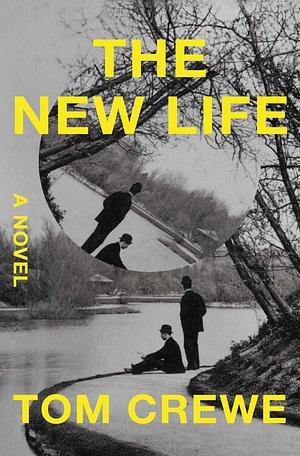
In among all the reading for Novellas in November, Nonfiction November, A Century of Books, Literary Wives, and Dean Street December, I managed to stuff a couple of books for my other projects. The last one was The New Life by Tom Crewe for my Walter Scott Prize for Historical Fiction project. It is set in late 19th century London and is based loosely on the true story of two men who wrote a controversial book about homosexuality.

What I’m reading now

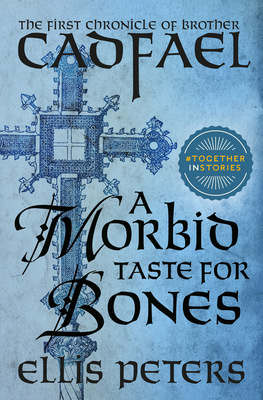
I thought I had read one Cadfael book years ago, and I did not really enjoy the TV series. However, when I saw that the first book in the series filled one of the holes in my A Century of Books project, I decided to read it. So far, it is pretty good! It’s A Morbid Taste for Bones by Ellis Peters.

What I’m reading next

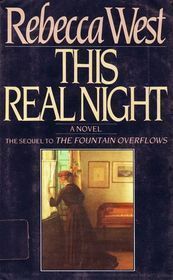
Of course, what I’m reading next often changes, but my plans are to fill another hole in my A Century of Books project by reading Cousin Rosamund by Rebecca West. It is the third in her Aubrey family trilogy, which I have been reading lately. (I believe I am reviewing the first one, The Fountain Overflows, on Christmas Eve.) I understand that trilogy was unfinished, which means this book is unfinished, but it has been compelling reading so far.

What about you? What have been been reading or plan to read next?

Review 2508: I Am Not Your Eve

This is an interesting yet difficult novel about one of Gauguin’s Polynesian “wives,” whom the blurb calls his muse. Although much of it is about her, Teha’amana, a very young girl, it is told with several voices—those of Gauguin’s daughter, his European wife (briefly), Teha’amana’s Foster Mother (called only that in the book), and very occasionally Gauguin himself.

The broad story is of Gauguin arranging a “marriage” on Tahiti with a very young girl. Their relationship is one-sided. She basically does what he tells her to do while he continues to talk about her as if she were free. Their relationship starts with rape and mostly consists of sex and posing for his paintings. She dislikes the food he eats. When she returns home after eight days to her mother as custom dictates, she tries to stay there.

From Denmark, Gauguin’s daughter writes about him in her diary. She seems to be the only family member who misses him. When his painting of Teha’amana arrives, her mother shoves it into the attic instead of taking it to Paris to sell, and she goes up to commune with it.

Interleaved with these stories are Polynesian creation tales and other myths.

This novel is poetically written, but it was sometimes difficult to know which narrator was speaking. There were a few times, for example, when I thought I was reading a myth but it was actually part of Teha’amana’s story. Also, I was occasionally startled by Gauguin’s point of view of Teha’amana’s behavior that seemed radically different from how she was feeling. Teha’amana’s expression of her point of view is very different from a Western way of telling things, so I didn’t always feel I understood what was going on.

The book only briefly mentions other girls, but apparently Gauguin had three very young Polynesian “wives,” hopefully one after another rather than at once. I couldn’t tell. Much of the content within the mythology sections and in Teha’amana’s story are very sexual in nature, although not graphic.

I read this book for my Walter Scott project.

Related Posts

Moloka’i

Under the Wide and Starry Sky

Euphoria

Review 2507: Literary Wives! Euphoria

Today is another review for the Literary Wives blogging club, in which we discuss the depiction of wives in fiction. If you have read the book, please participate by leaving comments on any of our blogs.

Be sure to read the reviews and comments of the other wives!

My Review

Oh, dear, Elin Cullhed and editors, morels come out in the spring. By October, it’s unlikely that any could be found, worm-eaten or not. Chanterelles are what you pick in the fall, among others.

Euphoria is about Sylvia Plath, set in the last year or so of her life. It begins when her daughter is one year old and she is pregnant with her son. It ends a few months before her death.

Before I get into my review, I want to comment on something. When I began reading this novel, I knew very little about Plath except she was a poet, she was married to Ted Hughes, and she committed suicide. Very recently, I read her novel, The Bell Jar, just by coincidence because it filled a hole in my Century of Books project. While I was reading Euphoria, I got the sense that there was a big controversy when Plath died. Some blamed her death on Hughes, who left her a few months before for another women. Certainly, there was a lot of anger against him for burning her diaries. Perhaps I’m seeing some reflection of the opposite side, but I ran across a post by All That’s Interesting, a blog produced by material collected from other sources, that states that Plath was at the nadir of her career when she died. Actually, her novel was recently published (one month before), she had been on BBC reading her poetry, and had recently finished her most famous poem, “Daddy.” So, where did this “nadir” idea come from? Maybe from Ted Hughes’s supporters?

That novel starts with the couple having moved to Devon at Hughes’s insistence. Plath liked living in London and feels lonely in the country, pregnant and left alone with her one-year-old Frieda while Ted goes up to London. Frieda wants attention all the time, and Sylvia has difficulty finding time to work or get anything done. Her marriage already seems rocky to me, alternating sometimes vicious verbal battles with voracious sex. Sylvia admits to liking being mistreated and having a fascination with death. She is extremely needy and jealous. He is always walking away.

The novel is written from Sylvia’s point of view. She is almost always either ecstatic or depressed. With her, as depicted by Cullhead, it is I, I, I. There isn’t so much a plot here as a detailed examination of her feelings as her children grow and her marriage breaks down. Jealous or not, she immediately recognizes that Aissa Wevill is after Ted.

This novel is sometimes difficult to read. Sylvia’s shifts in mood or reactions are sometimes hard to understand, and occasionally her thought processes were hard for me to follow.

What does this book say about wives or about the experience of being a wife?

Literary Wives logo

Well. Certainly Sylvia would be a difficult woman to be married to. First, she’s possibly bipolar, unsure of herself, and obsessed with Ted. But Ted, I think, is not exactly a model husband, even for his time. He helps out sometimes (which is actually unusual for his time) but he withdraws a lot because he has to write. Sylvia has to ask for time to write even though it is her fellowship that is supporting them at the beginning of the book. There are a few signs that he may be threatened by her as a writer, although other times he celebrates with her.

I know this is a time when men generally weren’t involved much with family life and childcare—and sometimes he cooks, does dishes, or takes care of the kids—but I was shocked when he left Sylvia, sick with puerperal fever but with an infant and toddler to care for, to go fishing, in winter no less.

I don’t think this book says anything about marriage in general, just something about this particular, very volatile marriage. It seems like the volatility that made it exciting at first was what did it in finally.

As so often happens when one person in a couple is attracted to someone else and wants to leave, that person begins finding fault with the person he wants to leave in order to make himself feel better about this betrayal. Often, the very things that attracted him in the first place are the things that irritate him later. You may find fault with my pronouns, but it is often these pronouns that this applies to.

Related Posts

Mrs. Hemingway

Passion

Owls Do Cry

Nonfiction November: Week Five

Here we are at the last week of Nonfiction November. The prompt for this week is

Week 5 (11/25-11/29) New To My TBR:  It’s been a month full of amazing nonfiction books! Which ones have made it onto your TBR? Be sure to link back to the original blogger who posted about that book! (Deb)

I have added a bunch of books to my TBR this week! Some of them were ones that I intended to put on it but forgot until reminded by a thoughtful blogger! Others are brand new to me. So, let’s go! I thought I’d divide these into books I already knew about and books I learned about this week.

Books I already knew about but forgot

Actually, a friend of mine recommended this book to me quite some time ago, and I forgot about it. So, when I saw it on Readerbuzz this month, I immediately put it on my list. Thanks Deb! It’s Sapiens: A Brief History of Humankind by Yuval Noah Harari.

I’ve had my eye on A Fever in the Heartland by Timothy Egan since it came out. Okay, I am interested in the history of fringe organizations. I’ll never forget reading Under the Banner of Heaven by Jon Krakauer. Also, I found Egan’s book about the dust bowl to be interesting. Notice how I made no attempt to use this book’s really long and bulky subtitle. C’mon you guys! Some subtitle on a nonfiction book is expected, but you don’t have to tell everything on the cover! The blog that reminded me of this book was Joy’s Book Blog.

I didn’t write down which blog reminded me of Caste: The Origins of our Discontent, because it was mentioned on several. I have been meaning to read this book, especially because I thought Wilkerson’s book about the Great Migration was excellent.

One morning as I was driving to my art class, I heard an interview with Amy Tan. I didn’t know that she had been more or less restricted to her house because of a condition that causes her to faint with no warning. She told how she got interested in looking at the birds in her backyard and how she eventually trained some of them to eat from her hand. The book is also illustrated by herself! I made a resolution to get that book right away, but I forgot all about it until Shoe’s Seeds and Stories wrote about it this week.

Those are the books I knew about before, but look what I picked up this week!

Books that piqued my interest this month

These books appear in the order that I wrote them down.

What could be more exciting than the story of women in 1938 tackling the Colorado River to see what botanical specimens they can collect? They were expected to die! I found out about Brave the Wild River by Melissa L. Sevigny on The Book Stop blog! Another unnecessarily long subtitle, guys.

I can thank Unsolicited Feedback for listing two books that I put on my TBR this year. One of them is Our Moon (long subtitle) by Rebecca Boyle. I’ve always liked the moon, and Boyle hooks it into effects on our intellectual development, science, and other topics.

The other book is Around the World in 80 Birds by Mike Unwin, illustrated by Ryuto Miyake. OK, I like birds. In this beautiful book, Unwin picks 80 birds from around the world and tells us all about them.

Thanks so much, Unsolicited Feedback!

This one looks like a page-turner, Spy Princess: The Life of Noor Inayat Khan by Shrabani Basu. It’s about the first woman wireless transmitter in occupied France during World War II. She assumed a dangerous resistance post, was betrayed, and ended up dying in Dachau. I put it on my TBR thanks to Literary Potpourri!

And stepping back to World War I, Margot at War by Anne de Courcy is a biography of Margot Asquith, the wife of Britain’s Prime Minister during World War I and how she affected the office. This is a staid description, but this book with its examinations of the couple’s private lives sounds quite juicy! Thanks to Hopewell’s Library of Life for this suggestion!

Finally, thanks to Helen of She Reads Novels for just yesterday reviewing another true crime novel by Kate Summerscale, The Peepshow: The Murders at 10 Rillington Place. I have found Summerscale to be reliably good and interesting but didn’t know she had another book out. I like me a good true crime.

Last year, I listed six or seven nonfiction books in my TBR, but only managed to read three of them (along with nine others). This year, I’ll try to make a point of doing better.