Review 2285: The Color of Lightning

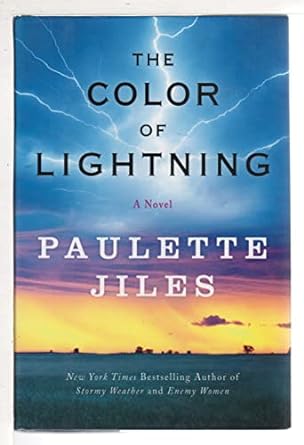
I have read several of Paulette Jiles’s books that are set in post-Civil War Texas and depict a countryside that’s dangerous and beautiful at the same time. Another characteristic of these books is that they feature brief appearances by the main characters of her other books. I believe that The Color of Lightning is the first of these books. Unlike the others, though, it is about a person who really existed.

Britt Johnson is a black freedman who travels with his wife and children along with his ex-master and a group of fellow Kentuckians to Texas to get away from the war in 1863. They all live in a small community called Elm Creek in Young County, Texas, at the edge of the area occupied by settlers. Although they are living in the traditional raiding lands of the Kiowa and the Comanche, the older residents of the settlement say they haven’t seen a native since they moved there.

Britt has been rounding up cattle, but his real ambition is to buy teams of horses and freight wagons so he can start a freight service for the area. While the men of the settlement are on a trip to Weatherford to get supplies, a force of 700 Kiowa and Comanche attack the white and black settlers of Young County. Britt’s oldest son Jim is killed and his wife Mary and children Cherry and Jube are captured. Elizabeth Fitzgerald’s daughter Susan is killed, and Elizabeth and her granddaughter Minnie are taken.

The United States government has removed its corrupt Indian agents from Indian Territory and for a few years makes an experiment of turning the various reservations over to the administration of religious organizations. Samuel Hammond is a Quaker who reluctantly agrees to take over the Kiowa-Comanche reservation. He hopes to manage the reservation without using force or violence, but he goes to work with no understanding of these native peoples, trying to contain them on the reservation when they have always been wanderers, stop the raiding (which he didn’t even know about when he took the job), and make the natives into farmers when they consider that women’s work.

In the meantime, Britt begins a long trip north to the winter territory of the Kiowa and Comanche to trade for his wife and children. He is given unexpected help from a young Comanche brave named Tissoyo whom he befriends on his trip. While he’s on his way, the story shifts to the lives of Mary, Cherry, and Jube in the Kiowa camp.

I think this novel did a really good job of representing the viewpoints of all of its characters—the settlers, the native people, the captives, and the Indian agency administrator. The novel is exciting at times and deeply interesting. Jiles is getting to be one of my favorite writers.

Related Posts

Simon the Fiddler

News of the World

The Son

Review 2284: The Bathysphere Book: Effects of the Luminous Ocean Depths

The Bathysphere Book is an engaging nonlinear account of the expeditions in 1930 made by William Beebe to explore the depths of the ocean as far as he could go in a bathysphere. In his last dive, he got down more then 3000 feet and was awed by the diversity and oddness of the life he found.

Illustrated by photographs and drawings that his fellow scientists made at his descriptions, the book contains his notes . It also goes off on interesting tangents to tell the stories of other explorers of the depths, the accomplishments of his fellow explorers, and some of the characters they encountered in their work and lives. It’s a shame that some of Beebe’s findings were disregarded, as he was considered more of a popular science writer and explorer than a scientist.

I am usually not a big nonfiction reader, but this book was really interesting, full of colorful and often neglected characters.

Related Posts

Cod: A Biography of the Fish That Changed the World

The Luminous Sea

Submergence

Review 2283: Foster

Foster is so good it made me cry. It is beautifully and sparely written, about a little girl who is sent away to stay with strangers, the Kinsellas, while her mother has yet another baby. Her father, we learn very quickly, has gambled away their heifer and tells lies for no reason. He tells the Kinsellas, “You can have her as long as you want her.” He forgets to leave her clothes.

The girl is scared and mistrustful. When she wets the bed, she expects to be punished and sent home, but Edna Kinsella says the old mattress has been weeping and merely cleans and airs it. The Kinsellas are kind. They give her clothes to wear and feed her well, and she helps Edna with chores. She begins to love living on the farm.

I will say no more except this is a lovely book.

Related Posts

Small Things Like These

Antarctica

Our Endless Numbered Days

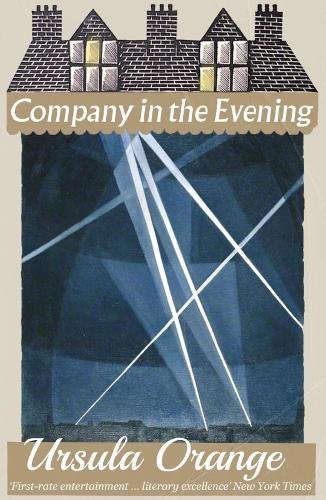
Review 2282: #DeanStreetDecember! Company in the Evening

I finally could fit a book for Dean Street December into my schedule! This event is being hosted by Liz of Adventures in Reading, Running, and Working from Home.

In 1940 London, Vicky is fairly satisfied with her life. Five years ago, in the midst of divorcing her husband Raymond for infidelity, she discovered she was pregnant. But she is getting along fine raising her daughter Antonia with the help of an old family retainer, Blakey. She works three days a week as a literary agent and devotes the other days to Antonia. She is an independent woman who doesn’t feel the need for company except for an occasional visit or outing and dislikes sentiment and receiving sympathy.

However, she finds herself inviting company when her mother tells her she’d like to sell her house and move in with her sister. The problem is what to do about Rene, Vicky’s widowed and very pregnant sister-in-law, who has little money and no family and lives with Vicky’s mother. Vicky has a spare room and feels she owes it to her mother to offer Rene a place to stay, even though she and Rene have almost nothing in common. She has no desire to invite her, but she does.

Soon enough, she becomes convinced that they are incompatible. Her efforts to get along with Rene usually end up being misunderstood. Worse, Blakey dislikes her. She is always brusque, but to Rene she is sometimes disrespectful.

Then Vicky runs into Raymond. The other woman returned to her husband, and Raymond is just recovering from a bout of tuberculosis and hopes to take a desk job in the army. They begin occasionally spending time together.

This novel takes a thoughtful look at marriage and at Vicky’s preconceptions of how marriage should be as she takes another look at what broke up her own. It is an intelligent, witty, and involving story. I liked it very much.

Related Posts

Begin Again

Sally on the Rocks

Bewildering Cares

Review 2281: Who Killed Father Christmas?

British Library Crime Classics’ latest book is another of their holiday mystery collections. This one includes some clever puzzles, some ghost stories, and one truly exciting chase.

“The Christmas Thief” by Frank Howel Evans, published in 1911, features the adventures of two endearing young men, Tommy and Harry, two homeless boys who thwart a gang of thieves.

In “The Christmas Spirit” by Anthony Gilbert from 1952, Sedley busts the ghost of the Green Girl—or does he?

In Patricia Moyes’ “Who Killed Father Christmas?” from 1980, someone murders the substitute Father Christmas in the toy department of a store, and he turns out to have been an undercover policeman. The motive for the murder was fairly obvious, I thought, but not so much identity of the murderer.

In “Death at Christmas” by Glyn Daniel from 1959, a colleague dies of a heart attack after telling Dilwyn Rees he is being haunted by his dead wife. Although his boss thinks an overactive imagination killed him, Rees isn’t so sure.

Another crime in the toy department takes place in “Scotland Yard’s Christmas” by John Dickson Carr from 1957. Detective Inspector Robert Pollard is accompanied by his girlfriend and her nephew, and all I can say is, he’d better not marry her.

Will Scott’s “The Christmas Train” from 1933 features a Simon Templar-ish thief who intends to steal some jewels on the train, even though the owner is accompanied by the police.

“Herlock Sholmes’ Christmas Case” by Peter Todd from 1916 is a spoof of another mystery writer’s detective stories.

“A Present for Two” by Ellis Peters from 1958-9 features a quite exciting kidnapping and chase after someone steals a priceless manuscript from the village museum.

As usual, I enjoyed some of the stories more than others, but this is a fun seasonal read for mystery lovers.

I received this book from the publishers in exchange for a free and fair review.

Related Posts

The Christmas Card Crime and Other Stories

Silent Nights

Murder at the Manor

Review 2280: The Vaster Wilds

I don’t know very much about the Jamestown colony, but apparently it nearly failed because of illness and starvation. In Lauren Groff’s latest novel, a servant girl steals some supplies and flees the colony, knowing she is being pursued. She vaguely knows she can head north to French territory or south to Spanish territory without really understanding the distances involved. She heads north.

The novel follows the girl’s grueling journey through the wilderness while occasionally revisiting her past, leading up to the reason she is being pursued. This account is gripping at times as she encounters various hazards and tries to find food. Occasionally, the novel also describes her nightmares and less lucid moments.

Groff’s writing is superb, and I was right there with her until the later pages, which enter a more metaphysical realm. I don’t find that kind of thing interesting, and it occupies most of the last 20 pages.

Related Posts

Arcadia

Fates and Furies

The Lost Book of Eleanor Dare

Review 2279: The Fox in the Attic

My only other exposure to Richard Hughes was his A High Wind in Jamaica, the reading of which was certainly a different experience than that of The Fox in the Attic. Readers may find the structure of the latter unusual, but Hughes meant it to be the first part of a huge novel called The Human Predicament, for which he finished the second part but not the third.

The main character is a young man in his early 20s named Augustine. In her introduction to the NYRB edition, Hilary Mantel says that he doesn’t notice things. But it’s more than that. He has formed ideas about what things are like and seems incapable of understanding they are not as he believes.

He has inherited a remote property in Wales and has been living there recently like a hermit. When the novel opens, he is carrying the body of a little girl whom he and his hunting companion found drowned in a marsh. He brings her home instead of leaving her at the scene because the marsh is full of rats. But nasty ideas begin floating around, so he decides to go visit his sister Mary.

Mary suggests he stay with some German relatives she spent time with just before World War I. It is 1923, and Augustine firmly believes the Germans are peace-loving, cultured intellectuals, and there will never be another war. In fact, as soon as he arrives, his relative Walther begins telling him about an incident that happened after the war in which he and others were held prisoner in a hotel, and Augustine finds it so hard to believe him that he stops listening although he has seen the proof of the incident written on the wall of his hotel room in Munich. In fact, the political situation in Bavaria is completely unstable, and inflation is so bad that an educated boy is working in the hotel as a bellman because a professional salary would not pay for his pair of shoes.

The first night Augustine stays with his family, in fact, is the night of the famous Bierhall Putsch, and we see a detailed description of Adolf Hitler as a character. But Augustine has decided he is in love with Mitzi, Walther’s oldest daughter, and doesn’t pay any attention to the political discussion. Although he realizes with a shock that she is Catholic, he’s sure he can easily convince her there is no god. In fact, he doesn’t even know she’s devout.

All the while, Augustine dithers in his romance, thinking everyone is expecting him to propose when no one has noticed he’s in love and Mitzi barely knows he exists, the political situation is worsening and there is real danger from the upper floors of the house.

I liked this novel when it stuck to everyday events, even the political ones, but when it a few times broke off into philosophical asides, I couldn’t really follow it or maybe didn’t try. The political events are somewhat elliptically covered for someone like me who isn’t familiar with them, at least insomuch as some key figures are assumed to be familiar to his audience and to me some of them are not.

Related Posts

A High Wind in Jamaica

The Magician

They Were Found Wanting

Review 2278: The Romantic

In the 19th century, Cashel Greville grows up in Ireland under the care of his aunt, who is governess to Sir Guy Stillwell’s family. But it’s clear to the reader, if not to Cashel, that all is not what it seems. Sure enough Cashel’s aunt moves them to Oxford, where they take up residence with Sir Guy under the name of Ross, and Cashel’s aunt Elspeth gives birth to twins, Hogan and Buckley. It is not until Cashel is 15 that Elspeth reveals she is his mother and Sir Guy his father.

Outraged, Cashel runs away from home and joins the army as a drummer boy. If you think I’m giving too much away, this all happens within the first 50 pages of this 450-page book, in which Cashel is on the field at Waterloo, hangs out with the Shelleys and Lord Byron, writes a best-selling novel but is cheated by his publisher and ends up in the Marshalsea, attempts to form a commune in Massachusetts, and so on. Oh yes, he also meets the love of his life in Ravenna, Italy, but she is married to a rich old man.

Cashel’s eventful and perhaps not altogether believable life (he claims to have discovered the source of the Nile before Speke and to have thwarted an antiquities smuggling scheme with the help of Sir Richard Burton) is supposedly documented by an autobiography and other papers that came into Boyd’s possession. With this claim, Boyd begins another of his “whole life” novels, maybe the most picaresque and least believable.

I usually like Boyd’s novels—in fact, some of them I have loved—but I had trouble connecting with this one. I’m not sure why, especially since it received uniformly positive reviews. It is fast moving despite its length. Maybe too fast. I didn’t feel like I got to know Cashel or really any of the characters. All of the women are ciphers, even Cashels’ great love. Boyd spends more pages on a sexual encounter with her than on Cashel’s marriage and its subsequent breakup.

Given Boyd’s plans for the adventures in this novel, maybe he needed to make it a lot longer.

Related Posts

Love Is Blind

Sweet Caress

Passion: A Novel of the Romantic Poets

Review 2277: Literary Wives! Hamnet

Today is another review for the Literary Wives blogging club, in which we discuss the depiction of wives in fiction. If you have read the book, please participate by leaving comments on any of our blogs.

Be sure to read the reviews and comments of the other wives!

My Review

Hamnet is a reread for me for Literary Wives, so if you would like to revisit my original review, including the synopsis of the plot, it’s at this link. Let me also comment that it was one of my Top Ten Books two years ago.

What does this book say about wives or about the experience of being a wife?

Literary Wives logo

There are several reasons why people assume that William Shakespeare’s marriage to Anne Hathaway (whom O’Farrell calls Agnes) was not a happy one. She was several years older than he and pregnant when they married; they lived apart most of the time; he left her his second-best bed (which is misunderstood). But Maggie O’Farrell chooses to take another point of view, that it was a love match.

The novel alternates chapters between the history of their relationship and their son Hamnet’s last days. Then it switches gears to show the aftermath of his death. By the way, Shakespeare is never mentioned by name.

In this novel, Agnes is a wise woman who knows all the healing herbs and can see into a person’s mind by grasping the muscle between their thumb and forefinger. She is thought to be strange and a witch. When she grasps Will’s hand for the first time, she sees vastness.

But Will has a hostile relationshp with his father and dreams of other things than being a glover. When he becomes depressed because he has no work, Agnes puts her head together with her brother Bartholomew, who suggests he be sent to London to sell gloves for his father. Will soon finds his element in London and plans to move the family there when he can afford it. But because of Judith’s poor health, the family can’t follow him there.

But the novel sticks at home, where he visits when he can, sometimes as long as a month—until Hamnet dies.

The novel depicts an Agnes otherworldly but confident in her relationship with Will until Hamlet’s death creates a break. Her grief is so excessive and he can’t bear to be reminded of his son, while she wants only to remember him.

This novel paints a moving depiction of grief and of how Shakespeare’s play eventually creates a mutual understanding. It’s a powerful novel, and there is probably a lot more to say about it, but I find myself unable to convey much more.

Related Posts

The Marriage Portrait

The Secret Life of William Shakespeare

The Marriage Game