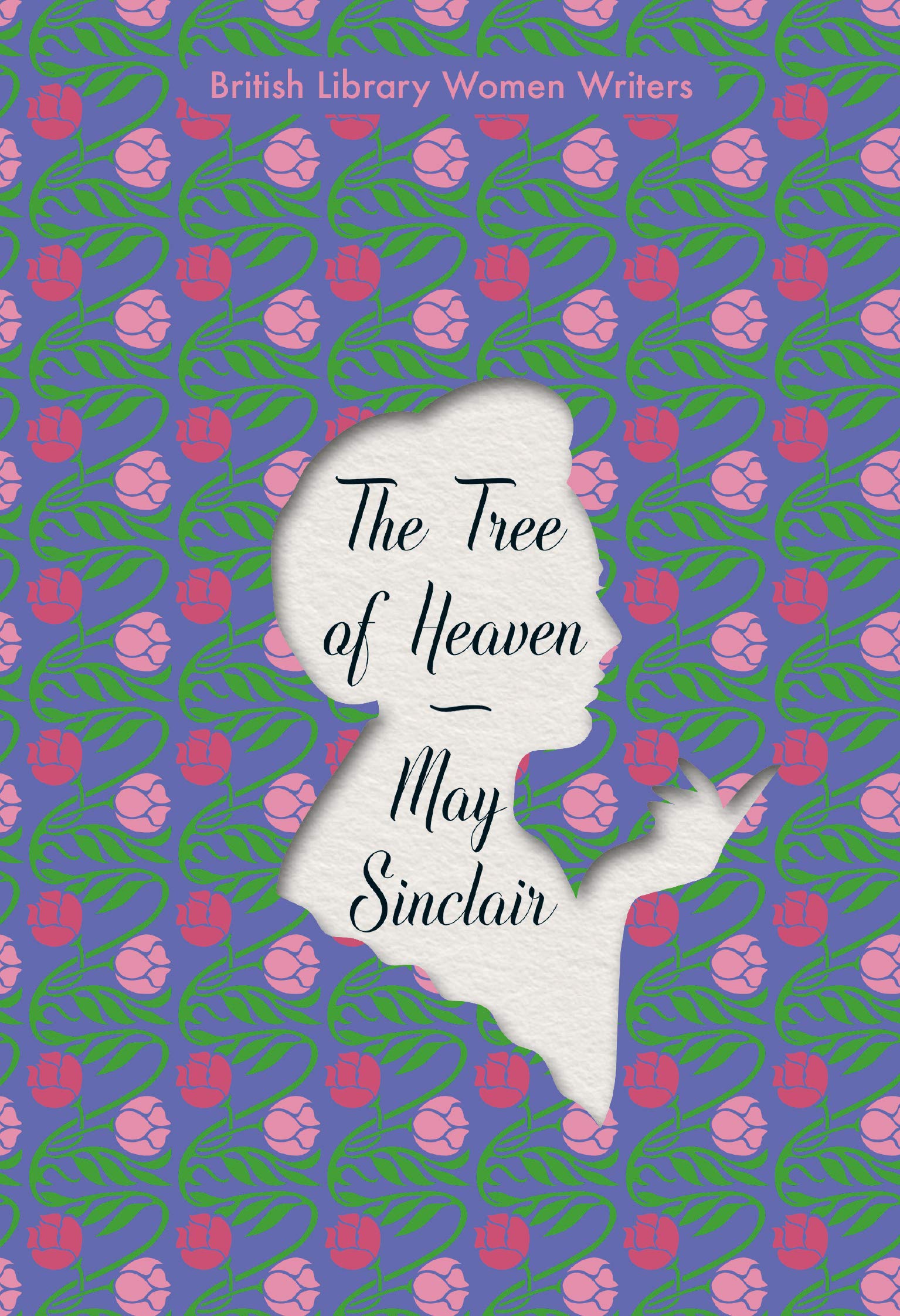
Review 2276: Classics Club Spin! The Tree of Heaven

Although the Preface states that the tree of heaven in this novel is stripped of its false identity in the end and shows itself as merely an ash—to symbolize the stripping away of Victorian sentimentality to realism—I have to say that depicting men’s deaths in World War I as glorious isn’t a bit realistic. But never mind. The book was written in 1917, so it pretty much had to.

The novel begins in the late 19th century when Anthony and Frances Harrison are young parents and have recently bought their house. One of the things Frances loves about it is the tree of heaven, which Anthony, a timber importer, states is nothing but an ash tree. The couple have four children, Dorothy, Michael, Nicky, and John. Frances is obsessed with her children, really the boys, to the point where Anthony feels left out.

This novel is about daily life in pre-war England through the microcosm of one family. Early on, as early as the first day depicted in the novel, when Michael refuses to go to a children’s birthday party, he demonstrates a fear of what he later calls the Vortex, which seems to be giving up his individuality because of the pressure of others’ excitements. As they grow, the children encounter situations which show and determine their personalities. The family takes in Veronica, the daughter of Anthony’s brother Barty and Frances’s best friend, Vera. Although Barty is family, he has become unbearable, and Vera leaves him for her long-time friend Ferdie Cameron. But Barty refuses to give her a divorce. Nicky, by then a schoolboy, becomes close to the lonely little Veronica, and it is thinking of her situation as a young man that makes him decide to marry a woman who is pregnant by another man, not for the woman but for the sake of the child.

As a young woman, Dorothy becomes involved in the suffrage movement, but doesn’t approve of some of their tactics. She too eventually backs off from the movement because of fear of the Vortex, while Michael joins a group of avant garde poets who renounce all previous poetry.

All of this leads up to World War I and the effect it has on the family and its friends. It is an interesting and well-written novel that provides a look at an ordinary (although well-off) family in the first couple of decades of the 20th century.

Related Posts

Family Roundabout

Some Do Not

They Were Counted

Review 2275: The Books of Jacob

The Swedish Academy that awarded Olga Tokarczuk the Nobel Prize for Literature called The Books of Jacob her magnum opus. It is certainly a stupendous novel at almost 1000 pages, carefully researched, minute in detail, taking on such subjects as the nature of religion, forgiveness, the interconnectedness of things. It is a dense historical novel about a real figure in history, Jacob Frank, the head of an odd religion, a Jewish heresy.

Frank emerges from another Jewish heresy, a group called the Shabbatians, who believe the Messiah has already come and therefore according to teachings, the Mosaic law is broken. The new law, according to Frank, is whatever he says to do. This story is told from multiple perspectives, notably that of Nahman, one of his earlier followers, who attempts to document his life and beliefs.

The movement, which begins in the mid-18th century, is formed mostly of Shabbatians, some of whom are merchants but others of whom are very poor. Frank’s teachings seem to consist mostly of story telling, but as with other cult leaders, one big feature is the sexual exploitation of women, first by all of them sucking a woman’s breast and later by Jacob assigning men partners even from the unmarried girls. You can guess that Frank is charismatic.

This fantastic story follows this group of people, which gets larger and larger, first from southeastern Poland down to Turkey, where Jacob briefly converts to Islam, then back to Lwow in Poland. There, they are attacked by the Talmudic Jews until from revenge they tell the authorities that it’s true that Jews use Christian blood in their rites, a lie that ends in the execution of 14 Jews, including rabbis.

After fleeing Poland again, Jacob decides that their route lies with conversion to Christianity, an act that he can justify with teachings but that also has the end goal of the members being allowed to own land and gain other honors denied them as Jews. Although the path is not always smooth and a lot more traveling ensues, the upward mobility of the group after that decision is phenomenal. Ultimately, Jacob becomes an intimate of the King of the Habsburg Empire.

The research that this novel reflects is phenomenal. As a reader, I was often enthralled but reluctantly had to put up with some deep philosophical discussions, including deeply confusing ones about numbers, since some of the members are kabbalists. The most difficult part of it, though, was the sheer number of characters, especially Frank’s followers. I was keeping up okay until they converted and all changed their names. Then I was usually lost.

I wouldn’t recommend this book as the first you read by Tokarczuk, and it’s certainly not an easy read, but it’s a fascinating story.

Related Posts

Drive Your Plow over the Bones of the Dead

Flights

Zealot: The Life and Times of Jesus of Nazareth

Nonfiction November: Week Five

This week’s host is Hopewell’s Public Library of Life, and the theme is New to my TBR:

It’s been a month full of amazing nonfiction books! Which ones have made it onto your TBR? Be sure to link back to the original blogger who posted about that book!

I haven’t participated in this event before, and I am not a big nonfiction reader, but I got a lot of ideas during the month for further nonfiction reading. Here are the nonfiction books mentioned this month that piqued my interest. I’m just dividing these up by weeks to give me a little space between cover images.

Books from Week Two

The theme for Week Two was what attracts you to a book, so a lot of people were just showing interesting covers. But even though I don’t think I use covers to attract me to nonfiction books generally, these made me look at a few books more carefully.

I saw A Place for Everything: The Curious History of Alphabetical Order by Judith Flanders posted on She Seek’s Nonfiction‘s page during week two. It sounds right up my alley, and it has a beautiful cover. I hadn’t heard of it before.

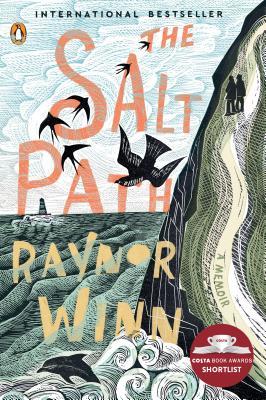
Entering the Enchanted Castle had the cover of The Salt Path by Raynor Winn on the post for Week Two. That reminded me that one of my best friends told me about the book, so I put it on my TBR. And again, what a great cover!

I’m sure I’m not the only one to notice what’s going on in our political arena, so when Silver Button Books put the cover of Cultish by Amanda Montell up in Week Two, I immediately added it to my TBR.

Books from Week Three

The theme for Week Three was pairing a nonfiction and fiction book. I admit that in a few cases, the fiction book looked more interesting to me than the nonfiction. However, here were four nonfiction books that struck my interest.

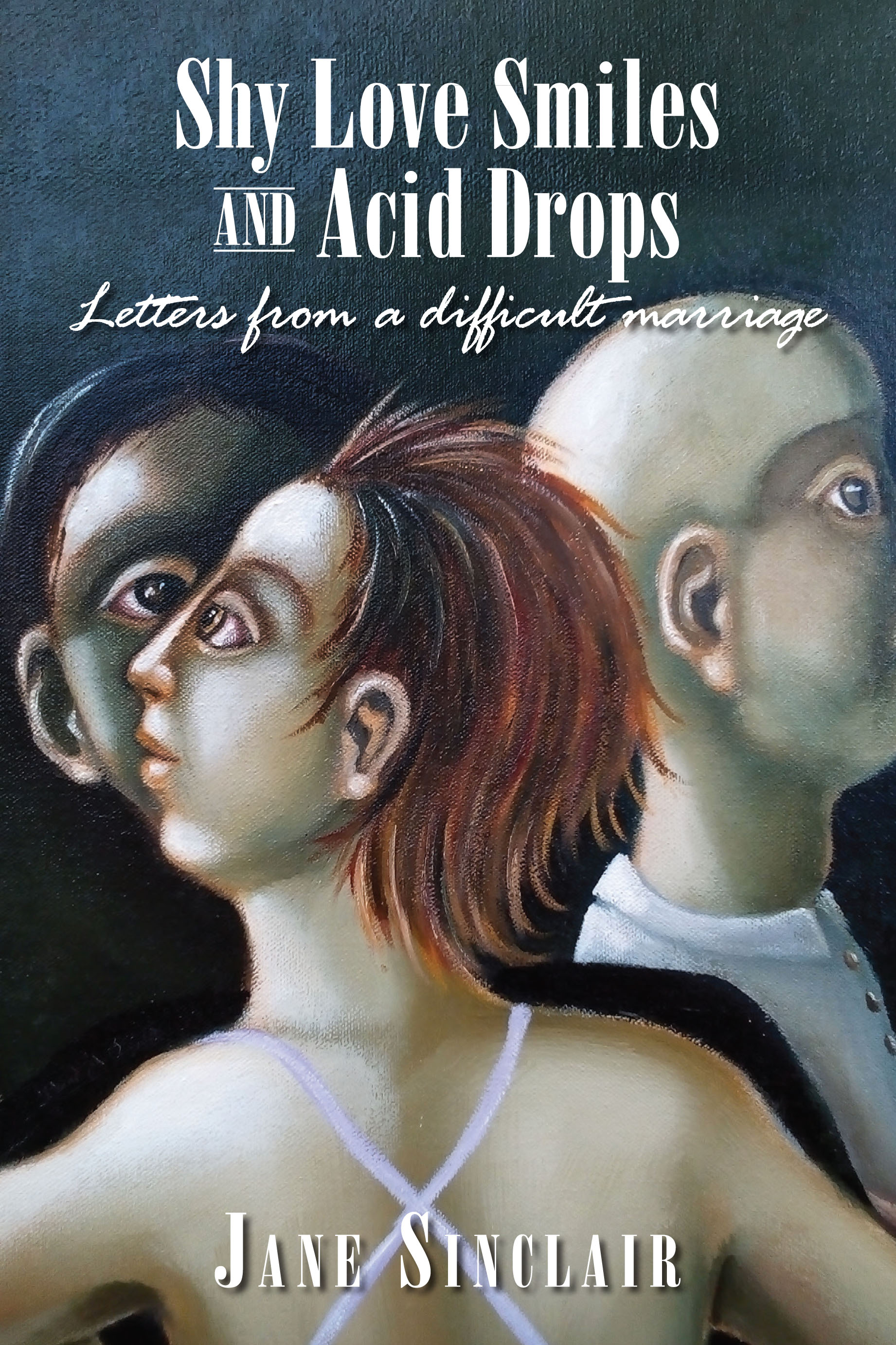
The cover of Shy Love Smiles and Acid Drops that Whispering Gums listed for Week Three as well as its subject matter made me put it right on my TBR. OK, this time I admit picking a nonfiction book for its cover.

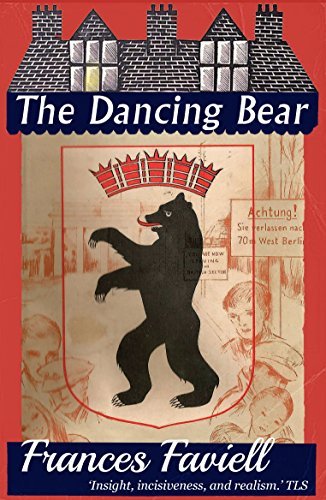
Books Please featured a memoir called The Dancing Bear by Frances Faviell for Week Three, and as I love the Furrowed Middlebrow imprint and have read some fiction by Faviell, I’m definitely putting this one on my TBR.

I love Amitav Ghosh, and I was unaware of the nonfiction book he’d written, The Nutmeg’s Curse: Parables for a Planet in Crisis until I saw it on Unsolicited Feedbacks post.

Entering the Enchanted Castle listed The Wild Silence, also by Raynor Winn, and I have to read it because of the cover and because it’s about Iceland.

Books from Week Four

For some reason many of the participants’ choices for Week Four weren’t grabbing me. The theme was Worldview Shapers, and maybe it was because some of participants didn’t really explain much about their choices but just posted their covers. Many of the participants posted several books on one subject, so I felt a little overwhelmed to pick one of them, even if I was interested in it, as I was by the holocaust books and the ones on the aboriginal experience, for example. In any case, Shoe’s Seeds and Stories selected the graphic nonfiction book Ducks by Kate Beaton, which I was already planning to read and in fact have in my pile right now.

Review 2274: The Misses Mallett

When I read that five years before she wrote this book, E. H. Young ran off with a married man, I had to wonder how much of it was autobiographical. Not that that’s exactly what happens in The Misses Mallett, but you’ll understand why I say this if you read it.

As a young woman, Rose Mallett rejects the proposal of Francis Sales. He is handsome, but she thinks he is sulky and boyish. And he is. Rose lives with her much older half sisters, whom she remembers thinking as a girl were like princesses. Now perhaps they are a little comic, but Rose doesn’t see them that way. Both are meticulously dressed in a style of twenty years before. Caroline, who likes to present a roguish effect but knows nothing about what she suggests, can be magnificent, while Sophia still looks girlish. Rose herself is beautiful in a cool, collected way, and dresses with a stylish severity.

Francis Sales goes away to Canada to learn farming and in a few years comes home with a wife, Christabel. Although Christabel says she wants to be friends, it’s clear she has some idea of Rose that is mistaken. Soon Christabel, in trying to prove her gameness at horse riding when she is actually afraid of horses, is badly injured so that she is a permanent invalid. For this incident she believes Rose had a part she did not play. Still, Rose begins a relationship with Francis that is not an affair but is more than a friendship.

When Rose is about thirty, the sisters’ niece Henrietta comes to live with them. Although the sisters never saw their brother Reginald unless he needed money, they still loved him. He has died, followed shortly by his widow, who rejected their money even though she and Henrietta were living in poverty, Henrietta having kept their lodgings by taking up the cooking for the whole house. When her mother dies, the sisters send for her.

Unfortunately, one of the first people Henrietta sees when she arrives is Francis Sales, who presents a romantic exterior riding his horse. She soon divines that Rose has a relationship with him even though they have lately broken up, and decides she will have him herself. As can be predicted, he’s not hard to get.

Because Henrietta sees Rose as a rival, she doesn’t understand the things Rose does for her. Rose has her flaws, but she isn’t the woman Christabel or Henrietta think she is. It is this misunderstanding that powers the plot of the novel.

I find Young fascinating. Her novels are not at all what I expect for her time, so early in the 20th century (this one is from 1922). Her heroines are complex and interesting. I have no idea what either of the heroines in this book see in Francis Sales, though.

Related Posts

Miss Mole

Chatterton Square

Jenny Wren

Review 2273: The Man in the High Castle

I wanted to read The Man in the High Castle for the 1962 Club, but it didn’t arrive from the library in time. Although speculative fiction is generally not my genre, this book is so well known that I was curious about it.

The novel postulates that the Axis powers won World War II. As a result, the United States was divided between Germany and Japan except for the Rocky Mountain states, which were deemed unimportant. Germany has the Eastern states and Europe and Japan has the Pacific states and Asia.

The action of most of the novel takes place in San Francisco, where a lot is going on. Frank Frink has quit his job at the factory and been convinced by his coworker to make jewelry, which his coworker is trying to sell. Mr. Cheldan, an antique dealer who specializes in pre-war American goods, very popular with Japanese businessmen, who are the only people with any money, finds out that some of his goods are counterfeit. A mysterious Swede named Mr. Beyner is coming to visit Mr. Tagomi at the Japanese Trade Mission. In the Rocky Mountain states, Julia Frink, Frank’s ex-wife, has met a young man. All of these characters incessantly consult the I Ching.

The fortunes of all these characters are going to be affected by the death of the head of Germany and the resulting factional struggle for power. A shocking book is circulating that posits that the Allies won the war. It’s banned in German areas, but in San Francisco everyone is reading it.

Almost 100 pages into this novel, I was profoundly uninterested in what was going on with all these characters. I only continued with the book because it began to be obvious who the person referred to by the title was, and I was mildly interested in that.

One of my problems with the book was the writing style, which is often very telegraphic, especially when reporting characters’ thoughts, leaving out parts of speech and using a lot of sentence fragments. I’m not familiar with Dick’s writing style, but at first I thought this was a device to show a sort of stereotyped Japanese influence, but then he used the same style for the thoughts of characters from the German-controlled areas.

I won’t tell what it is, but this is a novel with a twist. For me, novels with twists generally make everything fall into place, just a new place. However, in this case I felt the twist made the whole rest of the novel meaningless.

Related Posts

Aurorarama

To Paradise

Oryx and Crake

Review 2272: The Other Day

The Other Day is Dorothy Whipple’s charming memoir of her childhood in Blackburn, starting when she was very young until she was about 12. She clearly has a vivid memory of such things as her inability to understand when someone was teasing her, the ways she misunderstood things, and her great ideas based on childish misconceptions.

Her experiences of school were especially unfortunate. She was hopeless at mathematics, and her math teacher at her first school ridiculed her mercilessly until she “cheated” by claiming to get two answers right on a quiz. Later, she was entered into a convent school and became confused about what she was told about religion.

Most of her stories, whether happy or not, reflect a happy childhood, especially when the family later takes a cottage. Her memories reflect a lot of humor even though she seems to have been a serious child.

Related Posts

Someone at a Distance

Young Anne

Greenbanks

Review 2271: The Child and the River

Here is my lone contribution for Novellas in November, but it’s a great one!

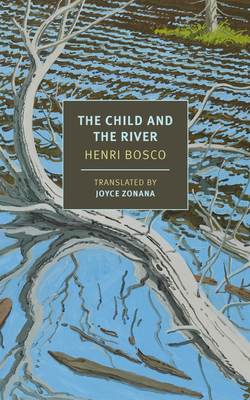
Pascalet grows up free on a farm in southern France, but his parents always tell him to stay away from the river. Of course, that means he is drawn to it, so while his parents are away and he’s in the charge of his aunt, he sneaks down to the river early in the morning.

There, he scrambles into a boat at the edge of the water and listens and looks, going into a sort of enraptured trance. Next thing he knows, his boat has drifted into the current. He is helpless, with no oars, until the boat comes aground on a small island.

On the island he spies on a gypsy camp, and there he sees a boy brought in and tied up. He waits for night, and when everyone is asleep, he cuts the boy free and they run away, stealing the gypsy’s boat. Pascalet and his new friend, Gatzo, begin living along the river.

This is a gorgeous, dreamy novella that fills your mind with the sights and even smells of the river. It is so evocative and beautifully written. The life along the river is minutely observed. It’s a lovely book.

I received this book from the publishers in exchange for a free and fair review.

Related Posts

Once Upon a River

The World My Wilderness

Dark Enchantment

Nonfiction November: Week Four

This week’s host is She Seeks Nonfiction, and the theme is Worldview Shapers:

One of the greatest things about reading nonfiction is learning all kinds of things about our world which you never would have known without it. There’s the intriguing, the beautiful, the appalling, and the profound. What nonfiction book or books have impacted the way you see the world in a powerful way? Is there one book that made you rethink everything? Do you think there is a book that should be required reading for everyone?

I can’t answer this one with just one book, and I can think of a few books that I read before blogging that made me see things differently. However, I’ll stick mostly to ones that I have reviewed on this blog.

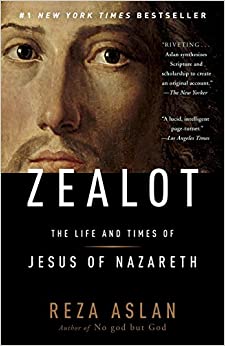
One was a book recommended by my brother called Zealot: The Life and Times of Jesus of Nazareth by Reza Aslan, an acclaimed religious scholar. Aslan’s goal was to try to find as much evidence as possible about the man Jesus aside from the religious claims. In other words, the historical record. What he found was that most of what we think we know about his life is myth, created by the gospel writers years after his death to further the claim that Jesus was the Messiah.

On the subject of religion, another book that affected me profoundly before I started the blog was Jon Krakauer’s Under the Banner of Heaven, about the beliefs and behavior of some fringe apostolic Mormon groups.

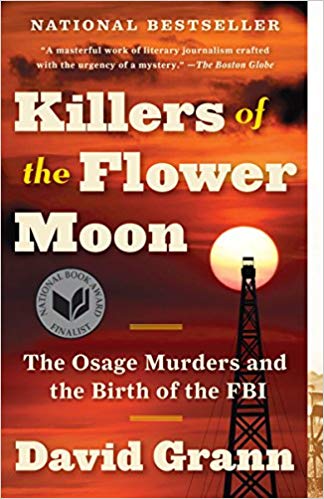
Cover for Killers of the Flower Moon

A book that might be popular again now that told me something I didn’t know about from history is Killers of the Flower Moon: The Osage Murders and the Birth of the FBI, which profoundly shocked me when I read it four years ago. As most of you probably know, it’s about members of the wealthy Osage tribe who were murdered by their guardians (the government deeming they were not able to look after their own interests) or white family members in order to get claims to their share of the oil money. The movie that is out now by Martin Scorsese is excellent.

Cover for Thinking, Fast and Slow

Thinking, Fast and Slow by Nobel Prize winning Daniel Kahneman explains the results of years of scientific experiments that show that most of our decisions are made by our unconscious rather than our conscious mind. This was an entertaining book full of intellectual surprises and little exercises that you can try yourself that show the profound implications of how we make our decisions.

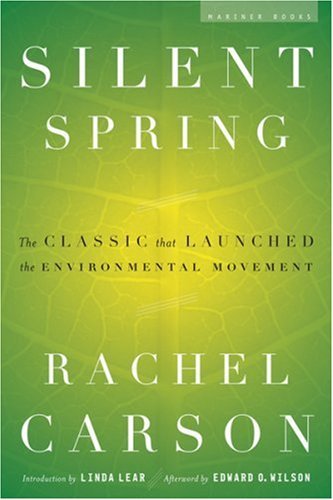
I was aware that DDT was banned as a result of Rachel Carson’s ground-breaking book Silent Spring, but her book about the poisons that we still use every day in agriculture and other industries made me realize why the world seems to be dying of cancer. This book may have been written in 1962, but it still needs to be paid attention to. I think everyone should read it.

Cover for The Omnivore's Dilemma

Finally, for me personally, the first book I ever reviewed on this blog was revelatory. That is The Omnivore’s Dilemma by Michael Pollan, about the foods we eat and how our basis in corn and soy is not really good for us. I was even more profoundly affected by his In Defense of Food, but I read it before starting this blog.

Review 2270: Fractured

Fractured is Slaughter’s second novel featuring Will Trent, the dyslexic detective from the Georgia Bureau of Investigation.

When wealthy Abigail Campano returns home early from her lunch date, she finds the window by her front door smashed and her teenage daughter lying dead at the top of the stairs with her apparent attacker standing over her holding a knife. In the resulting struggle, Abigail and the man with the knife both fall downstairs, and Abigail manages to kill him.

The Atlanta police have trampled all over the crime scene before Will Trent arrives to determine whether the GBI should be involved in the case. It’s Will who discovers the young man had been stabbed before Abigail arrived and was trying to help the girl. Then Paul Campano arrives and realizes the girl is not his daughter Emma at all but probably Kayla, her best friend.

Unfortunately, Will grew up with Paul in a children’s home. Paul was a bully then and is extremely aggressive now.

The Atlanta police are taken off the case, but Will’s boss attaches Faith Mitchell from the APD to work with Will. It takes him a while to realize that she is the granddaughter of a woman who was forced to retire after Will caught six of her APD officers stealing drug money.

The case becomes a kidnapping case, beginning with a search to identify the dead man. The Campanos have never seen him before. What was he doing in their house and where is Emma?

This novel is another exciting entry in this well-written and carefully plotted series. Will is an interesting character, and Faith begins to respect his abilities.

Related Posts

Triptych

The Murder Rule

Raylan