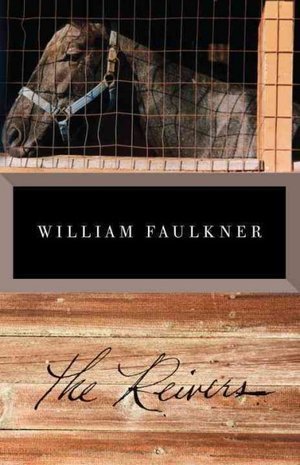
Review 2254: #1962 Club! The Reivers

The Reivers is William Faulkner’s last novel, written in 1962, which I chose as my last selection for the 1962 Club. Unlike some of his more famous novels, it is told straightforwardly by its main character, Lucius Priest, as a grandfather telling a yarn about his childhood to his grandson. I believe Faulkner wrote this novel, which reminded me of Huck Finn, for pure fun.

Key to the story, which is set in 1904 when Lucius is 11, is Boon Hoggenbeck, an overgrown man-child who works for Lucius’s grandfather, referred to as Boss. Lucius’s grandparents and parents have no sooner departed for the funeral of Lucius’s other grandfather than Boon decides to take Boss’s brand new automobile and Lucius to Memphis, both sort of colluding in this misbehavior without actually discussing it. On the way there, they discover that Ned, Boss’s Black coachman, has hitched a ride with them by hiding under a tarpaulin.

In these early days of cars in Mississippi, the trip to Memphis is in itself an adventure, but things heat up when Boon delivers himself and Lucius to a whorehouse (although Lucius calls it a boarding house) where Boon has a favorite girl, Miss Corrie.

A bunch of colorful characters appear, including Otis, a boy described as having something wrong and who you don’t notice until it’s almost too late. But the story really kicks in when the miscreants learn that Ned has traded Boss’s automobile for a horse that he plans to race against another horse that already beat it twice.

I wasn’t sure this was going to be my kind of story, but mindful of the time (it is definitely not politically correct in so many ways), and I mean 1904 not 1962, it is funny and contains some philosophizing about right and wrong.

Related Posts

The Hamlet

The Town

The Mansion

Review 2253: #1962 Club! The Pumpkin Eater

I chose The Pumpkin Eater for the 1962 Club because the title seemed vaguely familiar (aside from its nursery rhyme connections) and because I don’t think I’ve read any Penelope Mortimer. I think the title is familiar because there was a reasonably popular movie of it in 1964 starring Anne Bancroft.

The unnamed narrator is a wife and mother of a large number of children, the number, names, and ages (except one) never specified. At a young age, she was already married three times, once a widow, and already had quite a few children, including three stepchildren whose father died. As the novel opens, she is recounting a discussion with her father to her psychiatrist, in which her father is trying to dissuade Jake from marrying her, basically saying she is too flaky and has too many children.

As she goes on to tell the story of her marriage, nothing improves. Her psychiatrist thinks her desire to have more children is a pathology (and also entirely her responsibility). Both her psychiatrist and her doctor are disdainful and condescending to her. Nothing seems to be thought of her husband having affairs (although she naïvely believes he is faithful for quite some time despite an early incident with a girl named Philpot).

The fact is, Jake, a screenwriter, is gone on set most of the time, most of their friends are his, the family is wealthy enough to have servants, and even the children are absorbed by nurses early and by schools later. So, she has little to occupy herself with except small children and cooking.

This book is billed as black humor. I didn’t find it funny, but I did sympathize with the narrator. Some horrendous things are done to her, and all of the men around her are manipulative. I thought the novel was bleak rather than funny.

Related Posts

The Women’s Room

The Transit of Venus

A Lady and Her Husband

Review 2252: #1962 Club! A Murder of Quality

The second book I chose for the 1962 Club is A Murder of Quality, the second George Smiley novel. I found it surprising because all the other George Smiley novels I’ve read have been espionage novels, and this one is a straight mystery.

George Smiley is retired when he is summoned by his old colleague, Miss Brimley, now the editor of a Christian magazine. She tells Smiley she would like him to investigate a letter the magazine received from Mrs. Rode, whose family are great supporters of the magazine. In the letter, Mrs. Rode claims her husband is trying to kill her. Smiley agrees to look into it, but the next day they learn that Mrs. Rode has been brutally murdered.

Mr. Rode is a tutor at a prestigious boys’ school, Carne, with a high church atmosphere. Smiley attends Mrs. Rode’s funeral pretending to be a journalist from the magazine. He finds out that though both Rodes belonged to a Baptist chapel when they arrived, Mr. Rode has converted to the English church and has been trying to fit in with the school staff, while Mrs. Rode did not. Mrs. Rode appears to have been deeply involved in chapel charitable activities.

The police are searching for a homeless woman named Jane. When Smiley goes to look at the crime scene, he meets Jane, who tells him she saw the devil fly away on silver wings.

The solution to the murder relies heavily on Smiley’s ability to understand his suspects’ characters. The novel is an interesting character study and a plunge into the school’s secrets.

Related Posts

A Perfect Spy

Tinker Tailor Soldier Spy

The Honourable Schoolboy

Review 2251: #1962 Club! We Have Always Lived in the Castle

Twice a year, Simon of Stuck in a Book and Kaggsy of Kaggsy’s Bookish Ramblings sponsor a Read the Year club, for which they randomly pick a year in the first three-quarters of the 20th century, and participants select books published during that year to read. This time, the year is 1962, and We Have Always Lived in the Castle is my first selection for the club.

However, as usual, I have already posted reviews for three other books published in 1962:

We Have Always Lived in the Castle is a true modern gothic novel (or maybe novella—it’s very short), moving gradually but compellingly to reveal its secrets. Mary Catherine Blackwood lives with her sister Constance and their Uncle Julian in the family home, isolated from the rest of the village. We first meet Mary Catherine on one of her biweekly trips to the village for food, where she carefully plots her course to try to avoid people. However, she is mocked by the villagers, both young and old.

Slowly, we learn the first secret—that six years ago when Mary Catherine was twelve, most of her family was poisoned. Mary Catherine survived because she had been sent to bed without supper, Constance because she seldom used sugar, which had arsenic in it; Uncle Julian ate very little, so he survived but has since been feeble and muddled. Constance was tried for the crime but found not guilty. Ever since then, the girls have avoided other people.

Mary Catherine’s narrative hints that things are going to change. First, Helen Clarke arrives for tea, as she does once a week, but she brings along a friend, and Constance seems to be responding to her suggestion that she get out more. Mary Catherine worries about this, for she is very protective of Constance. Then Cousin Charles arrives. Naïve Constance accepts him, but Mary Catherine thinks he’s a bad one.

Mary Catherine is a dreamy girl who has strange compulsions and rituals, but one by one, Charles dismantles her protections around their property. We can see that the sisters are soon to be shaken from their oddly comfortable existence.

Jackson was a master at evoking an atmosphere. I think only her The Haunting of Hill House surpasses this one in power.

Related Posts

The Bird’s Nest

Hangsaman

Let Me Tell You

Review 2250: The Wheel Spins

The Wheel Spins is the novel upon which the many versions of the movie The Lady Vanishes are based. Although I am familiar with the story in all its incarnations, I still found the book exciting.

Iris Carr is on holiday with a group of her friends in a Balkan country, possibly Romania. Rich and spoiled, the friends have been cheerfully disrupting their small hotel, leading the other English guests to dislike them. The last day, she finds she is tired of them herself, so she decides to stay a day longer than the others. When she does leave, she has a touch of sunstroke and has to be helped. The train is crowded, so the porter crams her into a compartment for six as the seventh person.

In the compartment are a commanding woman in black who turns out to be a baroness, a family of three, a cold blonde lady, and a nondescript middle-aged woman in tweeds. Iris isn’t feeling well because of her sunstroke, but the nondescript woman turns out to be English, Miss Froy, and takes her to the dining car for lunch. There she prattles about returning to England to her elderly parents and dog, her job as governess for the baroness, and her next job for the baron’s political opponent.

Back in the train compartment, Iris falls asleep. When she wakes up, Miss Froy is gone. When she doesn’t appear, Iris searches the train for her, but she doesn’t seem to be on it. In growing alarm, she finds her compartment companions denying that Miss Froy ever was there. On her way to the dining room, Miss Froy met some of the English people from the hotel, but when Iris speaks to them, some have not seen her and others lie for their own reasons. So, even though a young man named Hare and the professor with him try to help her, Hare believes she has hallucinated because of her sun stroke, and the professor thinks she is hysterical.

As the train nears Trieste, Iris begins to fear Miss Froy is in danger, but what can she do about it? This all makes an thrilling novel.

Missing from the movie adaptations are passages that visit Miss Froy’s elderly parents and dog as they await her coming. In a way, they are unnecessary, but they make the ending much more touching, especially the dog.

I received this novel from the publishers in exchange for a free and fair review.

Related Posts

Some Must Watch

Juggernaut

Twice Round the Clock

Classics Club Spin #35

It’s time for another Classics Club spin. For the spin, members select 20 titles from their Classics Club lists and post them in a numbered list on their blogs. On Sunday, October 15, the club selects a number, and that determines which book to read for the spin. The goal this time is to read that book by Sunday, December 3, and post your review.

So, with no further ado, here is my list of 20 books:

  1. The Book of Dede Korkut by Anonymous
  2. The Tree of Heaven by May Sinclair
  3. Hero and Leander by Christopher Marlowe
  4. The Tavern Knight by Rafael Sabatini
  5. Love’s Labour’s Lost by William Shakespeare
  6. Les Misérables by Victor Hugo
  7. Tis Pity She’s a Whore by John Ford
  8. The Deepening Stream by Dorothy Canfield Fisher
  9. The Princess of Cleves by Madame de Lafayette
  10. Weatherley Parade by Richmal Crompton
  11. Cecilia, Memoirs of an Heiress by Fanny Burney
  12. The Book of Lamentations by Rosario Castellanos
  13. Our Mutual Friend by Charles Dickens
  14. The Methods of Lady Waldhurst by Frances Hodgson Burnett
  15. The Three Musketeers by Alexandre Dumas
  16. The Passenger by Ulrich Alexander Boschwitz
  17. The Return of the Native by Thomas Hardy
  18. Merkland, A Story of Scottish Life by Margaret Oliphant
  19. Incidents in the Life of a Slave Girl by Harriet Jacobs
  20. The Prophet’s Mantle by E. Nesbit

Since I have exactly 20 books left on my list, this will be the last spin that I can participate in for a while that doesn’t require repeating some of my entries. I’m interested to see how it turns out.

If I Gave the Award

As I just posted my review for the last short-listed book for the 2019 James Tait Black Award for Fiction, it is now time for my feature where I decide whether the judges got it right. This time the choice is difficult for me, because I didn’t really like any of the shortlisted books. Most of them share a strong intellectualism, although that’s not why I felt so-so about them.

It’s kind of a toss-up which of the books I liked least. I remarked in the review of Murmur by Will Eaves how much I dislike books with dreams in them. In this novel about an Alan Turing-like figure, the main character eventually experiences wakened dream states as a side-effect from chemical castration. It’s ironic that the other book I disliked, Crudo by Olivia Laing (the winning entry), is also a fictional character study of a real person, a woman very much like the poet Kathy Acker, with whom I was completely unfamiliar. In this case, I found Kathy really annoying in her neuroticism and use of crude language. Both of these books were extremely well written, but I had difficulties with them.

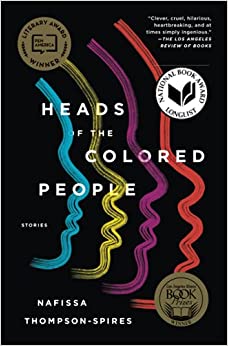
Heads of the Colored People by Nafissa Thompson-Spires was probably the least intellectually removed of the four books. It’s a collection of short stories linked by common characters that explores black identity in the California middle class. The stories are insightful and original, and some of them are bizarre.

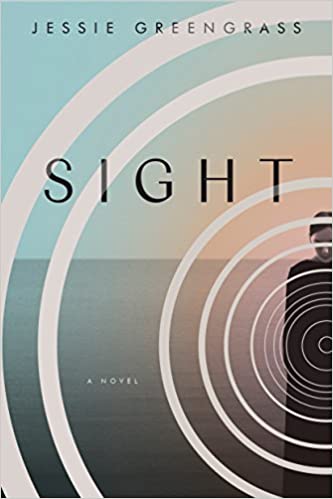
That leaves me not quite knowing what to do with Sight by Jessie Greengrass. It’s about seeing below the surface, narrated by a woman who is conflicted about her own pregnancy. It combines her ruminations with stories about scientists whose discoveries also have to do with seeing below the surface. I found it to be written in meticulous prose but also to be distanced from the reader, and I didn’t like the main character’s neuroticism.

I guess I’m going with Sight, but this one was a tough choice.

Review 2249: Murmur

When the cover of a book calls it “hallucinatory,” I know it’s not going to be a good fit for me. However, since Murmur is part of my James Tait Black project, I felt compelled to read it.

The novel aims to portray the mindset of an Alan Turing-like scientist named Alec Pryor after he is undergoing chemical castration because of a homosexual encounter. Aside from making his body more feminine, the chemical makes him dream and eventually induces wakened dream states, including ones where he fantasizes letters from his friend June, whom he hasn’t seen in years, and relives events of his boyhood.

Those who have been reading my reviews know how much I hate reading about dreams. Since it is difficult to know some of the time whether he is dreaming or remembering, this was a novel I found it hard to stick with, despite it being very short.

The rest of the novel is filled with philosophical musings about whether machines could have consciousness and other subjects. I felt that either I didn’t want to follow his thoughts or they were too hard for me to grasp. The journal section at the end is the most accessible part of the novel.

Related Posts

Crudo

Umbrella

Outline

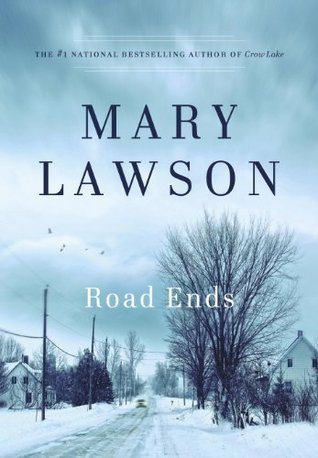
Review 2248: Road Ends

Mary Lawson’s subject is always dysfunctional families in distress living in the far north of Ontario. That sounds deadly, but her novels are absorbing and touching, and Road Ends is no exception.

The novel is told from three different perspectives at slightly different times. Megan Cartwright begins it in 1966, although there is a prologue set in 1967. In the prologue, the best friend of her brother Tom commits suicide where Tom will find him. This doesn’t at first seem to have much to do with Megan’s earlier section but informs Tom’s behavior throughout.

The Cartwrights is a large household of boys with only Megan and her mother the females. Megan’s mother Emily keeps having babies, and Megan is the only one keeping the household organized. Emily retreats to the bedroom with the baby, and Edward, her father, to his study after work. In 1967, baby Adam is a toddler, and Mary has overheard the doctor telling her parents he must be the last child, so she feels free to leave, having realized she will never have a life if she stays. She makes plans to go to Toronto in order to save money to go to London and stay with a friend, but when her father learns her plans, he pays for her to go to London.

Edward has withdrawn himself from the family. One reason is that he is terrified of becoming like his father, a drunkard who used to beat him. He has felt an overpowering anger at times, especially against his sons Peter and Corey, who are always fighting and breaking things. His section of the novel is set in 1969 in roughly the same timeframe as Tom’s, but because of his withdrawal, he hasn’t noticed the household descending into chaos.

For Tom, his friend’s suicide has sent him into a tailspin. He thinks he could have saved him if he had paid more attention. Tom was graduated from college and had job offers in engineering from two aircraft companies, but six months later, he is driving the snow plow at night and spending the day reading the newspaper. He can’t stand to be around people. But he starts noticing that Adam, now four, isn’t being cared for. His mother has had another baby and seems to only care for it. The house is filthy, the child is filthy, and there is no food in the house.

Mary, after a very rough start, has found her dream job in London running a small hotel. She was furious to hear her mother was pregnant again, and she is still homesick but determined not to go back.

I was extremely touched by the ending of this novel. Another really good book from Lawson. I can’t seem to go wrong with her.

Related Posts

Crow Lake

A Town Called Solace

The Other Side of the Bridge