Review 2231: Literary Wives! Sea Wife

Today is another review for the Literary Wives blogging club, in which we discuss the depiction of wives in fiction. If you have read the book, please participate by leaving comments on any of our blogs.

Be sure to read the reviews and comments of the other wives!

My Review

At the beginning of Sea Wife, I thought, oh no, it’s in he said/she said format, which I’m already sick of. That’s not really what’s going on, though. Eventually we realize that Michael’s ship log entries are interspersed with Juliet’s thoughts as she reads them.

Juliet is home after a voyage in the Caribbean. Before the trip, she had been suffering from post-partum depression since the birth of her 2 1/2-year-old boy George (or Doodle). Then her husband Michael convinced her they should buy a sailboat and go to sea. She was terrified of this idea, having no sailing experience herself. However, eventually she agreed. Michael wanted to sail around the world, but she convinced him to sail in the Caribbean off Panama, where they ended up buying the boat, so they could stay near land. Along with them went Doodle and seven-year-old Sybil.

Michael is right about one thing—the adventure forces Juliet out of herself. It also focuses attention on their marriage. They have some lovely moments, but dread arises as we slowly realize that Michael has not returned home.

After my initial bad reaction, which only lasted a few pages, I found this novel absolutely compelling. The descriptions of their stops and of the seas are vivid and beautiful. Both Michael and Juliet have the opportunity to unearth some of their own demons.

What does this book say about wives or about the experience of being a wife?

Literary Wives logo

First I have to rant a little about how unprepared this couple were to take on this kind of trip. Michael’s teenage years spent doing a few trips on Lake Erie were definitely not enough experience to set sail on the ocean with his family, especially when Juliet has never sailed. They’re not sailing on a cabin-cruiser-type yacht but on a sailing vessel, which is much more complicated. He tries to teach her during the trip, but she gets confused about the names of things and is afraid of doing something wrong. This mid-life crisis experiment seemed so stupid to me that it took me a while to get past it. They lived in Connecticut, for heaven’s sake. As this was supposed to be his life-long dream, he could have rented a boat and taught her to sail before they went.

In any case, a sailboat, however large, is a good place to focus the mind on the family problems. Michael seems to have been breathtakingly self-absorbed during Juliet’s depression, leaving her alone with the kids almost all the time and not helping with the housework.

Michael loves Juliet, but he harbors a lot of resentment against her for being depressed and for focusing on her memories of being abused by a family friend. He seems angry that she turned out to be a different person than she seemed to be when they met, a woman he thought was brave and self-assured..

Juliet is afraid she no longer loves Michael. Her political beliefs are opposite to his and he hasn’t handled her depression well.

I like how their relationship ebbed and flowed during the trip, with good times and not so good, like a real marriage, instead of (more common with our Literary Wives books) being unrelentingly bad. Living the dream, Michael is nicer and more involved with the kids even though he is occasionally impatient and Juliet has gotten out of herself. The couple end up really having adventures, as well as working out some of their problems. But how does it end? I’m not telling.

Related Posts

Ahab’s Wife, or The Star-Gazer

Dept. of Speculation

Happenstance

Review 2230: #ThirkellBar! Close Quarters

Although it begins somewhere else, Close Quarters is mostly concerned with Margot Macfayden. Readers may remember that in Jutland Cottage, Margot was the daughter of impoverished and ailing Admiral and Mrs. Phelps. She worked hard, day in and out, maintaining their house and keeping the goats and chickens without much of a thought for herself until Rose Fairweather took her in hand. At the same time, others pitched in to alleviate her condition by visiting her parents so she could get away sometimes. Nevertheless, the wealthy, older Mr. Macfayden found her crying in the henhouse one day and proposed.

At the beginning of Close Quarters, Mr. Macfayden dies after only five years of marriage, and aside from her natural grief, Margot finds herself again at a crossroads. Her parents are now cared for, but she thinks perhaps she should live with them again. However, she doesn’t want to.

She knows the Luftons would like to reclaim the house she’s been leasing, so she starts looking for a house, but she can’t find anything suitable. No one but the readers know that Canon Fewling (Tubby to his friends) suffered a great disappointment when he learned she was engaged.

Although I found the ending of this book more touching than the last few, there were several occasions when Thirkell repeated conversations that she has not only had in other books but that had already appeared in this one, as if she couldn’t remember what she had written. The story of Mr. Wickham’s reluctant proposal to Margot is repeated three or four times, for example, while a snobby conversation about common mispronunciations occurs more than once. There is a stupid recurring joke about the Parkinsons’ last name that I don’t understand but suspect is more snobbery, and several different people opine that Mrs. Parkinson wears the pants in the family. Also, Margot’s lack of undergarments when Rose took her in hand is mentioned again.

Maybe I’m getting tired of Thirkell’s little conversational tidbits, but they seem also to occur more often. I liked the central theme of this book but disliked a lot of the chatter. And that’s disappointing, because often the chatter is amusing. Anyway, only two more books to go.

Related Posts

A Double Affair

Never Too Late

Jutland Cottage

Winding Up a Project and Starting a New One

On thinking about the books I have read the last few years, I realized that I was reading far more British than American books, not that there is anything wrong with that, but it seemed odd because I am American. One of the reasons, I think, is that most of my projects are based in Great Britain even if the prizes accept entries from other countries. So, I decided to wrap up one of those projects and start a new one for the Pulitzer Prize for Fiction.

Even though I have enjoyed reading many of the shortlisted books for the James Tait Black Fiction Prize, I decided to wrap up that one, as the Booker Prize is a little more mainstream. I will continue to read the shortlist for the Walter Scott Prize for Historical Fiction, because I enjoy historical fiction so much.

One advantage of picking the Pulitzer Prize is that I have already read several of the finalists and winners, and several of them were favorites. I will continue to read the books in the James Tait Black list until I have finished all of them from 2010-2023. I have nine more to read and eleven to review.

Those who have been following my Angela Thirkell project might remember that we only have three more books to go before we finish the entire Barsetshire series (29 books). One of those reviews will appear tomorrow. So, that’s another project that’s winding up.

Review 2229: The Field of Blood

Ever since I read my first Denise Mina book, back in the Garnethill days, I thought I kept up with her. But it seems I might have missed The Field of Blood, which is the first Paddy Meehan book.

Two boys, 11 and 10 years old, take Brian Wilson, a three-year-old, out into a field and murder him. They are quickly found and thought to have committed the crime by themselves.

Paddy Meehan is an 18-year-old copy “boy” for the Scottish Daily News who wants to be an investigative reporter. When she reads about the story the police have put together of the crime, it doesn’t make sense to her. Why would the boys, who are from poor families, have taken a train out to a relatively posh area to kill Baby Brian when there are many desolate areas in their own neighborhood? She begins investigating and decides the boys were driven out to the scene.

Since she is not a reporter and is told to stop saying she is one, she uses the name of Heather Graham, the only woman reporter on staff. She is at outs with Heather, whom she previously considered a friend, because when the boys’ photo appeared in the paper, she recognized one as the cousin of her fiancé Sean and confided in Heather. Ambitious Heather suggested she break that story; however, she refused, saying her family would never forgive her. When Heather broke it instead, Paddy, who knew her family would think she did it, had a fight with Heather.

Heather is murdered, and Paddy doesn’t realize that because she was using Heather’s name, Paddy’s investigations have unwittingly caused her death.

Mina’s early mysteries are gritty. This one, set in 1980s Glasgow, is no exception—gritty and thrilling. Paralleling Paddy’s story is a real one about another Paddy Meehan, a thief who was framed by the police for murder.

Related Posts

The End of the Wasp Season

Still Midnight

The Red Road

Review 2228: The Island of Missing Trees

I’ve now read three books by Elif Shafak, but I always have the same problem. Some choice she makes in the narrative style separates me from getting fully involved. In this case, it’s the blasted fig tree.

In the 2010s, Ada is the sixteen-year-old daughter of Cypriot parents living in London. Her mother died the year before, and she is grieving. Her father, an introverted plant scientist who is also grieving, is not much help. Her parents went through traumatic events when they were in their teens during the invasion of Cyprus. Further, their marriage meant a break from their families, as Kostos is Greek and Defne was Turkish. Ada would like to understand more, but Kostos promised Dephne not to talk to Ada about their past.

Just before the holidays, Ada has a sort of breakdown in school, and her behavior is recorded and put on social media. She is depressed and hostile until her Aunt Meryem, whom she has never met, arrives for a visit. She is angry with her aunt because she didn’t come to Dephne’s funeral, but from her she begins to learn about Cyprus and her parents.

The chapters involving humans are separated by chapters narrated by a fig tree that Kostos brought from Cyprus. This fig tree knows all about the history of Cyprus as well as about various creatures. Plus, it is visited by numerous birds and insects, all of which have stories to tell or the tree has facts about them to impart. Every time I came close to getting involved in the flow of the story, there was a chapter by the fig tree to interrupt it. I finished the book, but I almost put it down numerous times, and I started skipping through the tree’s sections.

Related Posts

The Bastard of Istanbul

10 Minutes 38 Seconds in This Strange World

The 40 Days of Musa Dagh

Review 2227: The Silver Swan

In this second Quirke novel set in 1950s Dublin, Quirke doesn’t do that much investigating, the results of the last case having been hushed up. However, his poking around does stir things up.

Quirke, a pathologist, is contacted by a distraught Billy Hunt, a man he can barely remember from school days. The body of Billy’s wife Deirdre has been discovered naked in the water, assumed drowned. Billy begs Quirke not to perform an autopsy, because he can’t bear the idea of it. Quirke says he’ll do what he can, but he does do an autopsy and finds an injection site in her neck. However, he hides this information, and the coroner brings in a verdict of suicide. Quirke has assumed she took an accidental overdose, but he would like to know more about her, so he lets Detective Inspector Hackett in on enough to know everything is not straightforward.

The novel returns a bit in time to tell the story of Deirdre Hunt, who has been calling herself Laura Swan since she opened a beauty salon called The Silver Swan. Alternately, it follows several characters in the novel’s current time. One of the first things Quirke discovers is that Deirdre was having an affair with her partner, Leslie White, a silver-haired, languid man who affects a style that emphasizes his hair color and paleness. Quirke thinks he is dangerous and is disturbed to find that his daughter, Phoebe, knows him through her slight acquaintance with Deirdre. In fact, she is also drawn to him (although he seems singularly repulsive).

Deirdre has met White through her acquaintance with the mysterious Hakeem Kreutz, who offers “spiritual healing” to women clients and has been instructing Deirdre in Sufism. But she is just visiting him because she’s attracted to the exotic, as she is with White. The connection between the two men is much more complicated.

This novel is dark, with a slow-growing suspense as it reveals more information. It is not really a traditional mystery, but it makes compulsive reading.

Related Posts

Christine Falls

The Secret Guests

The Good Turn

Review 2226: Dust Tracks on a Road

Dust Tracks on a Road is Zora Neale Hurston’s lively memoir, which I read for my Classics Club list.

Hurston was raised in what was essentially in the wilderness at the time in Eatonville, Florida, the first town in the country, she alleges, founded and run by Black people. She was an energetic and imaginative child, and though her family was poor, she seemed to have an idyllic childhood (if you don’t count being whipped, and she didn’t) until her mother died when she was nine. (Other accounts say four, but she says nine.) Not long thereafter, her father remarried and her stepmother soon ran her and her older brother out of the house. (If, when I read Their Eyes Were Watching God, I had realized she was writing about the founding of Eatonville, I think I would have paid more attention to the information about the town.)

I found it interesting that Hurston had a series of visions as a child and that all of them came true. The first was her mother’s death, the second years of wandering from home to home. Having to go to work at an early age cut into her schooling, but such was her determination to get it that after trying to earn enough at various jobs, she finally just returned to high school, ending up with degrees in anthropology and ethnography from Howard and Barnard Universities.

Hurston relates her life in a lively way with lots of anecdotes, folk stories, and even songs and poetry. Although many of the recollections of her earlier life are very particular, the closer the memoir gets to when she was writing it, the more general it becomes, so we don’t find out much after her first ethnographic studies and novels are completed. Instead, Hurston finishes with a series of discursions on her opinions, which I found less interesting than the story of her childhood and young adulthood.

Related Posts

I Know Why the Caged Bird Sings

Kill ‘Em and Leave: Searching for James Brown and the American Soul

The Yellow House

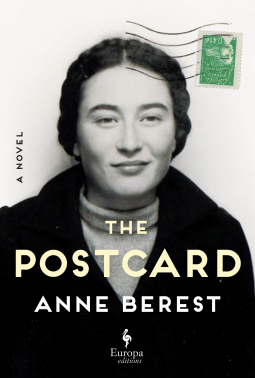
Review 2225: The Postcard

Although sold as fiction, I believe that The Postcard is very much autobiographical and historical, the story of the fates of Berest’s relatives and her own search for an identity.

The search begins with a postcard, one that arrived years before but that Anne’s mother Lélia shows her much later. It is an old postcard containing only the names of Anne’s grandmother’s parents, sister, and brother. All of them died in Auschwitz. The postcard is addressed by another hand to Lélia’s mother Myriam, but at Lélia’s address, where Myriam did not live. It is a mystery. Is it a threat? A reminder?

Myriam has never spoken about their family’s past and now she is dead, so both Lélia and Anne have grown up knowing very little about their family, Ephraïm and Emma Rabinovitch and their children, Noémie and Jacques. Since receiving the postcard, though, Lélia has built up an archive of documents about the history of the family up to when they were deported by the French government. The first part of the novel covers this history.

The further sections of the novel are about Anne’s attempts to discover who sent the postcard and what happened to Myriam. Why was she the only one missed, and what did she do during the war? And finally, how has her family’s experience affected Anne’s own life?

This is a deeply engaging story and an important one, I think. Although the Holocaust is long past, its effects are still reverberating.

Related Posts

Night

The Invisible Bridge

The Zone of Interest

Review 2224: Excellent Intentions

Of the Golden Age mysteries I’ve been reading lately, Richardl Hull’s The Murder of My Aunt was one of my favorites. So, I looked for another by him and found Excellent Intentions. Like The Murder of My Aunt, it has a gimmick—that it begins with the trial but doesn’t tell who the defendant is until the end. However, with its time tables and finicky details, it is the kind of mystery that makes my head spin.

No one is at all upset when Henry Cargate dies of an apparent heart attack on the train. He was a wealthy man who bragged about how much he paid for things, refused to help the local economy by buying from them or employing locals, insulted servants and guests equally, forged stamps and then accused others of doing so, and liked to accuse people of stealing items he planted on them. But when it turns out a passenger saw him take snuff and immediately die, and there is a poison in the snuff box, well then.

So far so good. Inspector Fenby manages to narrow the time that the poison got into the snuffbox to a few hours the day before. But then we get into details like what time the poison bottle was on the windowsill versus the desk, where was the snuffbox, what color were the roses in the next room. Sigh.

Related Posts

The Murder of My Aunt

Death in the Tunnel

4:50 from Paddington