Reading Thirkell’s Barsetshire Series in Order: #27 Close Quarters + #26 A Double Affair Wrap-Up

We’re counting down to the end here with only three books to go. My thanks to the loyal followers who have continued to comment even if they haven’t been able to read the books.

  • Liz Dexter
  • Penelope Gough
  • Renee

In A Double Affair, I believe I caught Thirkell in a continuity error for the first time. We’ll see how she finishes off the series.

The next book is Close Quarters, and I’ll be posting my review on Thursday, August 31.

And here’s our badge.

Review 2214: Life and Fate

Finished in 1960, Russian author Vassily Grossman’s Life and Fate was confiscated by the NKVD (predecessor of the KGB) and had to be smuggled out to be published in Europe. Taking War and Peace as its model, it is about the pressures of totalitarian governments during the siege of Stalingrad. It centers around one extended family, the Shaposhnikovs, but it also includes some of the German officers and others, visiting a variety of wartime settings: a besieged plant in Stalingrad, a German concentration camp, a scientific institute in Moscow, a Russian tank corps, and so on.

Because of its broad scope and length (more than 800 pages), it has a lot of characters, maybe a dozen of whom we visit and revisit, but others whom we see only once or twice. Some of the ones we revisit are Krymov, a commisar who is the ex-husband of Yevgenia Shaposhnikova; Viktor Shtrum, a famous physicist married to Lyudmila Shaposhnikova; Pyotr Novikov, a tank commander in love with Yevgenia; Yevgenia herself, who is worried about both Krymov and Novikov; Sofya Levinton, a doctor and friend of Yevgenia on her way to a German gas chamber. There is an appendix to the book listing hundreds of characters, but it doesn’t list most of the male characters’ first names or patronymics, so at times I wasn’t sure who the characters were talking about.

Although the Russian characters are uniformly patriotic, almost all of them live in fear, remembering the Terror of 1937 when many people were disappeared or deported to labor camps. Those times aren’t really over, as several characters run into trouble for minor infractions or no infraction at all, resulting in imprisonment and torture for some, demotions or exile for others. One character is labeled an enemy of the state for reporting that a soldier on his own side shot at him. In addition, bureaucracy gets in the way of people trying to do their war work.

This novel is powerful at times, but because of its structure, I didn’t really feel much connection to any of the characters except maybe Novikov, who spends hundreds of pages yearning for Yevgenia, not knowing she has returned to Krymov. It wasn’t until I was well into the book that I realized it was a sequel to Grossman’s Stalingrad, and it refers back to events that presumably occurred in that book, but it’s hard to know whether reading it first would have helped.

Also, Grossman occasionally takes a paragraph or two, sometimes a whole chapter, to philosophize on some subject. That’s a kind of polemic writing I don’t appreciate.

Related Posts

Sofia Petrovna

The Raven’s Children

Punishment of a Hunter

Review 2213: #ThirkellBar! A Double Affair

I have to start out with a spoiler for the book before this one, so if you haven’t read Never Too Late and plan to, skip now to the second paragraph. A Double Affair begins with the wedding of Miss Merriman, called Merry by her friends, to Mr. Choyce. Merry has appeared in many of the novels as the devoted secretary/companion to both Lord Pomfret and Lady Emily Leslie, and she deserves a happy ending. (Readers may recall that early in the series she had an unrequited love.) The wedding is described in much more detail than any of the others—if they are described at all—so Thirkell must have thought so, too.

Then we briefly return to the subject of Edith Graham, still eighteen after three books. And here, I think Thirkell has made a continuity error, for Edith is returning from a trip to America after having returned two books ago. I noticed this particularly because I read the beginning of this book out of order, so in my mind she had just returned and she was returning again. So, at the end of Never Too Late, I looked for an indication that she was going abroad again, but there was none—just her plan to go to agricultural school.

Thirkell gets over this, sort of, by saying she abandoned her studies to go to America with Uncle David and Aunt Rose, but never once is there a reference to two trips to America. Thirkell even has her say that she thinks her temperamental problems were caused by this trip, but she had those same problems two books ago when she returned the first time.

In any case, I’m a little tired of Edith and her temper. At the beginning of the book, she still has three admirers—George Halliday, the farmer; John Crosse, the banker and Lord Crosse’s son; and Lord Mellings, the young heir of Lord Pomfret. However, she seems to lose her temper if some man isn’t paying attention to her at all times.

This is a good time to look at the problems of George Halliday. His father died in the last book, and now his mother is feeling lonely. He is working hard and is sometimes irked because when he gets home, his mother wants attention, whereas he wants to work on the books or just relax. Finally, she goes for a visit to her daughter Sylvia at Rushwater, where Sylvia and Martin feel much the same. But Mrs. Halliday has a surprise for everyone.

This novel will finally dispose of the affections of George, John, and Edith, but in what combination?

Although I enjoyed keeping up with these characters, this is the first time I’ve felt that Thirkell lost track of her plotting a bit. Also, I don’t want to spoil any romantic surprises, but I’ll just say that she cheats a bit in this one.

Related Posts

Never Too Late

Enter Sir Robert

What Did It Mean?

Review 2212: Crimes of Cymru: Classic Mystery Tales of Wales

This latest British Library Crime Classics collection features mystery and crime short stories written by Welsh authors or located in Wales. The stories were written from 1908 to the mid-1980s, and some of them are quite eerie in nature.

For example, in the 1936 story “Change” by Arthur Macken, holiday makers scoff when Vincent Rimmer tells them lights are on all night in the cottages of Tremant to keep the fairies away. Yet later a child is apparently exchanged by the fairies. Or is he?

In “The Way Up to Heaven,” Roald Dahl (born in Wales) tells the story of Mrs. Foster, whose husband purposefully torments her by being late even on the way to her flight to Paris to see her grandchildren for the first time. She figures out a way to take care of that problem.

In “No More A-Maying” by Christina Stead, the lies of two children with a guilty secret create an injustice in rural Wales.

Although most of the earlier stores are more traditional, “Water Running Out” by Ethel Lina White explains how Harvey deals with his aunt, who has been preventing his marriage to Annie for years by blackmail.

And another attempt to prevent marriage is perpetrated in “The Chosen One” by Rhys Davies. Rufus, whose family has occupied his cottage for hundreds of years, gets a note from his eccentric landlady, Audrey P. Vines, telling him his lease is up and she’s throwing him out.

This was one of the more entertaining and atmospheric of these collections that I have read. I usually like them, but prefer getting into a longer work.

I received this book from the publishers in exchange for a free and fair review.

Related Posts

The Edinburgh Murders and Other Tales of Scottish Crime

Final Acts: Theatrical Mysteries

Murder at the Manor

Review 2211: Horse

This novel tells the story of a famous racehorse and the people connected to him evoked through some objects—his own skeleton and three portraits of him. Although the main characters in the novel are fictional, many of the historical characters are not. The horse, Darnley, who is renamed Lexington, is still considered one of the best racehorses of all time, and many of his offspring have been champions.

In 2019 Theo is a Nigerian graduate student of art history at Georgetown. He plucks a painting out of the trash of his neighbor. It is of a horse, and he recognizes that it is well painted, so he decides to write an article about having it cleaned and valued.

Jess is the head of a lab at the Smithsonian that cleans and articulates animal skeletons for display and study. She has recently located the skeleton of the famous race horse Lexington for a scholar studying equine bone structure when Theo brings in his cleaned painting. Jess recognizes it immediately as one of Lexington painted by Thomas J. Scott, a 19th century horse painter.

In 1850, 13-year-old Jarrett is a slave working with horses for Dr. Warfield in Lexington, Kentucky. Jarrett’s father, Harry Lewis, is a well-known horse trainer who has bought his own freedom and is saving to buy Jarrett’s. Jarrett is with Alice Carneal when she gives birth to Darnley, the horse that will be renamed Lexington. After a promise from Warfield to give Darnley to Harry instead of his yearly wage, Jarrett develops a close relationship with the horse.

Thomas J. Scott is a young artist who specializes in painting horses and is hired by Warfield to paint some of his horses. While he is there, he paints a copy of his picture of Darnley and gives it to Jarrett. Later, he returns to paint an older Lexington.

These are the characters whose points of view are used to tell the story of Lexington. Brooks’s story is based on what is known of the real horse and characters with some inventions. It’s an interesting story with vivid descriptions of the races, of 19th century New Orleans, and of the racing industry of the time. It also has strong themes of the effects of slavery, racism, and cruelty to animals.

Related Posts

Horse Heaven

The Sport of Kings

People of the Book

Review 2210: It Ends with Revelations

It’s going to be hard to convey a sense of this book without revealing a side to it that doesn’t arise until well into the novel. I will say that for 1967 the novel deals with a key issue in a surprisingly enlightened way, even though it may make modern readers cringe a few times.

Jill Quentin is the wife of Miles Quentin, a distinguished actor. Miles is opening a new play in a spa town during a summer festival. This play was already produced on television, but adapting it for the stage is proving difficult. In particular, Cyril, the actor playing the boy in the play, is not doing well despite having played the part on television.

Smith’s descriptions of the details of the play production as well as Jill and Miles’s relationship are interesting. However, the plot gets going when she befriends two teenage girls, Robin and Kit Thornton, who are staying with their widowed father in the same hotel.

I don’t want to say more, really, except that the novel involves a choice for Jill between romantic love and the love of a deep friendship and asks how important loyalty is in marriage.

I generally liked this book, but there was a point before some revelations when I felt that if it was a more modern book, it could be going somewhere creepy. However, it was not.

Related Posts

Which Way?

Shadowplay

Nightingale Wood

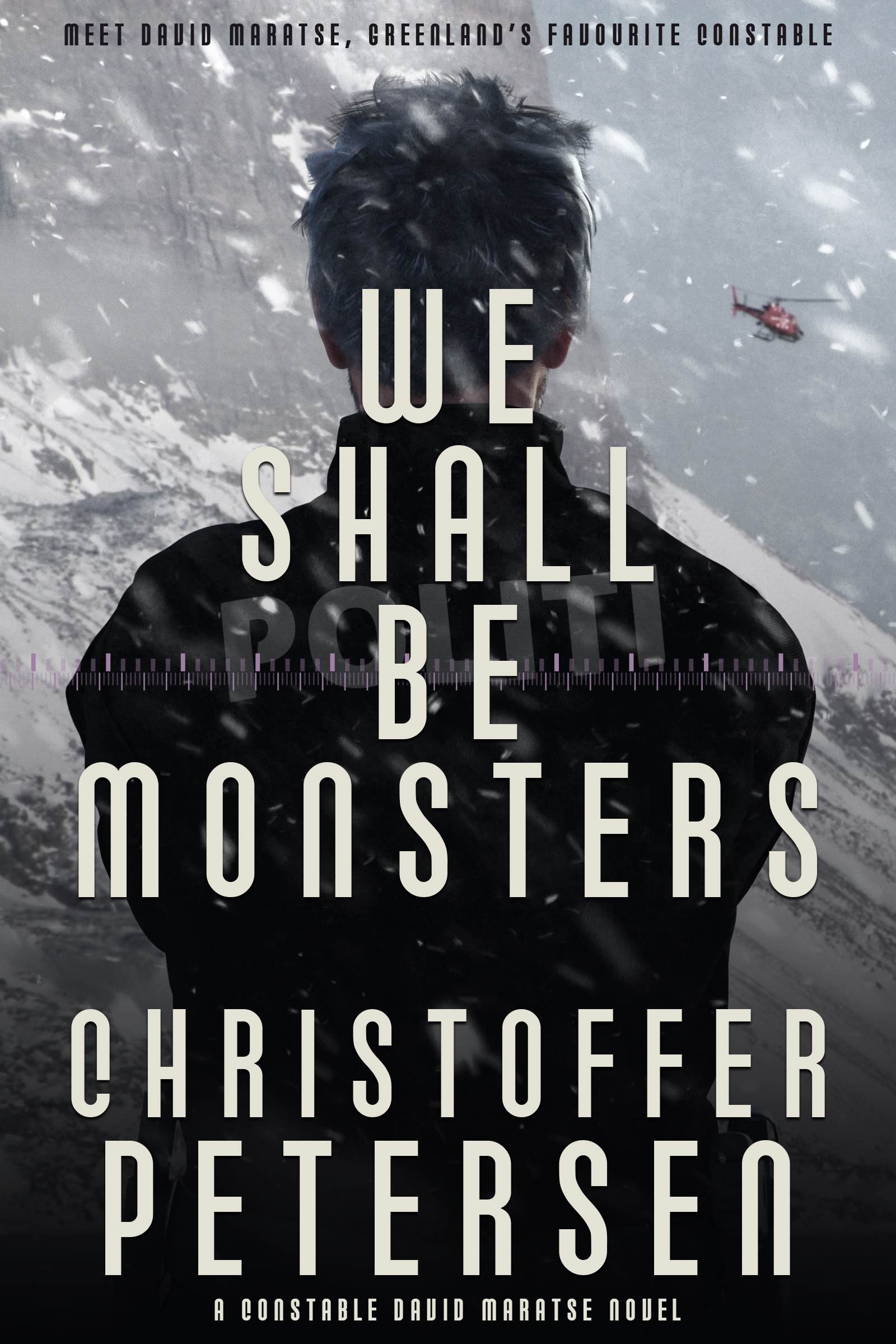
Review 2209: We Shall Be Monsters

If you are interested in reading this book, you will understand it much better—and there is a warning to that effect in the book—if you read the two books that came before it.

At the end of Blood Floe, retired Constable David Maratse’s friend and lover, Sergeant Petra Jensen, was kidnapped. Now the body of a teenager is found naked, his back embedded with fishing hooks with colored threads attached. Not far away, next to an ice-fishing hole, are Petra’s clothes and a suicide note.

Maratse knows that the use of her Greenlandic name in the signature is a message to him that she did not commit suicide. He arranges a funeral for her so that the authorities won’t realize that he plans to go off on his own to find her—and that’s what he does.

While Maratse is following leads and other police investigate the boy’s murder, there are glimpses of what is happening to Petra. Tensions rise when her captor tells her she will soon be set free, as the readers know that for him setting free means killing.

I was drawn to this series because of its glimpses into life in Greenland, but except for Maratse dressing in white and taking a sled dog team, there wasn’t anything particular to Greenland in this one. It’s a fairly standard thriller.

Related Posts

Blood Floe

Seven Graves One Winter

The Mist

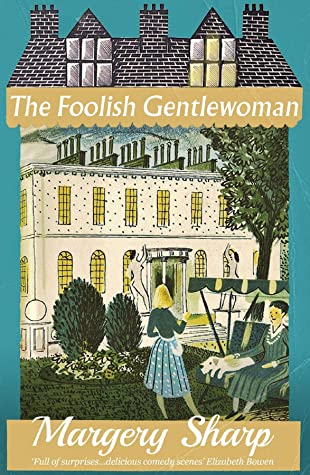
Review 2208: The Foolish Gentlewoman

When crusty, prim Simon Brocken goes to live with his widowed sister-in-law Isabel while his home is repaired from bomb damage shortly after World War II, he isn’t expecting to enjoy living so closely with other people. However, the household gets along comfortably together even though the four occupants don’t have much in common. Isabel is kind and generous, although Simon thinks she’s an idiot. Her Australian nephew Humphrey has come to stay, and he is slowly pursuing an understated courtship of Jackie, Isabel’s companion/secretary.

However, something is bothering Isabel, and eventually she tells them what it is. A preacher’s sermon about bad acts in the past being no less bad has made her consider an incident from when she was a girl, when her actions blighted the marital hopes of Tilly Cuff, a poor cousin her family treated a little like a servant. Tilly took a job as governess, and Isabel eventually married Simon’s brother.

Now Isabel thinks she must make amends to Tilly, so she has invited her to stay. But she also intends to give Tilly her entire fortune. Simon is appalled by this but can’t get her to change her mind. Then Tilly arrives, and everyone but Isabel soon realizes that she is actively malicious.

This novel is witty and sharply observant of human nature. It creates a situation that I couldn’t imagine being resolved neatly and that made me want to see what happens.

Related Posts

Harlequin House

Rhododendron Pie

Cluny Brown

Review 2207: Birnam Wood

Well, this is quite a novel. Unfortunately, I don’t know how to explain what it is like without giving too much away. But I’ll try. Let me say that I don’t know whether I liked it, but it certainly is effective.

First of all, you’re not going to find a character in this novel to outright like. Catton has fully realized her characters as flawed people, and she keeps turning back to them and showing another side. There is definitely a villain, though.

Mira is the founder of Birnam Wood, a gardening collective that plants vegetables in unused spaces. Mira is not picky about whether they do this with permission from owners or even steal water or tools to do their work. However, most of the members believe their activities are legal.

Shelley is Mira’s roommate and best friend but also the person in Birnam Wood who does most of the management and publicity work. She is tired of not being listened to or having her contributions unacknowledged.

Mira reads that a landslide near Korowai National Park has cut off one of the accesses to the park, leaving only one road to a nearby town. A prominent businessman, Owen Darvish, who has property in the area that he had been planning to subdivide, took the property off the market because after the landslide it will not sell. Mira decides that this large, unoccupied property in a remote area would be perfect for a major planting operation, so she drives there to check it out.

On the property, though, she is apprehended by Robert Lemoine, an American billionaire who has been in the news because of a deal with Darvish. Eventually, he explains that he is buying the property from Darvish and is interested in donating a large sum of money to Birnam Wood to help ramp up their organization.

Tony, a radical Birnam Wood member who has been away teaching in Mexico, comes back to a meeting. When Mira presents Robert Lemoine’s proposition, he is very much against it but is outvoted. He walks out but decides to go to the area, thinking an article on what Lemoine is doing there would help his attempts to become a journalist.

Lemoine has a secret agenda that none of these characters know about. The novel moves from seeming to be a combination of a study of characters and somewhat of a sendup to a plot full of suspense.

Related Posts

The Rehearsal

The Luminaries

The Bone People