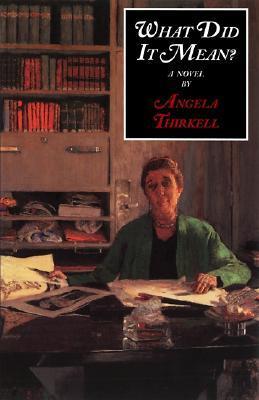
Review 2165: #ThirkellBar! What Did It Mean?

The focus of What Did It Mean? is on Queen Elizabeth II’s coronation. The novel deals principally with Lydia Merton, who has been asked to chair the committee for the Northbridge coronation pageant. This gives Thirkell the opportunity to poke fun at village committee meetings, during which very little seems to get done.

Lydia also gets acquainted with the Earl and Lady Pomfret and takes an interest in their oldest son, Lord Mellings, who at 16 is too tall for his strength, sensitive, and shy. Lydia arranges for him to meet the actress Jessica Dean and her husband Aubrey Clover, the playwright, and they enlist him in a part for their short play for the coronation, which promises to do much for his confidence.

For a while when reading this book, I thought Thirkell was starting to phone it in or that she needed a better editor. For example, there is a scene in which Lydia telephones to the Clovers to ask them to participate in the pageant. Then immediately following that, she takes Lord Mellings to the Deans to ask the Clovers the same question. Similarly, she reminds us several times of the little romance that took place between Noel Merton and Mrs. Arbuthnot when Lydia became so sick. There are also too many meetings described and no apparent romance until quite late in the novel.

However, the novel picked up as it went on, and the romance, once it emerged, was understated and touching. I finally ended up liking this one almost as well as the others.

Related Posts

Jutland Cottage

Happy Returns

The Duke’s Daughter

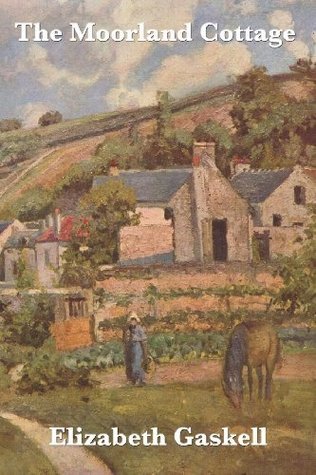
Review 2164: Classics Club Spin Result! The Moorland Cottage

When I selected The Moorland Cottage for my Classics Club list, I didn’t really read what it was about. Then when it arrived—a print-on-demand novella without any extraneous information—I thought maybe it was a gothic story, since most Victorian writers wrote some early in their careers. However, it is a romance with a strongly moralistic ending.

The Brownes live in an isolated cottage on the moor. Mrs. Browne is the widow of the respected curate of Combehurst. She dotes upon and spoils her son Edward while scolding and nagging at her daughter Maggie. As a result, Edward is selfish and unheeding, while Maggie is loving and giving.

When the local squire, Mr. Buxton, who was friends with Mr. Browne, decides to send Edward to school, the Browne children meet Frank Buxton and his cousin Erminia, both about their same ages, with Frank being a little older. Both Buxton children are impressed by Maggie but dislike Edward, and Maggie and Erminia become good friends.

As young men and women, Edward has not improved his character, while Maggie is good and beautiful, used to thinking of everyone but herself. Frank falls in love with Maggie, but Mr. Buxton is strongly opposed to their engagement. Then Edward’s misdeeds complicate the situation.

I had to laugh when I saw this novel described as “feminist” on Goodreads. When I was a little girl, I detested a fairy tale called “Patient Griselda.” It was about a prince who subjects the girl he loves to a series of painful tests to see if she is worthy of him. I wanted the girl to tell the prince to buzz off. This novel is going in the direction of Griselda except it is Edward, not Frank, who is always making demands. Thankfully, the ending was a little better than I expected. The novel has a strong religious message but one that seemed wrong-headed to me.

Related Posts

The Grey Woman

Tales of Mystery and the Macabre

Dolly: A Love Story

Review 2163: All the Horses of Iceland

In the 12th century, Jór tells the story of how Eyvind of Eyri traveled to Central Asia three centuries before, bringing back horses that formed the stock for the horses of Iceland.

Eyvind is a trader who joins up with a band of Khazar traders on their way to Khazaria. When he sees the small, fiery horses of Central Asia, he decides to try to buy some to take back to Iceland. He is helped in these goals by his encounters with a ghost who is haunting the people of a qan.

This beautiful little novella is told in the style of myth about a time of cultural change. It is poetically written and really lovely.

Related Posts

Gentlemen of the Road

Smile of the Wolf

The Sealwoman’s Gift

Review 2162: Shrines of Gaiety

It’s 1926. Ma Coker is being released from jail, and it’s like a circus in front of the prison. Nellie Coker is the head of a crime family in London, the owner of five clubs that Frobisher, the new broom at the police station, thinks are responsible for the disappearance of quite a few girls.

Miss Gwendolyn Kelling has unexpectedly inherited some money, so she quits her job in York as a librarian and decides to search for her friend’s sister, Florence Ingram, and Freda Murgatroyd, both 14, who have gone to London to make their fortunes, Freda being positive that she is going to be a star. When she goes to the police station, Frobisher asks her to visit one of the Coker clubs to report what she can observe.

Niven Coker, Nellie’s oldest son, by coincidence comes upon Miss Kelling on the street after she has been mugged. He gives her a ride to her ladies hotel, and afterwards she receives her purse.

Frobisher has been asking at the office for Maddox, one of the inspectors, but he has been on sick leave. Frobisher is sure Maddox is corrupt, but what he doesn’t know is that Maddox is putting the final pieces in place to take over Nellie Coker’s clubs. To start with, there is arson.

Maddox isn’t the only one after the Coker empire. There’s also Mr. Azzopardi, who begins by trying to exploit the weaknesses of Nellie’s youngest son, Ramsey.

There are some dark deeds in this novel, but it is written with a lightness that conveys more the fevered fun seeking of the time. For a crime family, the Cokers are curiously benign, and Nellie Coker seems to be three steps ahead of everyone else. The novel is more of an ensemble piece and doesn’t have a main character, although we admire Miss Kelling and also the plucky but naïve Freda. Although ostensibly a crime novel, I found it more a portrait of a particular period and enjoyed it very much. Atkinson has based some of it on the life of Kate Mayrick, the owner of clubs in Soho.

Related Posts

Big Sky

Transcription

A God in Ruins

Review 2161: The Lost Book of Eleanor Dare

After the death of her father toward the end of World War II, Alice Young finds out that Evertell, the farm that has been in her family for generations, was not sold as she thought but is waiting for her to decide what to do with it. She has not been there since her mother died under painful circumstances, and she doesn’t want to keep it. However, her thirteen-year-old daughter Penn has been depressed since her own father’s death three years before, and she hopes the trip to evaluate the farm will perk her up. She also hopes the money will help pay for Penn to attend the private school she expressed interest in several years ago.

When Alice and Penn arrive at the large but dilapidated farm, Penn is enchanted. She is also enchanted by the stories Alice tells her about the family’s descent from Eleanor Dare, an original settler of the doomed Roanoke colony. Unfortunately, it was the theft of a stone, said to be engraved by Eleanor Dare to explain where the survivors of the colony went, that finally drove Alice’s mother over the edge of sanity. Penn is also fascinated by the commonplace book, written in by the female descendants of Eleanor over the centuries.

As Alice tries to improve her relationship with Penn, she is forced to face memories of her mother’s death and find the truth of family secrets.

It’s interesting to learn that this book was inspired by Brock’s fascination with the stone alleged to be engraved by Eleanor Dare, because the story of Dare, as imagined by Alice’s mother, was the least interesting part of this novel. Possibly, this is because of the matter-of-fact way it is told, with few details. The more modern story is told in alternating chapters from Alice’s or Penn’s point of view, and I found it extremely interesting and engaging. Brock proves to be an effective storyteller. I only thought it took Alice a long time to make the decision that seemed obvious from the beginning.

Related Posts

Beheld

The Physick Book of Deliverance Dane

The Last Painting of Sarah de Vos

Review 2160: The Prime Minister

The Prime Minister is the fifth of Trollope’s Palliser novels and the most political so far. It follows two stories, one political and one not so much, but they intertwine.

The introduction to the Oxford World Classics edition says that Trollope wanted to write about politics but included a romance to make the book more acceptable to his readers. However, in this case, he admitted his idea of a romance was unfortunate. As a result, this novel was not as appreciated by his audience.

These days, we have bigger problems with this plot than Trollope’s contemporaries probably had. And that’s because of an anti-Semitism on the part of Mr. Wharton that seems so commonplace it’s not even commented on. As usual, I try not to judge older books by our standards, but be warned.

Instead of falling in with her family’s wishes and marrying Arthur Fletcher, who has been Emily Wharton’s friend since childhood, Emily falls in love with Ferdinand Lopez. Lopez has been generally accepted as a wealthy man and a gentleman, but no one knows anything about his family or his past.

Mr. Wharton is against the marriage, but the only reason he gives is that Lopez isn’t an Englishman and may even be a Jew. He doesn’t inquire into Lopez’s finances (which would have saved him a lot of trouble) or his background, but just refuses his permission until he finally gives up and allows Emily to marry. Slowly, we find out that Lopez has no money or any morals at all. Emily begins to learn what she has done on her honeymoon when Lopez insists that she ask her father for money after he has already given them £3000.

The political story concerns Plantagenet Palliser, now the Duke of Omnium. No one has been able to form a government, so the Duke is asked to attempt to form one, which of course would make him the Prime Minister. He tries to resist this honor, but he finally accepts it. At first he hates the position, because it doesn’t involve a lot of work on an important project, which is what he likes. He also has few social skills. He is upright and conscientious but not likable.

The Duchess at first determines to make a splash, so she begins endlessly entertaining. However, the Duke’s lack of appreciation for some of their guests begins to create problems, for example, when a man she invited to set up her archery range directly approaches the Duke for a political position and gets thrown out of the house.

One of her errors is to make Lopez a favorite, a decision which later causes problems for her husband. Despite its anti-Semitism, I found The Prime Minister to be an insightful depiction of marriage to an abuser, as Lopez separates Emily from her friends and family, belittles her, and makes all of his disappointments her fault. Even after he is gone, her behavior in thinking she has been shamed and must always bear that shame is true to the condition of an abused spouse.

I didn’t enjoy the political story quite so much but felt it to be insightful about people’s behavior in a political environment. I also like the ebullient, incisive Duchess.

Related Posts

Phineas Redux

The Eustace Diamonds

Phineas Finn

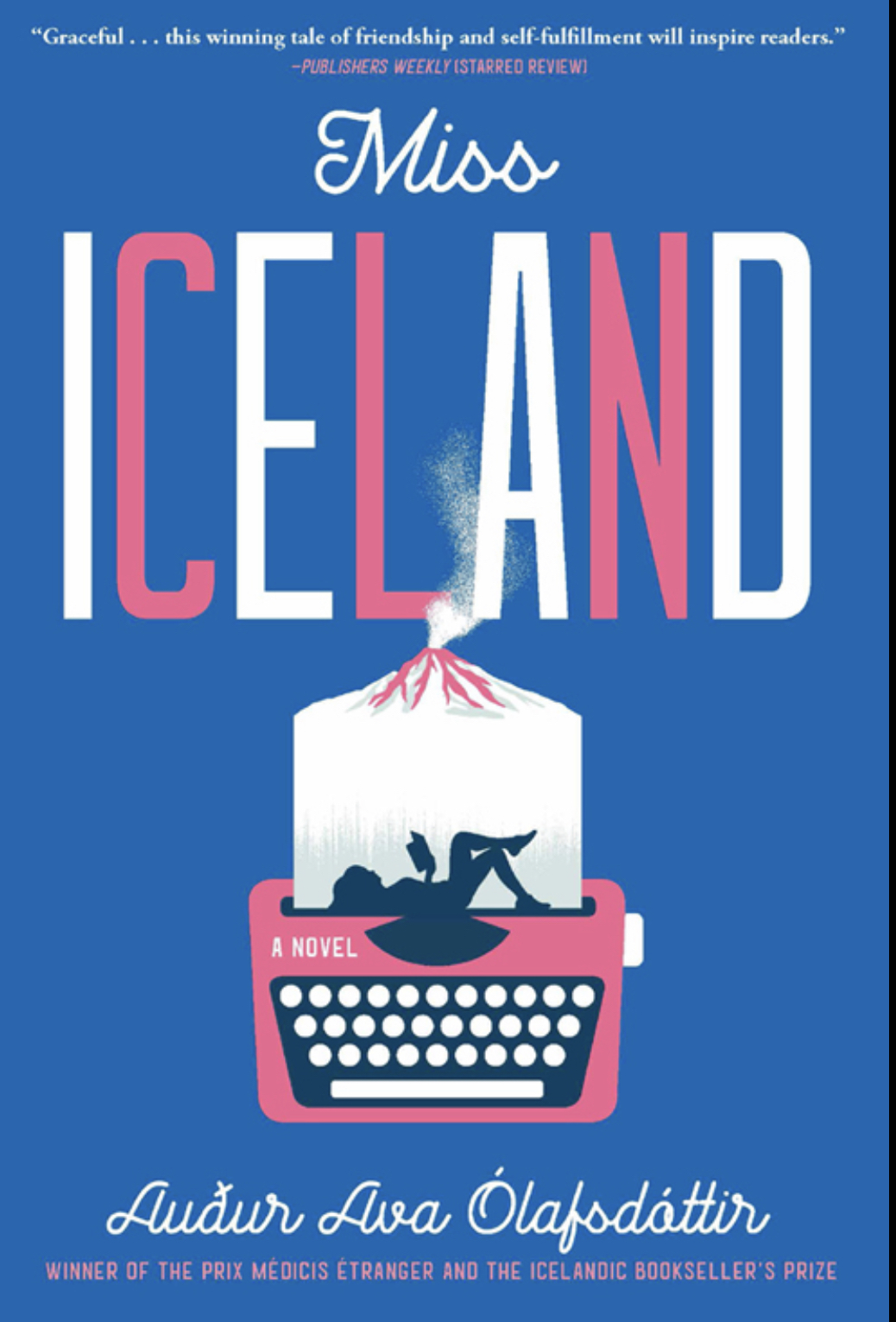
Review 2159: Miss Iceland

I was so entranced by Miss Iceland that I ended up reading it all in one day.

It’s 1963, and Hekla is leaving home at 21 to go live in Reykjavik and become a writer. She has plans to stay with her best friend Jón John Johnsson, while he is at sea, and she also has another friend there, Ísey, a young mother.

Hekla gets a job waitressing in a hotel restaurant, but when middle-aged men try to grope her, she is told to put up with it. One man repeatedly tries to get her to enter a Miss Iceland competition. She is not interested but later learns that another girl who entered was raped by one of the presenters. She really only wants to write, read, and visit her friends.

She loves Jón John, but he is gay, and apparently 1960s Iceland is no place for a gay man. He brings her clothes from Hull and dreams of escape.

Ísey also has ambitions to be a writer and fears that she will only have more children. Soon, she is pregnant again.

Hekla finds that in Iceland, poets are men. She gets a boyfriend, Starkadur, who is a poet and works in a library. She hides from him that she is a published poet, and when she asks about Mokka, the café where the poets hang out, she is told they don’t welcome girlfriends. When Starkadur finds out she is not only a poet but more gifted than he is, he begins obsessing and can no longer write. Still, he wants to marry her and buys her a cookbook for Christmas.

I can’t really describe what was so fascinating about this book. Hekla herself is quite detached, although not from her friends. I think it was because the story seemed real, not at all contrived. The ending is a little abrupt and unexpected, but I liked the story and wanted there to be more. The novel explores friendship, the urge to create, and the search for self-expression. It’s both delicate and powerful.

Related Posts

The Blazing World

Z: A Novel of Zelda Fitzgerald

Brooklyn

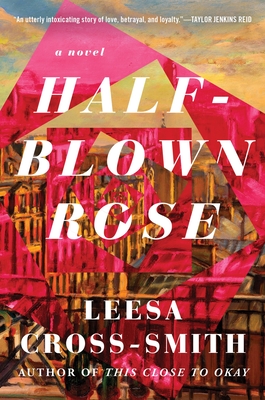
Review 2158: Half-Blown Rose

Vincent (a woman named after Vincent Van Gogh) is living in Paris, separated from Cillian, her husband, after his latest book revealed that when he left Ireland at 15, he left behind a pregnant girlfriend. Vincent and Cillian have been married for more than 20 years, but he had never told her about this.

While Vincent is teaching writing and creativity classes in Paris and considering having an affair with Loup, who is half her age, Cillian calls constantly trying to reconcile.

I don’t usually do this, but very soon after starting this novel I tried to figure out how old Cross-Smith is. This was because at about page 2, Vincent wonders if Loup is still looking at her and thinks, if he isn’t I’ll die. I thought, is this woman 12 years old? The character is 44, by the way.

Nevertheless, I continued reading, because the situation started to come out and it seemed intriguing, even though I was dreading the hot affair that I could see coming.

Then, at about page 75 begins a series of emails between Vincent and her husband’s illegitimate son and his mother. They are unbelievably juvenile, including lots of exclamation points.

Vincent is hanging around with artists and academics, and their conversation is absolutely unconvincing. And don’t get me started on the playlists (really?) and the number of references to Vincent’s menstrual blood. This was a DNF for me.

Related Posts

The Other Daughter

The Light of Paris

Alien Hearts

Review 2157: War Among Ladies

The staff at Besley High School are choosing up sides. Not only has the ineffective head, Miss Barr, appointed the steely Miss Lexington as second head, favoring her superior degree over the years of experience of Miss Parry, but then there is the problem of Miss Cullen, the French teacher.

The staff has been frantically preparing for exams. Miss Cullen used to be a good teacher, but her methods are out of date and her students don’t respect her or pay attention in class. Unfortunately, the system is structured so that failure in French (for some incomprehensible reason, and I assume for some other subjects, too) means that the student fails the exams as a whole, no matter what her other scores are. The result is that only four students pass the exam, which reflects on the whole school.

Further, Miss Cullen has taught for 26 years, but if she quits or is fired before she puts in four more, she loses her pension, including any money she has put into the fund herself. She can’t afford to quit.

All the other teachers are more or less in the same boat. If the school is closed or they lose their jobs, they are unlikely to be hired elsewhere because of the school’s poor reputation. Miss Parry begins actively trying to drive Miss Cullen out, suspecting that Miss Cullen will blame her inability to teach the students on Miss Parry’s failure to prepare them in Beginning French.

Into this hotbed come three new teachers, particularly idealistic Viola Kennedy. She does not understand that Miss Cullen’s attempts to befriend her are misunderstood as her joining Miss Cullen’s side in the school brouhaha.

This book was written to show how hard teachers work and how unfair the system is that forces teachers to work beyond their effective years (also how unfair the pension system is). However, it certainly makes women at work look bad. Although even the most badly behaved have flashes of sympathetic impulses (except maybe the despicable Miss Parry), they are relentless gossips and many of them are petty and vindictive. Women at work, at least here in the States, were stigmatized for years (as masculine or man-traps, and the word “unnatural” is used several times), and this book doesn’t do them any favors. Only Viola mostly keeps above the fray, but that doesn’t keep her from being dragged down by some of the others.

I received this book from the publishers in exchange for a free and fair review.

Related Posts

The Headmistress

Summer Half

Miss Bunting