
The Best Book for this period is To Paradise by Hanya Yanagihara!
Reviews, reviews, and more reviews

The Best Book for this period is To Paradise by Hanya Yanagihara!

The Classics Club has announced another spin. How does this work? Classics club members select 20 books from their lists and post a numbered list of those choices by Sunday, December 11. On Sunday, Classics Club picks a number, and the club member agrees to try to read the book corresponding to that number and post a review by Sunday, January 29, 2023.
I enjoy taking part in these spins, so here is my list!

Conductor Sir Noel Grampion is shot in the heart during a concert. Because of the angle of the shot, most of the orchestra members are suspects. Since Sir Noel was disliked by most of them and known as a womanizer, the list of suspects is a long one.
D. I. Alan Hope is assigned the case. Possibly wanting to try something new, Sebastian Farr tells the story in letters from Hope to his wife. Aside from the ethical and legal considerations of a husband telling everything about the ongoing case to his wife, let alone in writing, the device is an unfortunate one, for in trying to make the letters seem real, Farr expands the novel to include all kinds of unnecessary information, even things that don’t make sense. For example, he includes a long description of the house he was staying in before the murder. Since he writes to his wife at least once a day, surely he would have done that at the beginning of his visit, especially as the place has nothing to do with the murder.
Next, we’re subjected to maps of the orchestra and a complete list of players. No doubt about it, this is a puzzle mystery, in which readers are swamped with information, even some pages of the score.
Unbelievably, not a single member of the orchestra is interviewed by the police. Instead, Hope asks them to write about themselves. So we have to read page after page of mostly colorless letters that all say, “I don’t know nuttin’,” which in itself is hard to believe. Farr seems to think that musicians are either looking at the score or the conductor. The reality is that they are usually looking at both at the same time, so it’s hard to believe that no one could have seen who shot him. These letters start around page 90 and before that, we have no details about any of the suspects, although we have read several concert reviews to little purpose. After the letters, Hope goes back through one by one and makes comments on the individuals, forcing us to flip back and forth if we care to pair up the letters with Hope’s remarks. I didn’t.
When the second set of letters began, because Hope/Farr hasn’t eliminated more than a few of the many (about 60) suspects, nor do most of them have anything about them that distinguishes them from anyone else, I threw up my hands and skipped 50 pages to the last letter. There I read the identity of the killer and the name meant nothing to me. I started to read the explanation, and I got so bored I just quit reading.
I understand Sebastian Farr is a pen name for a renowned music critic of the time. I commend the novel in a small way for originality but believe he should have stuck to reviews.
I received this book from the publisher in exchange for a free and fair review.

I decided to read all of the Tommy and Tuppence novels in order when I read that they were Christie’s favorite sleuths. Partners in Crime is the second book in the series, set six years after the first.
Tuppence is beginning to be bored when Mr. Carter, Tommy’s boss, asks him to take six months off his work in the Secret Service to reopen the Blunt Detective Agency, which the department believes is connected with espionage. They are to look for a Russian blue stamp on a letter and further contacts.
Partners in Crime is not exactly a collection of short stories, but it is about a series of crimes Tommy and Tuppence solve in between tussles with the bad guys. Each case takes up one or two chapters. The book also has a running theme of either Tommy or Tuppence taking on the persona of a different detective from literature in each case. Unfortunately, I didn’t know who most of the detectives were, so I missed some jokes.
Some of the mysteries are laughably obvious, but others are more difficult. The novel suffers slightly from the problem I find with short detective fiction—not a lot of time to develop plots, red herrings, and characters. However, Tommy and Tuppence are funny and charming, so I enjoyed the book.
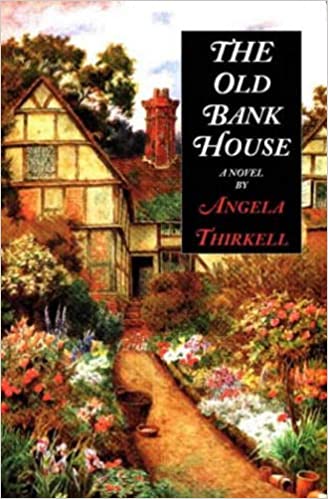
I think I have lost all my other readers from one reason or another, but I persist. If you happened to read any of the books coming up, don’t hesitate to make comments. I hope to have some steadfast commenters. I am still enjoying these books—in fact, The Old Bank House was one of my favorites—and don’t quite understand yet why her post-war ones aren’t considered as good (although I have recollections of one coming up about an election that wasn’t as interesting). As of now, there are only 11 more books in the series.

Thanks to the people who continue to participate:
Our next book is County Chronicle. I will be reviewing it Friday, December 30, so if you have read it, or want to read along, please join me.
And here’s our little badge.

Antonia Hodgson states in the Notes to The Silver Collar that she intended to write this novel from the very beginning of the Thomas Hawkins series. The Silver Collar is the fourth book in the series.
It’s 1728. Things are going well for Thomas Hawkins and his beloved Kitty Sparks, but Thomas begins to feel discontented because he is being supported by Kitty’s wealth and her pornographic bookstore. Then the couple quarrel because Thomas learns she has secretly been seeing Magistrate Gonson, who recently got him unjustly convicted of murder.
After they argue, Thomas stomps out. He returns to find out belatedly two things—Kitty is pregnant and Magistrate Gonson has conspired to help her mother, Lady VanHook, kidnap her.
Thomas knows that Kitty is terrified of her mother, whose intentions are twofold—to take over Kitty’s fortune and to torment Kitty. Finding her pregnant adds some spice. Thomas gets help from Jeremiah, a black man whose little daughter is enslaved by Lady VanHook, and from Sam and Gabriela Fleet. They find that Kitty has been incarcerated in an insane asylum, but that’s just the beginning of this fast-moving, adventurous novel.
There was one place where the pace slowed to a slog, and that was in reading Jeremiah’s letter, which was too long and went into too much extraneous detail. Hodgson created a trap for herself when she gave him speech problems, because this section would have worked much better as a dialogue. However, in all, this was an exciting entry in the series.
Today is another review for the Literary Wives blogging club, in which we discuss the depiction of wives in fiction. If you have read the book, please participate by leaving comments on any of our blogs.
Be sure to read the reviews and comments of the other wives!
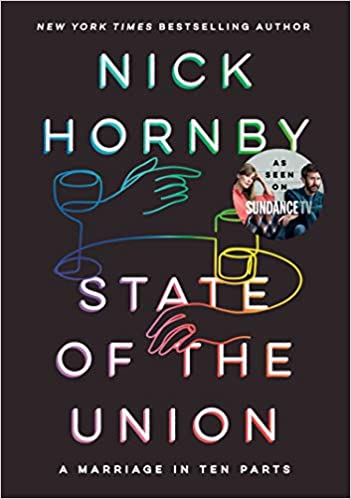
State of the Union takes place in ten scenes, as Tom and Louise meet in a pub before their marriage-counseling sessions. The novel is almost completely dialogue as the couple bicker and each picks apart what the other says. Although Louise has had an affair, she says it’s because Tom stopped having sex with her. Tom says he stopped having sex with her because she was clearly uninterested.
I haven’t read a Nick Hornby novel in a while, although the ones I read I found touching and engaging, particularly High Fidelity and About a Boy. State of the Union just seems too facile to me, though, about a couple who are more interested in scoring points off each other than talking seriously about their problems. Then when they finally start talking, they clear up their problems too quickly.
It says Hornby wants someone to make a movie from his book.

I know she is very popular, but I’m proving not to be a Janice Hallett fan. I almost finished her first book despite having serious problems with it, but unfortunately I had already purchased this one, because it was so popular, before I read that one. I quit reading The Twyford Code at about the 200-page point because it seemed rambling and pointless.
Steve Smith is a middle-aged ex-con who is determined to go straight. One day something reminds him of a day in school when his teacher took his class on a field trip because of an old children’s adventure story he found on a bus. Steve can’t remember that day very well, but he knows they went to Bournemouth to visit the home of the author, Edith Twyford, and he thinks that their teacher, Miss Isles, never returned from the trip. He decides to find out what happened to Miss Isles.
Steve doesn’t know that there is a whole internet culture around Twyford’s works, and people using them to search for treasure. He tries to get his old schoolmates to help, but they are not reliable for one reason or another. However, a librarian named Lucy is ready to help.
The entire novel is supposedly transcriptions of audio files Steve made on his phone, because the mission stated at the beginning of the novel is to figure out who he is (which would seem simple, but like the mission in the other Hallett novel, unlikely). I got a little tired of the misspellings this approach leads to as well as the rambling narration. The mystery seems to consist of word puzzles, and I wasn’t interested in solving them. I’m sure the book also includes a long and laborious explanation of the clues, which I’m not interested in reading. Finally, there is so much extra information thrown in that no one would be able to guess what is a clue and what isn’t. Hallett’s books seem to me to just throw in the kitchen sink in a very disorganized fashion and let the reader deal with it.
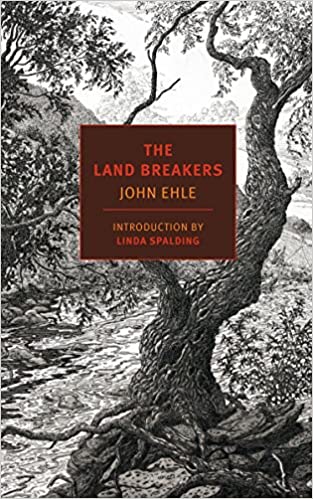
John Ehle grew up in North Carolina and can trace his ancestry back to one of the first three families to settle the remote western North Carolinian mountains (the Appalachians) in the 18th century. The Land Breakers is the first of a series of seven novels about the families who settled in that area.
It’s 1779: Mooney Wright and his wife Imy have been released from their indentures and are traveling around trying to buy land for a farm. However, no one will sell them land in the more settled areas. They find a store owner who offers them land in the remote western mountains, which have not yet been settled, and almost inadvertently they end up buying 600+ acres.
It is a hard journey to get there, but at last they end up in a pretty valley with soil that has never been cultivated. They are both hard workers, and they set about building a cabin and clearing land for planting the next spring. However, during the winter Imy dies of a sickness, and Mooney sinks into a depression.
Tinker Harrison, a comparatively wealthy man, arrives with his family and slaves the next spring. He wants to establish the valley as a settlement he can control. They arrive shortly after Mooney buries Imy. Following them are Ernest Plover and his family. The Plovers are in-laws to Harrison, because Ernest’s oldest daughter, Belle, married Tinker, although she is younger than Tinker’s son, Grover. Ernest is a shiftless man with seven daughters, the next oldest to Belle being Mina.
Once Mooney starts to come out of his depression, he becomes interested in Mina, who is beautiful but very young. However he has also noticed Lorry, Harrison’s daughter and the mother of two young boys. She married Lacey Pollard, but he left to look for a home in Kentucky four years earlier, and she never heard from him again. Mooney needs a wife to work for and make his plans succeed, and he is torn between the two women.
This novel is a sparely written story of the difficulties faced by those early settlers. These do not so much involve people as problems with wild animals and weather and the sheer remoteness of the area from anywhere else. Occasionally, when describing the landscape, the prose becomes lyrical. With its details of work, it reminded me a bit of the trilogy I read by Tim Pears, although that was set 150 years later. I was interested enough in this novel to order the second in the series.
Although I keep hearing that Thirkell’s post-war Barsetshire novels are not considered her best, I am still enjoying them and look forward to seeing what happens to the characters. In particular, The Old Bank House brought me to tears over one event, although I won’t say what it was.
The novel begins with wealthy industrialist Sam Adams’ purchase of the Old Bank House, but it deals mostly with the Grantlys, a family referred to in the series (and, of course, a major family in Trollope’s Barsetshire series) but not before met. The Grantlys are Adams’ new neighbors at the rectory. The oldest son, Tom, has just come down from Oxford where he has been studying Greats but feeling out-of-place because his war years make him older than the others (although that must have been common, as it was here in the States). In any case, he has decided he wants to work on the land, but he doesn’t want to return to college, even agricultural college, to do so. (Ironically, in his chafing, Tom seems younger than he is, not older.) The youngest son, Henry, has applied for the army and goes down to the post office at least once a day to see if his orders have arrived.
The novel is more concerned with the daughter, Eleanor, who has taken Susan Belton’s job at the Red Cross library. She yearns to live in London and has attracted the attention of Colin Keith, now a successful barrister. However, on a visit to Pomfret Towers, she gets a romantic crush on tired Lord Pomfret.
After Tom Grantly applies at a few places, he is taken on by Lucy Marling as an ordinary laborer in the market garden she runs for Sam Adams, but Martin and Emmy Leslie are also evaluating his capabilities for Rushwater. Lucy Marling is making the garden a success and has seriously impressed Mr. Adams.
Again, I found this novel deeply touching at times. It also serves as a record for the difficult living conditions that still prevailed in England four years after the end of the war and for everyday life at that time. Unfortunately for me, I got this book mixed up with the next one and read enough of the succeeding one that I knew from the start how a few of the surprises would work out, but I still enjoyed this one. In fact, it’s one of my favorites.
Book reviews of mainly modern & contemporary fiction
Writer and Historian
There is nothing more satisfying than reading a book while sipping a hot cup of tea.
A historical fiction book blog
Emerging as an artist
Liz Dexter muses on freelancing, reading, and running ...
For mostly adult, literary, fiction; focusing on historical, contemporary, biographical, and women.
"Well, there’s so much to read, and I’m so far behind." Wallace Stegner
Read to live and live to read
A bookish blog (mostly) about women writers of the nineteenth and twentieth centuries
A Celebration of Russian Literature
Reading: it's personal
Based in Romania, reading all over the world. Mostly fiction, some memoires and a little bit of poetry.
Adam Burgess
"Vivre le livre!"
"History is a vast early warning system." Norman Cousins
Scottish Book Blogger
"She had read novels while other people perused the Sunday papers" - Mary Elizabeth Braddon
A word after a word after a word is power. --Margaret Atwood
Books • Opera • Art • History
FOR DISCERNING READERS
Your online source for Jane Austen and her legacy
A Community of Classics Lovers
A blog about Irish books, writers, writing and everything in between.
 What? Me Read?