Review 1828: #ThirkellBar! Northbridge Rectory

Cover for Northbridge Rectory

Northbridge Rectory is the tenth book in Angela Thirkell’s Barsetshire series and another reread for me, so I won’t repeat my review but simply provide the link to it. Instead I’ll comment on what I noticed this time through.

Everyone is much more actively involved in the war in this one, so it seems closer. Yet it seems far away, too, as we busy ourselves with the emotional lives of several characters.

I’m starting to notice Thirkell’s tropes, and one is for the infatuation of a young man for an older woman. In this case, it’s the young officer Mr. Holden for Mrs. Villars, the rector’s wife. Sometimes, these infatuations are handled sympathetically and in one case a few books ago, it was a mutual regard that added a bit of pathos to the plot. In this case, it is more comic, with Mrs. Villars not noticing at first or making herself respond in a practical way after feeling in herself a tendency to want to imitate the fragile flower that he thinks he worships. However, his comments about how tired she looks make her more and more irritated.

The other very touching story is the restrained love triangle of the two penniless scholars, the terrifying Miss Pemberton and the timid Mr. Downing, and the comfortable and warm Mrs. Turner. Miss Pemberton, who seems at first a grim bully with Mr. Downing under her thumb, turns out to have a much more sympathetic side.

I loved the depiction of Mrs. Turner’s nieces, Betty and “the other girl,” and their swains, Captain Topham and Mr. Grieves. And I don’t know how Thirkell does it, but even though Betty has as many verbal tics as the voluble Mrs. Spender, Betty seems delightful while Mrs. Spender is just plain irritating.

Not only am I finding these novels just as delightful as I go on, but I’m also finding them deeper (in a light way) and more touching. We get just a sentence about the (backwards spoiler for Cheerfulness Breaks In) survival of Lydia Merton’s husband at Dunkirk, since Thirkell with this book is dealing with other characters, but it cheered me right up.

Related Posts
Cheerfulness Breaks In

Before Lunch

The Brandons

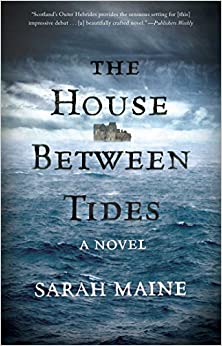
Review 1827: The House Between Tides

A house on an island separated from the main island by a causeway only open at low tide is the focus of this novel set in the Outer Hebrides. It’s a dual timeframe novel, which format I have to admit I am tiring of.

In 1910, Beatrice Blake arrives with her new husband, the famous artist Theo Blake, to his home on the island for the summer. In 2010, Hetty Devereaux has inherited the house and is considering turning it into a hotel.

Neither woman has made a good choice of partner. Theo thought Beatrice would drive away his thoughts of his first love Mailí but realizes very soon that she cannot compete and begins to neglect her. Hetty’s fiancé Simon has forced his way into her plans and has hired people to do surveys and look into such issues as financing before Hetty has even seen the property.

Both of these stories deal with how the property should be handled and how much claim the crofters have to the island, but in 2010, bones have been discovered under the foundation of the house. The 1910 story eventually reveals whose bones they are.

I found this novel interesting, and the descriptions of the island are lovely. However, even though I saw complaints about Hetty’s lack of backbone, I was more interested in the modern story than the older one. Possibly it’s because it was obvious to me why Theo is so interested in his factor’s son, Cameron, and also because I wasn’t interested in Beatrice’s romance. The final twist was obvious to me, although I didn’t figure out who the bones belonged to.

This novel is atmospheric but a little hackneyed, I think.

Related Posts

The Forgotten Garden

The Sea House

When They Lay Bare

Review 1826: The New Wilderness

Dystopian novels are coming out of the woodwork these days, and they are not really my thing, but I read The New Wilderness for my Booker Prize project. That being said, I have read some excellent dystopian novels, the Maddaddam trilogy being one of them.

All of the land has been put under production to support the population of the City except the Wilderness State and possibly the rumored Private Lands. The City has become dangerous, though, with such polluted air that Bea’s little daughter Agnes was dying. So, Bea and her scientist partner Glen proposed an experiment—to go with a small group of people to live in the wilderness without making their imprint.

At the beginning of the novel, the Community has lived in the Wilderness State for several years. They started as a group of 20, but several have died. They are living under strict conditions. They’re not allowed to settle anywhere or build structures. The Rangers appear periodically to tell them to move to another Post.

The group has been making decisions by consensus, but it’s clear that Carl and his partner Val would like to be in charge. Glen seems to have little control over his own experiment.

A lot of the novel is devoted to the relationship between Bea and her daughter, who is growing up a bit feral. Eventually, Agnes becomes the main character, which was unfortunate, as I didn’t find her very interesting. In fact, the characters are mostly just used as emblems. They aren’t very dimensional.

Life in the Wilderness State is so brutal that I couldn’t imagine the City being worse. I can understand the comparisons to The Hunger Games that I saw repeatedly on Goodreads, even though no one is trying to kill anyone. I see more of a legacy of Lord of the Flies in Community politics.

I found that my interest in the novel came and went, mostly with Bea. She is not in the book, however, for large portions of it. For me, this novel was mildly interesting at times, but I wasn’t sure I believed very much in how Cook makes her characters behave. Right at the beginning, for example, a couple of characters die and the reaction of the rest is sort of, oh well, these things happen. An explanation that when you’re so close to death, you get inured to it eventually emerges, but I think Cook gets that wrong. Maybe that happens in war, but I think that a hunter-gatherer group would feel the losses as much, if not more, than anyone else, because the group is so small. This struck me as wrong from the start.

One more comment—a quote from Publishers Weekly calls the novel “darkly humorous.” On the contrary, I didn’t think that the novel showed any humor at all or even tried to.

Related Posts

Oryx and Crake

The Hunger Games

The Second Sleep

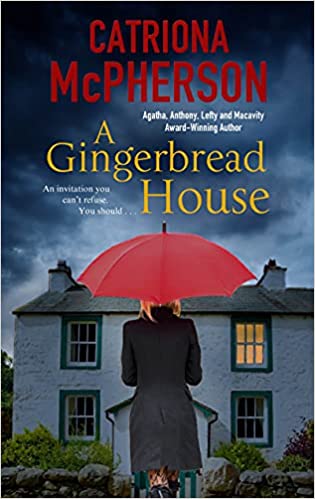
Review 1825: A Gingerbread House

Catriona McPherson, in her standalone novels anyway, is a master at creating creepy situations that eventually resolve into the making of warm communities. I guess that makes her the queen of gothic cozies. In A Gingerbread House, she’s hit it with another one.

Tash Dodd has discovered that her family’s transport business is involved in trafficking. She wants to take over the business and put things right, so instead of informing the police, she lodges her proof and presents her father with an ultimatum—retire or else. Then she goes into hiding to give him a week to think it over.

While she’s been away training to turn her business to greater good, she’s caught glimpses of some women just before their lives completely change. Someone is creating elaborate hoaxes to lure one lonely woman after another into a Victorian gingerbread-style house. The first is Ivy, an older woman who would like a friend but would settle for a cat. Instead, she meets Kate, who claims her twin sister looks just like Ivy. Please come to the house to meet her. Kate has a surprise in store for Ivy.

As usual, McPherson creates likable heroines—this time four of them—and there are friendly neighbors and a hint of a love interest. I enjoyed myself very much.

Related Posts

Strangers at the Gate

Go to My Grave

House. Tree. Person.

Review 1824: The Big Music

This high-concept novel is admittedly a bit demanding to read. Although it is the story of difficult family relationships, a distinguished heritage, a dying man, it is written to convey a sense of the piobaireachd, the classical form of bagpipe music, a type of music dependent upon repetition and embellishment.

John Callum Sutherland, an old man nearing his death, is trying to complete a piobaireachd called “Lament for Himself.” Because of his fears of his father, a famous piper, John Callum as a young man left behind his long, distinguished family history and vowed never to return. Only once he returned after his father’s death and met Margaret MacKay, the housekeeper, did he realize what he missed by leaving, the music and the great love.

Now, dying and off his meds, John Callum needs a new note for his piobaireachd. He decides he can find it by taking Katherine Anna, Margaret’s infant granddaughter as well as his own, to his small hidden hut where he works on his music. As he goes, he imagines the melodies made by Helen, Margaret’s daughter, when she finds her baby is missing.

Margaret has summoned Callum Innes, John Callum’s son, from the south because she knows John Callum doesn’t have long to live. Callum has never lived in the remote family home in Sutherland. He has only spent his boyhood summers there and has never felt part of it. He too fears his father.

This novel is about a family home, a family legacy, music, and the relationships between fathers and sons. It is at times touching, but it appeals more to the cerebral than to the emotional. Not only is the novel written in the form of the piobaireachd and attempts to convey the music, but it is heavily annotated and makes the novel itself, and the writing of it, the center of the story in the postmodern fashion. Finally, it provides nearly 100 pages of appendixes for those interested in the history of the family, the piobaireachd form, the geography of the area, and many other topics.

I found this novel, which I read for my James Tait Black project, more intellectually interesting than involving. I have to admit to tiring of some of its repetitions, most often of the footnotes in continually referring readers to the appendixes.

Every Note Played

Fair Helen

Dirty Birds

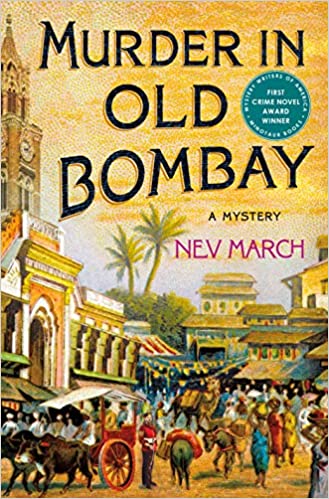
Review 1823: Murder in Old Bombay

Nev March says she was inspired to write Murder in Old Bombay by Sherlock Holmes and Kipling’s Kim. Certainly I can see the influence of the Holmes novels, if not in the hero’s deductive processes then in the complicated plot and disguises. From Kim, I hoped for a more atmospheric novel.

Captain Jim Agnihotri has retired from the army and is in the hospital recovering from serious wounds when he reads about a murder case. Two Parsee women fell or were pushed from the university bell tower, and the man charged got off because it wasn’t clear whether it was suicide or murder. Also, two other men present on the scene could not be found. Jim decides to offer himself as a journalist and investigate the case.

Having been hired, Jim goes to interview Adi Framji, whose wife and cousin were the victims of the crime. As a Eurasian, Jim is not usually accepted into either British or Indian society, but the Framjis soon accept him as a friend. Although Parsee families don’t marry outside the Zoroastrian religion, he finds himself smitten by Diana, Adi’s sister returned from London.

Jim’s investigation at first doesn’t turn up much, but even though the break in continuity seemed odd, the novel gets more interesting when he takes on a mission for the army. Indeed, he gets the opportunity to travel a bit and don several disguises.

As far as the mystery goes, this novel seems to stumble along. Jim also makes some cognitive leaps that don’t seem warranted by what has come before. For example, early on Jim concludes that the two girls who fell from the tower were being blackmailed. This turns out to be true, but where did it come from? There is nothing that comes before it to lead him to that conclusion.

The adventure portion makes the novel perk up, but otherwise I felt the effort was a little lackluster for a historical novel. March doesn’t supply much background for the historical events, nor does the reader get much sense of the sights, sounds, and smells of Victorian India, which is one of the things that makes Kim so wonderful.

Finally, although Jim is a likable character and I also liked the Framjis, I wasn’t interested in the romantic plot.

Maybe I’m making this review sound a bit too negative. I enjoyed parts of the novel, but the mystery seemed all over the place and I wanted more descriptions—of rooms, the city, the dress, the food. I wanted to feel the atmosphere of 19th century India, as a historical novel should make me do.

Kim

Dark Road to Darjeeling

Arctic Summer

Review 1822: Shuggie Bain

Shuggie Bain lives the first five or six years of his life in his grandparents’ flat in Glasgow with parents and older sister Catherine and brother Leek. The family is poor but respectable. His father Shug is a taxi driver, and his mother and grandmother keep a neat house. Shuggie’s mother Agnes is beautiful and always immaculately made up.

Shug is a horrible womanizer, though, and from jealousy Agnes hounds him by making calls to his dispatcher. Then Shug decides they should move to get a fresh start. What he describes as an outdoor paradise turns out to be a tiny shack next to a mine in a neighborhood built for miners’ families. But the mine is all but closed. It isn’t until the family unloads their possessions that they realize Shug’s aren’t among them. He has taken Agnes and her children out into the country to dump them.

Agnes descends into alcoholism, and as his older siblings grow old enough to leave, Shuggie is left trying to hide money for food, trying to keep Agnes’s drinking buddies out of the house, trying to get her to eat. All the while, he has a growing realization that he’s not like other boys. He likes pretty things and colors and is attracted to boys.

This novel is a moving and empathetic portrait of working-class Glasgow in the 1980’s, when there is not much hope for many people. It’s also a convincing depiction of the effects of alcoholism. It is absolutely gripping and heartbreaking. It was the winner of the 2020 Booker Prize, and it deserves it.

A Little Life

A Heartbreaking Work of Staggering Genius

Crow Lake

Review 1821: Berry and Co.

I hadn’t heard of Dornford Yates until a friend gave me a copy of Berry and Co. Apparently, Yates wrote a series of books about the same characters called the Berry books. This one was published in 1920.

The characters are Boy, the narrator, a major but certainly no longer serving; his sister Daphne, who is married to their cousin, Berry; and their cousins Jonah and Jill, all wealthy young people who live together at Whiteladies in Hampshire.

There isn’t really much of a plot to Berry and Co. In fact, I would have taken it for a collection of short stories except that it is clearly labeled a novel. Each chapter consists of a little adventure or some sort of prank, and the only recurring plot has to do with Boy flirting with a series of young women until he finally settles on one.

The novel is certainly meant to be funny and light-hearted, similar perhaps to Wodehouse’s Jeeves and Wooster series. Now, I do love a Jeeves and Wooster, but I did not much enjoy Berry and his pals. In fact, the reason I bring in the Jeeves books is because comparing them helped me understand why I liked one much more than the other.

Of course, Bertie Wooster and his pals are always getting themselves in ridiculous situations or pulling pranks similar to the ones in this novel. Here’s the difference. Bertie is essentially brainless, but he is also good-hearted. Almost all of his tangles result from him trying to help out a similarly dim-witted pal.

Berry and his friends, however, are highly intelligent, and their pranks tend to be mean-spirited. Sometimes, they are aimed at nasty characters, but other times these idle people, who have to be pushing 30 by 1920, just don’t like the way someone looks or is dressed. In other words, it’s a class thing.

I didn’t enjoy most of these jokes, which seemed juvenile, like something they would have done in college. Further, the zippy narration is periodically interrupted by rather florid descriptions of the scenery that don’t seem to belong to the same novel.

The characters, with the exception of Berry, aren’t very distinctive. They all engage in the same kind of banter, and a lot of time is spent with them rolling in laughter or trying to suppress it. Frankly, my favorite character was Noddy, a Sealyham terrier with a lot of personality.

This Side of Paradise

Empire Girls

On Her Majesty’s Frightfully Secret Service

Classics Club Spin #29!

It looks like the Classics Club is having another spin. Members can participate by making a numbered list of 20 of the books on their Classics Club lists and posting it by Sunday. On March 20, the Classics Club will pick a number, and that determines which of the books on your list to read by Saturday, April 30.

So, here’s my list for the spin:

  1. The Aenied by Virgil
  2. The Castle of Otranto by Horace Walpole
  3. The Mayor’s Wife by Anna Katherine Green
  4. Much Dithering by Dorothy Lambert
  5. Rhododendron Pie by Margery Sharp
  6. Music in the Hills by D. E. Stevenson
  7. We by Yevgeny Zemyatin
  8. Sleeping Murder by Agatha Christie
  9. Grand Hotel by Vicki Baum
  10. Sense and Sensibility by Jane Austen
  11. The Dead Secret by Wilkie Collins
  12. The Return of the Native by Thomas Hardy
  13. Merkland, A Story of Scottish Life by Margaret Oliphant
  14. Go Tell It on the Mountain by James Baldwin
  15. The Moorland Cottage by Elizabeth Gaskell
  16. The Moonspinners by Mary Stewart
  17. Isa’s Ballad by Magda Szabo
  18. A Double Life by Karolina Pavlova
  19. The Three Musketeers by Alexandre Dumas
  20. The Saga of Gosta Berling by Selma Lagerlof

If you choose to participate, good look on getting a book you enjoy!