Review 1805: The Mercies

A freakish storm kicks up one day in 1617 and drowns all the men on the island of Vardø who are out fishing. Only young boys and old men are left. There is no one to help the women, so they have to learn to fend for themselves, including fishing, which is considered unwomanly. Maren’s fiancé and her father and brother are all gone, so she must try to take care of her mother, her brother’s Sámi wife Diina, and her little baby nephew.

In Bergen, Ursa’s father has made one poor decision after another since her mother died, leaving the family relatively poor. She is happy taking care of her invalid sister, but soon she learns her father has betrothed her to Absolom Cornet, a Scot he hardly knows, who has been appointed the Commissioner of Vardøhus, the rarely occupied fort on Vardø. Her father thinks he has done well for her, but they have no idea that Cornet is being sent to root out witchcraft.

Ursa is taken aback at the primitive conditions she finds in Vardø, in remote Finnmark, and she knows nothing about keeping house. When Maren brings her some skins the villagers have prepared to keep the cold from coming up from the floor, Ursa asks her to teach her how to take care of the house and cook. Thus begins a deep friendship.

But Ursa’s husband has already begun looking for witches. The first names that come up from a vicious bunch of pious women are Maren’s Sámi sister-in-law, an older woman whose large house is a target of envy, and Maren’s bold and unconventional friend Kirsten.

The Mercies is a deeply involving fictionalization of true events in early 17th century Norway. Seldom have I felt such a growing feeling of dread as when I read this novel. It is truly gripping. It seems well researched and has believable characters.

Widdershins

Corrag

The Witches: Salem, 1692

Review 1804: Beheld

In the Afterword to Beheld, TaraShea Nesbit says she wrote it because she wanted to hear the women’s voices she missed in reading about Plymouth Colony. Certainly, the voices we hear in the novel are mostly those of the women or the dispossessed.

Beheld focuses on some of the stories we never heard about Plymouth, particularly the divide between the Puritans and the other residents—indentured servants, farmers, carpenters, and the other people meant to do the work and who do not share the Puritans’ beliefs.

Alice Bradford is the second wife of the governor, William Bradford. His first wife was her beloved friend Dorothy. But Dorothy died upon her arrival in Plymouth under circumstances Alice doesn’t understand, and shortly after Alice’s own first husband died, William sent for her to be his wife.

John and Eleanor Billington signed contracts to work for seven years as indentured servants in exchange for a parcel of land for each male in their family in the proposed colony in Virginia. But first the Puritans’ boat The Speedwell sprung a leak and the Puritans forced themselves onto The Mayflower. Then the boat went north to Massachusetts instead of Virginia. The Puritans took charge of the colony, not allowing the same rights to other men, not allowing anyone but themselves to trade with the natives, giving themselves the best parcels of land, and finally cheating John out of his son’s parcel.

This is an interesting novel that depicts the Puritans as self-righteous and self-serving. Of course, most of us who have studied this period and place since grade school know this, but perhaps not how much. Miles Standish is shown as greedy and violent. I felt this novel was quite eye-opening.

Mayflower: A Story of Courage, Community, and War

The Witches: Salem: 1692

Caleb’s Crossing

Review 1803: Five Windows

In Five Windows, D. E. Stevenson uses the metaphor of windows to reflect her main character’s growth, or change in mental outlook.

David Kirke (his last name again misspelled on the back cover of my Furrowed Middlebrow edition) begins his story as a young boy during World War II, the son of a rector of a small Scottish village. He comes from a happy home and loves rambling the countryside with his friend Malcolm, a shepherd, or Freda, a girl from a nearby farm.

David grows up a bit naïve, even after he goes to live with his uncle Matt in Edinburgh so that he can attend a better school. His eyes are opened to a less salubrious life when he moves to a London boarding house while he works as a clerk in a law office. That’s when he begins to learn that people aren’t always trustworthy or likable.

Five Windows follows David from childhood until just before he is married. It is pleasant, light reading about a likeable hero.

I received this book from the publishers in exchange for a free and fair review.

Winter and Rough Weather

Vittoria Cottage

The Baker’s Daughter

Review 1802: White Dog

In this last of the Jack Irish novels, Linda has just left Jack for a position in London when he accepts a job from his ex-law-partner Drew. Sarah Longmore, an artist, has been accused of murdering her ex-lover Mickey Franklin. Sarah says she didn’t do it, but the prosecution has a witness placing her near the scene, and the murder weapon was a gun Mickey loaned her. Drew wants Jack to look for evidence that she is innocent.

Jack begins poking around but is unable to find out much except that three of Mickey’s former associates are missing. Against his own instincts, Jack and Sarah become lovers, but later when Jack goes to her studio to meet a witness, the building explodes, killing Sarah and badly injuring Jack.

Now that Jack’s client is dead, Jack is more determined than ever to find out who killed Mickey. The novel does not neglect Jack’s sidelines of learning cabinet making, hanging out with the old men Jack calls the Fitzroy Youth Club, and helping Harry Strang and Cam with horse-racing projects.

Again, Temple has produced a suspenseful and exciting novel in his Jack Irish series.

Bad Debts

Black Tide

Dead Point

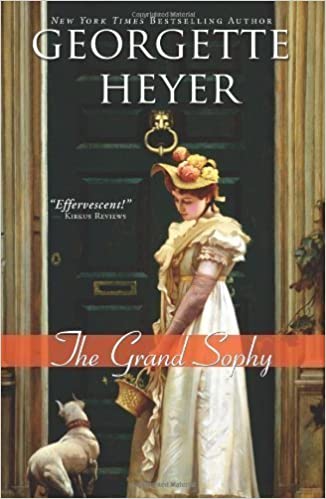
Review 1801: Classics Club Dare! The Grand Sophy

The latest Classics Club Dare is to read something romantic for February, so I have chosen The Grand Sophy from my list.

When Sir Horace Stanton-Lacey unexpectedly arrives at Lord Ombersley’s home to ask his sister to take charge of his daughter Sophy for a while, he discovers a depressed household. Lord Ombersley’s gambling debts had almost overrun the establishment until his son and heir, Charles Rivenhall, inherited a fortune from a distant relative. Charles “did something with the mortgages” and paid off the debts, and now he is trying to get the household to economize.

Charles is also engaged to Eugenia Wraxton, whose outward sweetness hides a self-righteous and meddling disposition. Her plans to occupy the family home after the wedding depress everyone except Charles.

By the time Sophy arrives, the announcement of her cousin Cecilia’s engagement to Lord Charlbury has been delayed by his having contracted mumps. Cecilia now thinks herself in love with Augustus Fawnhope, a devastatingly handsome but vague young man who fancies himself a poet.

Sophy arrives like a breath of fresh air. She brings a monkey and a parrot to entertain the children, a shy greyhound, and a fabulous black steed to ride. She immediately realizes that the family needs her help. And she never shirks her obligations.

Sophy is a firecracker of a heroine, and The Grand Sophy is one of Heyer’s most beloved novels. There is lots of fun to be had as Sophy’s stratagems twist and turn the plot. The novel is a re-read for me for the Classics Club, but I loved it this time just as much as I did the first time I read it.

Frederica

Venetia

Faro’s Daughter

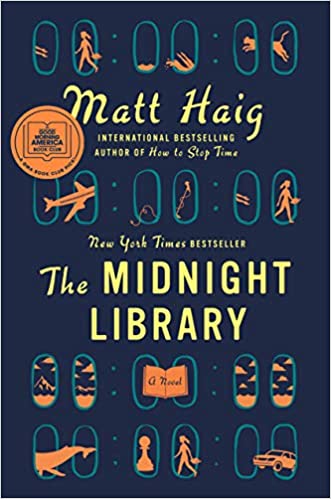
Review 1800: The Midnight Library

I am usually fairly good at spotting books I’m just not going to like without reading them, but I try to keep an open mind. Sometimes I am surprised if I do read one, as I was when I read Eleanor Oliphant Is Completely Fine. Sometimes I am not.

Nora Seed’s life started out with a lot of promise, but for one reason or other she quit doing all the things she’s good at. Haig begins with a countdown of days and hours before she decides to commit suicide. Having taken an overdose, she ends up in a library of all the lives she could have had, free to try some of them out.

I kept my patience and read through the first alternative life, about a quarter of the book. Then I quit.

Why didn’t I like it? Let me count the ways:

  1. The horrible sprightly tone with which it discusses a character who is so miserable she is suicidal
  2. The choppy rhythm of its writing. Almost every sentence begins subject verb subject verb, more like a children’s book than an adults’.
  3. The lack of character depth, or really any personality at all
  4. The lack of any kind of depth or subtlety
  5. The confused and poorly thought out working of the library
  6. Pretty much everything else about the book

Eleanor Oliphant Is Completely Fine

A Man Called Ove

The Virgin Suicides

Review 1799: Summer Will Show

I have enjoyed the two other books I read by Sylvia Townsend Warner, but I am not as sure how I feel about Summer Will Show. According to the Introduction by Claire Harman, the two main characters bear a strong resemblance to Warner’s real-life companion, Valentine Ackland (Sophia) and herself (Minna). This may be the problem I have with this novel, because, as with Vita Sackville-West’s Challenge, depicting a semblance of her own true-life relationship, I think perhaps the closeness of the relationship inhibits the writing. In this case, I didn’t really get the attraction between the two women. It didn’t seem convincing.

in 1848, Sophia Willoughby has been running her estate and raising her children on her own for some time. She has long tolerated her husband’s affairs, but when she hears of one with Minna Lemuel, she is enraged. Minna is famous as a sort of actress/prostitute/mountebank, and she is not only unattractive but older than Sophia. Sophia tells her husband Frederick he can stay in Paris.

Although Sophia is an extremely competent manager, she is impatient in many ways with her woman’s role. She wants to live a free life. She is not happy in society and has no friends. Although an attentive mother, she thinks her children are too soft and doesn’t coddle them. Then a mistaken attempt to toughen them up ends in their deaths.

With no one to care for, Sophia decides to go Paris and talk her husband into having another child with her. She arrives there as the Parisians are preparing for another revolution.

In searching for Frederick, Sophia meets Minna and is immediately captivated. In a short time, she is caring for her instead of a new child. Minna is a revolutionary, however, and although Sophia is skeptical of the movement, whose advocates seem to hang around Minna’s flat and do little, she is slowly drawn to Communism. In the meantime, Paris is starving.

Aside from what I felt was an unconvincing love affair, I wasn’t really interested in the revolutionary setting or the turn to Communism, which wasn’t very coherently explained. I was also appalled by Sophia’s treatment of Caspar, her husband’s illegitimate half-caste son. So, not so excited about this one.

Lolly Willowes

The True Heart

Challenge

Review 1798: The Mirror Dance

It looks like Alec, Dandy Gilver’s detecting partner, is settling down at last. Dandy doesn’t like Poppy, however, and perhaps is feeling a little jealous, so she goes along with her maid Grant to meet her new client, Sandy Bissett.

Miss Bissett has explained that a Punch and Judy show in Dundee has made puppets representing characters whose copyright is owned by her magazine company. The characters are Rosy Cheeke and Freckle. She wants them to cease and desist.

Before her appointment with Miss Bissett, Dandy and Grant go along to see the puppet show. During the show, the puppets stop moving, and after a wait, Dandy goes to see what the problem is. She finds the puppeteer, Albert Mackie, murdered in his booth. Dandy can’t figure out how anyone entered or left the booth without being seen.

Returning with Alec, Dandy finds the mystery becoming more bizarre, with the puppets found in their clients’ conference room, messages in lipstick and blood, and the discovery of a similar murder 50 years ago of a man with the same name. A brother of the murdered man also appears on the scene.

Usually McPherson’s Dandy Gilver mysteries are so full of red herrings that they’re confusing. This time I figured out the murderer, although nothing else, almost immediately. However, the series is still fun.

The Turning Tide

Dandy Gilver and a Spot of Toil and Trouble

Dandy Gilver and the Unpleasantness in the Ballroom

Review 1797: The Historians

Like her previous two novels, Cecilia Ekbäck has set The Historians partially on the fictional Blackåsen Mountain, a stand-in for the Kirina Mine in far northern Sweden. This novel is set during World War II.

In Lapland, a Sami girl goes missing. She is not the only one. Near Blackåsen, a miner decides to find out what is going on in the secret mine, the one that is supposedly out of bounds. He hopes to find members of the Norwegian resistance there, so that he can help them against the Germans, Sweden being neutral. Later, he is found dead.

In Stockholm, Laura Dahlgren is approached by her best friend Britta’s Sami friend Andreas. He tells her Britta has disappeared, and he is worried. Britta and Laura were part of a group of special history students studying with Professor Lindahl at Uppsala University. After the others took up careers, Britta remained, working on her thesis. Laura thought Britta wanted to tell her something the last time she saw her, but she did not. Now not only is Britta missing, but so is her thesis.

Jens Regnell, the secretary of a government minister, is perplexed when the ministry archivist, Daniel Jonsson, asks about some phone calls to the Danish and Norwegian foreign ministers that were not logged. In fact, he doesn’t know how one could circumvent the logging. When he tries to find out about the calls, he is shut down and then Daniel is replaced, reported to be ill. Next thing he knows, Daniel is dead, a supposed suicide. Oh, and Jens receives in the mail a thesis by a student named Britta Hallberg.

This novel is genuinely thrilling, as Laura reconvenes the friends in her study group to find out what happened to Britta and what was in her thesis. I started out reading this novel when I had to take a break from reading another novel on my iPad because it needed a charge, but I ended up putting that one aside completely, even after my iPad charged, until I finished this one.

In the Month of the Midnight Sun

Wolf Winter

Warlight