Wrap-Up for My James Tait Black Project

Announcement of a Review-Along!

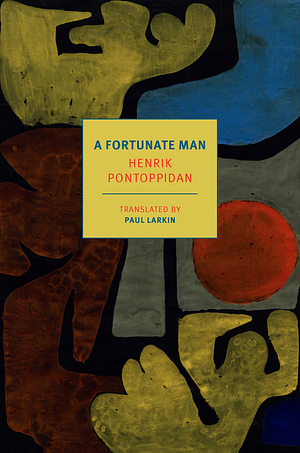
Before I plunge into my topic, FictionFan and I are announcing a Review-Along of the works of Henrik Pontoppidan, the Danish Nobel Prize for Literature winner (1917). We both chose his most famous book to read, A Fortunate Man (also known as Lucky Per), but readers are welcome to choose any of his works that are available. We’re aiming for March, as A Fortunate Man is a real doorstopper! See the details at FictionFan’s announcement post here!

James Tait Black Fiction Prize Wrap-Up

A few years ago, I decided to add the James Tait Black Fiction Prize to my shortlist projects. However, after a while I felt like I was reading too much British fiction as opposed to American or fiction from other countries, since all my prize projects were Brit-based and I also read a lot of reprinted British fiction. So, I dropped the James Tait in 2023 and added the Pulitzer Prize for Fiction. For the James Tait, I started my list back a few years, at 2010.

When I was just trying to wrap up this project by finishing the few books I had left to read, some fellow bloggers asked me if I would provide a wrap-up post for my reading. So, here it is, for the shortlisted books from 2010-2023, I know I’m finishing a few years later, but many of the books for this project were never available from my library, so I waited to see if they would become available and at the end, had to buy them. That hasn’t been a problem with my Booker or Pulitzer projects, although it has sometimes affected my Walter Scott Fiction Prize project.

The Data

Thanks to a request by FictionFan, I am providing data about my project. I am not a data person, so bear with me.

I began this project October 6, 2017, and decided to wrap it up in 2023. I finished reading on October 4, 2025, but it’s taken me this long to schedule the final two reviews. I posted my last review last Thursday, November 20, 2025.

Number of books read for project: 57

Ratings in The StoryGraph

Keep in mind that until 2025, I stored this data in Goodreads, which does not allow fractional ratings. There were only two books in the list that had fractional ratings, so I rounded them down. I am not really happy with 1-5 ratings, because to me, a 3.25 rating (a little bit better than 3, which is my meh rating), for example, is a lot different than a 3.75 rating (almost a 4).

Yes, I made some charts! It’s been a long time since I used Excel, so pardon me for any awkwardness. As you can see below, most of the books were rated either 3 (green) or 4 (blue).

Author Information

Number of female authors: 34; Number of male authors: 22

Note that one author made the shortlist twice.

I made a chart for author nationality. This chart is off by one because Sarah Hall is listed twice in my data, and I couldn’t figure out how to exclude one of her from this chart. So, there is one extra count for “English.” I used nationality as listed in Wikipedia, which for some authors listed two. Where are the Canadian authors, guys?

Settings

This answer was difficult, because some settings were unspecified while other books were set in several places, and one was just “Europe.” The chart I generated was unpleasing, so here is the data entered by hand for number of books in a setting:

U. S.: 17
England: 13
Ireland: 2
Scotland: 2
Multiple countries: 9
Unspecified: 5

Only one novel is set in each of the following countries: Kosovo, Bulgaria, Italy, Spain, Nigeria, Russia, Japan, Uganda, and Vietnam.

Genres

This section is problematic, I know, but I decided to add it at the last moment. The problem is that genres are so fluidly described these days that I could have a different list for each book! I tried for broader categories and used a search when I needed to, but sometimes I got as definitive a genre as “novel.” I also realize that short fiction could also fit into one or more of these genres, but I didn’t go there. I didn’t want to deal with specifying more than one genre per book. So, I did my best. Here is the genre breakdown I came up with. I was surprised by how many of the novels were historical, although I know it has recently become a very popular genre.

How Much I Liked Them

I wasn’t sure how to organize this section, so I decided to break it up into categories by how much I enjoyed the book. So, with no more adieu . . . These books are ordered by year of the prize, with the earliest first. For the most part, you will see that the category I put a book in has no relationship to whether it won that year or not. Winners are marked in red.

Books I Loved

Books I Highly Recommend

Books I Moderately Recommend

So-So or Even Meh or Some Good Stuff

Books I Actively Disliked or That Annoyed Me

Best and Worst

The best book choice is tough, but I pick Wolf Hall by Hilary Mantel. It captured me every second and was minutely researched.

The worst book choice is easy, the only one I didn’t finish, You & Me by Padgett Powell. Who needs to rewrite Waiting for Godot anyway? And so unfunny.

Review 2654: #NovNov25! Why Did I Ever

Technically, Why Did I Ever is a little longer than the page limit for Novellas in November at 210. But I found it in a list of recommended contemporary novellas and read it for this event.

Part of me doesn’t want to present a cogent plot synopsis for this book, because it isn’t presented cogently. Instead, the novella is written in fairly unconnected snippets, some of them titled but in a way that seems to have nothing to do with the snippets.

So, maybe not a synopsis, but here are some of the things that are going on. Melanie Money (we don’t learn either name for quite some time) hates her job as a Hollywood script doctor. She lives somewhere in the Deep South but occasionally flies to California for bizarre meetings about an inane script.

She has two grown children. Mev, her daughter, is methadone-dependent and has trouble keeping a job. Paulie, her son, is in New York under protective custody before testifying against a man who held him prisoner and viciously abused him.

In her home in a small Southern town, she has two very odd friends—the Deaf Lady, an old lady who is not deaf, and Hollis, a driving instructor who seems to spend most of his time in Money’s house.

Money has a boyfriend in New Orleans named Dix who calls a lot but from whom for a while she is keeping her address secret. She doesn’t regard him as very smart, but he seems to care for her.

Aside from the states of her various relationships, in which every character seems to respond to what is said with a non sequitur, the ongoing plot is about the state of the script and whether Melanie will be fired and about Paulie’s situation.

Melanie herself obsessively covers everything in her house (literally everything, even her books) with a coat of paint or alphabetizes everything, seems to drive aimlessly around the South, and worries about her missing cat and her kids.

It’s a very disjointed account, but it’s quite funny at times, especially about the movie industry.

Related Posts

Milkman

Girl, Woman, Other

A Girl Is a Half-Formed Thing

Nonfiction November 2025! Week Five: New to My TBR

Welcome to the last week of Nonfiction November 2025. This week the host is Deb at Readerbuzz, and the prompt is New to My TBR:  It’s been a month full of amazing nonfiction books! Which ones have made it onto your TBR? Be sure to link back to the original blogger who posted about that book!

In her roundup for the year, Shoe’s Seeds & Stories reminded me of Amy Tan’s Backyard Bird Chronicles. I must have read about that book on her blog last year, but I also listened to an NPR interview with her about the book. I still have that book in my pile, but Shoe also mentioned her memoir, The Opposite of Fate. I think I would like to read that.

In her roundup, Kate of Books Are My Favourite and Best mentioned Hannah Kent’s memoir, Always Home, Always Homesick, about falling in love with Iceland. I’m kind of fascinated by Iceland, and I loved Kent’s book set there, so I’m putting that one on my list.

On Books Please, I read about Islands of Abandonment by Cal Flynn, about what happens to places when they are abandoned by people. Sounds fascinating!

I noticed that Say Nothing: A True Story of Memory and Murder in Northern Ireland by Patrick Radden O’Keefe is mentioned by Anne in My Head Is Full of Books. This is another book in my pile that I think I read about last year but have not gotten to yet. So, not new to my TBR but waiting.

A memoir that looked interesting on Fanda Classic Lit was Notes from an Island by Tove Jansson & Tuulikki Pietilä, and it has a map on the cover! I love maps!

This book isn’t nonfiction, but Michelle Paver’s name has been popping up all over the place lately, so when Olivia of Bemused and Bookish paired it with a nonfiction book of exploration, I put Rainforest on my reading list. I didn’t put the nonfiction book on my list because I already read a similar book called The Lost City of Z by David Grann. Also, it has a great cover.

Also from Olivia’s post for book pairings is Uncredited: Women’s Overlooked, Misattributed & Stolen Work by Allison Tyra. As a woman whose work has been overlooked and misattributed, I think this will be interesting.

I think the Franklin Expedition is fascinating, and I have already read several books that are either about it or reference it, so when Aj Sterkel of Read All the Things posted Ice Ghosts by Paul Watson, I had to add it to my list.

Aj Sterkel also brought up Stiff by Mary Roach, which made me remember how much I enjoyed her book about space exploration, Packing for Mars. Learning what people have done with corpses throughout time sounds interesting. So, I put that on my list. And, by the way, Read All the Things also reminded me that I have not yet read Sapiens by Yuval Noah Harari, which I put on my list last year.

Joy of Joy’s Book Blog mentions The Warmth of Other Suns by Isabel Wilkerson, a book I read in 2015. This reminds me that I have not yet read Caste, by the same author, a book that I have had on my list since it came out. And she also reminded me of another book that I’ve had on my list for a while, Fever in the Heartland by Timothy Egan.

So, I’m cheating a little bit by mentioning some books that are on my TBR, but I have added quite a few this week.

Review 2653: #NovNov25! For Thy Great Pain Have Mercy on My Little Pain

The fourth novella I chose (via eeny meeny miney mo) for Novellas in November is about two real figures in Medieval literature, Margery Kempe and the anchoress Julian of Norwich. Julian of Norwich’s book Revelations of Divine Love is the first surviving book written by an English woman, and the book Kempe dictated (as she was illiterate), The Book of Margery Kempe, is the first-known autobiography in English.

The point of view alternates between Julian and Kempe. Both have experienced revelations, although at that time to do so was considered heretical. Julian experiences losses of everyone in her family and eventually decides she wants a life of contemplation. She becomes an anchoress, a woman who lives in a small room attached to a church, cemented in, the room with three windows—one to observe the church services, one to pass things back and forth with the maid, and one looking out on the street. People can talk to her but aren’t allowed to see or touch her.

Margery reacts to her revelations differently. She has had 12 children but doesn’t seem to like them or to like sex with her husband. Her point of view sounds like she has gone into permanent post-partum depression. She goes to the streets telling about Christ and sobbing loudly. She is several times examined for heresy. She disturbs church services and pilgrimages with her crying.

This book eventually leads up to an imagined meeting between the two women. It is well written and provides insight into the Medieval religious mindset and beliefs. Religion is seldom my cup of tea, though, so don’t ask me why I chose this book. I can’t remember.

Related Posts

The Name of the Rose

To Calais, In Ordinary Time

The Mistress of Husaby

Review 2652: Alligator & Other Stories

Alligator & Other Stories is the last book I had to read to wrap up my James Tait Black project. It is a collection of nine stories by Syrian-American writer Dima Alzayat, all with a theme of dislocation.

I was nearly brought to tears by the first one, “Ghusl,” about a woman preparing the body of her younger brother for burial, against tradition. The woman’s name is Zaynab, and I believe she is the same woman we read about in later stories.

“Daughters of Manät” (does it mean “destiny”? all I could find was a definition of the word without the diacritical mark) also brings in Zaynab as the aunt of the narrator, but it begins with a woman stepping out of a window, presumably committing suicide. This act indicates a shift of point of view between telling the story of Zaynab and whatever else is going on, but that’s just it. The rest is beautifully written, but I found it a bit opaque.

“Disappearance” is the only story that doesn’t seem to contain characters of Middle East origin unless one is Etan, a boy who has disappeared. The story is written from the point of view of a young boy who is not allowed to leave his New York apartment building during the summer that Etan disappeared.

In “On Those Who Struggle Succeed,” a young college graduate makes compromises, including hiding her Lebanese ethnicity, to try to succeed at a company.

In “The Land of Kan’an” an Egyptian man living in Los Angeles tries to overcome his predilection for men as sexual partners.

“Alligator” is a long story that shows America’s history of racism through newspaper clippings, interviews, and testimony, reverting many times to the killing of a Syrian grocer and his wife in Florida by the police in 1929. Although it employs the technique, becoming more common, of using documents to tell its story, I think it is overly long and a bit redundant. I hadn’t realized until reading it, though, that there was a large emigration of Syrians in the early 20th century and that they were treated like my Irish ancestors were in the late 19th century.

“Summer of the Shark” is from the point of view of a young man of Jordanian descent working in a call center on 9/11.

In “Once We Were Syrians,” Zaynab makes another appearance as a grandmother tries to explain to her granddaughter what her Syrian heritage means.

In “A Girl in Three Acts,” a teenage girl in foster care reconnects with the Christian Syrian family that ostracized her branch of the family when her grandfather converted to marry a Muslim girl.

I found the first and last stories most affecting. The stories are beautifully written, but since short stories are not really my thing, I’d like to see a novel by Alzayat.

Related Posts

Travelers

Unaccustomed Earth

In the Eye of the Sun

Some Book Serendipity of My Own

When Bookish Beck posts her lists of what she calls “Book Serendipity,” that is, coincidences she notices across books, I am always impressed by how many things she lists and the level of detail she notices. So, last summer, I noticed a few things and jotted them down, thinking I would create a book serendipity list of my own. Then I had to flip the page in my notebook for some reason and forgot all about it. So, this is the paltry number of things I wrote down, plus one that is more recent.

  • Frail older woman interferes with a much younger man’s life: The Sweet Dove Died by Barbara Pym and Cecil by Elizabeth Eliot.
  • Women are married to much older men: Cecil by Elizabeth Eliot and The Musgraves by D. E. Stevenson.
  • Feudalism is a good thing: The Secret of Chimneys by Agatha Christie and The Portuguese Escape by Ann Bridge.
  • Empire is a good thing: The Portuguese Escape and The Lighthearted Quest by Ann Bridge

Boy, Ann, you’re not doing too well here.

The other things I noticed were actually cross-media serendipities that happened almost exactly at the same time:

  • Reference to Burgess and Maclean in The Portuguese Escape by Ann Bridge while watching a TV series about Kim Philby, also with references to Burgess and Maclean (A Spy Among Friends, starring Guy Pearce and Damian Lewis)
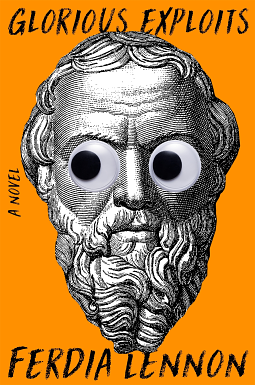
  • References to or setting in Ancient Syracuse in Indian Jones and the Dial of Destiny, on Jeopardy, and in Glorious Exploits by Ferdia Lennon

I guess maybe I’m not so much a details person as a big picture person, because I’m sure there have been more than these.

Review 2651: #NovNov25! The Buddha in the Attic

This is an unusual little book, which I read for Novellas in November. It is based on the experiences of Japanese women brought to California as brides in the early 20th century. It doesn’t have any detailed characters but instead treats the women as a disparate group and is written in first person plural.

The girls and women have never met their husbands. They have apparently been married by proxy and have letters from and photos of their husbands. But when their ship arrives, they don’t recognize them. Their husbands are twenty years older than their photos, and they are common laborers, not the bankers and professional men the women are expecting. The women have been brought there not to improve themselves but to provide sex and hard labor.

The novel follows the women in their many paths until World War II and the internment of almost all the West Coast Japanese residents. Somehow, despite its lack of distinct characters and plot, it builds. It makes you sympathize with the hard lives of these characters. It’s powerful.

Related Posts

Bread Givers

The Year of the Runaways

Silence

Nonfiction November 2025! Week Four: Diverse Perspectives

This week the host is Rebekah of She Seeks Nonfiction. The prompt is Diverse Perspectives. Nonfiction books are one of the best tools for seeing the world through someone else’s eyes. They allow us to get an idea of the experiences of people of all different ages, races, genders, abilities, religions, socioeconomic backgrounds, or even just people with different opinions than ours. Is there a book you read this year from a diverse author, or a book that opened your eyes to a perspective that you hadn’t considered? How did it challenge you to think differently?

I think the book I read that most reflected a perspective that was different from my own was Life Among the Qallunaat by Mini Aodla Freeman, a memoir by an Inuit woman whose life, even in the 1950s, was so different from my own, growing up at the same time. In the memoir, she portrays herself as a very naïve young girl, but at the same time there is lurking in her writing a little bit of humor as she explains the differences between her people’s ways of thinking and behaving and our own.

Another book that reflected a different kind of “modern” life was Fenwomen: A Portrait of Women in an English Village. What struck me about this book is that the lives of the people were so remote from those of everyday English people in the 1970s even though their village was located only about 30 miles from Cambridge. The fact that for years there was no easy transportation between the village and larger towns and even between the fen dwellers and the village made the villagers’ lives a lot more primitive than others’, and the situation, although it has improved with many people having cars, has only gotten worse for the poor with transportation issues such as the removal of bus routes.

I don’t feel as if this topic works that well for the books that I read this year, though.

Review 2650: The First Woman

The First Woman is one of two books left in my James Tait Black Prize project, which I began winding up in 2023. I’ll come right out and say that although I’m sure many people will enjoy reading the book, it was not really for me at times. I had trouble getting through it, although I found the end more interesting.

First, I don’t really enjoy dreams in novels, and at the beginning there are plenty of them. Also, although I may read a volume of folk tales, I don’t always like them mixed in with my fiction. However, I understand that here, they are a strong part of the culture portrayed.

At the beginning of the novel, Kirabo is a thirteen-year-old Ugandan girl. She is just beginning to enter womanhood even though she and her best friend Giibwa are still playing with dolls. Perhaps it is the upcoming passage that has made her wonder about her mother. All she knows is that her father, Tom, brought her home to his parents when he was attending university, and they raised her. When she asks about her mother, no one tells her anything, so she decides to consult Nsuuta, the witch.

Nsuuta and Kirabo’s grandmother, Alikisa, don’t speak, so Kirabo is surprised to find out that once they were best friends. Nsuuta is reluctant to talk to Kirabo, but she is plainly lonely and blind, so she agrees to talk to her if she will come for lunch. But she mostly tells her folk tales with a feminist bent.

I have to say that at this part of the story I was a bit shocked by Kirabo’s immersion into sexual considerations. Not that she does anything sexual, but, for example, as soon as she has her first period, she is told how to stretch her labia so she’ll have more pleasure from sex—about a week after she had her baby doll out! I read more about labia in this section than I have in any book except one by Simon Mawer.

Kiribo is about to have a shock. Tom has been telling her he is going to take her to the city to live with him. One day shortly before she is to start school at a secondary boarding school, he tells her to pack and takes her away. But when they arrive at his house, she finds he is married with two children she never met before and her stepmother doesn’t want her in the house.

The novel follows Kirabo for several years in the 1970s and 80s while she tries to reconcile the demands of her patriarchal culture with her desire to be educated and have a career. It also covers the effects of the reign and overthrow of Idi Amin, when, for example, Kirabo’s boyfriend Sio’s father is murdered because he has a Tanzanian wife.

After the almost purely sex- and marriage-related first half of the novel, I was more interested in the second half. However, about 75 pages go back in time to when Kirabo’s grandmother was a girl, to explain what happened between her and Nsuuta. I thought this material could have been covered more effectively in a story lasting a few pages.

Related Posts

Girl

Something to Hide

An Orchestra of Minorities