Review 1645: The 1936 Club! Nightwood

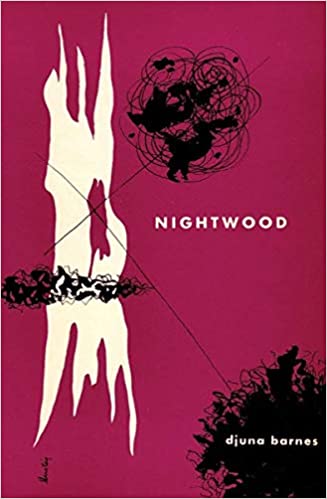
When I looked for books to read for the 1936 Club, I picked a couple of rereads, as I usually do, but also tried to find one I hadn’t read before. That novel was Nightwood, which I had heard of for years.

T. S. Eliot, who wrote the original Introduction and had a great deal to do with its publication, said that it would “appeal primarily to readers of poetry.” That comment struck dread into my heart, because I am not a big poetry reader. And indeed this is a difficult novel.

The plot is relatively slight. Felix, an Austrian Jew and pseudo-baron, marries Robin Vote because he wants a son to pass his heritage to. Robin is an enigma whom we only see through the eyes of those infatuated with her. She is boyish, and the Doctor, an intersex character who is also an enigma, implies that she is also intersex. Robin seems to view motherhood with horror, so she leaves Felix with his son and takes up with Nora, who is madly in love with her and spends most of her time dragging her, dead drunk, out of sleazy Parisian nightclubs. Then Robin dumps Nora for Jenny, a woman who always wants what other people have.

All the characters are distraught.

The novel is most known for its style and language. It is crammed with images and metaphor, but it is difficult to understand what the characters are talking about, especially the Doctor. I felt like I understood him less than half the time.

The novel seems filled with dread, as it might well in pre-World War II Europe, even though its characters’ preoccupations are not political. I found it disturbing, thought-provoking, and astonishing.

Related Posts

The True Heart

Fidelity

My Husband Simon

Review 1644: The 1936 Club! August Folly

This week it’s time for the 1936 Club, hosted by Stuck in a Book. For my first book published in 1936, I am delighted to review August Folly by Angela Thirkell. As usual with my first posting for the club, I am also listing the links for the books published in 1936 that I have reviewed previously:

__________________________________

Louise Palmer, who likes to manage things, has decided to put on a Greek play. This endeavor will involve the participation of most of the young people around the village of Worsted, including her summer guests, the Deans. Richard Tebbins, just up from Oxford with a poor third, is at the age when everything his parents do irritates him (although that’s usually earlier, in my experience). However, when he sets eyes on Mrs. Dean, his parents’ contemporary, he falls into puppy love. Mr. Fanshawe, the Deans’ guest, seems to be a confirmed bachelor, but he has always only loved young Helen Dean. However, he fears he is too old for her. These are just a few of the characters and subplots of Angela Thirkell’s fourth Barsetshire novel.

Sometime, I would like to read these novels in order, because although each one concentrates on different characters, they have characters that reappear in different books—presumably also plot lines. However, I used to randomly encounter the novels in bookstores and just picked up whatever I found.

August Folly is one of the more fun books, featuring eccentric academics, delightful children, realistic but absurd romances, and a cat, a donkey, and a bull. It is froth at its best. I was happy to revisit it for the 1936 Club and my Classics Club list.

Related Posts

Pomfret Towers

Wild Strawberries

Northbridge Rectory

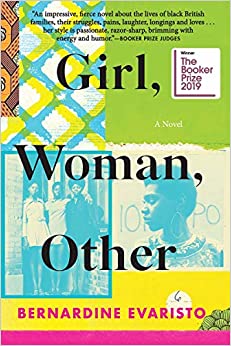
Review 1643: Girl, Woman, Other

Readers who prefer traditional narrative styles beware—there are hardly any periods in Girl, Woman, Other. Although I often enjoy more experimental novels, this bothered me at first, because it forces Evaristo to start a new paragraph almost every sentence, if you can call them sentences—many are more like lists. After a while, I got used to it.

Girl, Woman, Other is about the lives of British black women, twelve women who each has her own chapter. The plot, which is minimal, centers around a play about black female warriors named The Last Amazon of Dahomey, written and produced by Amma, a radical feminist gay woman. The novel is divided into four parts, each devoted to the lives of three women who have some type of relationship to each other. But there are more relationships within the book, some of them surprising.

The novel is fresh, the stories interesting, many of the characters justifiably angry. I wasn’t sure how much I liked it, though, until the Epilogue, which was touching.

All-in-all, Booker prize winner or not, I would call this novel of linked stories a semi-successful experiment in form and writing style. It is at times a little didactic through characters’ speeches, but it does tell some powerful stories about the experiences of black women, women’s sexuality, women in general.

Related Posts

Ducks, Newburyport

The Rehearsal

The Lesser Bohemians

Review 1642: The Tenant of Wildfell Hall

Gilbert Markham is a young man running a family farm when a new, mysterious person moves into the neighborhood, taking up residence in an old, half-derelict house named Wildfell Hall. She is Mrs. Graham, a beautiful young widow with a five-year-old son, Arthur. She tends to be reclusive, which makes the neighborhood more interested in her. Finally, Gilbert goes with his sister to call and finds that Helen Graham is supporting herself working as an artist.

Gilbert falls in love with Helen, but she will not allow him to express any of his feelings. Then, he hears an ugly rumor about Helen and his friend Mr. Lawrence, Helen’s landlord. Helen has secrets, but they’re not the ones being repeated about her. She finally decides to confide in Gilbert by giving him her diary.

I hadn’t read this novel for many years, so I put it on my Classics Club list. I found the structure of the novel—epistological first because Gilbert is writing a very long letter to a friend, and then the diary—to be cumbersome. It seems as though a straightforward first-person narration would be less artificial for the first part, which must be the longest letter ever written. For the middle, diary portion, I understand why Brontë chose that method of telling her story, which makes up the bulk of the novel, but it seemed a little clumsy and too long.

Finally, there were times when I tired of the self-righteous Helen. It seemed to me that her attitude might have driven a better husband than the one she chose away from her. Of course, he is a scoundrel, so there was probably no attitude she could adopt that would reform him, which makes the ending kind of absurd. I don’t know how to explain it without spoilers, but I thought it might be a sop to the critics of Brontë’s time who would have thought Helen should not have deserted her husband. Either that or she is destined for sainthood.

I am probably being overcritical of this book, which would have been quite shocking for its time because of making a woman who has fled her home with her child its heroine. Although I’ve read a gothic novel or two with the same premise, I’m sure this one was more groundbreaking through the husband’s faults being those of cruelty and dissipation rather than, say, robbery and murder. Here, we see Brontë taking up a feminist viewpoint, and I guess I’m just saying that I found Helen a little too rigidly moral. She spends an awful lot of time being outraged. Jane Eyre is also moral, but somehow from her it doesn’t seem as irritating.

Related Posts

The Castle of Wolfenbach

Aurora Floyd

The Grey Woman

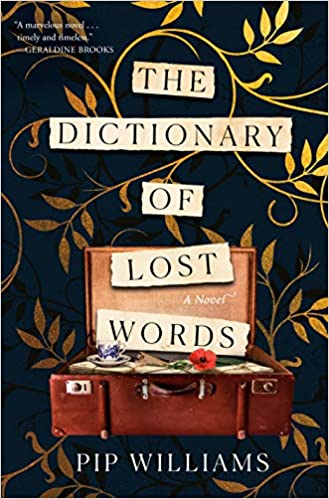
Review 1641: The Dictionary of Lost Words

After reading The Professor and the Madman, Pip Williams got interested in the ways that gender affected the original edition of the OED. She wrote The Dictionary of Lost Words to honor the women who helped produce the dictionary.

As a little girl, Esme becomes fascinated with the strips of paper used to keep track of different uses of words. Her father is the assistant to Dr. Murray, who is in charge of the OED project, and she spends a lot of time sitting under her father’s desk at the Scriptorium. One day, she finds the strip for the word “bondwoman” and puts it in her pocket. She begins collecting duplicate strips or words that will not be included in the dictionary and puts them in a trunk.

As a young woman, she begins working in the Scriptorium. She becomes fascinated with the idea that some words are not allowed in the dictionary because they don’t have a written source. Many of these words, she notices, are related to the poor and to women—words for women’s body parts, professions, epithets for women. She begins collecting her own words from Lizzie, the Murray’s maid, and from common people in the market.

link to Netgalley

This novel not only reflects the love of words but also the events of the time—the battle for women’s suffrage and eventually World War I. At first, I had difficulty getting into it, but that may in part have had to do with my problems with eBooks. Eventually, I was sucked in and found the novel touching, even though a few plot points are predictable.

I received this book from the publisher in exchange for a free and fair review. I had this review already scheduled for posting when I learned that the book made it to the shortlist for the Walter Scott Historical Fiction Prize.

Related Posts

Charlotte and Emily

The Adventure of English: The Biography of a Language

Dreyer’s English: An Utterly Correct Guide to Clarity and Style

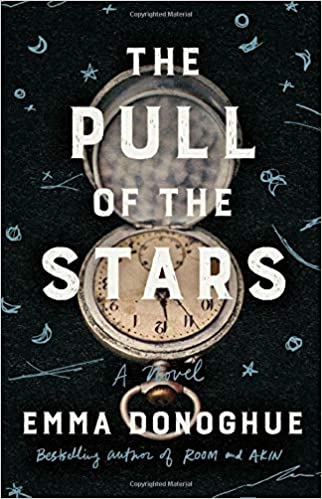
Review 1640: The Pull of the Stars

Julia Power is a maternity nurse in Dublin during the 1917 flu epidemic. The Pull of the Stars covers three days in her life on a small maternity ward for flu patients. With the hospital staff depleted because of illness and the matron away, Julia has only the help of a new volunteer, Bridie Sweeney, for most of the time. During this period, she has to cope with several emergencies and some deaths.

The novel appears to be knowledgeable about the state of medicine at the time and of the ignorance of the common people. One young woman expects to deliver her baby through her belly button, for example.

I found this novel interesting but curiously unsatisfying. I liked the characters Julia and Bridie, but no others are very fully developed. The plot seemed predictable and even a bit manipulative. I never know with Donoghue if I’m going to be blown away or relatively unmoved. This novel is timely, but that may make its content of very graphic medical details uncomfortable for some.

Related Posts

The Wonder

Akin

Room

Review 1639: The Ghost Fields

Detective Harry Nelson calls forensic archaeologist Ruth Galloway when a bulldozer at a housing development digs up an American World War II airplane. In the plane is a dead man. Ruth is fairly sure the body was moved there, because its state indicates it was buried in different soil. Oh, and the man was shot in the head.

The American Air Force identifies the body through dental records as Fred Blackstock. The problem with that is that Fred was reported missing from a flight over the channel, in a different plane.

The investigative team finds that Fred’s brother George is still alive, although slightly dotty. His other brother, Lewis, returned from a Japanese prison camp with PTSD and eventually disappeared and is presumed dead. George lives in a desolate family mansion with his son George and George’s wife Sally. Their grown children are Chaz, a pig farmer, and Cass, an actress.

Ruth hears that her friend Frank, a TV historian, will be returning to the U. K. to film a show about Fred. Her feelings are mixed because they haven’t been in touch for a while.

A memorial service for Fred brings his daughter Nell and her family from the United States. During the reception, Ruth finds a likely disturbed area with the right soil in the family pet cemetery and believes it may be Fred’s original burial place. Ruth and another guest also spot a mysterious stranger on the grounds of the house.

I had some inklings about some of the threads of this mystery but ultimately did not guess the truth. It remains another perplexing mystery and thriller by Griffiths and satisfactorily advances the course of Ruth’s private life. My only fear about the series is that Griffiths seems to be advancing it at about two years in the characters’ lives per year in real life, which could result in a premature end of the series because of Ruth’s old age.

Related Posts

The Outcast Dead

A Dying Fall

A Room Full of Bones

Review 1638: Utopia Avenue

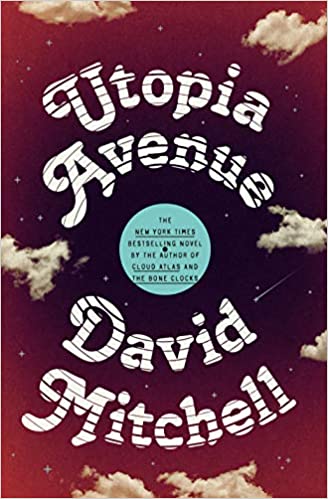
I always look forward to a new book by David Mitchell. So, I read Utopia Avenue almost as soon as it arrived at my house.

Dean Moss has had a bad day. First, he is robbed of his rent and the money to reclaim his pawned guitar almost as soon as he leaves the bank. Then, his landlady threatens to throw him out. When he asks for his pay a few days early, his boss fires him. He is out on the street wondering where to go when Levon Frankland introduces himself. Levon is a manager who has heard him perform. He wants to build a band from scratch and takes him to hear a guitarist and drummer perform at a nearby club. The two are the only good things in an act headed by a washed-up performer. They are Jasper de Zoet (Mitchell fans will know that last name) and Griff, a drummer.

Elf Halloway has a popular folk EP out, but the EP she recorded as a duo with her boyfriend Bruce has not done so well. Then Bruce dumps her, a fact she’s so ashamed of that she lies to her family about it. The three musicians invite her to join their group, which will have an eclectic sound.

This novel follows the band’s adventures as it attempts to gain enough recognition to cut an album. It reflects the love of music that is apparent from most of Mitchell’s novels and also features the reappearance of some of his recurring characters.

Utopia Avenue vividly evokes the heady days of the rock scene in mid-1960’s England and the United States. It features encounters with numerous pop culture figures such as David Bowie, John Lennon, Leonard Cohen, Mama Cass, Brian Jones, and many others.

If I fault the novel at all, I feel it salts these famous characters in a little too freely. Also, there are a few too many scenes where friends or complete strangers say exactly the right thing to a troubled band member.

However, the novel has a gripping subplot involving an invader into one character’s consciousness and overall, I enjoyed it.

Related Posts

Beatlebone

Daisy Jones and The Six

A Visit from the Goon Squad

Review 1637: A Perfect Union of Contrary Things

I have a few disclaimers before I begin my review of this book. First, punk, progressive, and grunge rock are not genres I’ve listened to, so I am profoundly ignorant of Maynard James Keenan’s work, which is perhaps a handicap for my review. Second, the author, Sarah Jensen, is a friend and ex-housemate, with whom I’ve been out of touch until recently. My belated discovery that she had written this biography piqued my interest in reading it.

Jensen follows Keenan from the time when he was a boy, leading a difficult life, to his present life as a musician, actor, comic performer, artist, winemaker, and writer. Yes, he truly seems to be a Renaissance man, continually working at something and giving his many projects detailed attention and effort.

Keenan’s young life was disrupted many times—by his parents’ divorce, his mother’s being incapacitated by stroke, his many households and schools. Although he is a seeker, his attitudes about formal religion are formed by his skepticism, even very early, about his fundamentalist upbringing and his anger at how members of her church told his mother she must have done something very wrong for God to have stricken her so.

Starting at high school, it seems, Keenan developed the philosophy that if you’re going to do something, you should do it well, and if you have talent, you should use it. He was a high school track star and gifted artist, whose dream was to go to art school. He accomplished that by enlisting in the army, where he so excelled that he was offered a place at West Point’s preparatory school. He attended that but with no intention of becoming an officer.

His path to such bands as Tool and A Perfect Circle was anything but direct, so much so that old friends weren’t even aware he was a musician. The tale of his progress through life is truly interesting.

The book is beautifully written, lyrical at times, and explores Keenan’s music, lyrics, and philosophy in detail. I felt a bit at sea in following the discussions of his music and his comic performances as part of Puscifer, as I explained before, despite having watched a few clips on YouTube.

If there was one thing that threw me off a bit it was the tone of the book, especially in discussions of Keenan’s performances, which felt more like, say, a Rolling Stone appreciation than a biography. That being said, I am more accustomed to literary and political biographies, which have more distance from their subjects than ones about living celebrities.

Related Posts

Educated

Giving Up the Ghost

Wild