Review 1557: Idaho

Best of Ten!
If you prefer the kind of novel that answers all your questions and ties everything up in a neat little bow, then Idaho is probably not for you. It is a haunting, atmospheric novel that ponders the depths of the human heart—love, guilt, friendship, regret.

The novel begins with Ann, married to Wade, a man with a tragic past. A year before his marriage to Ann, while he and his first wife Jenny were out cutting firewood, Jenny killed their youngest daughter, May, with an ax. Thinking only to keep his wife away from their older daughter, June, Wade drove the truck containing his wife and dead daughter down the mountain looking for help, leaving nine-year-old June there. Misunderstandings with the police prevented him from immediately returning, and June was lost.

Now Ann lives with Wade on their remote mountain farm, but she doesn’t really understand what happened. Wade prefers not to discuss it, and anyway, his memory is beginning to fail from hereditary early-only Alzheimers.

This novel explores this event and its ramifications through about 50 years of time and the viewpoints of a number of characters, some only peripheral to the story. It is beautifully written, provocative, and tragic. It is absolutely a wonderful novel.

Related Posts

Solace

Elmet

Wild Decembers

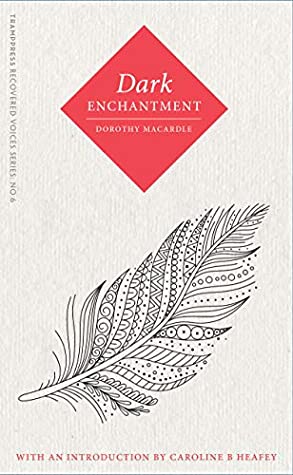
Review 1556: Dark Enchantment

I was delighted to receive a review copy of Dark Enchantment from Tramp Press from their Recovered Voices series and decided to time my review for the season. This is especially felicitous because the movie from another Dorothy Macardle book, The Uninvited, has been my family’s go-to Halloween movie for years. This is another entry for RIPXV.

After three years of teaching, an occupation that Juliet Frith likens to drudgery, she is exhausted and unwell. Her employers, eager for her to leave because of newspaper stories about her mother, have summoned her father to take her away. Frith is an actor who can’t afford to support Juliet and doesn’t know what to do with her, but for now they are vacationing on the Côte d’Azur.

On a day trip to visit villages in the Alps Maritimes, Juliet is taken ill at an inn, so Frith makes arrangements for them to stay the entire week. Juliet improves rapidly and befriends the pregnant wife of the innkeeper, Martine, so Frith arranges for Juliet to stay there when he has to leave for a job. Juliet will be working half-time at the inn for the length of Martine’s pregnancy. It helps that Juliet has met Michael, studying trees in the nearby forest.

The lives of all the villagers are soon wrapped up in drama because of Terka, a beautiful Romany woman who is missing an eye. She has a reputation as a sorceress, and the villagers are terrified of her. Although Juliet thinks Terka is being treated unfairly, Martine’s husband René is foremost at trying to drive her out of the area, so she has turned her attentions to poor Martine as well as others. Things begin to get ugly.

This novel develops slowly at first, but it has appealing characters and kept my interest. Although the threat foretold for Juliet doesn’t really pan out, she becomes deeply involved in the fortunes of Martine and René. I enjoyed this light read very much.

Related Posts

The Uninhabited House

The Good People

House of Glass


Review 1555: The Voices Beyond

I have been reading Johan Theorin’s novels for years, ever since I picked up The Darkest Room. The Voices Beyond is one of his atmospheric thrillers set on the Swedish island of Öland in the Baltic Sea. In the case of The Darkest Room, at least, there was also an element of the supernatural. This makes an appropriate book as we’re leading up to Halloween and is also an entry for RIPXV.

The novel begins in 1930, when Gerlof (who appears in all these books) is a young man helping out as a gravedigger. The man being buried is Edvard Kloss, of a family of wealthy farmers, and the rumor is that his two brothers killed him by toppling a wall on him. Also helping the burial that day is a teenager named Aron Fredh, rumored to be a bastard son of Edvard. When the coffin is put in the ground and they begin to cover it, everyone at the graveside hears three distinct raps, apparently coming from the coffin. The men haul the coffin back up and open it, but Edvard is definitely dead. However, his brother Gilbert falls over dead from the shock.

Sixty years later, Gerlof is a retired sea captain staying for the summer in his cottage on the beach in Stevnik. One night when he is sleeping in the boathouse, he is awakened by a terrified boy, Jonas Kloss. Jonas tells him that he was floating on a rubber dinghy when a large ghost ship nearly ran him over. He saved himself by grabbing a dangling rope and was able to get aboard. There he saw dead sailors on the deck and a young man chasing another sailor with an ax. Up in the wheelhouse was an old man. Jonas thinks he has seen the young man before.

Gerlof helps Jonas figure out that the young man sold him movie tickets the year before, so they are able to identify him as Pecka. Although Gerlof asks the boy not to tell anyone this, Jonas confides in his Uncle Kent. Soon Pecka is dead.

Intermittently, we learn the story of Aron Fredh, whose stepfather Sven reportedly took him away to America in 1930, and they were never heard from again. But Sven, a dedicated socialist, actually took him to the Soviet Union, where they lived a brutal life and Aron managed to survive the Great Purge.

Eventually, Gerlof realizes that the old man is Aron Fredh, pursuing some kind of vendetta against the Klosses. But how to find him?

Theorin does something really interesting with these characters that I don’t want to reveal. Let me just say that everything is not what it seems.

Although none of Theorin’s books has been quite as memorable as The Darkest Room, they have all been good, and I think this one is more memorable than the last couple.

Related Posts

Echoes from the Dead

The Darkest Room

The Quarry

If I Gave the Award

With The Vanishing Futurist, I have now finished reading all the shortlisted books for the 2017 Walter Scott Prize for Historical Fiction. So, it is time for my feature where I decide whether I think the judges got it right.

Sometimes, it’s easy for me to decide which book I thought was best. In this case, though, it’s pretty difficult as almost all the entries are really good. With the Walter Scott Prize, however, I think one aspect that should be looked at is how well the novel evoked the time and place, and that sometimes helps with my decision.

Let’s start with the winner, Days Without End by Sebastian Barry. I enjoyed this book, about two gay soldiers during the Civil War and the Indian Wars. I remember hearing criticism about the cross-dressing angle, which some readers thought wouldn’t be accepted back then. But I could buy this in communities that were solely male. My problem with the novel was that none of the characters seem fully developed, even though I liked them.

The weakest entry for that year, I thought, was The Gustav Sonata by Rose Tremain. Set in postwar Switzerland and about a boy and his friendship with a Jewish violinist, it felt to me as if it was holding a pane of glass between me and the characters. Also, this novel seems pointless until the very end.

All the other books do more with the time and place than The Gustav Sonata, but perhaps, although I liked it very much, Mothering Sunday by Graham Swift does less by virtue of the type of book it is. Even though this book, about how the events of one afternoon define the course of one young girl’s life, was one of my favorites, I’m not going to pick it just for that reason. It is a very short novel, and as such doesn’t have as much of the flavor of time and place, but it is an excellent book, extremely well written.

The Good People by Hannah Kent is based on a true crime and explores the deep superstition in a 19th century Irish village that leads to tragedy. This novel does a very good job of evoking time and place as well as building a sense of dread.

Similarly, The Vanishing Futurist evokes the heady times of idealistic young people after the Russian revolution as well as the dangers. Although the aims of the scientist in this novel may seem to be absurd, I don’t think they were an exaggeration of the types of things the Soviets were working on at the time. I felt it does a better job of depicting the time and place than several other novels about the aftermath of the revolution that I’ve read lately.

Notice I haven’t used the word “but” about either of the last two books, which is why my decision is so tough. These are both really enjoyable novels that handle their time and place well. And there is one more, Golden Hill by Frances Spufford. It is set in 18th century New York and evokes a city with mercantile origins and interests that still bears the influence of its Dutch founding. As far as plot is concerned, it is the most ambitious, about a young man who arrives there with a secret agenda. It is humorous and has a picaresque adventure story, so I decided to pick it, but nearly made this decision a three-way tie.

Review 1554: The Vanishing Futurist

Right before the start of World War I, Gerty Freely goes to Moscow to be a governess for the Kobelev family. There she falls in love with one of Pasha Kobelev’s friends, Nikita Slavkin, a brilliant, idealistic scientist and revolutionary. Although Gerty is not political, she eagerly embraces the life of a communard in a commune Slavkin founds in the Kobelev’s house after the revolution. With them are Pasha and his sister Sonya and a few other young people.

Slavkin’s mission becomes to invent a machine that will change people’s cellular structure making them perfect Communists. Eventually, he comes to believe that he can make a machine that will transport a person into another dimension where perfect Communism is possible. Certainly, it doesn’t seem possible in the present one.

Hobson’s novel skillfully depicts the idealist euphoria and immense creativity of the early days of the Russian revolution as well as the hardships, the inevitable disintegration of communal life, and the craziness of those days as the revolution begins to turn in on itself. It makes really interesting reading and seems to much more authentically depict the time than any of the recent novels I’ve read about it.

I read this book for my Walter Scott Prize project and really enjoyed it.

Related Posts

The Revolution of Marina M.

A Gentleman in Moscow

Memories: From Moscow to the Black Sea

Review 1553: Whippoorwills

Full disclosure: Peggy Schimmelman is my cousin’s wife, although I have never met her.

Whippoorwills is primarily an epistolary novel set in the Missouri Ozarks and Northern California. The premise of the novel is that Leigh, in California, wants to write a novel about Rosie’s friend, Chrystal, who disappeared when the girls were in high school. The two women are also linked by Melody, Rosie’s friend and Leigh’s sister, who is now dead.

The story is told in a rambling, folksy way by Rosie in Missouri, as she tries to convey information for the novel to Leigh. Intermittently, we also get a slice of Leigh’s life in California as she struggles with a job she hates and tries to find time to write.

This novel is well written and full of local color, both in its eccentric but likable characters and its vivid colloquial style. For all its expressed premise, it is really about the life of Rosie, whose fundamentalist background and natural naiveté combined with several horrific experiences send her into periodic mental illness.

For patient readers, there is a certain amount of payoff, but you have to embrace its many circumlocutions in Rosie’s eccentric way of expressing herself and just go along for the ride. At first, I wondered if the story of what happened to Chrystal was ever going to get anywhere, but then I realized the story was really about Rosie.

I did feel, though, that the novel was a bit too long and wandering and that the sections about Leigh didn’t add much to it. I enjoyed much of it, though, and found some of it touching.

Related Posts

Winter’s Bone

Mercy Snow

Wit’s End

Review 1552: The Beadworkers

The Beadworkers is a collection of short stories but also some poems and a play about the experience of American indigenous peoples in the Northwest, past and present. These works provide insight into religion, thinking, and beliefs of these peoples. Most of the stories are set in Oregon.

Many of the stories center around feasts. The first entries, a poem called “Feast I” and a story called “Feast II,” are about the importance of water. “Feast III” is about Mae, a woman who has decided to become a migrant laborer after the death of her husband.

“The News of the Day” is set in 19th century Boston, where Charles and his roommate are studying. On the same day, they receive news of family deaths, Marcel’s father from illness in Paris, Charles’s family in a battle of the Indian Wars.

In “Fish Wars,” set in the 1970’s, a schoolgirl fears her parents are getting a divorce. In actuality, her father is fishing and getting arrested for it in hopes of winning rights to fish in ancestral waters.

One of my favorites was “Beading Lesson,” in which an aunt instructs her niece in how to make beaded earrings, all the while mildly regretting that her sister, the girl’s mother, never learned to bead. In “wIndin!” an artistic young woman designs a Native American version of monopoly and tells about her relationship with Trevor, a Yakama gay man. Another favorite is “Katydid,” about the relationship between two young women, one who has abandoned her family because of their brutality, the other who has been abandoned by them.

Many of the stories evoke a sense of loss, as in “Falling Crows,” about the family’s reaction to a young man returned maimed from war, but most of them end in affirmation of some kind.

These stories are powerful and sparely written. Except for the final play, a reworking of “Antigone,” I really enjoyed them.

Related Posts

There There

The Round House

Folktales of the Native American

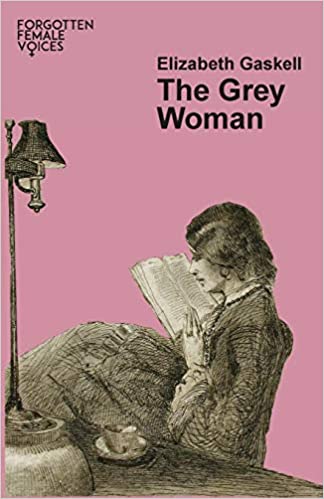
Review 1551: The Grey Woman

Here’s another book for RIPXV.

This novel opens with an unnamed narrator, a traveler in Germany, who meets a pale woman known as The Grey Woman. When he asks for her story, she gives him a letter she wrote to her daughter. This letter contains her story.

As a young girl in 1778, Anna Scherer is very beautiful. A miller’s daughter, she is invited to visit a school friend in Karlsruhe, where she stays with the Rupprechts. She is a shy girl, but she makes a conquest of her social better, a Frenchman named Monsieur de la Tourelle. She is pushed by Frau Rupprecht into receiving him and accepting his gifts, and the next thing she knows, she is engaged to marry him even though he makes her feel uncomfortable.

After their marriage, de la Tourelle takes her to his castle in the Vosges Mountains, where she feels that the servants spy on her. He makes her cut all ties to her family and tries to control her every movement, not allowing her even to go for a walk. The saving grace is Amante, the servant he hired to be her lady’s maid.

Aside from being a stern and controlling husband, de la Tourelle has a fearsome secret, which Anna and her maid discover by accident.

This novel is typical of the gothic genre that was popular in its time, except that it is much more believable than most that I have read, not including any supernatural elements. I took it to be one of Gaskell’s earlier works, and it may have been, because it was published the year of her death, in 1865. It is very short, easy reading, although the antique-sounding dialogue is a bit cumbersome. Luckily, there’s not much of it.

Related Posts

Tales of Mystery and the Macabre

The Castle of Wolfenbach

The Mysteries of Udolpho

Review 1550: Literary Wives! Alternate Side

Today is another review for the Literary Wives blogging club, in which we discuss the depiction of wives in fiction. If you have read the book, please participate by leaving comments on any of our blogs.

Be sure to read the reviews and comments of the other wives!

Cynthia of I Love Days
Eva of Paperback Princess
Lynn of Smoke and Mirrors
Naomi of Consumed By Ink

* * *

At first, I didn’t think I would be interested in the characters of Alternate Side, privileged and wealthy New Yorkers who live on a dead-end block on the West Side. Nora Nolan explains they are only wealthy because of the value of their homes, but their concerns are of private schools, servants, high-powered jobs, and other areas of privilege. However, I liked Nora and some of the other characters.

Nora loves New York and their little neighborhood. She is aware, though, that her husband, Charlie, is not as happy. His job in investments has not worked out as he hoped, and he is upset when he hears that his boss, Bob Harris, has approached Nora to run a new foundation he’s setting up. To avoid making Charlie upset, Nora takes a job for a woman who is opening a jewelry museum.

Charlie is also interested in the money they could make if they sold the house, and he often suggests other cities where they could live, but Nora, loving New York as she does, pays little attention.

Then things in the neighborhood are changed by an ugly incident. Charlie has scored a space in a small lot in the neighborhood. Before that, he engaged in the “alternate side” game of moving his car to another side of the street just in time to avoid a fine. But the lot proves to be a source of contention in which he is soon involved. People try to park there without permission, and occasionally the exit is blocked.

The hothead of the neighborhood is Jack, one of the two men on the block whom Nora doesn’t like. One day, Ricky, the neighborhood handyman, parks his van a little too close to the exit of the parking lot, although there is enough room to get out. Jack doesn’t think so, though, and becomes so angry that he takes out a golf club from his car and begins hitting the van. When Ricky runs up asking Jack to stop, he hits Ricky and breaks his leg.

The block begins to take sides. Nora, who thinks Jack is a horrible man, believes he is guilty of assault, while Charlie, who was there, says it was an accident. Then when Nora visits Ricky in the hospital, Jack’s wife Sherry—whom Nora likes—becomes angry with her. At the same time, Nora notices changes in the cleanliness of the area, and someone begins leaving little bags of dog poop on her front porch. She has a dog but always picks up his poop.

Quindlen makes the disintegration of the neighborhood a metaphor for the disintegration of Nora and Charlie’s marriage. She does this without too much drama, in a way that is interesting and well written. Still, I have to say as a minor caveat about the novel as a whole that I don’t have that much sympathy for someone whose biggest worry is whether her housekeeper will quit now that the kids have gone to college.

What does this book say about wives or about the experience of being a wife?

This is a nuanced depiction of two people whose needs are no longer the same. Nora seems cynical about Charlie rather than loving and disdains his business ambitions. As I’ve mentioned, she loves New York, while Charlie has grown to hate it. Nora acknowledges that Charlie would be more successful in any other city, but she isn’t interested in moving. In effect, she isn’t willing to compromise her own life for Charlie’s happiness any more than she has already done by turning down the job for Charlie’s boss.

Charlie also disdains Nora’s career, and later we learn that he has always felt like Nora’s second choice in mates, because she was deeply in love with her college boyfriend, James, who turned out to be gay. In fact, it is his fresh and honest personality that she turned to then and that stands in his way at work (although, another caveat, I wasn’t persuaded by Quindlen’s depiction of this personality and in fact had only a vague notion of Charlie’s personality). Charlie himself is turning too often to drink.

I loved this novel for showing an undramatic parting of the ways, a story about people growing apart. There is no deceit, no affairs, no big fights, just a realization that parting needs to occur and the beginning of new lives.