Review 1524: Drive Your Plow over the Bones of the Dead

Mrs. Dusczejko lives in a tiny Polish village near the Czech Republic, so remote that they get Polish or Czech police depending upon where in town they call from. In the early morning, her neighbor, whom she calls Oddball, comes to get her, telling her he has found their other neighbor’s body. Although she hates this other neighbor, whom she calls Big Foot, because he’s a hunter and she believes it’s a crime to kill animals, she helps him make the body decent before the police arrive. Later, it’s determined that he died from choking on a deer bone.

Mrs. Duszejko is an eccentric old lady who spends her time doing astrological charts, helping an ex-student translate William Blake’s writings into Polish, and writing letters to the police complaining about poaching. After a few months, though, her life is disturbed when men in the area begin dying in a series of bizarre killings.

This is an unusual crime story that’s not so concerned about the criminal case as it is about the activities of its characters. It is sometimes funny and always atmospheric. I really enjoyed it.

Related Posts

The Secret in Their Eyes

My Darling Detective

With Fire and Sword

Review 1523: Eleanor Oliphant Is Completely Fine

Eleanor Oliphant leads a life of routine. She’s worked at the same company for years, doing the same job. She stops at the same stores on the same days and buys the same things. She has no friends, and her only human contact besides work and shopkeepers is her Wednesday phone call from her abusive mother. She doesn’t quite understand many interactions and often offends people. She also has a scar on one side of her face.

At a rock concert, she decides she has seen the man for her, the lead singer. She begins preparing a systematic approach to attract him. Around the same time, she meets the new corporate IT guy, Raymond, who is kind to her.

I have commented before about how much I dislike the custom of comparing a book to another book in its publicity. I understand that publicists are trying to build on the other book’s popularity, but if I loved the other book, I am always skeptical that I will find any resemblance. In this case, the comparison kept me from reading this book because I felt that the book it was compared to, A Man Called Ove, was cheap and manipulative. I finally read Eleanor Oliphant because a friend recommended it.

I have to say that I found this novel endearing and touching. At first, I was afraid that all of its humor would be around Eleanor’s eccentricities, but the depiction of her is more nuanced than that. You grow to care about Eleanor and the other characters as her friendship with Raymond opens her up to other people. There are hints of a horrific past, and you eventually come to admire Eleanor’s courage and resilience.

Related Posts

Where’d You Go, Bernadette

Bitter Orange

The Death of Bees

Review 1522: A Single Thread

Violet Speedwell’s fiancé was killed during the First World War, and twenty years later she’s one of the many single women in Winchester. Even though there are so many, they haven’t gained any respect, it seems. Violet has managed to free herself from her difficult mother by arranging a work transfer from Southampton to Winchester, but so far she hasn’t made much of a life for herself.

When she stumbles upon a private ceremony in Winchester Cathedral, she gets interested in the work of the broderers, a group of women who embroider kneelers and seat cushions for the cathedral. She joins the group and soon has made friends with an office worker because of it. Although Violet is at first hyper aware of other people’s attitudes, through her new friendships she begins to become more accepting and take more risks.

I was reasonably interested in Violet’s journey, but this novel seemed unfocused to me. For example, although people are inconsistent, Violet’s extreme awareness of what other people think does not seem to mesh well with a woman who occasionally goes out to pick up men for sex. This characteristic seems much too modern for the woman Violet was at the beginning of the book, although the affair at the end is more plausible. Also, as to the two preoccupations of the novel, embroidery and bell ringing, it was as though Chevalier couldn’t decide which to write about. She did a better job at bell ringing than did Dorothy Sayers in The Nine Tailors, which I found incomprehensible (not the mystery, just the information about the bells), but I think that perhaps two focuses is one too many.

Maybe to Chevalier the cathedral said cushions and bells to her, but she wasn’t really writing about the cathedral. In any case, I’m trying to poorly express that I found this novel mildly interesting but also unsatisfying.

Related Posts

Burning Bright

Remarkable Creatures

The Summer before the War

Review 1521: The Yellow House

The Yellow House is not just a memoir. It’s more an excavation of self and belonging. Sarah M. Broom centers her explorations around her childhood home in New Orleans East. She begins with what she knows of her grandparents’ lives and her parents’ before marrying. Then she tells how her mother, Ivory Mae, purchased the yellow house when she was 19, the first house owned by the family.

At the time of the purchase, 1961, New Orleans East was touted as a promising area for expansion of the city. However, this promise never unfolded. The story of the slow crumbling of the neighborhood and house, culminating in Hurricane Katrina, is a symbol of the disenfranchising of all the poor inhabitants of the city, particularly those of color.

Although Broom was living in New York at the time of the hurricane, many of her family members had to be evacuated, and two of her brothers chose to ride the storm out. The storm destroyed the house, but it also rendered the family physically and metaphorically homeless. Almost more excruciating is the catalog of incompetence and obliviousness to the needs of its citizens by the city of New Orleans after the storm.

This is an interesting and eye-opening memoir about the population of the city that is usually ignored, and of course, it has ramifications for all such populations in all such cities.

Related Posts

Educated

A Mountain of Crumbs

Mountains of the Moon

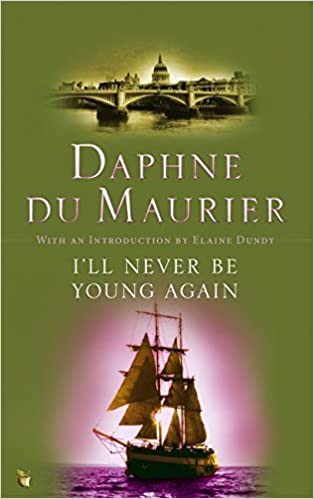
Review 1520: I’ll Never Be Young Again

Richard is a young man who has always felt his famous poet father disdained him. He is about to throw himself into the Thames when he is stopped by an older man named Jake. With Jake, he sets out as a common seaman on a Norwegian barque.

Richard is a very changeable, touchy, and selfish young man, but Jake says he will be all right, he’s just young. The pair go off traveling among the fjords and see Stockholm, with Richard changing how he feels about their experiences almost minute by minute. Ultimately, an accident sends Richard on alone to Paris, where he begins writing and meets a girl, Hesta.

I thought I had read just about everything by du Maurier, but I hadn’t come across this novel before. It is her second, and it certainly shows immaturity. Although du Maurier is good at description, this novel depends upon it too much, so that it is slow moving. In addition, the dialogue is quite crude. Du Maurier believed she had a male side that eventually led to an ability to write effectively from a male point of view, but I don’t think she’s quite there yet. She overdoes it.

Finally, Richard is so self-centered that its hard to find any sympathy for him, which made it difficult for me to finish the book. When he meets Hesta, for example, she is an independent young woman studying music. He manages to strip everything away from her so that she is totally dependent upon him. Then he takes her for granted.

So, I didn’t really enjoy this novel, although the ending lessened my dislike of it. I have to say, though, that Richard as a character is all too believable.

Related Posts

Castle Dor

Rebecca

Daphne du Maurier: The Secret Life of a Renowned Storyteller

Review 1519: Perdita

On holiday from his university job, Garth Hellyer takes on a task for the Longevity Project by calling on Marged Brice, who is supposed to be 134 years old. Garth can hardly believe she can be as old as she says she is, and although she has a birth certificate, she has no other form of identification. Marged says she would like to die, but she has to find someone to take care of Perdita.

Marged gives Garth her journals, and he begins to read the fascinating story of a girl attuned to nature, in particular to Georgian Bay off her home on the Bruce Peninsula of Ontario. The journals begin in 1887 and tell the story of the girl’s love for the bay and for George Stewart, an artist.

Meanwhile, Garth becomes reaquainted with Clare, a neighbor on the bay. She, it appears, has cared for him since they were teenagers, but he has never paid attention to her.

This novel is atmospheric with a strong sense of place, particularly the older story, and interesting, although I sometimes wondered when we would get to Perdita. It’s a long novel at 400+ pages, and it takes a long time to get to Perdita, but it kept my interest. If anything, the explanation of Perdita seemed a little unclear. I almost think I would prefer this as a ghost story, which it is not. It does have a faint ecological message.

I’ve said I’m getting tired of the split timeframe novel, but it didn’t bother me for this one and was, in fact, necessary. On the other hand, the historical portion of the novel was definitely the more important.

Related Posts

The Luminous Sea

Mortal Love

Melmoth

Review 1518: Chances Are

When Lincoln decides to sell the cottage on Martha’s Vineyard that has long been in his mother’s family, he thinks it’s a good opportunity to reunite with his friends from college, Mickey and Teddy. Although it’s more than 40 years since they spent Memorial Day weekend at this cottage, they’ve kept in touch all these years. Back in the day, they were the three students at an elite college who did not share their classmates’ blue-blooded, wealthy backgrounds.

Being on the island brings back memories of Jacey, the girl all three of them loved. She also shared that last Memorial Day weekend with them. Then she left and apparently disappeared from the face of the earth.

Lincoln, a successful real estate dealer who’s had some difficulties since 2008, begins looking into Jacey’s disappearance. Teddy, an editor who sometimes suffers from mental illness, is troubled by his memories of that weekend.

This novel explores friendship, difficult relationships, and even muses on fate. It is well written, as Russo’s novels always are, and engaging. I haven’t had as much enjoyment from Russo’s latest efforts as I did for his earlier ones, but this one comes close to being as good as, say, Empire Falls or Nobody’s Fool.

Related Posts

Empire Falls

Everybody’s Fool

Bridge of Sighs

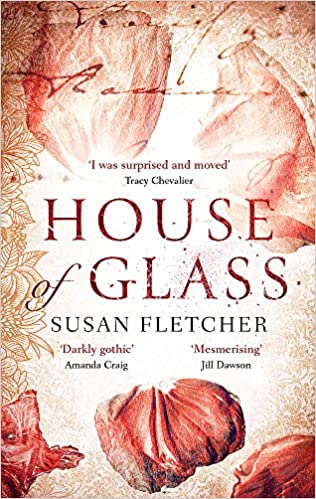
Review 1517: House of Glass

Clara is born with bones so fragile that as she grows, they can snap for the slightest reason. Her mother and stepfather keep her inside a home filled with padded corners until she is an adult. When they judge that she is finally able to come out, she is slightly misshapen through injuries that didn’t heal well.

Shaken after her mother’s death, Clara finds comfort in visiting Kew Gardens and learning about the plants. Her voracious curiosity tends her to spend a lot of time talking to the foreman of the glasshouse. Eventually, he offers her a job. A wealthy man wants to establish his own glasshouse to rival that of Kew. Will she take a job overseeing the planting and establishment of this garden?

Clara decides to take the job at Shadowbrook, where she is received by the housekeeper, Mrs. Bale. The owner of the house, Mr. Fox, is often away on business, and even when he is home he doesn’t like to be disturbed in his rooms on the upper floor.

Clara finds there are rumors in the village about the house and its former occupants, the Pettigrews. Mrs. Bale seems to be under some strain, and she eventually reports that the house is haunted by Vivenne Pettigrew. Clara doesn’t believe in ghosts and begins trying to learn about the Pettigrews. Those who are willing to talk about Vivienne seem to be describing a different person than she imagines from the few words spoken by those who knew her.

Ever since Fletcher’s marvelous Corrag, I have been waiting for her to write something as good. This novel comes very close. It starts out as a ghost story but goes much farther, exploring women’s role in pre-World War I society. It is atmospheric and wonderfully written, with an assertive and appealing heroine. I recommend it highly.

Related Posts

Corrag

Let Me Tell You about a Man I Knew

The Lace Reader

If I Gave the Award

Having reviewed 4321, the last of the Man Booker Prize shortlist for 2017, I find it is now time for my feature where I explore whether I think the judges got it right.

Sometimes, I will choose the most experimental book as my favorite, which in this case is a toss-up between Paul Auster’s 4321 and George Saunders’s Lincoln in the Bardo. Well, really, of those two, Lincoln in the Bardo, the winning book for 2017, is most experimental, so let’s look at it first. With the conceit of the dead being a sort of combination chorus and driver of the plot, and moreover that the preoccupations of the dead manifest themselves physically, I found myself first amused and then annoyed. Ultimately, I found it a little tiresome, so this is not the book I would have picked.

I found 4321 interesting in concept and the story more or less absorbing, but I also thought it was at least 100 pages too long. Everything about it was verbose, and really, what is that interesting about adolescent boys that you would have to explore in detail their every thought and obsession?

Exit West by Mohsin Hamid is certainly timely, with its story of immigrants, but I felt it was too concept driven. It is not so much interested in the experience of immigrating itself than in the isolation after immigration. It also did not do much with its characters.

Ali Smith’s latest entry, Autumn, has Brexit as one of its central themes. It is also much harder to define. I found it interesting and intellectually challenging, but it did not stick with me like some of the other books.

History of Wolves by Emily Fridlund, about a teenager who witnesses something she doesn’t understand, did stick with me more. I thought the novel was thought-provoking but also confusing and included a lot of things that didn’t pan out.

In case you didn’t figure it out, this time I’ve been going from my least favorite to my most favorite of the novels (well, not exactly, because I liked 4321 a little better than Exit West), so I end with what would have been my winner, Elmet by Fiona Mozley. It is deeply atmospheric and tells a compelling story. It may be the least experimental of the choices for 2017 (although History of Wolves isn’t really experimental either), but it resonated with me and has a distinctive narrative voice.