Review 1507: Catch and Kill

Catch and Kill is Ronan Farrow’s book detailing the NBC News investigation into claims of sexual harassment, abuse, and rape by Harvey Weinstein against numerous female actors and employees. This investigation resulted in Farrow’s New Yorker article that precipitated the Me Too movement. The book also details the obstruction of Farrow’s efforts to pursue the investigation by his own management at NBC, which turned out to have its own culture of sexual abuse and harassment and a system of cover-ups for this behavior.
Less well known is his story of surveillance by the Weinstein organization and of threats against witnesses and potential witnesses. Interestingly enough, he also mentions instances of similar claims against Donald Trump before his election, which, along with those against Weinstein were “caught and killed” by the National Enquirer and its affiliates.

Farrow is very open about his own not very helpful responses to his sister Dylan’s claims against their father, Woody Allen, and about his feelings of being spied upon as well as a certain amount of naiveté when NBC first began obstructing his investigations. This is an interesting account of a landmark moment in recent history.

Related Posts

In Pieces

Giving Up the Ghost

The Headmaster’s Wife

Review 1506: The Broom of the System

We first meet Lenore Beadsman in 1981 as a 15-year-old on a visit to her sister at Mount Holyoke. There, three guys from Amherst invade the girls’ dorm room and more or less sexually assault them, except Lenore, who leaves. The point of this part?

We meet her again working as a receptionist in Cleveland and having an affair with her boss, Rick Vigorous. Her great-grandmother has disappeared from a nursing home along with a substantial number of patients and some staff. The manager of the home, which is owned by Lenore’s wealthy father, has been asked to keep the incident quiet, but he asks Lenore to contact her father. She is unable to reach him, however.

I tried hard to read this novel, which I know is considered brilliant and was recommended by my brother, but I just couldn’t get on the same wavelength with it. Though I know it was considered innovative in its time (1987), it seemed dated to me, both in its bizarre zany humor, which reminded me of A Confederacy of Dunces, Tim Robbins, or Richard Brautigan, and in its treatment of women. I read about a quarter of it but saw myself completely lose interest when the cockatiel started spouting break-up lines. The novel just seemed too ridiculous, and I also felt it wasn’t going anywhere. The hyper-intellectual dialogue seemed completely unlikely. It also seemed pretentious.

Related Posts

The Sellout

You & Me

The Finkler Question

Review 1505: Cold Earth

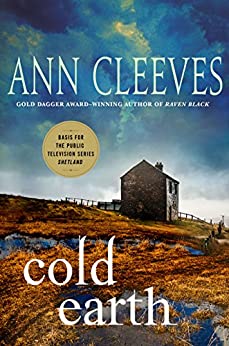
Jimmy Perez is attending the funeral of Magnus, an old man who was a recluse for years, when the hillside above the cemetery collapses in a landslide, taking out a cottage further down the hill. Jimmy thinks the cottage is unoccupied, but he goes to check. There he finds the body of a woman, apparently killed in the slide.

While Jimmy’s team struggles to identify the woman, the coroner lets them know that the woman was already dead inside the cottage. She was strangled. Jimmy must call in his boss, Willow Reeves, from the mainland. He finds he’s thinking of her more and more.

When the team thinks they’ve identified the woman as the American owner of the cottage, they have another setback. She is at work in New York and has no idea who might be using her cottage. In any case, the dead woman was using her name when she crossed over to the island.

As usual with Cleeves, this was an interesting but difficult puzzle. I have to say that there was so little apparent connection between the victim and the murderer that it was almost cheating. Also, the novel seemed to conclude a little too quickly after the build-up at the end. Still, I enjoyed reading it.

Related Posts

Thin Air

Blue Lightning

White Nights

Review 1504: The Curate’s Awakening

Thomas Wingfold is a curate who was brought up in the church but has never really considered what his beliefs are. When he is challenged by a cynical university man, George Bascombe, to prove that Christ even lived, he realizes he can’t do it. This sends him into a crisis of faith, during which he tries to form his own beliefs.

Helen Lingard is George’s cousin, a young woman who is described as someone who has never thought before. George comes to believe he can mold her thought to match his, in which case she might make a wonderful wife. However, Helen finds she needs someone to turn to when her beloved brother, Leopold, returns home in desperate trouble. After the curate begins preaching more heart-felt sermons about his search, she decides to confide in him.

This novel, written in 1876, is part of a trilogy called The Curate of Glaston, and it is meant to have a spiritual message. As such, it wasn’t a good choice for me, especially as it goes into great detail about Thomas’s conversations with his mentor and his sermons. It is perfectly readable, though, if you are interested in such a subject. I was, in fact, interested to find out what happened to Helen and Leopold, but although I tried very hard to finish this book, I couldn’t.

Related Posts

The Perpetual Curate

Salem Chapel

The Candlemass Road

Review 1503: The Battle Lost and Won

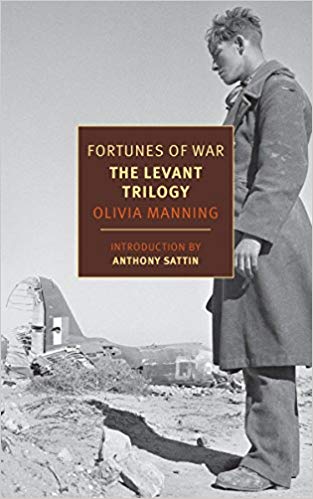
The second novel in Manning’s Levant Trilogy, The Battle Lost and Won begins one day after The Danger Tree ended. Simon Boulderstone continues his leave after finding out that his brother Hugo has been killed. He tags along with Harriet and her friends for an evening in Cairo, but when he hears that the big push is coming up, he returns to his unit hoping to be in on the action.

This book continues the pattern of its predecessor by alternating the points of view of Harriet and Simon. Simon becomes more closely involved in the second battle of El Alamein while Harriet becomes more frustrated with her husband Guy. As usual, Guy occupies all his time with projects and saves none for her, nor does he agree to anything she asks for. He is generous with anyone but her. Without any job or other occupation, she gets dragged into the love lives of her flatmates Angela and Edwina.

Like many middle novels, this one does not have its own climax but works its way to the final volume. Still, I am interested to see what happens to Guy and Harriet, and to some extent, Simon.

Related Posts

The Danger Tree

Friends and Heroes

The Map of Love

Review 1502: Wild Decembers

Best of Ten!
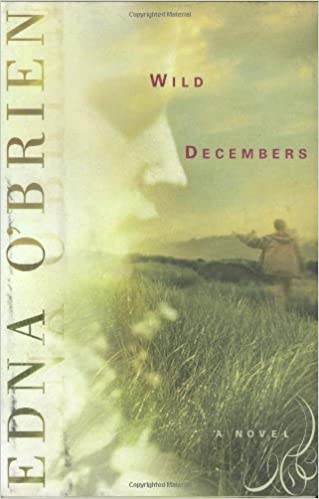
Although the Bugler and Brennan families have been feuding for generations, when Mick Bugler inherits land in the mountains of Western Ireland near the Brennans, he and Joseph Brennan are disposed to be friends. They are, that is, until Bugler goes behind Joseph’s back to lease the field Joseph has leased for the past 15 years. Joseph must take a huge loss on dairy cows that he can’t feed, but that doesn’t seem to faze the wealthy Bugler.

As the situation deteriorates, Bugler keeps getting the best of Joseph, however inadvertently. Joseph’s attitude is egged on by the villagers, who don’t like Bugler. It doesn’t help that Joseph’s sister, Breege, has fallen in love with Bugler, unaware that he’s engaged to a woman back in Australia.

This beautiful, moody novel winds its way to an inevitable sad end. O’Brien’s writing is gorgeous and evocative. This is quite a book.

Related Posts

Solace

When They Lay Bare

The Spinning Heart

Review 1501: Pachinko

In 1932, 16-year-old Sunja is fascinated by Hansee, a debonair Korean who lives in Japan but visits her small village in Korea to buy fish. Sunja has an affair with him, but when she learns she is pregnant, he tells her he has a wife and children in Japan but wants her to be his Korean wife. While realizing she will disgrace her family, she does not agree.

Isak, a frail Christian minister, comes to stay at Sunja’s mother’s boarding house on his way to Japan, but he soon falls ill with tuberculosis. Sunja and her mother Yangjin nurse him back to health. When he understands Sunja’s predicament, he offers to marry her to give her child a father. So, the couple leave for Japan, where the novel follows the fates of them and their descendents for the next fifty plus years.

At the time of the beginning of the novel, Japan ruled Korea, and the Japanese treated the Koreans as second-class citizens in their own country. In Japan, the Koreans are considered dirty and lazy and are forced to live in ghettos. They are discriminated against, and most are not allowed to become citizens even if born there.

This novel is an interesting story about the difficulties Koreans had living in Japan. It is the type of novel that is more interested in what happens to this family, though, than in creating well-rounded characters. I liked it but did not love it.

Related Posts

A Tale for the Time Being

The Vegetarian

Unbroken

Review 1500: Sofia Petrovna

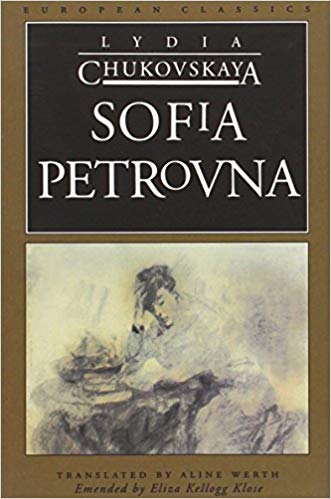
The heroine of Sofia Petrovna is an ordinary Soviet woman, not political but a happy worker at a publishing house. She has a son, Kolya, a promising engineering student who is a dedicated party member.

Then things begin to go wrong. She hears of the arrest of some doctors, one of whom she knows. They have been accused of sabotage. She can hardly believe it. He seemed like such a nice man. But if they say it is true, it must be. Then Kolya is arrested.

Lydia Chukovskaya’s novella about the Great Purge under Stalin was written in 1939-40, and she kept it hidden for years. A Soviet publishing company accepted it for publication in 1962, but when it was almost ready, backed out. It was finally published in Europe in 1965 after having been smuggled out of the country.

This is a deeply interesting and harrowing novella about what happens to an individual when the world seems to have gone crazy.

Related Posts

Memories: From Moscow to the Black Sea

The Ukrainian and Russian Notebooks

A Gentleman in Moscow

Review 1499: Tombland

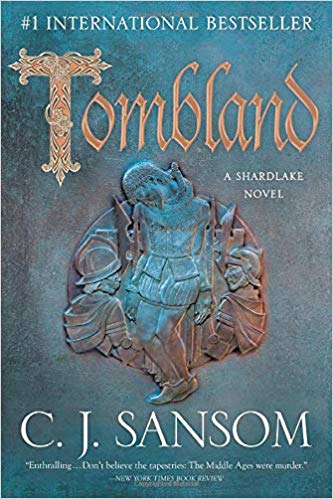
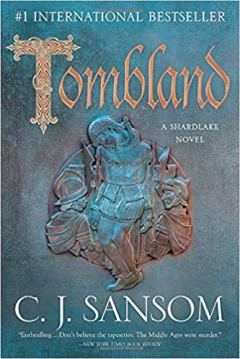
My understanding was that Lamentation was supposed to be the last of C. J. Sansom’s Matthew Shardlake mysteries; then Tombland came out. I had previously wavered about whether to continue with the series about the dour lawyer, but Lamentation was so good that I decided to read Tombland.

It is 1549. Edward VI is 12 years old, so the country is being ruled by Lord Somerset, the Protector. It has been a late summer, so crops are not expected to be good. Further, landlords have begun illegally enclosing common land for sheep, throwing their tenants off the land. As a result, thousands of poor are roaming the country. The Protector has promised that a commission will look into this problem, but so far nothing has happened.

Lady Elizabeth asks Matthew to look into a case where a distant relative, John Boleyn, has been arrested for murdering his wife, Edith. Lady Elizabeth does not wish anyone to know that Edith came to her for financial help and did not receive it. Edith had left her husband nine years previously, and no one knew where she went. Recently, she was found brutally murdered, upside down in the creek on her husband’s property. Lady Elizabeth wants to know whether John was guilty and if not, have Matthew find the murderer. If need be, she will try to get John a pardon. This notion is difficult politically because of the Boleyn connection, so it is a last resort.

Matthew thinks it is unlikely that John would have killed his wife and left her body so exposed, because he is the likely suspect and it negates his subsequent marriage to his mistress, Isabella. John’s twin sons, Barnaby and Gerald, seem like demented feral animals, but Matthew also believes they loved their mother. He finds Edith’s father, Gawen Reynolds, to be an angry, hateful man. Still, aside from a land dispute, he can’t find a motive for Edith’s murder.

This novel is 800 pages long, and John’s trial is in the first few hundred pages, so I was wondering about that as we approached the verdict without a solution to the crime. But, for this novel, the mystery is really an excuse, almost a McGuffin, for what Sansom is really interested in, the story of Kett’s Rebellion. Common men anticipating the promised commission begin making camps, rounding up landlords who have enclosed their land, and tearing down enclosures. Matthew, his assistant Nicholas, and his old friend Barak are taken up by the rebels when they go to visit a potential witness, Flowerdew. The last half of the novel is about this incident in history.

I thought this novel was interesting, but I also felt that if Sansom wanted to write about the rebellion, it might have been better not to wrap it into a mystery. In fact, I felt that the section dealing with the rebellion was a bit too detailed, taking up more than 400 pages, with a 50-page essay at the end of the novel. As a result, I didn’t think this book was as good as some of his others, particularly Lamentation. Sansom appears to want to be a straight historical novelist, and maybe he should just do that.

Finally, although I feel that some of the books in this series are outstanding, it has always bothered me that no one in them ever shows a vestige of humor, and Matthew has to be one of the most depressed characters ever.

Related Posts

Lamentation

Heartstone

Revelation