A Century of Books: How Am I Doing? January Report

In January, I foolishly decided to join Simon Thomas’s Century of Book Challenge, even though I knew that reading 100 books, one for each year in a century, from 1925-2024, would be tough because last year I only read 169. So, how am I doing? I was trying to finish by the end of December, but I clearly didn’t make it.

Here are the holes in my project with the books listed for this month below. If you want to see the details, see my Century of Books page.

  • 1925-1934: complete!
  • 1935-1944: complete!
  • 1945-1954: entry needed for 1948
  • 1955-1964: entries needed for 1955 and 1960
  • 1965-1974: complete!
  • 1975-1984: entry needed for 1981
  • 1985-1994: entries needed for 1990, 1991, and 1993
  • 1995–2004: entries needed for 1995, 1997, 2001, 2002, and 2003
  • 2005-2014: entries needed for 2005, 2006, and 2007
  • 2015-2024: complete!

I had a little confusion this month with the year 1980. I finished The Name of the Rose only to find that the year was already occupied by Tropical Issue, a renamed book by Dorothy Dunnett. However, I looked that book up again, and it actually belonged in 1983. So, I filled two slots at once.

Since December 25, I read the following books. The ones for this project are listed in bold. As you can see, I concentrated this month on books for this project. I completed books for two more decades:

  • How Green Was My Valley by Richard Llewellyn for 1939
  • The Feast by Margaret Kennedy for 1950
  • Sense and Sensibility by Jane Austen (from 1811, too early to count)
  • The Temptations of Big Bear for 1973
  • A Bend in the River by V. S. Naipaul for 1979
  • The Name of the Rose by Umberto Eco for 1980
  • The House of the Spirits by Isabel Allende for 1982
  • Howl’s Moving Castle by Diana Wynne Jones for 1986
  • The Shape of Water by Andrea Camilleri for 1994
  • Malice by Keigo Higashino for 1996
  • Island by Alastair MacLeod for 2000

As of today, it looks like I have 15 books left to read for this project, although it will take a bit longer for me to post all the reviews.
Review 2532: Beauvallet

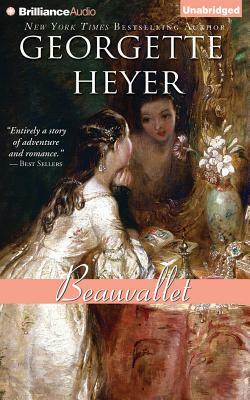
I am fairly sure I read Beauvallet to fill a hole in my A Century of Books project, but as has happened too many times already, once I had read it, I saw that I had already filled that hole. This book is one of Heyer’s earlier novels, and it is more of a swashbuckler than her other ones, showing a possible influence of writers like Dumas, Rafael Sabatini, or Baroness Orczy.

In 1586, Beauvallet is a privateer like his colleague Drake, a daring, laugh-in-the-face-of-death type guy. His ship is fired on by Don Juan de Narvaez, who wants to show off for his lovely passenger, Doña Dominica de Rada y Sylvan, who is traveling with her father, the ailing late governor of Santiago. They are returning to Spain because of his health.

Beauvallet takes their ship and puts the crew into a boat for shore. However, he promises to take Doña Dominica and her father to Spain, because of her father’s illness. Beauvallet immediately begins to court her. Dominica is at first hostile but eventually falls in love. When he drops them at a smuggling port in Spain, he vows to come get her within a year and make her his wife. Obviously, this poses difficulties because England and Spain are at war. Once Dominica’s father dies, things become worse because her relatives, into whose custody she falls, want her to marry her cousin for her fortune.

I don’t think this is one of Heyer’s best. Her main characters aren’t as appealing as usual, and I think her social comedies are more effective than her adventure novels. However, it’s always worth it to read Heyer. If you haven’t read her, I suggest you start with one of her Regency romances.

Related Posts

An Infamous Army

The Talisman Ring

The Toll-Gate

Review 2531: The Bell Jar

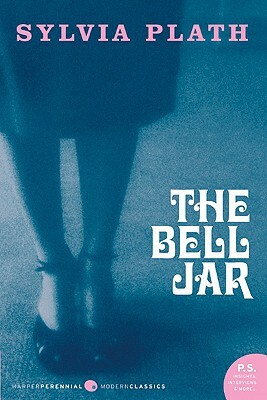
I’ve meant to read The Bell Jar for years, so when I saw it would fill a hole in my A Century of Books project, I got it from the library. I was also interested in it after reading the biographical fiction Euphoria, about Sylvia Plath and her husband, Ted Hughes.

In 1953, Esther Greenwood has earned an opportunity from a major fashion magazine, an internship with a group of other girls in New York. At first, she studiously applies herself to her assignments, but she becomes distracted by her fascination with Doreen, who seems more worldly than the other girls. She is tempted out by endless partying until Doreen gets a boyfriend and Esther has several unfortunate encounters with men.

She returns home from her internship suddenly adrift. She has not been accepted into a writing program, she doesn’t want to live with her mother, and none of the careers she can think of are appealing. Everything seems gray and uninteresting.

Of course, this is the story of Esther’s fall into mental illness, wrapped up in her inability to see a path for herself aside from marriage, which she clearly fears.

The novel is clearly based on Plath’s own experiences. It is clearly and vividly written and looks deep into the psyche.

Related Posts

Euphoria

Song of a Captive Bird

My Brilliant Career

13th Anniversary! Top Ten Books of the Year!

When I started blogging, I decided to list my top ten books of the year at my anniversary instead of close to the calendar new year so that I would have reviewed a year’s worth of books. It’s that time again. My actual anniversary is tomorrow, but that’s not usually a book blogging day for me. This year for perhaps the first time, I haven’t had multiple books by the same author to choose between. Also unusual for me because I read so many vintage books, most the books on this list were published recently. Unusual for me, too, is that half the books are written by men.

I was only reviewing three books a week last year, so that made the list of Top Ten books a bit shorter than usual but a little easier to choose from.

It was really an excellent year for historical fiction for me. Of the ten books I chose, six are historical, one is dystopian, two vintage contemporary, and one contemporary fiction. Of the historical fiction books, one was set in the 18th century, one in the 19th century, three in the 20th century, and one spans the time between the 17th century and the present.

So, here they are, in the order that I reviewed them:

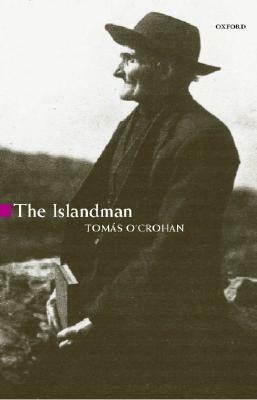
Review 2530: The Islandman

I read The Islandman to fill a hole in my Century of Books project. It is the memoir of a man who was born in the Blasket Islands in far Southwest Ireland, in 1856. The Irish edition of this book was a big seller in Ireland after it was published in 1929. The islands are now unpopulated as the government removed the last inhabitant in the 1950s.

The memoir is written as a series of anecdotes but in order of time. The existence of the inhabitants was a difficult one of mostly subsistence living. The people worked hard. Fishing was a major source of food, but scavenging shipwrecks was a source of subsistence and some income (money wasn’t much in use). Most families had a cow or two, hens, maybe pigs, and a donkey for hauling peat and seaweed. Patches of land were cultivated for potatoes and grain.

Although the people were poor, because of the fishing, they did well enough during the potato famine. However, they had many more difficult periods.

O’Crohan took to schooling but only had six years of school because there was no teacher on the island the other years. He of course spoke Irish but didn’t write it well until later in his life, when people started coming to him to learn the language.

This is an interesting account, especially as I’ve been interested in life on remote islands for some time.

Related Posts

A Stranger Came Ashore

The Unseen

This Other Eden

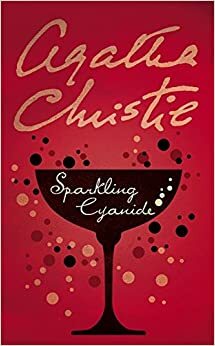
Review 2529: Sparkling Cyanide

This novel begins in an unusual way for Christie, with sections on six people, each of whom had a motive to kill Rosemary Barton. There’s her younger sister, Iris Marie, who would inherit a fortune. There’s her husband George’s secretary, Ruth Lansing, who would like to take her place. There’s Anthony Browne, whose secret Rosemary has discovered, that he is really Tony Morelli. There’s Stephen Faraday, whose career as a policeman will be finished if his wife learns of his affair with Rosemary. There’s Sandra Faraday, who already knows about the affair. Finally, there’s her husband, George Barton, who also knows about the affair. Almost a year ago, these six were together at a party when Rosemary suddenly died from cyanide poisoning.

Rosemary’s death was ruled a suicide. Now, nearly a year later, someone has mailed George letters saying that Rosemary was murdered, so George decides to set a trap by reconvening the same people at the same table. But first, he asks in his friend, Colonel Race. Race things it’s a foolish idea, and it is—for George dies that night, also poisoned.

Colonel Race teams up with Inspector Kemp to try to figure out what happened. Was Rosemary poisoned? Who wrote the letters? How could anyone have poisoned George without touching his drink?

I don’t think the approach used in this novel was very successful. The writing seemed oddly static. It is only when we leave the character bios that the novel snaps back to life, with Christie’s usual clever dialogue and interesting action. Then, it’s quite good and makes you forget the first part.

Related Posts

The Mirror Crack’d from Side to Side

The Man in the Brown Suit

Death on the Nile

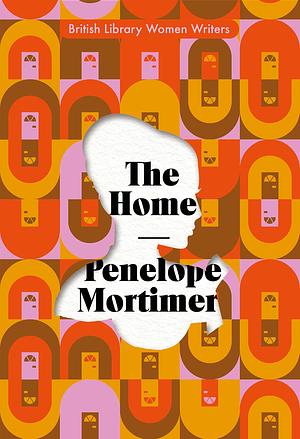
Review 2528: The Home

Eleanor is moving. She’s doing this because after 26 years of marriage, her husband is leaving her. Their marriage had been an open one, which translated to her husband Graham being serially unfaithful while she had two affairs that ended in friendship because she loved Graham. The last few years have not been happy, but still it’s hard for her to accept that he has left her—without really talking about it—for a woman who is younger than her oldest daughter.

Now she is trying to make a home for children who, all but one, are adults living on their own. Nevertheless, they return in ones and groups to stay with her.

Eleanor struggles in this novel with the idea of what home is, with loneliness, with her desire to mother children who don’t really need it anymore, with desire and love for Graham, and with the need for someone to take care of her. The novel looks unflinchingly at the situation that many middle-aged women found themselves in beginning in the 1970’s, when divorce rates began to rise. For example, Graham (who in my opinion is an unrelenting jerk) supposes Eleanor can get a job when she has been trained for nothing and has no work experience for the last 26 years except being a wife and mother.

This is sometimes a rough read but always an insightful one. Mortimer has an unfailingly observant eye.

Related Posts

The Pumpkin Eater

A Separation

The Women’s Room

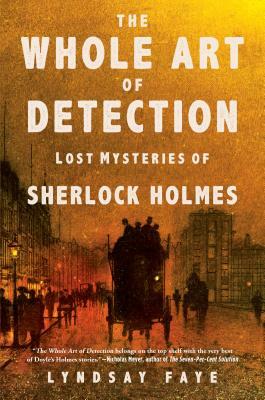
Review 2527: The Whole Art of Detection: Lost Mysteries of Sherlock Holmes

I knew this book might not be a good fit for me, because I usually feel that mystery short stories are too short to do much but pose puzzles, but more importantly, because I usually think it is unsuccessful when an author continues another author’s work. However, I have generally enjoyed Lyndsay Faye’s books, so I tried this one.

Purporting to be lost stories, notes, and diary entries, most by Dr. Watson but some by Holmes, this book’s 15 stories span the time from before the two met until 1902.

I am not going to run through a description of each story. Instead, I’ll comment on how authentic Faye’s stories seemed as stories about Holmes, keeping in mind that I haven’t read a Holmes story in years.

First, how much like the originals are Faye’s Holmes and Watson? Faye clearly is very familiar with the books (this applies to pretty much all the things I’ll look at, not just this one) because she makes lots of references to other cases and certainly has down Holmes’s characteristics. However, it seemed to me that her Holmes is more of a Benedict Cumberbatch Holmes than an Arthur Conan Doyle one. For one thing, he is much more expressive of emotions, more so even than Cumberbatch, especially as the book goes on. Watson seems himself, only even more flowery of description, but smarter. Also, like in the B. C. version mentioned above, his war service is stressed a lot more.

What about the mysteries? Well, you’re reading the words of a person who never once guessed the solution of a Sherlock Holmes story—until now. On the one hand, Faye’s stories are not nearly as ridiculously overcomplicated and unlikely as Doyle’s (spoilers for ACD!)—teach a snake to crawl down a rope? while dying, say “the speckled band” instead of “a snake bit me”? On the other hand, it seemed ridiculously easy to guess at least portions of the solution for most of the stories (unlike in Faye’s other mysteries—this is what I mean by mystery short stories—they’re either totally opaque or too easy). For instance, in “The Case of Colonel Warburton’s Madness,” I guessed immediately that (spoilers) gaslighting was involved and who was doing it. I just didn’t know how. Later in a story about identical twins, I knew immediately that the twins had switched.

Faye writes well and keeps up the interest. I just wish she’d write more of her own stuff.

Related Posts

Seven for a Secret

Back to the Garden

The Edinburgh Mystery and Other Tales of Scottish Crime

My Life in Books

Okay, what the heck, I needed to avoid doing the dishes for another half hour or so, so I stole this idea from The Chocolate Lady, who took the prompts from Anna Book Bel. The idea is to finish out the prompts with titles from books you read in 2024. They don’t have to be true or make sense, but you can’t repeat any. So, here goes:

(Apparently, I have participated at least once before, as evidenced by the logo above being in my files. But I don’t remember doing it.)