Here’s the prompt for Week Two of Nonfiction November:
Week 2 (11/4-11/8) Choosing Nonfiction: What are you looking for when you pick up a nonfiction book? Do you have a particular topic you’re attracted to? Do you have a particular writing style that works best? When you look at a nonfiction book, does the title or cover influence you? If so, share a title or cover which you find striking. (Frances)
What are you looking for when you pick up a nonfiction book? Do you have a particular topic you’re attracted to?
As far as the overall categories are concerned, I tend to gravitate toward history and biography, with a distinct slant toward reading about literary figures. However, there are certain periods of history that appeal to me (the Wars of the Roses and the Tudors, for example), and there are certain authors that I trend toward, usually buying any books that I come across. Here are some of those authors:
Bill Bryson
Doris Kearns Goodwin
David Grann
Erik Larson
Kate Summerscale
Claire Tomalin
Lucy Worsley
As you can see, several of these names are historians and biographers. I also like reading about art and true crime.
Do you have a particular writing style that works best?
Where writing style is concerned, I obviously want the book to be well written. In nonfiction, writing can get pretty academic and stuffy. If I’m not reading a book for a particular research goal, then I prefer the style to be more informal, maybe even with a touch of humor. However, Goodwin uses a more formal style, but it is eminently readable and not stodgy.
When you look at a nonfiction book, does the title or cover influence you? If so, share a title or cover which you find striking.
Yes, of course, the covers influence me to buy books. I’m not going to pretend otherwise. However, I’m more influenced by the author than the cover, usually. Titles not so much in nonfiction, because they are often stodgy or ruined by those stupid subtitles they all seem to have now. I think the cover that I liked best from my reading of the last year was the one for The Salt Path (note no subtitle).
It wasn’t until I was getting ready to post this review that I realized that at 152 pages it qualifies forNovellas in November!
I read Envy right after Dostoevsky’s The Gambler, and perhaps that was too much for me. The two short Russian novels have a lot in common even though they were written more than 60 years apart. They both feature young male narrators in a frenzy and easily offended. They both have long philosophical speeches that doesn’t seem to mean much. Olesha leans more into Absurdism, but Dostoevsky can be pretty absurdist himself.
Andrei Petrovich Babichev is a model Soviet citizen, a trust director in charge of food. He has literally picked our narrator, Nikolai Kavalerov, up from the gutter and given him a bed on his sofa. Andrei Petrovich is fat and self-satisfied, true, but Nikolai hates everything about him.
Then he meets Andrei’s brother, Ivan, a sort of buffoon who makes up ridiculous stories and also hates Andrei.
Andrei’s claim to fame is a huge communal dining hall he’s building, where food is supposed to be good and cheap. He has also produced a good, inexpensive sausage that he’s proud of. Olesha is clearly making fun of these accomplishments, and I don’t know how he got away with it in 1927 Soviet Union.
There is lots of talk about the New Man that Communism is going to produce but no sign of one. (Coincidentally, I am reading The Possessed by Dostoevsky right now, and there’s lots of talk about the New Man in it, too; only apparently he’s supposed to be produced by Nihilism.)
Thanks to the publisher for sending me this book in exchange for a free and fair review.
It’s my week for WWW Wednesday, where I answer three questions about my reading, and you can, too, if you like!
What did I just finish reading?
What am I reading now?
What will I read next?
I stole this idea from The Chocolate Lady, and it seems to be popular. If you would like, please let me know about your own reading life!
What did I just finish reading?
I have been reading for several projects lately, although my intention was to read as many books as possible for my A Century of Books project before the end of the year. The book I read last was supposed to fill a hole in this project, but alas, once I had read it, I realized that I had already filled that particular hole. I thought that by making a list of the holes I had left and marking them off as I bought or reserved books at the library, I would avoid that, and I have so far. Until now. Anyway, this book was Beauvallet, one of Georgette Heyer’s early novels, and it is a swashbuckler rather than a Regency romance. It was supposed to fill the hole for 1929, but I read The Islander a week or so ago, and that filled it first. It’s possible that this book appeared in a list for the wrong year on Goodreads. I’ve seen them make that mistake before.
What am I reading now?
The book I am reading now is The Stone Angel by Margaret Laurence, and it will indeed fill a hole in my Century of Books project. I thought I had read something by her before, but it turns out I have not. So far, it’s an interesting novel about the life in small-town Canada of a very old woman and about the perils of getting old. Although I am not as decrepit as this 90-year-old woman, it’s ringing some bells, let me tell you. Let’s hear it for filling the hole for 1964!
What will I read next?
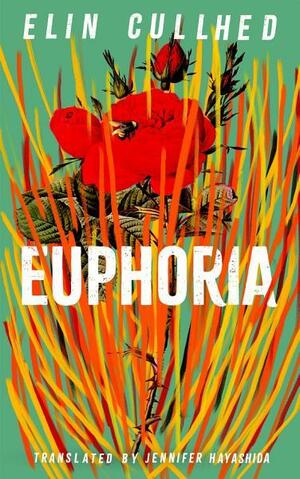
I generally read well ahead of my posts unless I decide to insert reviews for a special occasion that I hadn’t planned (as I will be doing this month, getting ready for Dean Street in December). After I finish a book, I write up a rough review in a notebook, and then I prepare my posts about a month ahead. Why am I telling you this? Because I have already passed the point in my prepared posts for my Literary Wives review of Euphoria by Elin Cullhed. Got to get going on that! After that will come a couple of books for Dean Street, so I won’t be back on my Century of Books project for a few books.
Take a moment and let me know what you have been reading or plan to read!
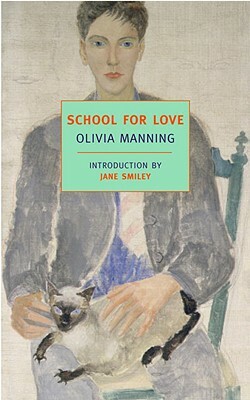
This year, I thought I’d try to pop some novellas into my October reading so that I could participate in Novellas in November, hosted by Bookish Beck and Cathy of 746 Books. I actually read School for Love for my Century of Books project, but was delighted to see that at 191 pages, it qualified for this one, too.
Felix Latimer arrives during a snowstorm in Jerusalem from Baghdad. He is newly orphaned, his father having been killed during the war (WW II) and his mother having recently died from typhoid. So, he is being taken in by a family connection, a woman named Miss Bohun who runs a boarding house, until he can get on a boat to England. The war is winding down, but at this point places are reserved for soldiers and government personnel.
Felix is in his mid-teens, but for a long time I took him for much younger. He has been taught by his mother to look for the good side of people, and he is disposed to be grateful to Miss Bohun, but readers see her another way right from the beginning. Although she runs a fringe religious organization and talks about good works, early on she sits down with Felix to figure his share of expenses and while adding up her household expenses, includes some things twice, then remarks that they should divide the costs in half even though she has another boarder (although admittedly, he is very poor and we don’t know how much he pays). Even so, his half of £36 mysteriously ends up at £21, leaving him pocket money of only a few pounds a month. (Later, she tries to raise the rent to take the full amount.) She also feeds the boarders poor and scant food.
At first, Miss Bohun confides in him and he is confusedly willing to take her part in her concerns. Although we learn that she has stolen Frau Leszno’s house and furnishings from her by putting the house into her own name to “protect” it, and actually uses Frau Leszno as a servant, Felix is ready to take Miss Bohun’s part because Frau Leszno seems so unpleasant. He likes Mr. Jewel, the other tenant who lives in the attic, but he still takes Miss Bohun’s part when she tells him he has to leave the next day, even though he has nowhere to go. (He ends up in the hospital.)
Miss Bohun is scheming, we find, to oust Mr. Jewel and move up into his attic herself so that she can rent her room to Mrs. Ellis, a young widow. Once Mrs. Ellis appears, Felix is smitten, and he begins to see the other side of Miss Bohun after taking in Mrs. Ellis’s sarcastic remarks. We eventually learn that Miss Bohun has promised Mrs. Ellis the whole house in the fall, a promise she has no intention of keeping. In fact, we realize all along that she has been trying to replace her tenants with more wealthy or prestigious ones, with the idea of getting more rent.
Although there is some action, most of the novel is concerned with the interactions among these characters and a few more. Felix begins to wake up to some realities.
The portrayal of Miss Bohun is a masterly one as we note her constant hypocrisies. As for love, although Felix begins with a crush on young Mrs. Ellis, it’s only really between Felix and a little cat, Faro.
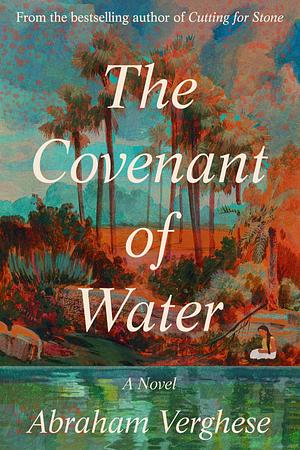
In 1900, a 12-year-old girl, later known as Big Ammachi, travels to meet her future husband and marry him. Almost immediately after her father died, her uncle married her off. She is lucky, though, because her thirty-some husband makes no effort to consummate the marriage until she is 19. In the meantime, she acts as a mother to his little son Jo Jo and takes care of the house.
Although they live in southwestern India, on the Malabar Coast, an area where people are constantly in boats or on the water, she notices that her husband and Jo Jo avoid the water. It is not until Jo Jo dies in a tragic accident that she learns some members of her husband’s family suffer from the condition of disorientation in water that often results in drowning.
In 1933 Madras, Digby Kilgour, a Scottish surgeon, arrives to take up a position at the hospital. Although he was at the top of his class, he has found that his origins as a poor Glaswegian have kept him out of the positions where he can work with a more experienced surgeon. At the urging of one of his professors, he has applied for a position in India.
He finds fairly quickly that his superior, Claude Arnold, is incompetent, so he begins spending time at another hospital, working with an Indian surgeon. He falls in love, however, and this ultimately results in tragedy, turning his life toward a different direction.
Verghese takes his time, introducing many characters and stories and taking the reader through two more generations to the 1970s. He moves between these stories, eventually linking them.
Verghese is an enthralling story teller. Although on occasion he gets a little too deep into medical topics, for the most part, he gets us involved, depicts vivid sights and smells, and carries us along with his tale. Like those of some other writers of Indian descent that I’ve read, his tales loop and branch, but they eventually converge and resolve.
Last year, I participated in Nonfiction November, and it was fun, even though I don’t read a lot of nonfiction. It takes a different approach than a lot of the challenges, which just have you reading books from the topic or time. Instead, each week it asks a series of questions about your nonfiction reading throughout the year.
Week 1 (10/28-11/1) Your Year in Nonfiction: Celebrate your year of nonfiction. What books have you read? What were your favorites? Have you had a favorite topic? Is there a topic you want to read about more? What are you hoping to get out of participating in Nonfiction November? (Heather)
What books have I read?
I only read 12 nonfiction books this year, which I suppose by any standard is a poor showing. I don’t want to list them all, but let me categorize them by overall topic.
Histories: 3
Memoirs: 5
Biographies: 3
Graphic nonfiction (graphic as in graphic novel): 2
Essays: 1
You can see that these numbers add up to more than 11. That’s because the categories overlap a bit.
What were my favorites?
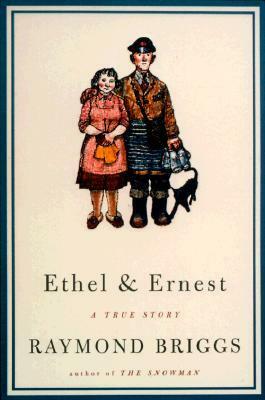
I read two literary biographies by Lucy Worsley and found her writing style so smooth, funny, and lively that I liked them a lot. These were Jane Austen at Home and Agatha Christie: An Elusive Woman. I also very much liked the charming graphic biography by Raymond Briggs, Ethel & Ernest.
Another book that stands out for writing style is the ironic but informative style of Thomas King in his book The Inconvenient Indian, about the history of broken treaties, evil government policies and so on toward the native peoples of Canada and the United States. I put this book in the essays category because it jumps from topic to topic, but it could also be in the history category and in current events, if I had a category like that. My review of that book hasn’t come out yet, but I compared him to Bill Bryson in writing style but with more sarcasm.
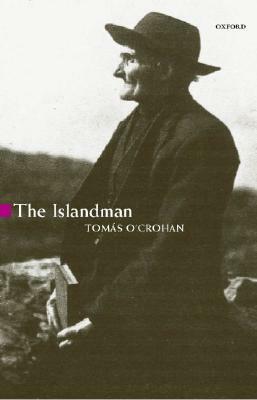
An interesting memoir for me was The Islandman by Tomás O’Crohan, translated from the Irish by Robin Flower. It is the recollections of a man born on the Blasket Islands off the coast of Southern Ireland in 1865, a very primitive existence.. Part of what I refer to as my “forced march through Ireland” 30 years ago included hiking up a hill on the Dingle Peninsula to look at the Blasket Islands, which have been unoccupied since the 1950s, when the Irish government removed the few remaining inhabitants.
It’s actually a little hard to answer this question, because I liked all of the nonfiction books I read this year. I always like David Grann, for example, and his history of The Wager in its last voyage was as compelling as usual.
Have I had a favorite topic?
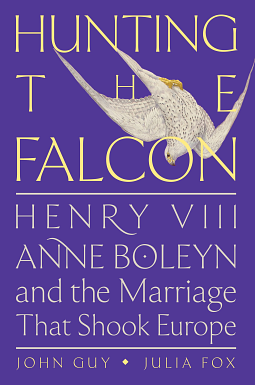
I think it’s clear from my list of books that I like books about people, so I have read a preponderance of memoirs and biographies, but also histories about people more than events. For example, I put under the histories and biographies categories Hunting the Falcon by John Grey and Julia Fox, about the early lives of and relationship between Henry VIII and Anne Boleyn. I haven’t reviewed this one yet, either.
I only read one book on this topic this year, but I also like true crime and books about topics like spiritualism (not in the philosophical sense but histories about it), so what could be better than a book that combined both? It’s The Haunting of Alma Fielding by Kate Summerscale. The crime in this one isn’t a murder or anything, just ripping people off.
Is there a topic I want to read more about?
Not specifically, although perhaps I would like to read more about the Halifax explosion, and I have so far only read fiction about that. I will probably just continue to read the types of nonfiction that I usually read. I don’t usually go out looking for nonfiction, but if I hear about a new book by a favorite author or read someone’s review of one that sounds interesting, I’ll look for it. I believe I heard of Hunting the Falcon in a review by Helen of SheReadsNovels.
I could also swear that I read another book on the Blasket Islands, but looking at the available ones online does not ring a bell for me, although there are several similar memoirs to the one I read this year. It’s just that I vividly remember the part about having to leave the island. Anyway, when I tried to figure out what book I read, I saw Island by Alastair MacLeod. I’m not altogether sure it is set on the Blaskets (in fact, I think they are not), but remote Irish and Scottish island life has always appealed to me, so I have put it on my reading list.
What am I hoping to get out of Nonfiction November?
Last year I made a list of other people’s nonfiction reads with the idea of reading some of them. I didn’t think I read any of them, but I did, The Salt Path by Raynor Wynn, Ducksby Kate Beaton, and I have The Dancing Bear by Frances Faviell on my desk! And today, I am going to check that the others are on my To-Read list on The StoryGraph, so I don’t forget them. (They are!)
Otherwise, it’s kind of nice to reflect back on what I have read. In addition, the entries from last year by other people made me think about nonfiction more and add 8 nonfiction books to my To-Read list.
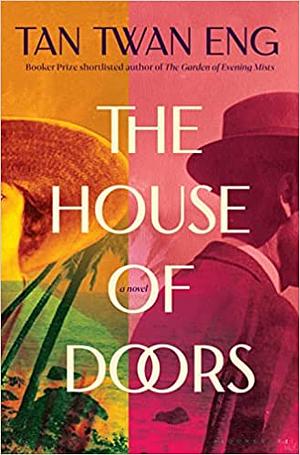
In 1947 South Africa, shortly after her husband Robert’s death, Lesley Hamlyn receives a package that has come a long way, through circuitous routes, to find her. It has no note and does not say who sent it, but it is a book written by Somerset Maugham more than 20 years ago.
This gift returns her memories to 1921, when she and Robert lived on the island of Penang and were visited by Maugham. The point of view shifts to that of Maugham, who soon learns that his broker has gone under and lost all his money. Although he is dreading his wife’s reaction from England, he is more afraid that Gerald, his secretary and lover, will leave him if he is broke.
He and Lesley begin to get to know each other. Eventually, she tells him about her life 10 years before. On the same day that she heard her best friend, Ethel, had been arrested for murder, she also learned her husband was having an affair.
Tan skillfully weaves the story of Lesley’s relationship with Ethel and the trial with her experiences resulting from meeting Dr. Sun Yat Sen, who has been attempting the overthrow of the Manchu dynasty in China. Lesley begins helping his organization translate its brochure and eventually has an affair with a Chinese man. They meet in the House of Doors.
I was interested in all these stories and although I know very little about Maugham, I spotted the seeds of more than one of his stories in them. For example, Ethel’s story is very similar to that of The Letter, which I am familiar with because of the movie with Bette Davis.
As much as I enjoyed The Garden of Evening Mists, I think I liked this novel even more. Although I read it for my Walter Scott Prize project, I probably would have read it anyway.
In January, I foolishly decided to join Simon Thomas’s Century of Book Challenge, even though I knew that reading 100 books, one for each year in a century, from 1925-2024, would be tough because last year I only read 169. So, how am I doing?
Here are the holes in my project with the books listed for this month below. If you want to see the details, see my Century of Books page.
1925-1934: entries needed for 1928
1935-1944: entry needed for 1939
1945-1954: entries needed for 1948 and 1950
1955-1964: entries needed for 1955, 1957, 1960, and 1964
1965-1974: entries needed for 1969 and 1973
1975-1984: entries needed for all years except 1975, 1976, 1978, and 1980
1985-1994: entries needed for all years except 1987, 1988, 1989, and 1992
1995–2004: entries needed for all years except 1998, 1999, and 2004
2005-2014: entries needed for all years except 2008, 2009, 2010, 2012, and 2014
2015-2024: complete!
This month my reading was slowed down by a couple of big honkers, especially The Possessed or Devils by Dostoevsky, which is too early to qualify for my project. However, as you can see, I really buckled down trying to fill the holes in my project. Since September 25, I read the following books. As we’re closing in on the end of the year, I decided to mark the ones that fill one of my holes in bold from now on:
On a terrible stormy night, the Greystone lifeboat crew is called out to rescue a fishing boat in danger. When they reach the boat, it is not a fishing vessel but a tender with a naked body in it. The body is that of Jem Rosco, a former local boy turned famous adventurer who has been staying in the village for a few weeks, saying he was awaiting a visitor.
Although no one knows who the visitor may be, Alan Ford, the father of lifeboat helm Mary, reports seeing a blond woman walking towards Rosco’s rented house in the early hours. However, Matthew Venn’s team can find no leads about the woman or the car that dropped her off.
Rosco’s past is proving hard to track. His apartment hasn’t been occupied for months, and no one seems to know if he has any surviving relatives.
One possible expected visitor, they find, is Eleanor Lawson, Rosco’s ex-flame who married someone else, Barty Lawson, a local magistrate and commodore of the yacht club. Eleanor claims Rosco was her true love, but Barty clearly despised Rosco from the time they were both boys. Barty doesn’t seem to be a likely murderer, though, as he is regularly driven home drunk from the yacht club.
Screenshot
Venn’s team is having difficulty penetrating the secrets of the village, which contains lots of families belonging to the Barum Bretheren, the cult Matthew grew up in but left. Then Barty Lawson is found dead, apparently having fallen off a cliff. Not only does Matthew think it’s unlikely that Barty was out strolling the cliff trail, but Barty’s body is found at Scully Head, near where the tender containing Rosco’s body was anchored.
I still don’t know what I think about the character Matthew Venn, who seems unknowable. Maybe I prefer Vera or Jimmy Perez because I first encountered them on television, where they immediately assumed distinct personalities. However, Cleeves knows how to keep her readers rivetted as far as plot is concerned.
That said, the motive for the crime in this one seemed absurd and the murders overly complicated. Still, the journey was enthralling.
I haven’t felt as if I had the time to fully participate in Russophile Reads’ Dostoevsky Read-a-Thon, but my original plan was to read some of the shorter works. (That’s boiling down to The Gambler.) I have already read all the long ones and reviewed a couple of them already, and I didn’t think I had time to read any more. Well, that was the plan.
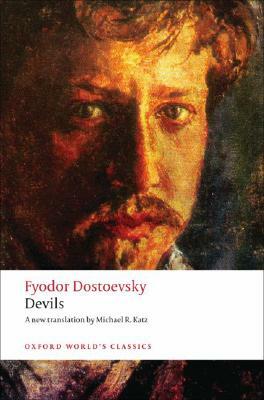
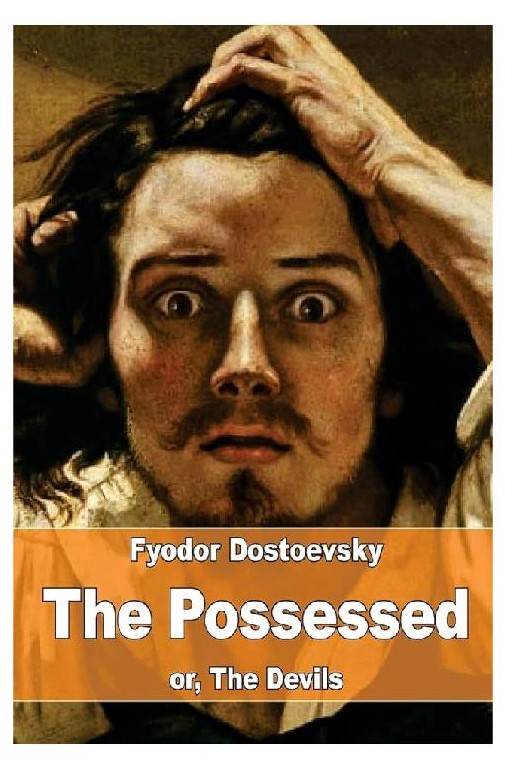
I could not remember Devils at all. For some reason, I got it into my head that it was about the same length as Notes from Underground, a relatively short work. So, I put a hold on it at the library. It already had four holds on it, which is unusual for my local library, and surprising. After a while, when only one hold had been released, I realized I wasn’t going to get it in time to read it for the project, so I began looking for a copy of it. That was when I discovered that Devils was once known as The Possessed, which I had in my own library (which means I have actually read it. I don’t put books on the shelves until I’ve read them). The newer editions of this book are all called Devils or Demons, apparently a preferred version of Dostoevsky’s title. And I have a Modern Library edition of the old Constance Garnett translation, which was all that was available years ago for most of the classic Russian translations (now considered inferior). And, of course, it’s more than 700 pages long with very small type. But I plunged in.
So, finally I get to my review. Let me say first that my spelling of names might seem eccentric now (especially Nikolay instead of Nikolai, which is much closer to the correct pronunciation), but since I reread the Constance Garnett translation, I am using her spelling.
The Introduction to my Modern Library edition of The Possessed says that although Dostoevsky thought he was a progressive, he wrote the book out of fear of nihilism and revolution. Until some events toward the end of the book, though, it’s hard to take the activities of the radical characters seriously.
The novel starts with two respected members of a provincial town. Stepan Trofimovich Verhovensky is a highly regarded scholar. However, for 20 years he’s been living under the patronage of wealthy and forceful Varvara Petrovna Stavrogin, supposedly writing a book but accomplishing nothing. He’s not exactly a parasite but rather an impractical, unworldly intellectual who has never had to take care of himself. He does manage to spend a lot of her money, but lately she’s been drawing in the expenses.
The action gets started (sort of) by the not quite simultaneous arrival of these two characters’ respective sons, Nikolay Vsyevolodovich Stavrogin (usually referred to just as Stavrogin) and Pyotr Stepanovich Verhovensky. Stavrogin is a sulky, charismatic young man who left years ago as a student and may be involved with a group of nihilists in town. He is also quite the womanizer, for we learn that both of Varvara Petrovna’s young friends, Liziveta Nikolaevna and the more dependent Darya Pavlovna, were involved with him during a visit to Switzerland. Pyotr Stepanovich has been gone even longer, as his father took no interest in him when he was a child and sent him away to be raised. He doesn’t seem important at first but turns out to be the catalyst for most of the action. He seems frivolous but is madly lying to and manipulating people for his own ends.
Both Stavrogin and another character named Shatov have become disillusioned with the revolutionary group that a group of the characters belong to, but Shatov, who has been running an illegal printing press, has asked to quit. Pytor Stepanovich has as one his goals, aside from sowing general confusion, to convince his group of five cell members that Shatov means to betray them, because he wants them to kill him. Pyotr Stepanovich, we learn, is an informer himself but also wants to avenge an insult by Shatov, who spat in his face back in Switzerland. Stavrogin doesn’t seem any more devoted to the cause, but Pyotr Stepanovich has secret plans for him. (There’s another character Pyotr Stepanovich wants vengeance against, and that’s his foolish father, Stepan Trofimovich.)
For quite a while, Dostoevsky seems to be setting us a farce, Stepan Trofimovich’s behavior is so clueless and absurd, the social machinations and gossip in the town are so ridiculous, and the radicals’ attempts to sow confusion are so silly. But violence kicks off thanks to the activities of Pytor Stepanovich.
Frankly, although I believe that Dostoevsky had a radical youth, his depictions of their meetings and their statements of belief seemed absurd. But I am no expert on on 19th century radicalism.
Everyone is in a frenzy at usual with Dostoevsky, and frankly, I had a hard time tolerating the many long, rambling speeches, whether of a religious or nihilistic subject. (And the nihilists, as well as others, sure seem to spend a lot of time talking about God.) This book was so long that by the end, when Dostoevsky has knocked off half the main characters, I was just skimming. Not my favorite of his works.
However, I was lucky enough, while poking around on the web, to find a multi-part article by Elif Batuman (author of The Possessed: Adventures with Russian Books and the People Who Read Them) about attending a 12-hour-long production of The Possessed in Italian on Governor’s Island. The first part is called “My 12-Hour Blind Date, with Dostoevsky,” and if you want to read all the parts, there are links to them, published by The Paris Review. It’s hilarious.











 What? Me Read?