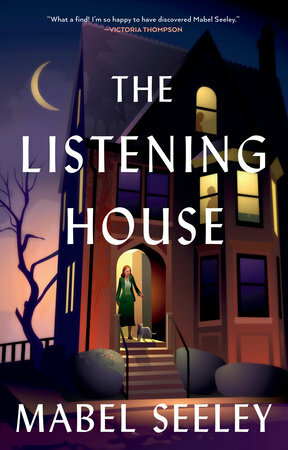
Review 2485: #RIPXIX! The Listening House

This old mystery, written in 1938, is a doozy. And, it qualifies for RIP XIX!

After losing her job through no fault of her own, Gwynne Dacres decides she has to move out of her apartment. She takes a couple of rooms in a rooming house owned by Mrs. Garr. Although the house is dreary, the rooms are spacious and nice—and available at a cheap rent.

Once she moves in, she is taken aback by Mrs. Garr’s behavior, popping in every time she moves furniture, and also her stinginess about hot water. But worse, at night she feels as if the house is listening for something.

Her rooms are on the ground floor with a door to the back overlooking a steep hill. One morning she goes outside and sees a dead body lying on the ground below the property. He is identified as Mr. Zeitman, a local gangster. The conclusion is that the area behind the house made an easy dumping ground.

Things keep happening, though. Gwynne sees a stranger dart down the stairs. She hears footsteps at night. Someone breaks in and is clearly looking for something.

Then Mrs. Garr goes on an outing to Chicago with her niece and doesn’t return. When her niece comes over, the residents find she may never have gone. She is finally found dead inside the kitchen that she always keeps locked.

Gwynne has gotten acquainted with another lodger, Mr. Hodge Kistler, who owns a local newspaper, and together they begin talking over the string of events. When Lieutenant Strom comes into the investigation, he begins to involve Gwynne because she keeps discovering things that his men have missed.

Then one night someone knocks Gwynne over the head.

Gwynne is 1930s smart and sassy. The story is fast-moving and it’s hard to know what’s going on. Once the investigation gets going, Mrs. Garr is connected to a horrible crime from years before, and connections begin to be made with some of the lodgers. This is quite a fun book, deeply entertaining.
Related Posts

The Iron Clew

The Circular Staircase

The Uninhabited House

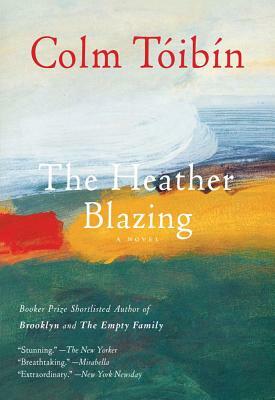
Review 2484: The Heather Blazing

Eamon Redmond is a judge in Ireland’s high court. When the novel opens, he is reconsidering his decision in a complex case and at the same time getting ready to leave for his summer house in Cush. The novel follows him back and forth in time as he examines his relationships with his deceased father and his wife.

His wife Carmel complains twice in the novel that he is distant, and she finds him unknowable. Toíbín presents us with a description of his everyday actions and key moments in his life, but we never understand how he feels about these things. However, there is a warmer ending to this novel, in which there seems to be human interaction in his future.

The descriptions of the Irish coastline, where Toíbín himself spent every summer, are beautiful. And sad, because the landscape is changing—the cliffs are being eaten by the sea.

This is Toíbín’s second novel. It is moody, sometimes a little funny, but mostly sad. As with Toíbín’s character, I felt a bit removed from it.

Related Posts

The Empty Family

Nora Webster

Brooklyn

WWW Wednesday

My intention has been to do WWW Wednesday once a month, the first Wednesday of the month, if I remember. What is WWW Wednesday? It’s an idea I stole from the Chocolate Lady, who took it from someone else, I think. For that day, you discuss what you are reading now, what you just finished, and what you plan to read next.

If you like, please comment with your own answers to these questions.

What did I just finish?

My last book was one I read to fill a spot on my A Century of Books project. Unfortunately, as has happened all too often, by the time it surfaced in my stack, I had already read another book from that year. However, I enjoyed it very much. It was School for Love by Olivia Manning, who is best known for her Levant Trilogy. This book is also set in that area, in Jerusalem at the end of World War II. It’s about an orphaned teenage boy who is stuck in Jerusalem awaiting a place on a ship back to England.

What am I reading now?

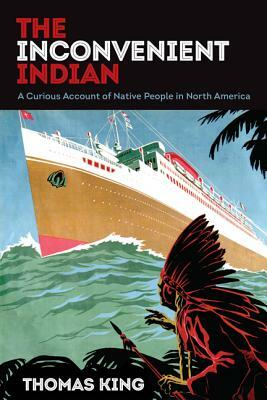
I found this book when I was looking for more by First Nations authors. Thomas King was recommended, but it seemed as though he mostly writes short stories, which I am not big on, just because I usually want more. I thought this book was a novel, but it actually turned out to be nonfiction, which I would have figured out if I had read the subtitle. It is more like a set of essays on subjects to do with the treatment of native populations at the hands of both Canada and the United States. I am finding it interesting and written in a loose, acerbic style. Like Bill Bryson only with more sarcasm. The title of the book is The Inconvenient Indian.

What will I read next?

I’ve got another book lined up to fill a hole in my Century of Books project. I was so delighted with Cassandra at the Wedding that I was glad to see Young Man with a Horn listed by the same author, Dorothy Baker. So far, I don’t think I’ve read another book for the same year, so that will be nice, too.

Since we are now in the last quarter of the year, I’ll probably be concentrating on trying to finish this project, to the neglect of my other projects and contemporary reading. But you know me, I like to mix it up!

Take a minute and let me know what you have been reading or plan to read.

Review 2483: In the Upper Country

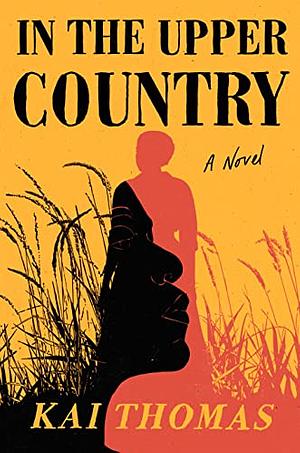
In 1850, Lensinda Marten lives in an all-Black town in Canada north of Lake Erie. She is a healer, but she is puzzled when she is summoned to the side of a slave catcher who has come after a group of escaped slaves that are hiding on Simion’s farm. Puzzled because the man is dead. When she hears that an old woman, one of the escapees, has been arrested, she realizes she is wanted to write a story about the woman for the Abolitionist paper.

She goes to visit the old woman in jail and finds that she isn’t ready to tell her story. Instead, she wants to swap stories with Lensinda. In doing so, a history of cruelty is reveealed, and the two women find connections between each other.

Thomas says in the Afterword that he heard and read many stories about Canada’s history of slavery, its treatment of First Nations people, and the War of 1812, but he could find no story that did everything he wanted. So, he chose this method of telling several stories that interface.

Although I found the information interesting and the settings and historical details to be convincing, I’m afraid his approach didn’t work that well for me. Just as I was getting interesting in Lensinda’s story, the novel appeared to move away from her. There were quite a few characters whose connections aren’t immediately clear, and I kept getting them confused as we jumped from story to story. Eventually, the stories connect, but that wasn’t clear for quite a while.

I read this novel for my Walter Scott prize project.

Related Posts

Washington Black

Beloved

This Godforsaken Place

Review 2482: These Old Shades

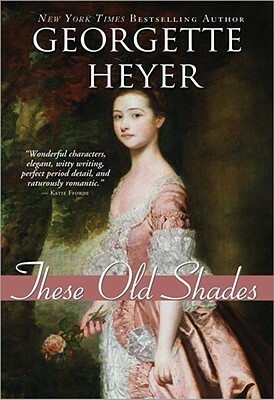
In trying to fill some of the holes in my Century of Books project, I noticed that These Old Shades, which I haven’t read for many years, would help. This novel is Heyer’s first, and it is also the first of four about the Alastair/Audley family. (The others are The Devil’s Cub, Regency Buck, and An Infamous Army.)

Late on a mid-18th century night, His Grace of Avon Justin Alastair is walking through a Paris slum when a boy collides with him. The boy is fleeing his brutish brother. On impulse, the Duke buys the boy, but it is clear he is up to something. He takes the boy home and makes him his page.

The boy, Léon, has fiery red hair and dark eyebrows. The Duke has noticed this resemblance to his enemy, the Comte Saint-Vire, and takes Léon around to embarrass him. However, he begins to have other thoughts about the resemblance because of Saint-Vire’s reaction.

Soon, though, it is revealed that Léon is really Léonie, disguised as a boy since she was 12. The Duke takes her to England and leaves her with his sister while he arranges a chaperone, announcing that he intends to adopt her as his ward. Léonie is starting to enjoy being a girl when she is kidnapped by Saint-Vire.

This is an adventurous, amusing romantic novel. The Duke is enigmatic and Léonie is charming and feisty. Although the Duke has a bad reputation and is known as Satanas, as his relationship with Léonie develops, he becomes more human. Some of the interviews between Saint-Vire and Avon struck me this time as a little unsubtle, but overall, it is a great start to Heyer’s career and I enjoyed it very much.

Related Posts

Regency Buck

An Infamous Army

The Nonesuch

Review 2481: Memorial

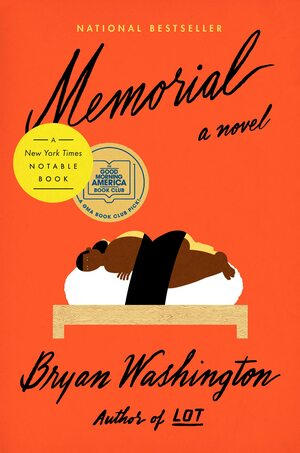
Benson is a young Black gay man living in Houston with his Japanese boyfriend Mike. When Mike’s mother is due to arrive for a visit for the first time in years, Mike tells Benson that his father is dying and he’s going to Osaka to be with him, leaving his mother with Benson, who has never met her before.

While Benson navigates the situation with Mitsuko, Mike’s mother, he also considers his relationship with Mike, which has been deteriorating lately. For his part, Mike must work through his resentment that his father deserted him and his mother when he was a teen. That, and Eiju’s general prickliness.

This novel explores the difficulties both men have had with their families and their relationships with each other. Each man also tentatively begins getting to know another gay young man.

Although this novel is supposed to be funny, the humor went right over my head. I found it perceptive and sometimes touching, although I am not a fan of explicit sex scenes. I read it for my James Tait Black project.

Related Posts

Real Life

Edinburgh

Murmur

A Century of Books: How Am I Doing? September Report

In January, I foolishly decided to join Simon Thomas’s Century of Book Challenge, even though I knew that reading 100 books, one for each year in a century, from 1925-2024, would be tough because last year I only read 169. So, how am I doing?

Here are the holes in my project with the books listed for this month below. If you want to see the details, see my Century of Books page.

  • 1925-1934: entries needed for 1928, 1929, and 1931
  • 1935-1944: entry needed for 1939
  • 1945-1954: entries needed for 1945, 1948, 1949, and 1950
  • 1955-1964: entries needed for all years except 1956, 1958, 1959, 1961, and 1962
  • 1965-1974: entries needed for 1967, 1969, 1971, and 1973
  • 1975-1984: entries needed for all years except 1975, 1976, 1978, and 1983
  • 1985-1994: entries needed for all years except 1987, 1988, 1989, and 1992
  • 1995–2004: entries needed for all years except 1998, 1999, and 2004
  • 2005-2014: entries needed for all years except 2009, 2010, 2012, and 2014
  • 2015-2024: complete!

Since August 28, I read the following books:

  • Maitland: Scenes from Scottish Life by Margaret Oliphant from 1851 (too early for this project)
  • Germinal by Émile Zola from 1885 (too early)
  • Dead Ernest by Alice Tilton from 1944
  • The Chateau by William Maxwell from 1961
  • Passenger to Frankfurt by Agatha Christie from 1970
  • Fifth Business by Robertson Davies from 1970
  • Charity Girl by Georgette Heyer from 1970
  • Tropical Issue by Dorothy Dunnett from 1983
  • Death of a Hollow Man by Caroline Graham from 1989
  • I’m Not Your Eve by Devika Ponnambalam from 2022
  • The Dark Wives by Ann Cleeves from 2024

Review 2480: Glory

I tried really hard to finish this book, as it is on my Booker Prize project list. I read more than half the book, but it was really not for me. Despite raves by critics, for me it was a DNF.

The novel fairly straightforwardly covers the recent history of Zimbabwe, beginning with the overthrow of Robert Mugabe but then going back in time to show the beginning of his reign of terror. The twist is that all the characters are animals. Everyone is giving the nod to Animal Farm, but Bulawayo credits a cultural background of using talking animals in stories. Both novels are satires and deal with the use of language, though.

Although using animals as characters does nothing for me, I also felt as if it did nothing for the book except make the characters emblematic—hence, undeveloped and one-sided. What was worse for me was being subjected to so much political and religious speech. The first chapter is 30 pages long and consists almost entirely of one speech after another lauding the Father of the Nation, known as Old Horse, on the occasion of the anniversary of the revolution.

In the next chapter we learn that Dr. Sweet Mother, his wife, intends to take the position from him. Only there is a coup by the vice president, Tuvius Delight Shasha, and at least in the next 200 pages, we never hear from her again.

Next, there is supposed to be a free and fair election, so everyone gets excited, but you can guess how that turns out.

I quit because the plot finally seemed to be moving a little with the return of a goat named Destiny who has been missing for 10 years, but then we got yet another chapter where the different views of the election are aired. I just couldn’t take it. I wasn’t enjoying one word.

This is going to be a book you either love or hate, although in glancing at some reviews, I was astonished to see a five-star review by a person who only read 50 pages and then blamed her dislike on herself. At 400 pages, this novel is extremely repetitive, going over and over the same tropes, sometimes repeating a word or phrase many times for emphasis, and using the word “tholukuthi,” which is a word for emphasis, sometimes several times in the same sentence.

The characters have no depth and there is no real character development. There are lots and lots of political speeches and sermons.

This novel is deemed important because of its look in the recent history of Zimbabwe. Maybe it would have been too difficult to read with people as characters, but it would have been much more readable and relatable for me.

Related Posts

We Need New Names

This Mournable Body

Afterlives

Review 2479: Classics Club Spin Result! Merkland

I have read and enjoyed all of Margaret Oliphant’s Carlingford series as well as her first novel and one other. Merkland (which has different subtitles depending on where I look at it: in my eBook it says “A Story of Scottish Life” and in my hardcopy it says “or, Self-Sacrifice”) is her second novel and shows her inexperience. I read it for my Classics Club Spin.

Although the main character of the novel is Anne Ross, it has two plots concerning the fates of two disgraced young men. At the opening of the novel, Anne learns from her unsympathetic stepmother not only that her older brother Norman Rutherford, long believed dead, may be alive, but that he is believed to be the murderer of Arthur Aytoun, who was found shot to death 18 years before. Anne is horrified when she learns that her great friend, Mrs. Catherine Douglas, has invited this man’s daughter, Alice, to stay with her, for she thinks Alice must hate her family.

Mrs. Catherine, for her part, is facing a dilemma. She has unexpectedly inherited some money and, being already wealthy herself, had intended to give it to hard-working but poor young James Aytoun, Alice’s brother. However, two old friends have come to her to ask for help for Archie Sutherland, the young local laird, who has fallen in with bad companions and is badly in debt. She decides in Archie’s favor, but before she can send him the money, he loses his entire estate gambling.

Mrs. Catherine sets about rescuing Archie by bringing him home to recover and arranging honest employment where he might eventually earn enough to buy back his heritage.

For her part, Anne discovers a letter that indicates Norman may be innocent of the crime even though the circumstantial evidence against him is strong. She makes it her goal to try to clear her brother’s name, especially important because Alice Aytoun has fallen in love with Anne’s young stepbrother, Lewis.

So far, so good. Two interesting plots plus other subplots such as the identity of a mysterious child and the fate of Rutherford’s estate in the hands of his dissolute English ex-companions. However, this novel is much longer than it needs to be, containing passage after passage of moralizing and sermonizing. Modern audiences may also be dismayed at its strong message against women’s rights. Further, the novel takes several chapters beyond the crisis to wrap up its loose ends, and by the end I was just skimming the paragraphs trying to finish.

A final note about the edition I read. I dislike reading eBooks, so even though I have Oliphant’s complete works on my iPad, I looked for a paperback version. Drat these print-on-demand books! I ended up with the edition shown above, published by Horse’s Mouth, that had all the evils except that it was corrected for misreadings by machine reading, which I have encountered before. No page numbers, no copyright or any other kind of information except a short biography and a list of other works, no formatting (the text starts at the bottom of page 2). Worst of all, it is only in about 6 pt. type at the largest, when anyone who knows anything about it knows that about the smallest you can go and still be readable is 9 pt.

Related Posts

Passages in the Life of Margaret Maitland of Sunnyside

Hester

A House in Bloomsbury