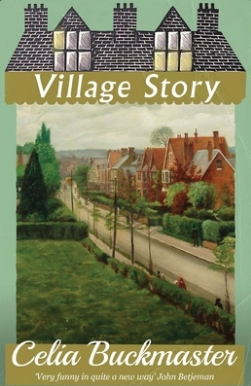
Review 2478: Village Story

Like Buckmaster’s Family Ties, Village Story presents us with lots of characters and we begin slowly to sort them out and differentiate them. Buckmaster, who frequently speaks directly to the reader, states that Mrs. Ethelburger is her heroine, but Mr. Noyce gets more attention.

The novel begins with the Darlingtons because they have the nicest garden in the village, but it’s only their daughter Linda who has a minor role in the story. Linda, we’re told, having been pronounced “gifted” in school, has been spoiled. Hoping to keep her out of trouble, Mrs. Darlington takes her up to the big house in the village, the Noyce’s house, and gets her a job as a housemaid. There, she proceeds to make trouble by telling everyone that Mr. Noyce has been making love to her in the drying cupboard. This is a lie. In fact, Mr. Noyce is hardly even polite to her. But from a 21st century viewpoint, this minor plot is troubling on lots of levels, not least of which is the author’s attitude toward girls’ education. We must try to view it in the context of its time, where these views were not unusual.

Next, we briefly meet Mr. Noyce, who led a cosmopolitan life before settling down in the village on the family estate after his father died. Mrs. Noyce is an artist, one whom Mr. Noyce believes could become great, so he encourages her to keep painting. Even though that’s what she wants to do, her relationship with Mr. Noyce is on edge, and she seems to be rude to everyone. Of course, the village thinks she shirks her household duties.

Mrs. Ethelburger isn’t much interested in household duties, either, and since she has several small children, her house shows it. We’re told she and Mr. Ethelburger love each other, but he isn’t much of a character in the novel, and she is just breaking off an affair with Mr. Browning, a young businessman who lives with his mother. Mrs. Ethelburger used to visit old Mr. Noyce, so one day she wanders onto the property—now much more private—and strikes up a friendship with Mr. Noyce.

Also in the village are the Sparks, the rector and his wife, an elderly couple. He tends to be studious while she has decided to become a Communist without really understanding anything about Communism.

The novel only has the suggestion of a plot, mostly about the party the Noyces decide to have and the fate of the Noyce’s marriage. But somehow Buckmaster ties it all in with the fate of the village itself. I was interested in the story but sometimes couldn’t remember who all the characters (many more than I described) were and wondered where it was going.
Related Posts

Family Ties

A House in the Country

Near Neighbors

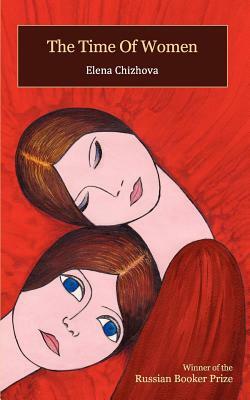
Review 2477: The Time of Women

In 1950s Soviet Union, Antonina has a child out of wedlock. She is lucky to be allotted a room in a house with three old ladies, making a deal with them to cook and clean if they’ll take care of the baby while she’s at work at the factory. The deal becomes even more important when they realize Suzanna isn’t talking at the right time. They all become terrified that the girl will be institutionalized or at least that Antonina will be forced to take her from one doctor to another.

So, Suzanna stays out of school and the grannies teach her to read and write and even to understand French. She imbibes Russian fairy tales as well as some strange beliefs and superstitions, and the grannies sneak her to church to have her baptized.

All goes well until a man at work, Nicholai, starts paying attention to Antonina. Although they have done nothing but have tea, the union people at work assume they are having an affair and begin pressuring them to get married.

Then the situation turns serious. Antonina has cancer. How will the grannies be able to arrange to keep Suzanna after Antonina dies?

This novel effectively depicts the poor living conditions and the uncertainty of life in Soviet Russia, where the state can become involved in the details of anyone’s private life. The narration moves from person to person, and a lot of action is conveyed in somewhat elliptical dialogue, so I wasn’t always sure what was going on. Dreams and stories are also given a lot of importance.

I found the ending, which is another story, fairly unsatisfying, though.

Related Posts

A Mountain of Crumbs

A Train to Moscow

Sofia Petrovna

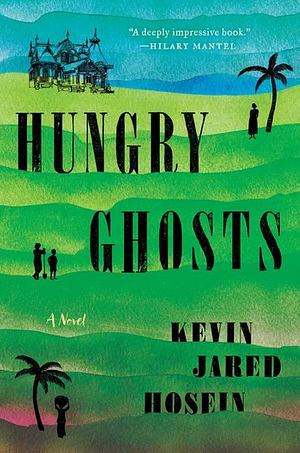
Review 2476: Hungry Ghosts

I feel safe in saying that if I wasn’t reading Hungry Ghosts for my Walter Scott project, I wouldn’t have read it at all. It is absolutely brutal.

In 1940s Trinidad, Krishna lives with his family in the Barracks, run-down ex-military barracks that are leaky and filthy, where five families live in each building, one to a room. Krishna’s father Hans has aspirations for better and insists that Krishna attend school in the village, but there he is mercilessly teased and bullied by other students as well as teachers. Krishna and his cousin Tarak have begun to hang with two twin brothers, Rudra and Rustrum, who have a bad reputation because their father was a murderer.

Hans works for Dalton Changon, a prosperous man. Changon’s wife Marlee has recently noticed some disturbing changes in his behavior—a heightened paranoia and a tendency to hallucinate. Then he disappears during a night when there’s a terrible storm.

Marlee receives a threatening note, so she offers Hans a large amount of money to stay on the property overnight as a guard. He accepts, thinking to save a down payment on a house. However, soon he is involved in a torrid affair with Marlee, not even returning to his home when his wife, Shiveta, is hospitalized for an infected foot.

Meanwhile, Krishna, defending himself from some village boys who try to drown Tarak’s dog, injures Dylan Badree. Because Dylan’s father is a policeman, Krishna is put in jail and is only released after Marlee’s intervention. But the boys’ feud begins to go in evermore dangerous directions.

This book contains graphic descriptions of drowned dogs and murdered dogs and the killing of a rabbit. Everyone in it who seems like a good person either becomes bad or is victimized. The language of the book is impressive, but sometimes Hosein uses such obscure words that it seems pretentious. Hosein certainly describes a vivid world, but it’s not a place I wanted to be in.

Related Posts

Fortune

A Brief History of Seven Killings

The Cold Millions

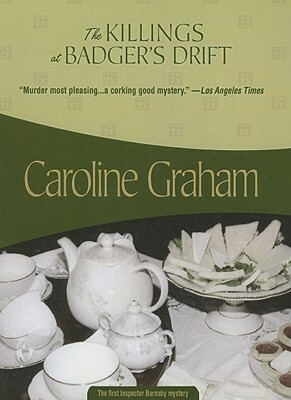
Review 2475: The Killings at Badgers Drift

Here’s another book that qualifies for RIP XIX!

As such a longtime fan of Midsomer Murders, I decided it was time to have another go at reading the books. I tried reading this one long ago, but I was so disappointed in the character of Sergeant Troy that I didn’t continue.

While Miss Simpson, an elderly ex-schoolteacher, is out in the woods looking for an orchid, she sees something she wishes she hadn’t. Later, she is found dead of an apparent heart attack. However, her friend Miss Bellringer goes to Inspector Barnaby because she thinks there are suspicious circumstances.

In investigating, Barnaby encounters a slew of colorful characters, all with secrets. There is Doctor Lessiter, who mishandled the death diagnosis, and his sexy wife Barbara as well as the doctor’s sulky teenage daughter Judy. There are the creepy Dennis Rainbird, an undertaker, and his mother. At the big house, Henry Trace, a wheelchair-bound middle-aged man, is preparing for his wedding to beautiful Katherine Lacey, 19 years old. This is a wedding not celebrated by either Trace’s sister-in-law, Phyllis Cadell, or Katherine’s artist brother Michael.

Barnaby begins turning up all kinds of secrets, and soon there’s another murder.

I’m so familiar with the TV show that it was hard to judge how difficult it would be to guess the solution. Sergeant Troy is hateful, but he didn’t bother me as much this time around. Warning that the text contains some homophobic comments, mostly from Troy.

I think Graham is a deft plotter and constructor of interesting characters. I note that the TV show chose to have the murder victims die in more spectacular ways than in the original novel.

Related Posts

Magpie Murders

As She Left It

The Killings on Jubilee Terrace

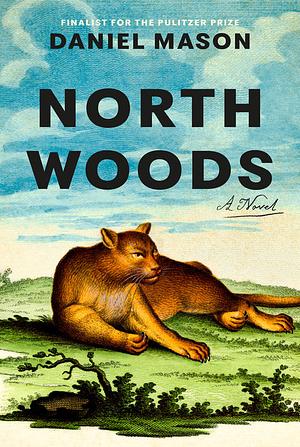
Review 2474: North Woods

In early colonial days, a couple flees one of the colonies into the wilderness of Massachusetts. There, they settle in a valley.

A settler with a baby is kidnapped by natives. When she becomes ill with fever, they leave her with an old white woman, who cares for her. But when white men come after her and plan to kill the natives—the old woman’s friends—she murders them. Before this happens, one of the men gives the captured woman an apple, and she drops the seeds on the ground.

An apple tree grows.

After the French and Indian Wars, Major Charles Osgood gives up his uniform and decides to grow apples. His friends think he has lost his mind. He searches all over until a child leads him to an apple tree near a ruined cabin in the wilderness. The apple is marvelous. He builds a house and takes cuttings from the tree to make an orchard, producing an apple called Osgood’s Wonder.

So Daniel Mason goes on relating the history of this plot of ground, from one owner to another. People die, are murdered, are conned, become ghosts, run mad, the wilderness recedes and then returns, the house is ruined and rebuilt, added to, ruined, rebuilt. Each section is linked to others by characters, coincidences, and place. Some of the incidents are funny, some fates are sad, some characters get what they deserve. Tales are punctuated by songs written from the grave.

I can’t really convey how much I enjoyed reading this unusual novel. It’s steeped in the beauty of the forest. It somehow manages to involve you despite some quite short (some longer) stories of its characters. You get worried about the fates of apple and chestnut trees! I loved this one. It did exactly what a book is supposed to do, pulled me into a different world and made me reluctant to leave it.

Related Posts

The Overstory

The Orchardist

Ulverton

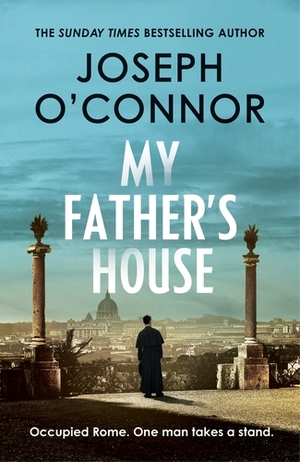
Review 2473: My Father’s House

Helen of She Read Novels has posted a note about Readers Imbibing Peril (RIP XIX), which I always forget about but usually participate in. As somewhat of a suspense novel, My Father’s House qualifies, so let this be the start of my participation this year. Most of the action is on Instagram at @PerilReaders, but I am not a great user of that.

My Father’s House is a book I read for my Walter Scott project, and it is also the first in O’Connor’s Roman Escape Line trilogy. It is based on the true story of the Escape Line, a group of people who helped captured soldiers and others escape from the Nazi occupation of Rome. In particular, it focuses on Monsignor Hugh O’Flaherty, one of the group’s founders.

After Rome is overrun by the Nazis, the Vatican gives Monsignor O’Flaherty a duty of ministering to British soldiers in Nazi captivity. Being an Irishman, he isn’t eager to do this duty. However, when he sees the condition of the men and the ease with which the Nazis break the Geneva Conventions, his manner to the Germans is such that he is removed from the duty. In this way, he comes to the attention of Obersturmbannführer Paul Hauptmann.

O’Flaherty then decides to form a group to help soldiers escape from the Nazis. The group becomes successful enough that Hauptmann begins receiving threatening communications from Himmler.

Much of the novel centers around a Rendimento, as the Choir, the central group that runs the Escape Line, calls their missions. The group has planned its mission for Christmas Eve (1943), thinking that Hauptmann won’t expect it, but in the last few days, Sam Derry, an escaped British major who would normally run it, is incapacitated. They begin training Enzo Angelucci instead.

The main focus of the novel is whether the mission will be successful, but the narration travels around in time and person via transcripts of interviews of several of the participants. In some respects, this structure is interesting, helping you get to know the other characters, but they didn’t all have distinct voices, and you didn’t get to know them well. There is also the disadvantage that the approach tends to interrupt the building suspense.

I thought the novel was very interesting in its subject matter. I’d never heard of the Escape Line. However, as the first of a trilogy, I’m not sure how much more there is to say, even though no doubt there are many adventures to recount. I didn’t feel as if I got to know most of the characters in the novel, not even the Monsignor.

Related Posts

Ghost Light

Shadowplay

Munich

WWW Wednesday

I stole this idea from the Chocolate Lady who stole it from someone else. What’s WWW Wednesday? It’s really just a check-in that I do once a month. I talk about what I just finished reading, what I am reading now, and what I expect to be reading next. That gives you a chance to do it, too! I wish you would!

What did I just finish reading?

I just finished the second of Caroline Graham’s Inspector Barnaby series, Death of a Hollow Man. I have long been a fan of Midsomer Murders, which is based on this series, although Graham only wrote a few books. I tried reading the series years ago but stopped after the first book because my ideas of the characters had been created by the TV show. In this book, there’s another shock, because Barnaby’s daughter Cully is depicted as acidic. However, I enjoyed the book, despite knowing the solution because of being so familiar with the TV series. Graham does a pretty brave thing in this book, using half the book to do the build-up and spending lots of time developing the characters before the crime.

What am I reading now?

I actually haven’t started reading the next book but have taken it out as I write, and I know absolutely nothing about it except it’s on my Walter Scott prize project list. It’s I’m Not Your Eve by Devika Ponnambalam, and I see it’s about the muse of Paul Gauguin. Well, that should be interesting. I’m looking forward to it.

What will I read next?

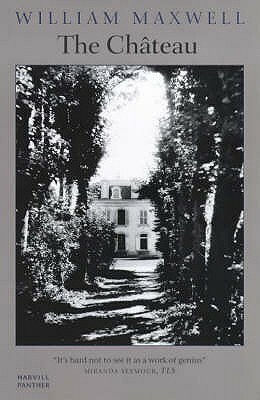
I went through my pile of To-Read books, and I took out all the books that will fill holes in my Century of Books project and put them in a little pile on my bed table. I’ve been trying to read one every other book. Death of a Hollow Man filled in 1989, and The Chateau by William Maxwell will fill in 1961. I’ve been reading lots and lots of books for the same years and quite a few published before the years my project covers, so I know I won’t make my deadline of reading all the books this year, but I will forge on! By the way, I know nothing about this book, including why I bought it!

What have you been reading, and what will you read next?

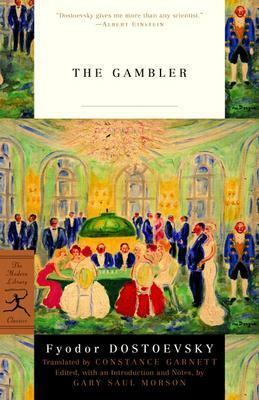
Review 2472: 2024 Dostoevsky Read-A-Thon: The Gambler

The Gambler is known as Dostoevsky’s most autobiographical novel, written in 26 days to foil the claims of an unscrupulous publisher. For Dostoevsky himself was a gambling addict and made a fool of himself over a girl called Polina when he was much older than his fictional alter ego. I read The Gambler for the 2024 Dostoevsky Readathon hosted by Russophile Reads. You can read his much more thorough evaluation of The Gambler here.

Alexey is a tutor for a Russian family returning at the opening of the story from two weeks’ leave to a German spa and gambling town. He works for the General tutoring his young niece and nephew and he is madly in love with Polina, the General’s older niece.

The General is broke, although he is madly pretending not to be. In fact, during his leave, Alexey has been pawning things for Polina. The General is in love with a Frenchwoman named Blanche, who is clearly after the money he expects to get when his aunt dies. Also hanging around are a Frenchman named des Grieux, whom the General has been borrowing money from and who has his eyes on Polina, and a rich Englishman whom Alexey likes named Mr. Astley.

As usual with Dostoevsky’s main characters, Alexey is in a sort of frenzy, this one of love for Polina. In attempts to gain some kind of equality with the other characters, he instead repeatedly shows his immaturity.

I have read most of Dostoevsky’s novels but I didn’t realize he could be funny until this one. The General hears that his aunt is ill and may be dying, so he keeps sending telegrams asking if she is dead in his desperation to seal the deal with Blanche. Suddenly, his aunt, called Grandmother in the novel because she is Polina’s grandmother, appears in town. And does she appear. She takes over the novel until she departs, making Alexey her escort to the casino, where she at first wins a lot of money.

Then loses it, but has the sense to go home. In the meantime, she disinherits the General. She is the most truly Russian character in the novel, with the other Russians trying to pretend they are cosmopolitan.

Eventually, we learn from Alexey’s experience what it’s like to be a gambling addict. For Alexey goes to the casino to try to win enough money to help Polina.

This is a short, sometimes funny, sometimes sad but always lively story about Alexey’s inability to understand what is going on, and about greed in its various forms. Note that the story contains lots of stereotypes in depicting people from countries other than Russia.

Related Posts

The Brothers Karamazov

The Idiot

The Kreutzer Sonata Variations

Review 2471: Literary Wives! Their Eyes Were Watching God

Today is another review for the Literary Wives blogging club, in which we discuss the depiction of wives in fiction. If you have read the book, please participate by leaving comments on any of our blogs.

Be sure to read the reviews and comments of the other wives!

My Review

Their Eyes Were Watching God is another reread for me. I looked over my original review and still agree with it. I can make one more comment. This time around I really tired of the dialect and was happy that it became less as the work went on. Writing novels in dialect was popular between the late 19th century and the early 20th, but it is sure hard on the reader. You can find my original review here.

What does this book say about wives or about the experience of being a wife?

Janie’s journey is a search for both love and selfhood, and it involves three marriages.

When she is a naïve 16, Janie’s grandmother arranges a marriage for her with Logan Killick, a much older farmer. Janie believes those that say married people learn to love each other, but very soon she finds this isn’t always so. Keeping house isn’t enough for him. He wants her to do heavy work around the farm. The last straw is when he announces his intention to buy a second mule so that Janie can plow, too. For Logan, a wife seems to be someone who can save him from hiring a farmhand. Janie puts up with a few months of this and then walks off with flashy Joe Stark.

Joe is a guy fall of ideas and ambition who becomes a powerful force in the all-black town of Eatonville. (On a side note, I didn’t understand until I read Dust Tracks on a Road what a big deal this town was.) Unfortunately, a trait Joe shares with Logan is that a wife should do as she’s told, so he doesn’t allow Janie to take part in any of the pleasures of living there. She must bind up her beautiful hair, mind the store but not take part in the conversations in it, and act stately, because she is the mayor’s wife. Both these husbands treat Janie more like a symbol of what they want than a person. There is also the issue of Joe’s verbal and sometimes physical abuse of her.

After Joe dies and she’s been a widow for nine months, she takes off with the much younger Tea Cake. She’s in love. When he takes her $200 and loses it gambling, she is only worried that he left her. He does consult her on plans and lets her do what she wants, and certainly he provides opportunities for fun, but he is also jealous and beats her once just for show. It’s a different culture and time, but I was fairly appalled at everyone’s reaction to the beating.

In the Afterword, Henry Louis Gates, Jr., points out that Hurston wanted to show characters who are real, not all good, not all bad. I guess that’s my way to understanding why Janie remains so in love with Tea Cake. And he does treat her as a person. But it seems to me that in the search of love and selfhood, Janie only gains selfhood once Tea Cake is gone.

Related Posts

Dust Tracks on a Road

Go Tell It on the Mountain

Red Island House