A Century of Books: How Am I Doing? May Report

In January, I foolishly decided to join Simon Thomas’s Century of Book Challenge, even though I knew that reading 100 books, one for each year in a century, from 1925-2024, would be tough because last year I only read 169. So, how am I doing?

Here are the holes in my project with the books listed for April below. If you want to see the details, see my Century of Books page.

  • 1925-1934: entries needed for 1926-29 and 1931
  • 1935-1944: entries needed for all years except 1935, 1936, 1937, 1941, and 1943
  • 1945-1954: entries needed for all years except 1946, 1947, 1952, 1953, and 1954
  • 1955-1964: entries needed for all years except 1956, 1958, 1959, and 1962
  • 1965-1974: entries needed for 1967, 1969, and 1973
  • 1975-1984: entries needed for all years except 1975, 1976, and 1978
  • 1985-1994: entries needed for all years
  • 1995–2004: entries needed for all years except 1999 and 2004
  • 2005-2014: entries needed for all years except 2009, 2010, 2012, and 2014
  • 2015-2024: complete!

Read since April 24th:

Unfortunately, too early to be counted, The Prophet’s Mantle by Fabian Bland (E. Nesbit) from 1885

Books that count:

  • The Shutter of Snow by Emily Holmes Coleman from 1930
  • Ferdydurke by Witold Gombrowicz from 1937 (DNF)
  • Westwood by Stella Gibbons from 1946
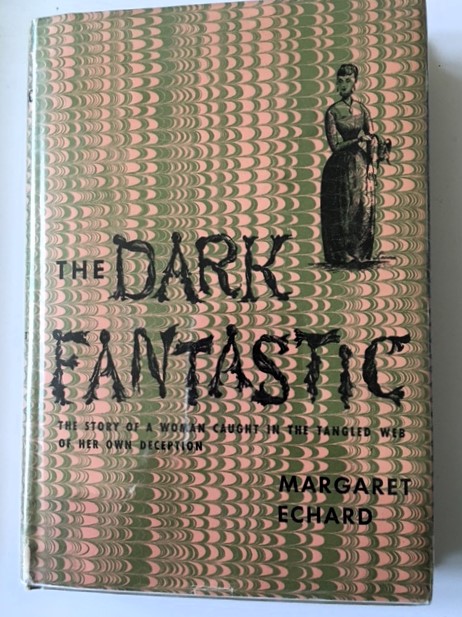
  • The Dark Fantastic by Margaret Echard from 1947
  • Spam Tomorrow by Verily Anderson from 1956
  • Cassandra at the Wedding by Dorothy Baker from 1962
  • Endless Night by Agatha Christie from 1968
  • Ibiza Surprise by Dorothy Dunnett from 1970
  • The House Next Door by Anne Rivers Siddons from 1978
  • Killing Me Softly by Nicci French from 1999
  • La Rochelle by Michael Nath from 2010
  • The Lotus Eaters by Tatjana Soli from 2010
  • Recipe for a Perfect Wife by Karma Brown from 2020
  • After Sappho by Selby Wynn Schwartz from 2021
  • Agatha Christie: An Elusive Woman by Lucy Worsley from 2022
  • The Collected Regrets of Clover by Mikki Brammer from 2023 (DNF)
  • The Wren, The Wren by Anne Enright from 2023
  • Weyward by Emilia Hart from 2023
  • North Woods by Daniel Mason from 2023

Review 2438: A Stranger Came Ashore

I don’t often read children’s books, but I’m a sucker for a selkie story. This fun little book is set in the Shetland Islands and based on their folk tales and customs.

There is a terrible storm on the night that the Hendersson family hears a knock on the door. A stranger arrives, Finn Learson, who seems to be a sailor from a wrecked ship in the bay. The Hendersson’s dog Tam growls at him, but the family takes him in.

That night, young Robbie Hendersson hears someone playing his father’s fiddle. It is making strange music that he’s never heard before. He goes to look and sees Finn Learson playing it. Tam is still growling, but Finn stares at him as if doing magic and Tam stops.

Robbie begins to suspect that Finn is a selkie. He remembers his grandfather’s tales of the selkie king, who lures girls away undersea to marry him and how they drown when they try to leave. He is afraid that Finn is after his sister, Elspeth. But no one believes him.

Robbie finally finds someone to help him against the selkie. But he’s almost as afraid of his helper as he is of Finn.

This book is probably meant for children around 8-12, and I think they would enjoy it, especially if they are interested in old stories. I liked how it managed to incorporate other old customs of the Shetlands.

Just as a side note, there was a Scottish singer named Jean Redpath. As a young woman I had several of her albums, and I believe it was a song she sang, “Lassie Wi’ a Yellow Coatie,” that referred to a but and ben. I had no idea what one was until I read this book, some fifty years after encountering the term.

Related Posts

Doll Bones

Sealskin

The Sea House

Review 2437: The Guest Room

Tess’s grief over her sister Rosie’s murder four months ago is taking obsessive forms. First, she wanders all over London late at night hoping someone will try to attack her, as Rosie was found beaten to death on Hampstead Heath. She has moved into Rosie’s flat and is harassing Rosie’s ex-boyfriend. In addition, she constantly calls the police detective on the case offering obscure clues.

Unable to face Rosie’s bedroom, Tess offers it as a B&B, letting it out short-term to help make the mortgage. She has also taken a job at the Barbican, where Rosie used to work.

Tess leases the bedroom for a longer term than usual to a potter named Arran. As she does with all her tenants, when they are away, she looks through their stuff. In Arran’s things, she finds a diary about his infatuation with a woman. At times, it sounds like he is stalking her.

Tess doesn’t know it, but someone is stalking her. Is it her annoying downstairs neighbor, Luke? Her geeky across-street neighbor, Elliott? Or someone else?

This novel moved along pretty well and kept me interested, but Tess isn’t exactly a likable heroine. I was less bothered by that than my feeling that it was fairly easy to guess who Arran is writing about and although I wasn’t absolutely sure, the possibility of one character being the murderer occurred to me, and I was right.

Related Posts

Dark Side

The Girl on the Train

Accidents Happen

Review 2436: The Dark Fantastic

I was surprised by the direction that this novel took, but I would have been less surprised if I hadn’t missed a note from the author. It explained that although the characters were made up, the novel was inspired by events that took place at her great-grandparents’ home in rural Indiana.

In post-Civil War Terre Haute, Indiana, Judith Amory is defying convention by attending Macbeth without a male escort. She has recently been dismissed from her teaching position for being too advanced in teaching George Eliot, so she can’t really afford to go, but she thinks of herself as refined and cultured and is excited to see the performance of Edwin Booth.

At the performance, she ends up breaking convention again by speaking to her neighbor, a young man who has journeyed in from his farm just to see the play. Judith finds him handsome, prosperous looking, and eager to discuss literature, perfect for her idea of a husband—until he says he has a wife and three children. Then he mentions that the nearby town needs a teacher.

Judith is not dismayed. First, she intends to have that job even though it’s a bit beneath her. Then, she intends to have that man, Richard Tomlinson.

How she gets her Becky Sharpish way is one thing, but what happens afterward is quite unexpected. This is a pretty good, darkish novel that dabbles in the supernatural. Echard is good at setting her scene and presenting the dynamics of the Tomlinson family. She’s good at depicting the main characters, although I lost track of some of the secondary ones. This is a good one for those who like darkish tales. Warning for the politically correct—the one Black character is depicted stereotypically as isn’t surprising for a novel published in 1947.

Related Posts

Dark Enchantment

The Unforeseen

The Uninvited

If I Gave the Award

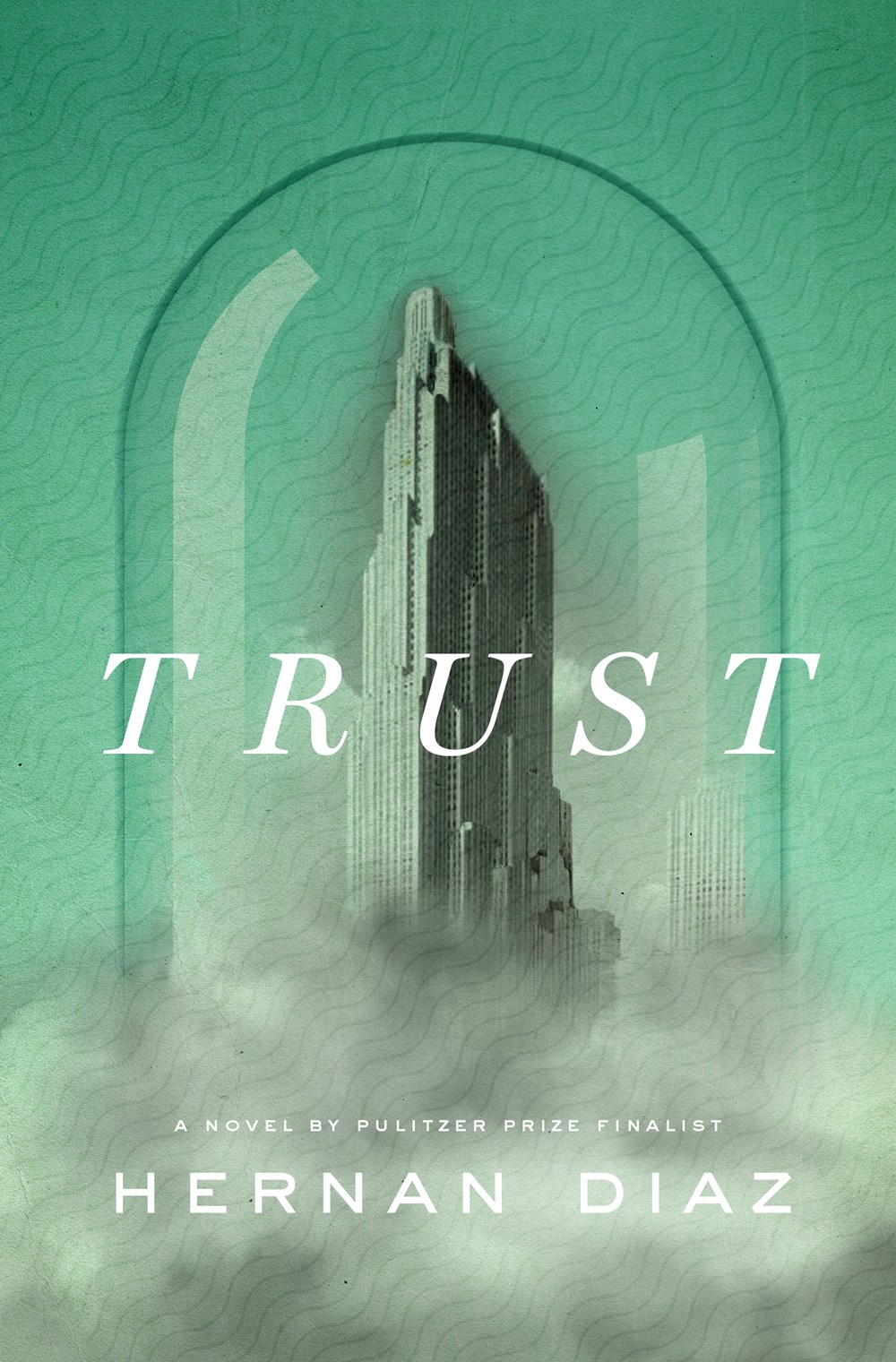
Since I just reviewed the last book on the shortlist for the 2023 Pulitzer Prize for Fiction, it’s time for me to evaluate whether I think the judges got it right. That year was an unusual one, because they awarded it to two of the three novels on the shortlist, Trust by Hernan Diaz and Demon Copperhead by Barbara Kingsolver. I felt that there were flaws in all three novels.

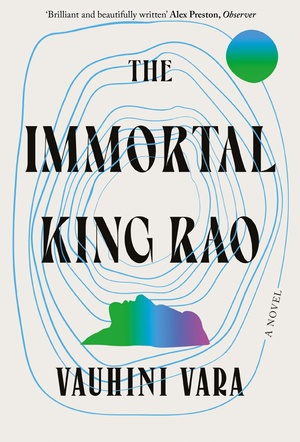
I think I’ll start where I often do, with the book I liked the least. That is with The Immortal King Rao by Vauhini Vara. It may be that I’ve just read too many dystopian novels this season, and they are not my favorite. But I also thought Vara tried to tackle too many subjects. This impressed some of the newspaper and magazine reviewers, but it made me feel the novel was too all over the place. It hits runaway technology, social networking dangers, climate change, the disintegration of national governments, not to mention dysfunctional families.

It’s harder for me to evaluate the other two. Although I am not a fan of novel rewrites, Demon Copperhead was a clever rewrite of David Copperfield, placing the old classic in a modern framework. However, Barbara Kingsolver is not really good at funny, which is one of Dickens’s hallmarks, and I missed the innocence of the original character. The story is gripping, however.

I think I’m going to go with Trust as the most ambitious of the three novels in terms of structure. Trust presents the story of a wealthy early 20th century tycoon and his wife three times. Although the first time, a novel about the couple, was commonplace, and the second retelling, an “autobiography,” by the tycoon, was so megalomaniacal that it was hard to read, the third section by the tycoon’s ghost writer is where the meat and the surprise of the novel lie. I likened this novel to Russian nesting dolls, and it’s the one that has stuck with me longest.

Review 2435: The Immortal King Rao

Just a note before I begin my review. I finally took up WordPress on their offer of my own domain, which came with the plan I was using. So, if you have a bookmark set to my blog, please change it to https://whatmeread.com. If you have subscribed to my blog by email, I’m sure your email links to the blog will be automatically redirected, and I suspect there are redirects for anyone who types in my old URL.

The timing for me in reading this novel was unfortunate, because I’m not much of a dystopian fiction fan and I had unfortunately read two others recently, accidentally but also because there are so many coming out recently. One of these novels was excellent, though. I read The Immortal King Rao for my Pulitzer Prize project.

In a prison in near-future Seattle, Athena Rao is writing her social profile as proof that she didn’t commit the crime she’s accused of. Athena is the daughter of the disgraced King Rao, a Steve Jobs/Mark Zuckerberg type guy who invented the Coconut—the first computer designed for the general public—and apparently the whole idea of social networking. He was disgraced and adopted a solitary life on an island in Puget Sound until he decided on a further achievement—to create a daughter from his deceased wife’s frozen embryos who is connected from birth to the Internet.

If you’re thinking mad scientist, this isn’t really the emphasis of the novel. Instead, we learn about King Rao’s early life in India and later life in America, we hear what happens when Athena decides to leave home, but we also learn of the disintegration of the world’s governments toward a planet run by an algorithm that is supposed to be fair, and of the immanent threat to the planet of climate change.

There is a lot going on in this novel, a fact that seems to have impressed critics. Personally, I was at first taken by the descriptions of Rao’s childhood in India, but tired of it once it became involved in family disagreements. I wasn’t very interested at all in Rao’s life as a student and then entrepreneur in America. I was most interested in Athena’s story and her attempts for her life to mean something. Although Vara handles everything very well, I think there is too much going on here for me.

Related Posts

The Memory of Animals

Our Missing Hearts

The Sunlight Pilgrims

Review 2434: Family Ties

The Monsoon family was once better off but now not so much. The family consists of Charles Monsoon, now an old man, and his younger wife, who seems to be always referred to as Mrs. Monsoon. They have two grown sons, George, who is a solicitor but prefers to work on a book about butterflies, and Stephen, who is a market gardener. Both sons live at home with their wives. Stephen’s is Vivienne, who helps Mrs. Monsoon keep the house, and George’s is Amy, who, now that her two boys are away at school, does nothing at all.

At first, the novel introduces so many characters that I kept confusing them. There are the Rockabys, whose daughter Lavinia is engaged to Mr. Swan, the doctor’s son, who has come to the village to handle his father’s estate. There are also the Tyces. Mrs. Tyce has become eccentric, so her son Rupert has been summoned to take care of some problems. Then there is the vicar and various other characters. However, the novel eventually settles down to being mostly about the Monsoons, particularly Amy.

Amy is finding herself dissatisfied, not wanting to be thought of as only a wife and mother. She wants some other identity but doesn’t really do anything about it except mope. The time period is not specified, but later it is clear that it’s 20 years or so before the time the novel was written in 1952, so there probably isn’t much she could do, and Mr. Monsoon and the other characters keep making remarks about a woman’s place. Then she meets Rupert Tyce, who is surprised to find her reading Baudelaire in French. Rupert fancies himself a cultured man about town, so they begin spending time together.

George and Amy drift apart, and eventually the question becomes whether the marriage will survive.

This isn’t a serious novel, though. The characters are eccentric, and most of them do very little. A lot of attention goes to a stinking ditch and the excess of pigeons on the property. Mr. Monsoon does less and less, and when he hands the household affairs to his sons, they are shocked at how he has mismanaged them. Mrs. Monsoon is unappreciated and keeps taking to her bed. It’s all fairly silly in an entertaining way.

Related Posts

A House in the Country

Much Dithering

Not at Home

How Many Top Books Have I Read?

Last week, the New York Times released a list of its top books since 2000. Glancing down at the titles of both the 10 Best Books from each year and the Notable Books, I realized that, at least for the first few years, I had read at least one book. So, I decided it might be fun to post the list of books I have read from each year. I only looked at the titles shown by their covers in the article, skipping the long lists of Notable Books.

2023

From the 10 Best Books:

None yet, but I have The Bee Sting and Northwoods in my pile.

From the 7 top Notable Books:

And I have The Covenant of Water in my pile.

2022

From the 10 Best Books:

From the 7 top Notable Books:

2021

From the 10 Best Books:

From the 7 top Notable Books:

2020

From the 10 Best Books:

From the 7 top Notable Books:

2019

From the 10 Best Books:

From the 7 top Notable Books:

2018

From the 10 Best Books:

From the 7 top Notable Books:

2017

From the 10 Best Books:

From the 7 top Notable Books

2016

From the 10 Best Books:

From the 7 top Notable Books

2015

From the 10 Best Books:

From the 7 Top Notable Books:

2014

From the 10 Best Books:

From the 7 top Notable Books

2013

From the 10 Best Books:

2012

From the 10 Best Books:

From the top 7 Notable Books:

2011

From the 10 Best Books:

From the top 7 Notable Books:

  • IQ84 by Haruki Murakami (Now, we’re to ones I read before I started blogging. So, no link.)
  • The Cat’s Table by Michael Ondaatje

2010

From the 10 Best Books:

From the top 7 Notable Books:

2009

From the top 7 Notable Books:

2008

From the 10 Best Books:

2007

From the 10 Best Books:

  • Tree of Smoke by Denis Johnson

From the 7 top Notable Books:

2006

From the 10 Best Books:

From the 7 top Notable Books:

2005

From the 10 Best Books:

From the 7 top Notable Books:

  • Beyond Black by Hilary Mantel
  • Harry Potter and the Half-Blood Prince by J. R. Rowling

2004

From Editor’s Choice:

From the 7 top Notable Books:

2003

From the Editor’s Choice:

From the 7 top Notable Books:

  • Any Human Heart by William Boyd

2002

From Editor’s Choice:

  • Atonement by Ian McEwan
  • Middlesex by Jeffrey Eugenides

2001

From Editor’s Choice:

  • The Corrections by Jonathan Franzen
  • John Adams by David McCullough
  • True History of the Kelly Gang by Peter Carey

2000

From the 7 top Notable Books:

  • The Amazing Adventures of Kavalier and Clay by Michael Chabon

Have you read any of these books? What did you think?

And here’s an added bonus,

My Favorites of the Books in This List

In the order in which they occur:

  • Bright Young Women by Jessica Knoll
  • The Dutch House by Ann Patchett
  • Educated by Tara Westover
  • Everything Under by Daisy Johnson
  • All the Birds, Singing by Evie Wyld
  • The Blazing World by Siri Hustvedt
  • The Goldfinch by Donna Tartt
  • Life After Life by Kate Atkinson
  • Bring Up the Bodies by Hilary Mantel
  • Thinking, Fast and Slow by Daniel Kahneman
  • A Visit from the Goon Squad by Jennifer Egan
  • Cloud Atlas by David Mitchell
  • Any Human Heart by William Boyd
  • Atonement by Ian McEwan

My Least Favorite

Again, in the order in which they appear, and there were some that I really hated:

  • The Vegetarian by Jean Kang
  • All That Man Is by David Szalay
  • The Sellout by Paul Beatty (DNF)
  • Beatlebone by Kevin Barry
  • Beyond Black by HIlary Mantel (DNF, sorry Hilary, I usually love you)
  • A Heartbreaking Work of Staggering Genius by David Eggars

Review 2433: Prophet Song

When I’m reading books for my projects, I don’t really look to see what they’re about, I just find them and read them. Prophet Song was for my Booker project, and I was dismayed when I realized it is a dystopian novel, since that is not my thing and I had recently read another one.

However, I soon realized I had read another novel by Lynch, Grace, a historical novel about the Irish famine, and I had forgotten how much I liked it. When you think of it, the famine was dystopian in its own way.

This novel rings lots of bells. It makes you think not only of Nazi Germany, but of Putin’s Russia, the Ukraine, and our own refugee crisis. Actually, refugee crises around the world.

The novel starts with a knock on the door. Ireland has recently voted in an ultra-right party, and the government has declared a sort of martial law, against what, it is not clear. A newly formed department, the GSNB, has sent officers to investigate a complaint about Larry Stack’s role as a union representative for the Irish Teacher’s Union. Larry answers that there is nothing wrong with him helping the union bargain for better pay and conditions, but it’s clear they’re trying to head off a planned strike with threats.

When Larry attends the strike, he doesn’t return. Nor can his wife Eilish find out what happened to him. Nor can the union solicitor. Normal rights have been suspended.

Eilish is left to care for her father, who is slowly succumbing to dementia, and her four children—Mark 16, Molly 15, Bailey 13, and Ben, a baby. Eilish goes on planning her Easter visit to her sister Áine in Canada, hoping that Larry will be free by then, but then Mark and Ben are denied passports.

Things go from bad to worse: Larry’s name is published in a list of subversives in the paper, and their house and car are vandalized. Mark receives a call-up to the military on his 17th birthday. Eilish’s sister keeps urging her to leave, but she won’t leave Larry and Mark, after Mark disappears to join the rebels.

This is an absolutely gripping story that keeps building and building. It is written in Lynch’s poetic prose, with long paragraphs that pull you along and create a sense of urgency.

Dystopian or not, this novel is excellent.

Related Posts

Grace

The Memory of Animals

American War

Review 2432: The Hunter

I always look forward to Tana French’s latest novel, and when it arrives, it jumps to the top of my pile. This one follows up on her last novel, The Searcher.

And really, it’s necessary to spoil the ending of The Searcher to explain this novel, although readers who haven’t read it may be able to get along without reading it. The main character of both novels is Cal Hooper, a retired detective from Chicago who moved to the countryside outside the Irish village of Ardnaskelty because he liked the look and feel of it. In the previous novel, Trey, a girl from a no-hope family, asked Cal to find out what happened to her older brother, Brendan, who disappeared. Cal did, and here’s the spoiler for that book—he had to make her promise not to take revenge against her brother’s murderers, who are all men of Ardnaskelty, although she doesn’t know which ones.

Now Trey is a teenager. Cal has been teaching her to do woodworking, and they have been buying furniture, fixing it up, and selling it and even occasionally making custom furniture. Trey’s family has been considered trash, but Trey herself is starting to earn some respect despite rough edges.

Then Trey’s father, Johnny Reddy, who abandoned his family years ago, returns. Cal dislikes and distrusts him on sight. Soon, the villagers find out that Johnny has a big plan for getting rich.

He has befriended a British man named Cillian Rushborough, a rich man whose people came from Ardnakelty. Rushborough is full of his grandmother’s story that gold used to be found on the mountain, and that it will have been swept down to the river. Johnny has convinced the villagers who own land along the river to go in together and salt the river with gold so that Rushborough will pay them to look for gold on their land. Cal isn’t invited to take part in this scheme, but he pushes his way in to keep an eye on Reddy. Once he meets Rushborough, he knows something else is going on.

Unfortunately, Trey sees her father’s scheme as a way to get back at the men who killed her brother. So, although she wants her father to leave, she starts helping him with it. Then, a body is found.

French usually pulls me right into her books, but for some reason, the setup of the scam kept losing my attention. Finally, though, things got moving and, as usual, French does not fail to fascinate.

Related Posts

The Searcher

The Witch Elm

The Trespasser