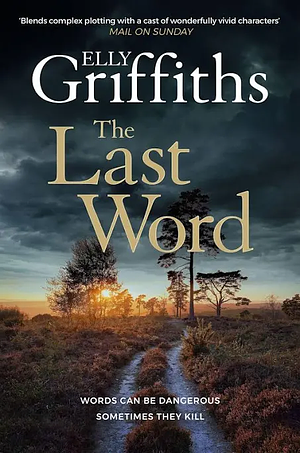
It’s the first Wednesday of the month, so it’s time for WWW Wednesday, an idea I borrowed from David Chazan, The Chocolate Lady, who borrowed it from someone else. For this feature, I report
What I am reading now
What I just finished reading
What I intend to read next
This is something you can participate in, too, if you want, by leaving comments about what you’ve been reading or plan to read.
What I am reading now
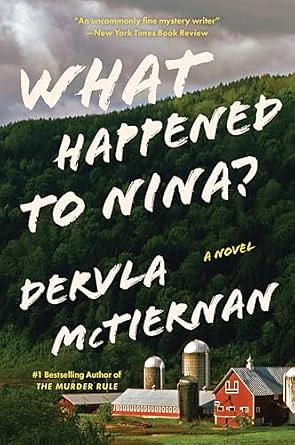
I am reading What Happened to Nina? by Dervla McTiernan. It’s a departure from the other books I’ve read by her, because it’s set in Vermont, U. S., instead of Ireland. It’s billed as a thriller, although so far (I’m two-thirds of the way through), it’s not showing any evidence of that. It’s more of a psychological novel about what happens when a young woman goes missing.
What I just finished reading
My last book was one I read for Literary Wives, review coming up December 1. It’s The Soul of Kindness by Elizabeth Taylor. It’s more of a community novel, like Middlemarch, even though it has a main character. It’s about the effect of a woman’s actions on the people around her.
What I will read next
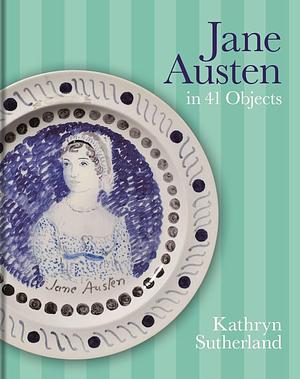
I just got this book out of the library, so I’ll probably read it next. It’s Jane Austen in 41 Objects, yes, nonfiction by Kathryn Sutherland. I read about it on another blog, and it sounded fascinating. I would say it is right in time for Nonfiction November, except that I probably won’t be posting my review until January or February.
It’s November, so it’s time for another yearly event, Novellas in November. I’ll start out this post with a recap of the novella reading I did during the year and finish with my first review. Since the beginning of the year, I’ve been tagging books with the word “novella” so that I don’t have to look at the page count for each. I think that since last year’s event, I have read quite a few more novellas than usual, and at least two that I read about during the event.
Novellas Read So Far This Year
Here are the novellas I have read up to this point, not counting the ones I am reviewing for this event, 20 of them!
I know that some people are counting short nonfiction, but I am not, and anyway, that would only add one more book to this list.
My Review
I decided to include this book as the first one for Novellas in November even though it is a few pages too long at 210. It is a book that wasn’t published for some years after it was written, during a time when Pym was considered past her prime before being rediscovered, and in its subtle way, it’s a little darker than she is known for.
Humphrey Boyce and his nephew James meet Leonora Eyre at a book auction when she nearly faints after a successful bid. Leonora is an elegant woman of a certain age, the kind then considered fragile. (I don’t think we have any of those anymore.) She is single and can be cold, and she is definitely snobbish, but then so are James and Humphrey. Both James and Humphrey are attracted to her, but although she is closer in age to Humphrey, who is in his 60s, she prefers James, in his 20s. (We know Leonora is “of a certain age,” but exactly how old is hard to say. Middle age came earlier even as recently as the 1960s.)
James is comfortable with Leonora, but there is no hint that he feels romantic about her, whereas when Leonora learns he has a girlfriend in the country, Phoebe, she sets to work to drive her away. While he is on a buying trip in Europe, she boots out her old lady tenant and moves his things into the attic apartment in her house, even taking some of them to decorate her own rooms. But he returns with an even more dangerous friend, an American named Ned. In the meantime, Humphrey is competing with James.
James is sweet-tempered and naïve, so he worries about hurting Leonora’s feelings, but she seems to me like an attractive spider. It’s ironic that she disdains her friend Meg for a similar relationship with a young gay man named Colin.
This novel is insightful into human behavior and slightly biting. It contrasts the new behaviors and mores of the young with the much more formal manners of the older characters. In fact, from the first few sentences, when stodgy Humphrey remarks that a book sale is no place for a lady, I wondered if I was in 1867 instead of 1967.
I received this novel from the publisher in exchange for a free and fair review.
For week two of Nonfiction November, the host is Frances at Volatile Rune. The prompt is Choosing Nonfiction: There are many topics to choose from when looking for a nonfiction book. For example: Biography, Autobiography, Memoire, Travel, Health, Politics, History, Religion and Spirituality, Science, Art, Medicine, Gardening, Food, Business, Education, Music. Maybe use this week to challenge yourself to pick a genre you wouldn’t normally read? Or stick to what you usually like is also fine. If you are a nonfiction genre newbie, did your choice encourage you to read more?
I’m not actively reading nonfiction this month unless something comes up in my pile. I usually use this month to read other people’s entries and get ideas for books to read in the future. I put a bunch of books on my To Read list last year, but so far, I have only managed to read a few of them. That doesn’t mean I don’t intend to read them.
As far as genres, although I tend to read mostly history and biography, particularly of literary figures, and a bit of true crime, I will read any topic if it seems interesting, even science, which in general I don’t have much interest in. About the only topics I won’t read are self-help and health, because I’m really uninterested in those topics. But psychology, for example, which is related, I find interesting. (I also won’t read business books, especially the “Ten Traits” type, because they are based on very little research and are generally stupidly thought through—and thank goodness, I’m no longer working.)
I thought I’d use this week to talk about some of the more unusual, for me, nonfiction books I read during the year. Unfortunately, I have only posted reviews of one of them so far.
Although I don’t tend to read about health, this year I read Animal, Vegetable, Miracle: A Year of FoodLife by Barbara Kingsolver. Now, granted, this book is partially memoir, but it also has lots of information on food topics and the importance of eating fresh food. I actually read this book because it filled a hole in my A Century of Books project that I was trying to get done last year. (It came over into this year by four months!) That’s because, although I tend to like Kingsolver and think she has written wonderful books, she can also be preachy. And she is, a bit, in this book. But it also has lots of information about food topics I hadn’t thought about, includes a bit of memoir, and has tasty sounding recipes!
Now, I like books about maps and mapmaking. I don’t often see one, but I think books about mapmaking and the related subjects, geography and geology, can be interesting. I haven’t reviewed it on my blog yet, but one of my best books, whenever it comes up (it may not make it until next year) will be Pocket Atlas of Remote Islands: Fifty Islands I Have Not Visited and Never Willby Judith Schalansky. This is a lovely book that I read about on someone else’s blog. I’d like to give them credit, but I can’t remember who they are. (I did a quick search hoping a familiar blog name would pop up, but it didn’t, although I saw lots of copies for sale on eBay, surprisingly.) This book is interesting not just because of the islands Schalanksy chooses to talk about but also because of the things she chooses to tell about them, including a topographical map, one story about each place, and the distance from other locations. This is probably the most unusual book about maps I have ever read.
Finally, another as yet unreviewed book for me is Fenwomen: A Portrait of Women in an English Villageby Mary Chamberlain. This is a sociology study from the 1970s, when feminism was just starting to make inroads in academia, but it was also the very first book published by Virago, and its reception was fairly astonishing, at least it would probably seem so to people nowadays. It simply interviews as many women in a small village in the fens as it can about their lives, their work, and so on. The updated version that I got includes an Introduction from 2010 that talks about what happened when it was published and includes about twenty pages of beautiful photos at the end.
I’m looking forward to getting new ideas for nonfiction this year.
Why have I never heard of Celia Fremlin before? This book is great! When I first read a review of it last year, I could only find an expensive used copy, but another blogger this year (sorry, I don’t remember who) set me looking again, and I found an inexpensive set of three novels, including this one.
Meg gets an urgent message from her older sister Isabel asking her to drop everything and come see her at a vacation caravan site on the seaside. The telegram simply tells her that Mildred, their much older half-sister, is in trouble.
After talking it over with her friend, Freddy, Meg travels to the run-down caravan park to learn that Mildred’s problems have to do with Uncle Paul. Fifteen years ago, when Meg was a child, Mildred married Uncle Paul, and they spent their honeymoon in a cottage just a few miles away. It turned out, however, that Uncle Paul was not only already married but he was wanted for attempted murder of his wife for her money, and Mildred was also wealthy.
Now it is the end of Uncle Paul’s 15-year sentence. Mildred seems to think he will be coming to get his revenge, but she has perversely rented their old holiday cottage.
Both of Meg’s sisters seem permanently distressed. Isabel worries constantly about her husband Philip’s reaction to everything, while Mildred is often alarmed enough to scream. Meg talks Mildred into returning to town and looking for different lodging, which she finds for her at a comfortable hotel. She also finds Freddy there.
Her sisters’ alarm seems to be contagious, though. When she arrived at the cottage, she found Mildred all aquiver because she had been hearing footsteps—Uncle Paul’s footsteps. Isabel is hardly less nervous. And Meg learns that she may also be in danger, because she was the one who recognized Uncle Paul in an old newspaper.
Fremlin manages to work a good deal of suspense from what seems like trivial incidents, and from fears that Uncle Paul could be any of several men around. But just when I was deciding that everything was in their heads, things got going.
This book reminded me of a lot of Mary Stewart’s combinations of suspense and a bit of romance that I’ve always loved. The writing style is sprightly, the dialogue is witty, and the characters are vivid. Finally, Meg is an engaging, intelligent heroine.
This book is the second in Adler-Olsen’s Department Q series. It’s Danish super noir.
Someone has put a file on Carl Morck’s desk. It’s the case of two murdered teens, brother and sister, from 20 years ago. The only thing is, it’s been solved. Nine years after the murders, Bjarne Thøgerson confessed. He was part of a group of students who were originally suspected of the crime—Ditlev Pram, now the owner of several hospitals; Torsten Florin, a famous designer; Ulrik Dybbal, a stock market analyst; and the deceased shipping magnate, Kristian Wolf. The other member of this group was Kirsten-Marie Lassen, who has disappeared. Of the group, only Bjarne did not come from wealth.
So, Carl wonders, was Bjarne innocent of the crime, or did he take the fall for the others? He has become wealthy in prison, which might indicate the answer.
In the meantime we learn that the above-mentioned group of powerful men—who prove to be vile human beings—are searching for Kirsten-Marie Lassen, whom they call Kimmie. That’s because she has proof that they committed not just the double murder but scores of beatings of random strangers and some other murders. Kimmie is now a homeless person who is hiding from them.
As Carl and Assad investigate, they are blocked by their boss because the case is closed but also because someone is bringing pressure from above. There is a spy in the force, and Carl is being personally threatened.
This is really a grim entry into the series, not because of the investigation but because of the activities of the super-rich, soulless bad guys. Also, FictionFan mentioned to me that she quit reading the series because it made Assad into a figure of fun. I’m not quite seeing that yet, but the Danish characters seem to be quite bigoted, even Carl at times.
Marble knights walking in the night, a man coming back from the dead, a man who acquires a sweetheart in the graveyard, a haunted picture frame, killer vines, such are the fodder of E. Nesbit’s collection of 18 ghost stories. None of these stories are truly terrifying, but some of them are at least original.
There are a few that turn out not to really be ghost stories—for example, a salesman who uses a ghost story to get a better room—and I liked those better than most of the ones involving the supernatural, although I do like a nice, chilling story.
Several of the stories are about thwarted love affairs or unscrupulous rivals for a girl’s affections. Some have sad endings, but in others people get what they deserve.
This book is about on par with the volume of Victorian ghost stories I reviewed a few years ago, but uniformly better written and sometimes more subtle.
Bruce Attleton is a once-successful novelist married to the actress Sybilla Attleton. He has planned to meet up with his friend Neil Rockingham in Paris, but he doesn’t show up. When Rockingham finds that no one knows where Attleton is, he thinks of going to the police.
In the meantime, Robert Grenville, a journalist who wants to marry Attleton’s ward, Elizabeth Leigh, learns that a strange man with a beard named DeBrett might be blackmailing Attleton. He traces DeBrett to a weird studio with a tower, breaks in, and finds Attleton’s briefcase in the coal cellar.
Grenville goes to the police, and eventually they find a body plastered into what had been a niche in the wall. But the body has no head or hands, so is it Attleton or DeBrett, since both seem to be missing?
There’s no love lost between the Attletons, and both were unfaithful, so is that a motive for murder? Or has Attleton faked his own death? Did Grenville kill him since he was denying permission for him to marry Elizabeth? Or does it have something to do with his cousin, who recently died?
If this doesn’t sound complicated enough, the mystery gets more so as it continues. I guessed the motive, but the murderer was just one of many guesses.
I think I like Lorac’s rural mysteries better because of their atmosphere, although the studio is certainly creepy. Of course, Inspector Macdonald is going to solve the crime.
Hi, all, it’s November, so it’s time for Nonfiction November, which I participated in the last two years. This year, it is hosted by the following bloggers:
Each week, the host posts a prompt for discussion and a linkup where you can link your posts. For this first week, the host is Heather at Based on a True Story, and the prompt is Your Year in Nonfiction. For more information about the prompt, see Heather’s blog. And here we go for mine.
What Did I Read?
Since November 2024, I read 16 books. I think this means that I have increased my nonfiction reading in number by one each year that I participated until now, when I went up by four (but I am not sure if I included the two books I read in November 2024 in my count last year—probably not). Last year I didn’t list them all, just totaled them by category, but sixteen isn’t so many, so I may as well, in the order that I read them. If I have reviewed them yet (I am behind posting), there’s a link to the review.
Pocket Atlas of Remote Islands: Fifty Islands I Have Not Visited and Never Will by Judith Schalansky
Shakespeare: The Man Who Pays the Rent by Judi Dench
The Novel Life of Jane Austen: A Graphic Biography by Janine Barchas and Isabel Greenberg
Fenwomen: A Portrait of Women in an English Village by Mary Chamberlain
As far as categorizing them, here goes:
Biography/Memoir: 10
Art and Language: 3
History: 4
Sociology: 1
Sports: 1
Food: 1
Science: 1
True Crime: 1
Maps: 1
Clearly, some of these fit into more than one category. The hardest to categorize are Animal, Vegetable, Miracle, which I have put under memoir but is as much about the importance of good food, and Shakespeare: The Man Who Pays the Rent, which I have not put under memoir, even though it includes lots of anecdotes, but under art and language, because it’s mostly about interpreting Shakespeare’s plays (which sounds dull, but it is not).
Just as a side note, when I look at my record of nonfiction reading from the past year, I see that I seriously went into it in the spring, reading half a dozen books between February and April, then sort of fell off for the summer, and picked up the pace a bit in the fall.
What Were My Favorites?
If I go by my ratings, my favorites were Life Among the Qallunaat, The Pocket Atlas of Remote Islands, and Shakespeare: The Man Who Pays the Rent. However, hands down, the one that made the most impression on me was Pocket Atlas of Remote Islands. I’m sorry, therefore, that I haven’t reviewed it yet. (It’s going to be a Best of Ten, which I tend to save up so as not to have too many in a given period, so I may not get to my review this year, because there are a bunch ahead of it.) I believe I read about it during last year’s Nonfiction November. Other books I read about last year were Cultish and Mad Madge (I think).
What Were My Favorite Topics?
Well, obviously and always, I like reading about people and history. I didn’t read anything this year that I wanted to follow up on, although I like to read about indigenous people, so probably will.
What Am I Hoping to Get Out of Nonfiction November?
Since I’m not a big nonfiction reader and don’t tend to read many blogs that focus on it, I hope to add a few more interesting books to my To Read list.
The last book I selected for the 1925 Club is Bread Givers. It is the mostly autobiographical novel about poor Jewish immigrants living in New York.
The novel opens with the Smolinsky family not having enough money for the rent. Reb Smolinsky spends all of his time studying the Torah and depends on his wife and daughters to support him. Bessie, the oldest daughter, earns the most and willingly hands over every penny to her family, but she is getting a little old to attract a husband. Mashah, the beautiful next sister, takes all her money to spend on finery, buying a new trinket when her family doesn’t have enough money to eat. Fania, the third sister, is still fairly young. Sara, the narrator, is only ten, but she goes out to buy some herring and then sells it on the street for twice as much, coming back with the rent and enough for some food. The father, of course, gets all the good parts of the food and any meat. After this incident, the family takes in lodgers and begins to do better.
Sara begins to form her own opinion of her father and their lives through the experiences of her mother and sisters. Her father takes any extra money for his charities and clubs, so her mother never has anything nice.
Bessie gets a boyfriend. Berel Bernstein is a hard-working tailor who plans to open his own shop and wants to marry Bessie because she is a hard worker and will make a good wife. So, he is willing to overlook the absence of a dowry. But their father tells Berel he wants money from him to make up for losing Bessie’s wages. He says he must have new clothes for the wedding, never mentioning a dress for Bessie. Berel doesn’t accept this or their father’s hostile attitude and leaves angrily. Weeks later, Bessie hears he is engaged to another girl. The light goes out of her.
Then Mashah begins to behave in a less selfish way. It turns out she is in love, with concert pianist Jacob Novak. Jacob is supported by a wealthy father, and when Mr. Novak comes to meet the family, it’s clear that he views them like dirt under his feet. Jacob doesn’t have the courage to stand up to him. He eventually returns, but Mashah has lost her faith in him and in love, so she sends him away.
Then Fania falls in love with Morris Lipkin, a journalist and poet. But the holy Reb Smolinsky thinks Lipkin isn’t good enough. After a big argument with his family about how he’s been driving off his daughters’ suitors, he claims he can find them better husbands. He brings home a flashy diamond merchant on the night Lipkin comes to ask for Fania in marriage and ignores Lipkin, who then leaves.
Like everything her father does, his matches end in unhappiness for his daughters. Sara begins to hate him and decides her life will not depend on a man. She is working in a box factory, but she decides she is going to college to become a teacher. And at every step she has to navigate a different foreign culture.
Written in the vernacular, this novel is a personal story of struggle against poverty and ignorance. Of course, Sara’s family think that education isn’t for women, but only submission to a husband is. I found this work really gripping. I read it in one day. My Persea Books edition is illustrated by photos from a film based on Yezierska’s short stories.