Review 2339: The Quiet Tenant

For five years, the woman in the shed has been captive, padlocked in, handcuffed to a table, subject to repeated rape. Her captor lives in the house with his wife and child. But his wife has recently died, and his in-laws, who own the house, want to sell it. When he tells her he has to move, she knows it means her death. She knows when he has been out killing, but she has managed so far to talk him out of killing her, and now she convinces him to move her.

Emily is the owner of a restaurant and serves as its bartender. She is in love with handsome Adrian Thomas, who comes in regularly for a nonalcoholic drink. His wife has recently died, and she thinks he is showing interest in her.

In between short chapters from the women’s points of view are even shorter ones from the points of view of his victims.

This novel is certainly readable and suspenseful, but I had a few problems with it. First, the tone of the chapters by the victims is all wrong. These chapters make up a very small portion of the novel, however.

I had a bigger problem with the unlikelihood of the captive woman not taking several opportunities to escape. The first time, when Adrian absentmindedly doesn’t lock the handcuffs properly, is explained by her belief that the house has hidden cameras and Adrian’s omission may have even been a test. But I don’t know. I think most people would try. It’s less believable when she decides not to leave without the 13-year-old daughter, Cecilia, especially since as soon as she got to police, Cecilia would not be in danger. I found this really unlikely after Adrian leaves her free in the house during Christmas break while he is at work. She would have had all day to get away. She knows by the end that he has tricked her about the cameras, so she should be able to guess he’s tricking her about the so-called GPS tracker he put on her wrist.

Still, if you want to ignore such details, the novel is certainly a page-turner.

Related Posts

Room

Dark Places

Before I Go to Sleep

Review 2338: My Death

The unnamed narrator of My Death is a novelist who has been unable to write since her husband died a year ago. She has been isolated in a house in the west of Scotland. She decides to try biography instead and chooses the figure of Helen Ralston, whose accomplishments as an artist and writer were overshadowed by her tumultuous affair with her mentor, W. E. Logan, another artist.

When she begins to look into the subject, she finds that all of Ralston’s books are out of print but Logan’s are not. However, Ralston is in her 90s and eager to meet her and share her journals and photos. The narrator is struck with unease, however, when she sees a painting by Ralston entitled My Death, a supposed landscape of an island that is really a painting of the artist’s most intimate parts. As she continues her research, she keeps finding odd echoes of her own life.

This novella is described as gothic, but I wouldn’t exactly call it that, although it is unsettling and weird. Important to Tuttle is the theme of, as the Introduction by Amy Gentry puts it, “the erasure of women’s authorship by men.” That is certainly at work here, as she based some of the details of Ralson’s life on that of Laura Riding, an American poet and lover of Robert Graves, who accused Graves of stealing material.

This is an involving story that at first seems straightforward but gets odder and odder. I found it fascinating. Tuttle is in general a science fiction writer, but despite that I may look for more by her.

I received this book from the publishers in exchange for a free and fair review.

Related Posts

The Bloody Chamber

Luckenbooth

Ghostly

Review 2337: The Berry Pickers

Joe’s Mi’kmaq family travels every year from Nova Scotia to Maine, where his dad is the foreman of the berry pickers and the rest pick berries, too. In 1962, Joe’s little sister Ruthie disappears from where they left her sitting on a rock eating a sandwich near their camp. The police don’t give them much help. The family searches for her for days but does not find her and continues to look for her in subsequent years..

Now an older man dying of cancer, Joe has lived most of his life away from the family, blaming himself for events caused by his anger. He has finally returned home to die, surrounded by his family but not Ruthie.

While Joe looks back over his life, we hear from Norma. As a child, Norma had dreams of another home, another mother, a brother named Joe. She also had an imaginary friend named Ruthie. But her mother told her it was just her imagination—her neurotic, overprotective mother who barely let her go outside. It’s not too hard to guess Norma is Ruthie.

Every other chapter is Norma’s, as she grows up, sometimes receiving clues about her identity but never really going there.

The novel is built around whether Norma will find her family before Joe dies. There’s not much doubt about that, although the ending is touching.

I thought the idea behind this novel was an interesting one, although in Norma’s mother Peters has invented a monstrous creation, as proved by her family keeping her secret to pacify her. I think we’re supposed to feel some sympathy with this grief-stricken woman, but I absolutely didn’t, and even though her husband is a sympathetic character, I couldn’t fathom his actions.

That aside, Peters’ writing is fairly commonplace, with lots of clichés. I found her characters flattish. I was a little disappointed in this one.

Related Posts

There There

History of Wolves

Guy Mannering

Review 2336: An English Ghost Story

In an attempt to solve their family problems, the Naremores decide to look for a house outside the city. As soon as they see the Hollow, they love it. It is a large house with towers set in an apple orchard. The previous owner was Louise Magellan Teazle, the author of many children’s books. At the Hollow, all four Naremores feel a sense of well-being.

Although the family loves living at the Hollow, they are much like four islands. Steve is a successful business owner who believes he is constantly trying to rescue his wife Kirsty from ill-conceived business ventures instigated by her best friend, Veronica, whom he dislikes. The latest one cost him a lot of money, especially because Kirsty made Veronica a partner even though she invested no money—and Veronica is still racking up debts against the closed business. Steve spends most of his time in his office working.

Kirsty was a reader of Teazle’s Weezy series, so she’s the first one to realize that the house played a part in the books. She has even found the magic chest of drawers—which produces something new from the bottom drawer, a jumble from the middle drawer, and always the same thing from the top drawer. She misses Veronica and believes her family’s demands have kept her from succeeding at something of her own. Although she has taken on the traditional housewife role, most of the time it is hard to tell what she is doing.

Teenage Jordan is wrapped up in her first romance with her boyfriend, Rick. She spends most of her time in her room imagining showing Rick around the Hollow.

Ten-year-old Tim spends his time outside pretending to be a soldier patrolling the perimeter. No one seems to pay him any attention, but he is aware of the “locals” almost immediately.

All but Steve are aware on some level that there are other presences in the house and on the property. As these presences seem friendly, the family feels renewed, but when the family starts falling into old patterns, the house turns against them.

I am always looking for a good ghost story, but at some point this wasn’t it. It seemed promising. Newman did the buildup really well. However, when the horrors got going, they just seemed silly to me. I always find horrors that seem possible a lot scarier than things that are invented just to be scary. For me, the events during the haunting didn’t make sense, although there was logic in the overall idea.

Also, the Naremores out of the influence of the house are not very likable people. Steve gets more and more wrapped up with a macho sense that he’s taking care of his family—to the point where he ultimately seems insane. Kirsty is disdainful toward Steve and resents her family. Jordan is a fairly typical teenager wrapped up in herself, and Tim seems to have no personality at all. He is so obsessed with his game that he is truly boring.

Related Posts

A Haunting on the Hill

The Darkest Room

This House Is Haunted

Review 2335: Silence

I was interested in this novel because of its setting in 17th century Japan. However, although it is considered the author’s masterpiece, it is almost completely about religious faith, Roman Catholic faith, in fact, although the particular religion doesn’t affect my lack of interest in that subject.

Although the Japanese originally welcomed the Portuguese and allowed missionaries and conversions, by 1627 when the novel begins, the shogun has closed the country’s borders and outlawed Christianity. Word comes back that Christóvão Ferreira of the Society of Jesuits is apostate in Japan.

Three of his former students cannot believe this of their beloved leader. So, Francisco Garrpe, Juan de Santa Maria, and Sebastian Rodrigues get permission to journey to Japan in hopes of finding Ferreira.

After a long and difficult journey, Garrpe and Rodrigues arrive in Japan, Santa Maria being too ill to leave Macao. In Japan, they immediately take up a life of hiding, the situation being perilous, while they wonder if they have the inner strength to be martyred. They have come from Macao with the only Japanese man they could find there, a shifty man named Kichijiro, who says he is not a Christian. However, when they reach Japan, he takes them to a village of Christians who say he is one.

Several times Rodrigues has to witness Japanese being tortured or killed for being Christians, and he begins to wonder why God remains silent while Christians suffer. His battles with doubt become the focus of the novel.

Although the novel is historically interesting, the continual mental thrashing is not, at least not to me, nor are the religious arguments between him and Japanese authorities after he is caught. However, someone interested in religion may find them so. I also found distasteful the fascination with becoming a martyr.

Related Posts

The Thousand Autumns of Jacob de Zoet

The Silk Roads: A New History of the World

Zealot: The Life and Times of Jesus of Nazareth

A Century of Books: How Am I Doing? March Report

In January, I foolishly decided to join Simon Thomas’s Century of Book Challenge, even though I knew that reading 100 books, one for each year in a century, from 1925-2024, would be tough because last year I only read 169. So, how am I doing?

I decided this accounting would make more sense if I listed the holes, so here goes. If you want to see the details, see my Century of Books page.

  • 1925-1934: entries needed for 1926-31
  • 1935-1944: entries needed for all years except 1936, 1937, 1941, and 1943
  • 1945-1954: entries needed for all years except 1947, 1953, and 1954
  • 1955-1964: entries needed for all years except 1958 and 1959
  • 1965-1974: entries needed for all years except 1965, 1966, 1972, and 1974
  • 1975-1984: entries needed for all years except 1976
  • 1985-1994: entries needed for all years
  • 1995–2004: entries needed for all years except 2004
  • 2005-2014: entries needed for all years except 2009, 2010, 2012, and 2014
  • 2015-2024: complete!

Read since February 28th:

  • The Circular Stairway by Mary Roberts Rinehart (unfortunately, it doesn’t fit in this project because it’s from 1908)
  • Firebird by Zuzanna Ginczanka from 1936 and 2023
  • Beginning with a Bash by Alice Tilton from 1937
  • Mrs. Martell by Elizabeth Eliot from 1953
  • Impact of Evidence by Carol Carnac from 1954
  • Silence by Shūsaku Endō from 1966
  • My Death by Lisa Tuttle from 2004
  • An English Ghost Story by Kim Newman from 2014
  • The Green Road by Anne Enright from 2015
  • The Memory of Animals by Claire Fuller from 2023
  • The Quiet Tenant by Clémence Michallon from 2023
  • The Berry Pickers by Amanda Peters from 2023
  • The Hunter by Tara French from 2024
  • Murder Road by Simone St. James from 2024

Review 2334: Murder at the Residence

In my search for a Scandinavian mystery series that I want to keep following, I decided to try to read a novel by Stella Blómkvist, especially as it is set in Iceland. Much to my initial confusion, I found that the main character of the novel is also named Stella Blómkvist. I wondered whether I was reading true crime or another mystery series that features the author as a character only to find that Stella is the nom de plume of an anonymous author whose sex is even unknown.

On New Years Eve 2009, Stella has an unpleasant encounter with some thuggish young police academy students that leads to her meeting a Latvian prostitute named Dagnija. When Dagnija learns that Stella is a lawyer, she asks her to find her friend Ilona, who has been missing since she left a party the two were attending.

Stella also takes a case from an old man named Hákon Hákonarson, whose dying wish is that Stella find a woman he believes is his daughter.

Iceland is in chaos because of corruption in the government, banking system, and police. Demonstrators are practically living outside the legislature. But everyone is shocked when a fat cat financier is murdered in a church across from the president’s residence where a major reception is in progress. It is Stella herself, arriving to attend a christening, who finds the body of financier Benedikt Björgúlfsson beaten to death.

Within a few days, Stella is assigned to defend a drug addict named Sverrir Guðbjartsson. He has been charged with the murder of Benedikt on the basis of the police having found candlesticks used to beat him under Sverrir’s bed after a tip-off. Sverrir says he was at the church sleeping in the back seat of a friend’s car but did not go into the church. Oddly, the CTV footage that would show whether he left the car seems to be unavailable.

Finally, Stella is requested by a drug mule named Robertas who claims just to have been delivering a car. He says he had no idea it was stuffed with drugs.

The novel skips around among these cases, some of which are connected. Frankly, so many names are mentioned that I kept losing track of who was who, particularly as characterization doesn’t seem to be a strong suit of Blómkvist’s.

Stella is a salty, libidinous personality. I don’t mind sharp-tongued heroines, but I don’t think Stella is a convincing character. I have lots of reasons for believing there is no way the author is a woman or at very least is someone who has no knowledge of children. Stella has a daughter who is conveniently only mentioned as an afterthought and is apparently perfectly behaved and never wants any attention. It is hard to tell how old she is, but I actually thought she was an infant because of what Stella said about her until she suddenly spoke at the end of the novel.

Related Posts

My Soul To Take

The Mist

Last Rituals

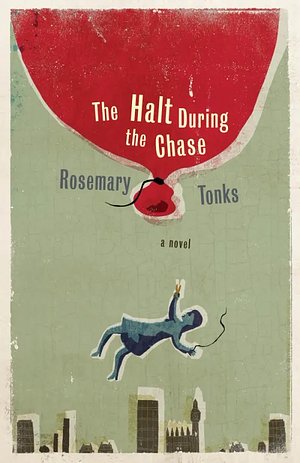
Review 2333: The Halt During the Chase

Sophie is an intelligent, vivacious young woman who is in love with Philip, whom she considers perfect. It’s clear, however, that she is subduing her personality and dressing to please him. She, her mother, and friends have been waiting for a proposal of marriage, but none has been forthcoming. Then, during a romantic tryst in a hotel room, he says something that she finds unforgivable, and it becomes clear to her that, although he loves her, he wants a wife with money.

Sophie realizes she needs to be more independent of her mother, too. After attending some “spiritual” lectures that sound like they are about self-realization, she realizes that their relationship as it is, with her coddling and reassuring her mother, is bad for them both.

Sophie decides to split from Philip, although it is difficult to do so because she still loves him. But she wants to live her own life. Her elderly friend Pussy has told her that once she tries to leave, he will try to get her back, and he does.

This novel is intelligent and funny. It contains unusual turns of phrase and vividly conveys emotions. Sophie is a sparkling heroine. I just loved this novel.

Related Posts

Sing Me Who You Are

Sally on the Rocks

Beneath the Visiting Moon

Review 2332: The Circular Staircase

Rachel Innes, a 40-some-year-old spinster who has raised her niece Gertrude and nephew Halsey, is persuaded to leave the city and take a house in the country near where they have friends. She leases a large house from the Armstrongs, a banking family who are visiting California for their health.

Miss Innes arrives first with her servants and passes a comfortable night. However, the next night she and her servant see a face at the window and later on hear noises as if someone has broken in, although the windows and doors remain locked.

Gertrude and Halsey arrive with a friend, Jack Bailey, who is a clerk at the Trader’s Bank in town. That night, there is another disturbance. This time, an intruder is shot to death at the bottom of the circular staircase. He is Arnold Armstrong, the estranged son of the house owner, who should not have had a key. If that’s not bad enough, both Halsey and Jack have vanished. Right about this time it becomes known that the Trader’s Bank has failed because someone has stolen millions of dollars of securities. Suspicion has fallen on Paul Armstrong, the bank president, but maybe also on Jack, to whom Gertrude is engaged.

The house now becomes the target of a series of mysterious intrusions. Strangers appear on the grounds, noises are heard in the house, holes appear in the walls of an unfinished ballroom. Miss Innes runs up against someone on the staircase in the dark, and the events continue even with police guarding the house.

It’s not hard to guess why people are trying to break in, especially after Paul Armstrong dies in California, leaving an unexpectedly small estate. But Rinehart keeps the action going with lots of perplexing incidents.

The novel is engagingly written and moves along quickly. There isn’t much character development here, but that’s not to be expected from a thriller from 1908. However, we like Miss Innes and we also like Mr. Jamieson, the police detective who gradually lets Miss Innes in on the investigation.

Related Posts

The Uninhabited House

Seven Keys to Baldpate

The Iron Clew

What Is It with Cathedral of the Sea?

Cover for Cathedral of the Sea

I occasionally look at my stats, and I find it interesting to note such things as which reviews are most read and when. I decided to look at them last week because I recently noticed that the novel Cathedral of the Sea had been popping up again as one of the reviews that was most read. I remembered it as a mediocre historical novel, so that piqued my curiosity.

Sure enough, the novel has the third highest number of views of any other on my site. (I’m not counting views of my home page, which has more than 83,000. That page, after all, is whichever review is up for that day.) The one in first place with 983 views is The Devil All the Time, which I don’t really count because it got linked to from Robert Pattinson’s official site after I mentioned the character he was playing and was only looked at for that year and the next. The second place review is for The Cruelest Journey: Six Hundred Miles to Timbuktu, but views of it peaked from 2017-2019 and fell off to almost nothing from there. Cathedral of the Sea only had a few views for the first few years after I reviewed it, but starting in 2020, it has had an average of 90 views a year, which is a lot for one of my several thousand reviews, and continues to pop up regularly as one of the most viewed posts of the week.

Cathedral of the Sea was published in 2006, but I didn’t review it until 2013. It was a popular book for a while—you can see that it says “#1 International Bestseller” on the cover—but I found it an uninspired and rather poorly told story. I looked back at my review to remind myself what I thought of it, and I observed that the characters were poorly defined and Falcones had a habit of bringing people and things into the story when he needed them and then forgetting them. His women have no personality at all and have horrible fates. The oddest thing about it was that he has a plot where the main character is trying to discard his mistress for years so that he can have good marriage with his long-suffering wife. He finally does, and then there is an immediate jump of five years and within a page or so from that jump, Falcones kills off the wife. The wife is a cipher the entire time, and it’s like he doesn’t know what to do with her once the mistress is gone.

So, I notice that in 2018 Netflix posted a production of it. Could this be the reason people keep looking it up? It’s true that in 2018 the views of my post jumped from almost none to 33 that year and then almost doubled the next year and again the next year. But it has continued to be viewed at about the same rate every year since then. It’s a mystery.

Maybe the Netflix program is better than the book. I guess I have my answer. (I was looking all this stuff up as I was writing this, so I didn’t even know I had an answer until the end of the post. In fact, my plan was to ask my readers if they had a clue about it.) I was unaware of the Netflix series before now. It’s little research expeditions like this that make looking at the stats interesting.

Have you read Cathedral of the Sea or seen the Netflix show? What did you think of it?