Review 2316: Undone

Will Trent has taken his partner Faith Mitchell to the hospital because she passed out. While he is waiting, an ambulance brings in a woman who has been hit by a car. She is naked and has obviously been kept captive somewhere and been tortured. Even more horribly, her eleventh rib has been removed.

The Georgia Bureau of Investigation has to be invited into a case, but Will drives to the crime scene, which is only being investigated near the road. The police try to send him away, but he enters the nearby woods to try to find where the woman was escaping from. He finds a hole in the ground covered by a sheet of plywood. Inside the man-made cave, he finds indications that two women were there. Eventually, he finds a second woman hanging upside down from a tree, dead. This woman has been blinded.

Back at the hospital, the doctor, Sara Linton (who apparently is the heroine of a different series by Slaughter), tells Faith she is diabetic. This condition is complicated because Faith is also pregnant.

For his part, Will has married his lover Angie, but she took off almost immediately afterwards. To his dismay, Will finds Sara, a widow, attractive.

As Will and Faith try to identify the victims, with the local police withholding evidence, another woman disappears. Because she physically resembles both victims, Will and Faith think she might be another victim of the same person.

This is another fast moving and interesting entrant to this series about a dyslexic detective and his partner.

Related Posts

Triptych

Fractured

Raylan

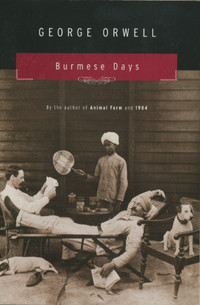
Review 2315: #ReadingOrwell24: Burmese Days

I picked out Burmese Days to read for Brona’s Reading Orwell event. It may be the only Orwell I read, though, unless one comes up in one of the biannual year reads hosted by Stuck in a Book.

There is nothing politically correct about Burmese Days, published in 1934 and probably set 10 years or so earlier. So, if bigotry bothers you, best stay away. Also, a warning for animal lovers—this book contains the murder of a dog.

John Flory is stationed in North Burma working for a timber concern. He hates most of the English people who live in Burma and spend their nights drinking and complaining about the natives. He wants to talk about books and more intellectual concerns, so his only friend is Dr. Veraswami, an educated Indian. However, when the subject of admitting an Asian to the European Club comes up, Flory doesn’t have the gumption to support the doctor’s admission.

He learns later that this admission is more important than he thinks, because Dr. Veraswami has offended U Po Kyin, a corrupt magistrate who is determined to ruin him. Membership in the club would make the doctor impregnable.

Flory doesn’t want to leave Burma, which he loves, but he is desperately lonely. He decides the only option is to find a woman who loves Burma too and is interested in intellectual discussion.

On the scene comes Elizabeth Lackersteen, a young woman who has been left penniless and has come to Burma to find a husband. Because she came from Paris, Flory immediately imagines her hanging out with artists and thinks he’s met his soulmate. He doesn’t even notice how she hates being among the Burmese and is exactly the type of woman he dislikes.

After Flory take Elizabeth on a hunting expedition, she seems inclined toward him, especially as her uncle has been approaching her inappropriately. But then the dashing Lieutenant Verrall appears, and Mrs. Lackersteen discovers he is an Honourable. In the meantime, U Po Kyin has expanded his efforts to disgrace the doctor to include his friend Flory.

This is a bitter satire against the British Raj with few likable characters and a dark ending. I’m sure it is meticulously observed, even though many of its characters seem like caricatures.

Related Posts

The Glass Palace

The Siege of Krishnapur

The Singapore Grip

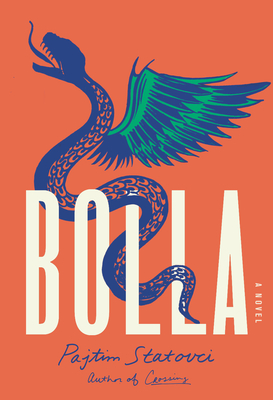
Review 2314: Bolla

Arsim is an Albanian literature student in Pristina, Kosovo, in 1995 when he meets Miloš, a Serbian medical student. They are immediately attracted to each other and soon begin a torrid affair. Although he is young, Arsim has already been married for four years to Ajshe, and on the day he consummates his relations with Miloš, she tells him she is pregnant.

The affair continues through Miloš’s graduation, but shortly thereafter, it becomes too dangerous for Albanians to stay in Kosovo, and Ajshe and her brother arrange for the family to leave the country. As soon as he learns Arsim is leaving, Miloš joins the Serbian army.

Arsim’s relatively linear narrative is broken by short sections narrated by Miloš that are harder to understand and move back and forth through time. He is the more fragile of the two and becomes damaged by his war experience.

This novel, which I read for my James Tait Black project, is beautifully written and ultimately haunting. However, I so disliked Arsim that it was hard for me to read. He is absolutely vile in his behavior to almost everyone in the book but especially to his wife and children, whom he periodically deserts and beats when he is there. When he thinks later that he did his best by them, he defines this as financial support. Really, he deserts anyone who poses any difficulties.

Related Posts

The Tiger’s Wife

The Great Fortune

Trespasses

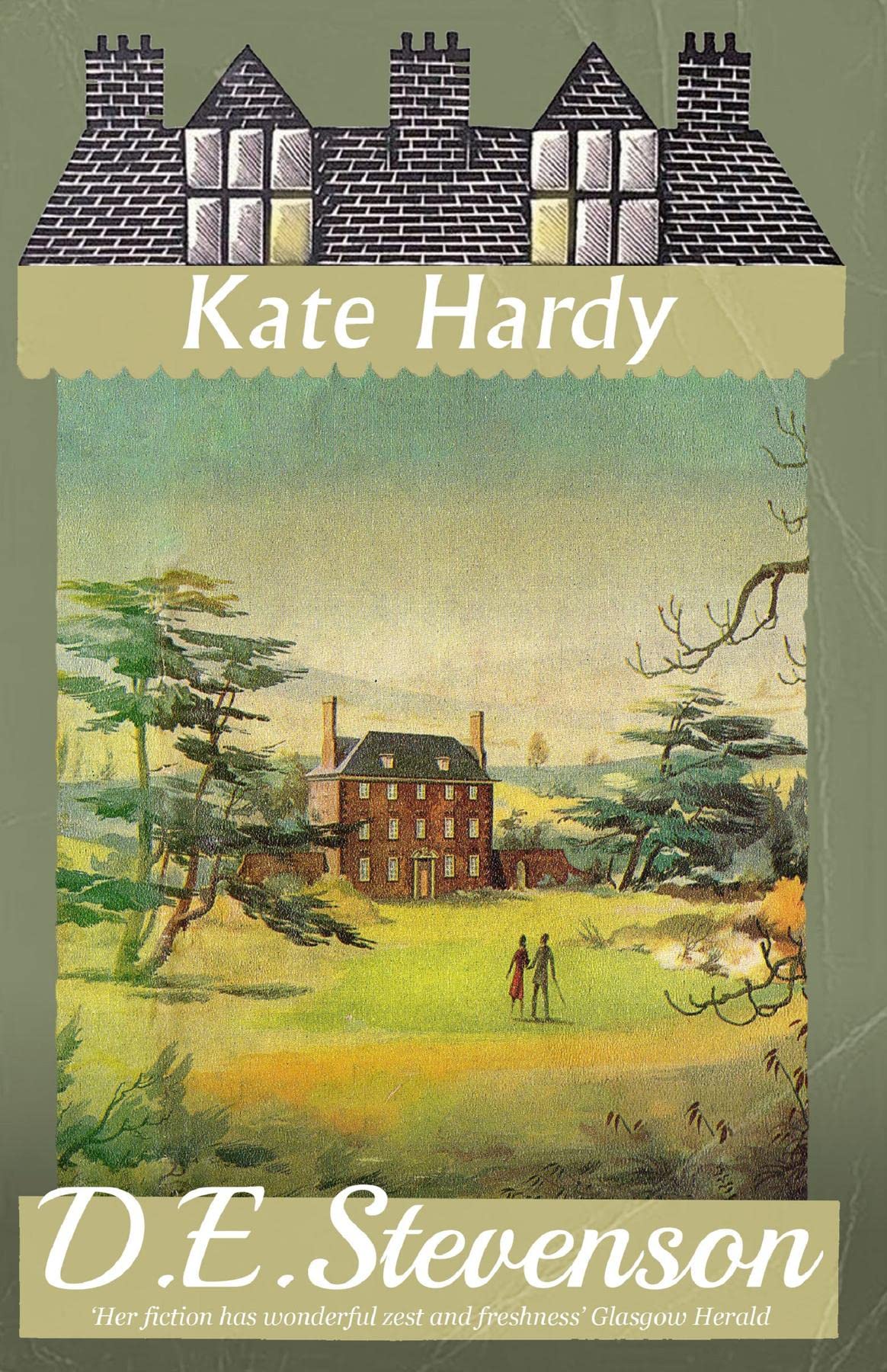
Review 2313: Kate Hardy

I usually like D. E. Stevenson’s novels for very light reading, but Kate Hardy seemed all over the place.

Old Quinings is a village that has been left in the past, and the residents like it that way. They are interested to learn, though, that Mr. Morven has sold the Dower House. The new owner is Kate Hardy, a writer of adventure stories who has been yearning to get out of London and away from her selfish sister and spoiled niece.

Kate has bought the Dower House sight unseen, but she loves it as soon as she sees it, even the resident ghost. She meets Mr. Morven early on, but he is careful to visit only rarely because he is old-fashioned and married, although he and his wife live apart.

Kate doesn’t mean to be a recluse even though she needs time to write, and she gets involved in all kinds of things. When she barely knows Mr. Morven, she receives an anonymous letter alleging an improper relationship between them. Another letter goes to Mrs. Morven, who comes back from America hoping her husband wants a divorce. Then Kate arranges to take care of the couple’s nine-year-old daughter Susan, which is an odd offer to a stranger and even odder for the stranger to accept. Susan arrives, but we hardly spend any time with her.

In a gesture that seems sweepingly condescending, Kate also gives a party to welcome back Mrs. Stack’s son Walter from his service in India even though she has just met Mrs. Stack and doesn’t know Walter. There’s a class issue here, not only because of the invitation but because Walter has bettered himself in the service but is stubbornly insisting on keeping his promise to take back his old job and take care of his mother. His old mates are resentful of his getting his job back, although that was promised when he went to war, and his mother and Kate think he could do better.

Then there is the witch plot, which is just silly.

I think there is too much going on in this novel. Maybe the whole thing with the witches was meant to give atmosphere, but it just seemed sort of thrown in, as does the presence of Mr. Morven’s daughter. Also, Kate ends up with two suitors without us having much of a sense of what they are like. I noticed in addition a couple of occasions when Stevenson tells us what people talked about without recounting the dialogue—and the dialogue gives us a better sense of what people are like. Its not very convincing to be told a character’s views are interesting instead of learning what they are or hearing the character say them.

So, I don’t think that this was one of Stevenson’s best.

On the old subject of mistakes in the Furrowed Middlebrow series, which we haven’t encountered in a while, Mrs. Stack is called Mrs. Stark on the back cover of the book, and there is a section after the novel ends that was apparently written by Stevenson but in my copy appears to be missing pages, because it has no heading and starts in the middle of a sentence.

Related Posts

The Baker’s Daughter

The Blue Sapphire

Vittoria Cottage

Review 2312: Bright Young Women

Bright Young Women is a novel centering around the true story of a famous serial killer, whose last killings took place in a sorority at Florida State University in Tallahassee in 1978. Apparently, Knoll believes as I do that men commit such acts at least partially for the attention so she calls the killer The Defendant throughout the book instead of his name. So will I.

The novel is narrated by two different people in three different time frames. In 1978, Pamela is the president of a sorority and is about to become an important witness. In 2021, she is still trying to track down evidence that will lead to the body of one of his earlier victims.

That victim is Ruth, the second narrator, who in 1975 had the misfortune to meet The Defendant at the beach in Issaquah, Washington.

This novel doesn’t want to focus on The Defendant so much as on the girls he was after. The novel sticks with Pamela from the day before the crime through the days after she sees a strange man fleeing the sorority house, but it focuses on Pamela’s self-development afterwards. At the beginning, she is living an expected life as head of the sorority with the brightest girls on campus, engaged to Brian and planning to attend law school, only an inferior school even though she was accepted to Columbia because Brian couldn’t get in. Pamela is obviously in shock after the event because she doesn’t realize for hours that two of the girls are dead. But she clearly tells the sheriff that although she at first thought the man she saw was Roger, her best friend Denise’s boyfriend, she realized the man was a stranger. Nevertheless, the sheriff focuses on Roger, and this is only one instance of the incompetence of the law enforcement work on the case. Pamela is disregarded and patronized time and again in this novel.

One of Knoll’s themes is her idea that The Defendant, having performed poorly at college and not having been accepted into law school, was picking out successful, attractive women to kill. Then the media fed into his own view of himself by depicting him as smarter and more handsome than he was, despite his ridiculous performance when he eventually defended himself. Basically, they admired the killer while denigrating his victims.

Ruth’s self-evolution takes her from a lesbian woman dominated by an unloving mother who doesn’t want the neighbors to know her “shame” to a confident, lovely girl who has found a place for herself, largely because of the help of her friend Tina. It is Tina who later comes to Pamela and tells her she thinks The Defendant murdered Ruth as well as the sorority girls. Although Tina is right about everything, law enforcement disregards her and warns Pamela against her.

Knoll’s late 1970s certainly sound more like the 60s to me. In Michigan, I didn’t know any girls who were interested in sororities or still used hair spray or dressed as described in the novel anymore. Then again, it was Florida.

I found this a fascinating novel with a strong feminist message. I am looking forward to what Knoll does next.

Related Posts

The Shining Girls

The Broken Girls

Killingly

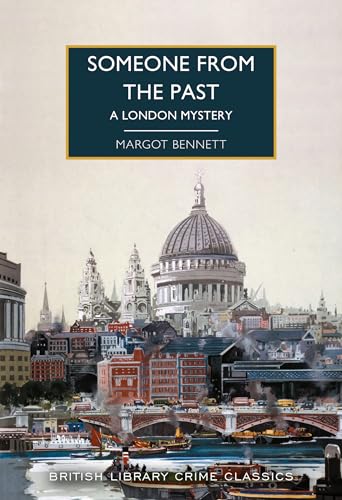
Review 2311: Big Ben Strikes Eleven

Financial tycoon and former politician Sir Robert Boniface is found shot to death in his limousine in the Vale of Health on Hampstead Heath. At first, the police aren’t sure if the death is murder or suicide—only the lack of the gun tells them it is murder.

The body is discovered by a window washer, but Matt Caldwell, an artist, is present in a nearby pub. He is not only able to identify the victim and his car, having painted Sir Robert’s portrait, but he is happy Sir Robert is dead.

Enquiries by Inspector Beckett and Superintendent Mooney lead in the direction of Sir Robert’s nephew, Frank Littlewood, who was recently fired by Sir Robert. However, two office mates, Sir Robert’s confidential secretary Miss Pritt and the obsequious Mr. Fuller, seem too eager to drop him in it.

Then the police find the gun and establish that it belongs to Matt Caldwell. Unfortunately, he is nowhere to be found.

I haven’t paid much attention to this issue until other bloggers pointed it out about other novels, but I would say this novel is about 100 pages longer than it needs to be. First, the action is brought to a screeching halt while the author lays out the case against the original three suspects—as if readers haven’t been paying attention—then we follow Matt Caldwell’s progress in a completely unnecessary romance that coincidentally brings more clues to light. The information is important, but it seems as if it could have been introduced in a different way that didn’t take two or three chapters.

But my biggest problem was with the actual investigation. Early on, Miss Pritt tells the police that the murder had nothing to do with business and uses that reason to withhold information about Sir Robert’s appointments. And the police just go along! Later, the Superintendent just hands her her handkerchief, which he found at the scene of the crime! In other ways, the approach to evidence is just as casual.

Finally, an interview with the Earl of Rollesborough, on the board of the trust that Sir Robert works for, seems called for from the beginning but doesn’t take place until the end. And no wonder, because it pretty much makes everything obvious.

I was able to identify the murderer fairly early on, but that didn’t bother me as much as the sloppy police work, or possibly lack of knowledge about police work.

I received this novel from the publishers in exchange for a free and fair review.

Related Posts

Death of an Author

Death of Mr. Dodsley

Partners in Crime

Why I Quit Using Goodreads

Observant readers may have noticed that in the last couple of days, the Goodreads widgets have been missing from my blog. Here’s why.

I got a surprise email from Goodreads on Sunday morning. Apparently, someone had complained about one of my reviews because it only had the link to my review on this blog in it. They said that it violated their review policy, so they removed it. They said if anyone else complained about other of my reviews in the same state, they would remove those.

I found that interesting for a couple reasons. (Actually, I found it infuriating.) One, when I started using Goodreads 12 years ago, I sent them an email asking if it was okay to link to my blog. They said yes, it was encouraged, and they didn’t tell me I had to write anything else. I felt that putting in part of my review and then linking to the review was redundant, so I have simply stuck to a statement referring to my review with the link. And I have done that for more than 2000 reviews over 12 years.

It is also interesting, because the majority of “reviewers” simply pick a number of stars, and at least my review did more than that.

So, first I looked for this policy that I had apparently violated. I couldn’t see a place for it on any of the menus or submenus. I looked for a link to it on a review page for a book. I found nothing. Finally, I clicked on the link to the policy that they emailed me, and as far as I can tell, this is the policy I innocently violated. The only way I can tell this is because the other policies don’t have anything to do with this issue. I haven’t harassed anyone, plagiarized anyone, or abused their rating system.

Full reviews that link to a blog are acceptable, as long as the blog is not selling a competing book and using the review to denigrate the book being reviewed in favor of its own.

The word “full,” I guess, is supposed to convey that you have to write something in addition to a link. Otherwise, this rule is about something else entirely. There is no rule that outright says you have to leave a text review in addition to a link.

I sent them an email explaining all of this, and the response I got just repeated everything they had already said. To my comments about not being able to find their reviews policy on their site, they actually responded this:

 For security reasons, we do not share details about our guidelines or moderation processes. 

So they’re purposefully hiding their policies? Is that what that means?

In the meantime, I was so angry, especially at the pettiness of someone bothering to complain about my review, that I decided to look for alternatives. I finally decided to switch to The StoryGraph because it allowed me to import my Goodreads data (some of it) and because it was one of two alternatives that allows me to use my computer rather than an app on my phone. I have Goodreads app on my phone, but I never use it.

While I was researching alternatives, I heard for the first time about some of the controversy surrounding Goodreads since it was bought by Amazon. Some of it involves not following up when authors complain about blackmail attempts by people who threaten to load their books up with one-star reviews if they don’t pay up. I found this interesting because Goodreads does allow you to post star reviews with no other content, whereas The StoryGraph does not. You have to at least make some selections about the type of book it is even if you don’t write anything. Apparently, it is okay to Goodreads to leave just stars, even if this can be abused, rather than linking to a full and legitimate review. And it is interesting to me that they would not follow up on blackmail threats by removing the one-star reviews but then remove mine.

I may have cut off my nose to spite my face, because I am having to get used to the new interface, and in some ways I don’t like it. It is a lot harder, maybe impossible, to see all the books you have reviewed. I used the Goodreads spreadsheet feature a lot, and they don’t seem to have anything like that, although I have asked. (I can export all my book information and figure out how to get it to tell me what I need, but I’m too lazy.) As far as traffic is concerned, my blog stats inform me that I got eight referrals from Goodreads in the last year, so that seems insignificant. I do have one follower who came over from Goodreads that I know of and who leaves comments on my blog occasionally, but I don’t think I have lots of them. I don’t know how many users The StoryGraph has, but probably a lot fewer than Goodreads. The only social feature that I used on Goodreads was to see what one of my friends was reading, just one. So, I’m not going to miss that.

Anyway, all I can say is, bye, bye Goodreads.

Review 2310: Jane Austen at Home

Although I read Claire Tomalin’s biography of Jane Austen years ago and thought it was very good, I feel that historian Lucy Worsley’s book provides a more personal look at Austen with more detail about her everyday life. Although some references are drawn from Worsley’s knowledge of Georgian society, she doesn’t hesitate to draw inferences from Austen’s novels and letters. Further, I think she has a better sense than some biographers of when in Austen’s letters she is joking

Worsley points out how important a settled home is in Austen’s fiction. Certainly, from the time of her father’s retirement from Steventon, that is something she and her sister and mother did not have that provoked much anxiety.

It was Tomalin’s suggestion that Austen was unable to write when she was unsettled, but Worsley suggests that Austen was working on novels all along but not doing much to market them. She also pointed out some subversive ideas in Austen’s fiction that I never noticed despite how many times I’ve read the novels. In any case, she does a good job of showing how revolutionary Austen’s fiction was for her time.

Related Posts

Jane Austen: A Life

Charles Dickens: A Life

The Life of Sir Walter Scott

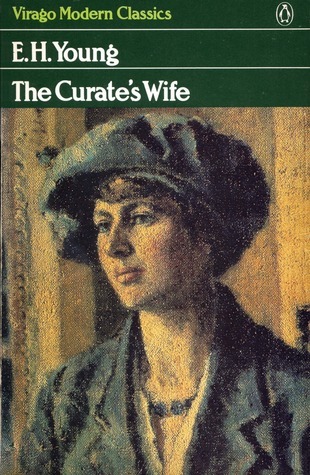
Review 2309: The Curate’s Wife

When I reviewed E. H. Young’s Jenny Wren, I remarked that I preferred Jenny’s sister Dahlia to Jenny. So, I was delighted to find that The Curate’s Wife is about Dahlia (although Jenny’s romantic fate is also involved).

Dahlia has married the curate, Cecil Sproat, on the basis of a friendship in which she feels she can say anything. But very soon, she finds that’s not true when it applies to religion, which has not formed part of her upbringing and which she finds silly. For his part, Cecil is rigid and has been unthinking in his religious beliefs. There is also the problem that Cecil is in love with Dahlia, but the reverse is not true.

Another issue is created by Mrs. Doubleday, the wife of Rector Doubleday, Cecil’s boss. She is an unpleasant woman who already dislikes Cecil and takes a strong dislike to Dahlia. She makes it her business to listen to gossip about the girls’ mother’s inferior social standing and her affair during the war. Their mother foolishly married farmer Thomas Grimshaw at the end of Jenny Wren, hoping that would remove a bar to Jenny’s marriage with Cyril Merriman, but that only made the situation more hopeless. Jenny has gone off to live with Mr. Cumming’s sisters and father and learn about the antique business.

Dahlia begins to feel as if she missed out. After school, she was first isolated on the farm and now is living with a dedicated man doing good works. She has never even been to a party or enjoyed other types of amusements. She begins to fancy herself in love with Simon Tothill, a young man she met at a theater rehearsal.

Just as Dahlia and Cecil are beginning to understand each other, Jenny arrives without warning. She has left the Cummings and expects to live with Dahlia and Cecil. Although Dahlia is happy to see Jenny, she begins to realize just how selfish her sister can be. For his part, Cecil is a little jealous of how close the sisters are.

Dahlia’s problems with Cecil have an interesting parallel in the relationship between the Doubledays. Mr. Doubleday is easy going and tries to avoid trouble but is afraid of his ill-natured wife. Their son is returning after three years of service in Africa, and Mrs. Doubleday wants him all to herself. But she soon makes a mistake in a remark that frees Mr. Doubleday from trying to please her.

This novel takes a complex look at new marriage and the lack of preparation people have for its problems. I didn’t like Jenny any better, but I have been impressed by how far below the surface Young’s novels go.

Related Posts

Jenny Wren

The Misses Mallett

Chatterton Square