Review 2308: One Afternoon

One afternoon Anna Goodhart, a widow in her mid-thirties with three daughters, runs into Charlie, a young actor whom she met years ago at some event of her husband’s. He invites her to a party. She agrees to go but almost backs out. However, she goes and they soon begin an affair. Although she doesn’t expect it to last, she is wild with joy and makes no secret of their relationship.

This is the story about a woman who begins to rebuild her own life after her husband’s death, to realize things about her marriage, and to identify what she wants her life to be. Although attitudes had begun to change for women in 1974 when this book was published, it reads like a much more modern novel. I was surprised how the people in Anna’s life, with a couple of exceptions, take her affair and her subsequent decisions.

This is a lovely book filled with mostly kind people. It explores memory and how it tangles with reality as well as the complexities of love.

Related Posts

Four Letters of Love

The Transit of Venus

The Women’s Room

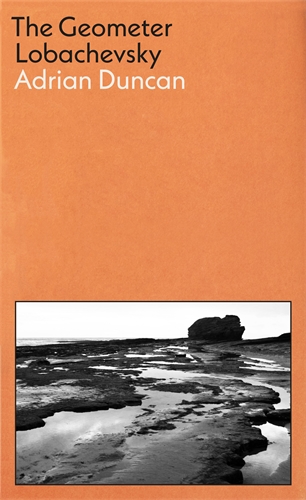
Review 2307: The Geometer Lobachevsky

In 1950 Ireland, Soviet citizen Nikolai Lobachevsky has been working in the western bogs, trying to help a team survey the bog lands. He receives a letter from the Soviet government summoning him home to take up a “special assignment.” He knows that probably means execution, so he hides on a remote estuarial island.

Readers who look for a rousing plot aren’t going to find one here. Nothing much happens except for work and exact observations. First, Nikolai is helping with the surveying. Later, he helps farm seaweed. But he is homesick, and once he hears of Stalin’s death, he decides to return to Russia, taking a gamble that Malinkov, for whom he used to work, will pardon him for whatever sins he’s supposed to have committed.

I just felt meh about this novel, which I read for my Walter Scott project. It excels at descriptive passages, but it was hard to know Lobachevsky. Also, I am not that into strictly contemplative novels.

Related Posts

The Fawn

The Bogman

The Secret Guests

A Century of Books: How Am I Doing? January Report

In January, I foolishly decided to join Simon Thomas’s Century of Book Challenge, even though I knew that reading 100 books, one for each year in a century, from 1925-2024, would be tough because last year I only read 169. So, how am I doing?

Well, unlike Simon, who seems to have a huge library of unread books from just about every decade, I have just been reading through my pile, and my worst fears are being justified. Just in the first weeks, I read seven books written in 2023! I had to decide whether, on my page for keeping track, I would list just one book per year or go ahead and list every book I read for that year, and I decided to do the latter, because the former was just too frustrating. I also had to decide, because my first few book reviews for the year were for ones I read in 2023, whether to list those. I decided to do that even though it might seem like cheating, because it’s unlikely that I am going to meet this challenge at the rate I am going. And in any case, by the end of the year, I won’t have posted reviews of the books I read towards the end of the year yet.

I will summarize my progress so far by decade. If you want to see the details, see my Century of Books page.

  • 1925-1934: 4 books (however, 3 of them are for 1934—I don’t know how I did that)
  • 1935-1944: 1 book
  • 1945-1954: 1 book
  • 1955-1964: 2 books
  • 1965-1974: 2 books
  • 1975-1984: 1 book
  • 1985-1994: 0 books
  • 1995–2004: 0 books
  • 2005-2014: 2 books
  • 2015-2024: 16 books, but 7 of them are from 2023

So, although Simon said the first half of the year you could just plug in the years and later begin to purposefully look for books for the years you don’t have, I may have to come up with a plan that is more specific sooner, because random reading doesn’t seem to be working well for me.

I’ll post this report each month, so you can see how I’m doing.

Review 2306: The Midnight News

Is The Midnight News a love story? a murder mystery? an espionage tale? a story about a dysfunctional family? an exploration of how the stress of war affects people psychologically? I’m not telling.

Charlotte is the daughter of privilege. Her father is a peer and a member of Parliament with an important war job. But Charlotte has chosen to work as a typist in a government office and live in a respectable but middle class boarding house.

It is the Blitz, and Charlotte’s home is in a dangerous area south of the Thames. She and the other residents of the house have been spending their nights on the lowest level of the house.

The novel starts slowly. Charlotte spends a day with her best friend, El, who has been elusive lately. Then El is killed in the Blitz. Charlotte goes to visit her godmother, Saskia, after she hears that a well-known actress, a schoolmate, has also been killed. Then Saskia dies, too. Charlotte has noticed a square gray man in several different places and comes to believe he is following her and killing people she is close to. This may seem like a wild idea, and since Charlotte has begun hearing the voices of her dead friends and has a history of mental illness, we begin to worry about her.

Then there is Tom, the son of an undertaker whom Charlotte has noticed feeding the birds. He is waiting to hear about a scholarship and a place at King’s College, but notifications are delayed because King’s has been hit in the Blitz. He is in love with Charlotte but thinks she is above him.

Is Charlotte being followed or is she paranoid? Is there something else going on? This novel eventually because a fast-moving, tightly plotted, and satisfying tale.

Related Posts

The Body Lies

A Country Road, A Tree

Longbourn

Review 2305: The Fawn

The Fawn is an unusual novel, narrated as it is by Eszter, who through the entire novel is speaking to another person. Eventually, we understand this is her lover, whose identity is not confirmed until the last half of the book.

The novel moves among scenes from the present and the past, sometimes with no transition, so that I was briefly confused about the when. Eszter grows up very poor. Her parents are from more prosperous roots, her father’s perhaps aristocratic, but his family has thrown them off. Her father is a lawyer but he takes few cases. He is more interested in horticulture and in fact is ailing for most of her life. So, her mother teaches endless piano lessons to support them, and Eszter earns money by tutoring other students and sometimes by stealing. Her life is made harder by her parents’ sufficiency for each other. She feels that they pay no attention to her.

Although Eszter becomes a famous actress with a good income and a nice flat in Budapest, she never forgets or forgives the slights of her childhood. In particular, she hates Angéla, a schoolmate who is beautiful and kind, but whose way is made easy by everyone because she is rich and beautiful. Her bad grades are corrected by the school after visits from her parents. Eszter is happy to see her family leave town after it is disgraced, but Angéla re-emerges after the war, married to the man who becomes Eszter’s lover.

Eszter is a complex character, not likable but someone who still keeps our sympathy. This novel explores the complexity of human relationships. Eszter laments that no one has ever loved her for herself, but she has turned herself into a chameleon—a famous actress who so submerges herself in her roles that on the street no one recognizes her. The Party members refuse to believe her true story when she submits her CV for approval to work at the theater, so she has to reinvent her life to make herself into a reformed aristocrat. Her lover loves her but doesn’t understand her at all.

I found this novel a little difficult at first because it just seemed to be rambling, but the narrative is compelling. Once I really got going, I just wanted to see how it ended.

Related Posts

Iza’s Ballad

Abigail

Nightwood

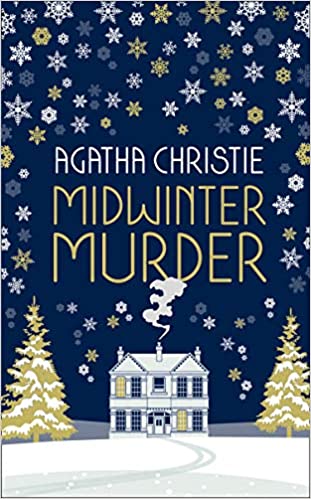
Review 2304: Midwinter Murder

Even though I don’t always get on with mystery short stories, I’ve observed Midwinter Murder going around and thought it sounded like good winter reading. And so it proved to be.

For one thing, with Christie’s stories I didn’t feel that lack of characterization that I often feel with other mystery short stories, since Christie is so deft at depicting characters with just a few strokes. Not all of these stories involved murders, and some are quite benign. Poirot appears in several, Miss Marple in one, Tommy and Tuppence in one, and in two, a Mr. Satterthwaite and his mysterious friend, Mr. Quin.

“The Clergyman’s Daughter,” about a woman who inherits a house only to find odd things happening in it, was unfortunately already included in Partners in Crime, which I read last year. Similarly, the Miss Marple story, “A Christmas Tragedy,” was included in The Tuesday Club Murders.

Just for a change, I believe I preferred some of the more benign stories. For example, in “The Problem at Pollensa Bay,” Mr. Parker Pine receives a plea from an overprotective mother to find a way to get her poor son Basil away from a girl she deems unsuitable. But Mr. Pine doesn’t see anything wrong with the girl.

I also liked “The World’s End,” in which the mysterious Mr. Quin appears in a desolate location in Corsica to right a wrong.

And in “The Manhood of Edward Robinson,” Edward is a clerk who yearns for romance but his too-practical fianceé Maud thinks he’s a spendthrift and chides him when he tries to make a romantic gesture. Edward wins £500 in a contest and decides to spend it all on a sportscar then take it away for a day before Maud ruins his fun. And he has an unexpected adventure.

There are lots of stories with clever puzzles, for example, “Christmas Adventure,” in which Poirot figures out why there is a jewel in the plum pudding. But I thought I’d point out some of the more unusual stories.

Related Posts

Partners in Crime

The Tuesday Club Murders

The Christmas Card Crime and Other Stories

12th Anniversary! Top Ten Books of the Year!

Today I’ve been blogging for twelve years, which means it’s time for my anniversary post, where I list my top 10 books of this year of blogging. This year I found it much more difficult to pick this list than in previous years. Working from my Best of Ten list, I had several cases of more than one book by the same author that I had to choose between. I also didn’t have as many books that I was absolutely sure would end up in my top ten for the year as I usually do. (When I’m sure, I mark them in purple on my list.)

Of the books I’ve chosen, six are historical novels, three are vague as to time, and only one is clearly contemporary, but harks back to the 1970s (which some of us can remember). Eight are by women. This is an international group of novels. I’ve chosen books set in far northern Canada, islands off the coast of Denmark and in the Moluccas, France, Iceland, Michigan, Texas, and Ireland. My choices are by Canadian, Danish, American, Icelandic, Indo-European, French, and Irish authors. Seven of the books were written relatively recently, while three are older books. This year, all are novels.

So, in the order in which they appeared on my blog, here are my top ten books of the year:

  1. The Other Side of the Bridge by Mary Lawson
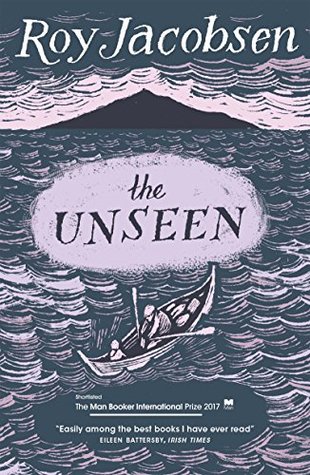
  2. The Unseen by Roy Jacobsen
  3. The Flight Portfolio by Julie Orringer
  4. Miss Iceland by Auður Ava Ólafsdóttir
  5. The Ten Thousand Things by Maria Dermoût
  6. News of the World by Paulette Jiles
  7. We Have Always Lived in the Castle by Shirley Jackson
  8. Tom Lake by Ann Patchett
  9. The Child and the River by Henri Bosco
  10. Foster by Claire Keegan

Review 2303: Alice

Margaret admires her best friend, Alice, even from their days at school. She thinks Alice is beautiful and elegant and envies her her siblings. However, Alice’s sister Sonia disillusions Alice early by leaving home with a man and turning up at school to demand Alice give her her monthly allowance.

As the two naïve and protected girls emerge into womanhood, Margaret comes to understand that Alice is afraid of life and has no confidence in its success. After Sonia steals the boy that’s been courting Alice, she tries to commit suicide and then incautiously marries Cassius, the man who saves her, when she hardly knows him.

Although the marriage is clearly ill-advised, to Margaret Alice lives a much more exciting life than her own. Still, Margaret notices how suggestible Alice is to those giving bad advice, even people she used to avoid.

Although this novel, about young women in the upper echelons of society, works as a social satire, it also has a serious message about what happens to unprepared young women thrown into society, especially in the years between the wars, when mores where changing.

Related Posts

Sally on the Rocks

Beneath the Visiting Moon

Love in a Cold Climate

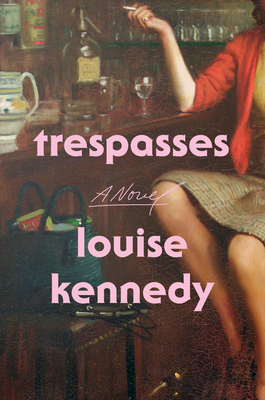
Review 2302: Trespasses

I read somewhere that Kennedy inserted the romance into Trespasses to make the political and social environment of her childhood palatable to readers. If that is so, I personally found the political and social parts more interesting, although the romance seems to take over the novel. However, the addition of the romance helped create the extremely touching ending.

Cushla is a Catholic schoolteacher who helps out at her brother’s pub in 1970’s Northern Ireland. One day Michael Agnew comes into the pub. He is nearly twice as old as she is, a Protestant, married, and a lawyer. She is immediately attracted to him even after she finds out he’s known as a womanizer. Soon he invites her to teach a group of his friends Irish, which leads to an affair.

At school, the children pick on one of her students, an eight-year-old named Davy McGeown, who is poor and who has a Catholic father and a Protestant mother. The family is threatened at home, and soon after Davy’s father finally gets a job, he is beaten mercilessly and left a cripple. Even the principal of the school treats Davy and the family badly, and there are hints of potential child abuse in the attentions toward Davy from the local priest. Cushla begins trying to help out Davy and his family, including his sullen older brother, Tommy.

Although Cushla’s family has successfully stayed out of the internecine conflict and serves people of both religions at the pub, things begin to change for them.

For quite a while that I was reading this novel, I was only mildly interested in the main story line but fascinated with the other things that were going on. However, towards the end, I was completely drawn in and found the ending particularly touching.

Related Posts

Milkman

The Last September

Troubles

Review 2301: Someone from the Past

I found Someone from the Past to be the best of the British Library Crime Classics I’ve read so far. It has a smart, feisty, occasionally indiscreet heroine, is fast moving, sometimes exciting, and presents an interesting, character-based mystery.

Nancy is at a restaurant about to receive a proposal from her boyfriend Donald when her estranged friend Sarah approaches the table. This approach creates some awkward moments, because Donald was the last in a string of Sarah’s lovers and didn’t take her departure well. Finally, he leaves the table so the women can talk.

Sarah tells Nancy she is about to marry a wealthy man, Charles. Then she says that someone has been writing her letters threatening her life. As Nancy is a reporter and knows all the suspects—Sarah’s discarded boyfriends—Sarah asks her to try to find out who is writing the letters. She says she’ll send her one of them in the morning.

Nancy’s evening ends poorly, with Donald stomping off. But the next morning, he arrives at her flat, confused and frightened. He tells her he went to see Sarah in the early hours of the morning and ended up falling asleep in the sitting room. When he awakened shortly after eight, he found Sarah murdered in her bed. He is sure the police will think he did it.

To protect Donald, Nancy lets herself into Sarah’s apartment and tries to remove all traces of his visit. In doing so, she notices some odd things about the scene. Unfortunately, when the cleaning lady arrives, Nancy puts the chain on the latch instead of hiding or going out another way so it was obvious someone was in the flat.

Shortly after she arrives home, the police are at her door. They think she killed Sarah, partly because she left her own fingerprint in the apartment and because the cleaning lady recognized her when Nancy met one of Sarah’s other lovers in a pub before going home. Nancy thinks the only way to clear herself and Donald is to figure out who did it herself. The list of suspects consists of Sarah’s last four lovers, including Donald.

Nancy finds she isn’t very good at lying to the police, keeping secrets, or fleeing the country, but she is good at figuring out clues. I’m not so sure she’s that good at picking future husbands, though.

I received this book from the publishers in exchange for a free and fair review.

Related Posts

In a Lonely Place

Excellent Intentions

Water Weed