
The Best Book for this period is Hotel Silence by Auður Ava Ólafsdóttir!
Reviews, reviews, and more reviews

The Best Book for this period is Hotel Silence by Auður Ava Ólafsdóttir!

It’s time for another Classics Club Spin. What’s it all about? Members of the Classics Club select 20 books from their Classics Club lists (here’s mine) and list them by number on their blogs before Sunday, January 21. On that day, a spin number is selected by the club, and that number determines which book on the list the member will read by the spin deadline, which is Sunday, March 3. I am always ready to play, so here is my list:

So Late in the Day is a collection of three of Claire Keegan’s short stories. Unfortunately for me, I had already read one of them, “Antarctica,” in her collection Antarctica. All three stories focus on relationships between men and women.
In “So Late in the Day,” we get to know Cathal. We follow him in the course of what was to be an important day for him, as he considers his relationship with his fiancée, referred to only as “she.”
In “The Long and Painful Death,” an unnamed writer starts a residency in the home once owned by a revered Nobel-Prize-winning author. On her first day, however, she has to deal with a visit from a man who claims he has permission to view the house but turns out to have a different agenda.
The story “Antarctica” was a reread for me. It’s about what happens when a married woman decides one time to have a fling.
As always with Keegan, the stories are written in lucid, precise prose. They reflect a good deal of cynicism about relations between the sexes.

The Salt Path is Raynor Winn’s memoir of walking with her husband the 600+-mile Salt Path from Wales around the tip of Cornwall and back to Devon. This may not sound extraordinary or appealing to everyone, but the circumstances that initiated the walk were difficult.
It must have been the worst few days of their lives to date. For years, Raynor Winn and her husband Moth had been fighting a lawsuit that, through no fault of their own, threatened their home and livelihood. They went to court having found a document that proved they owed nothing, but because they didn’t follow the proper procedures, they were not allowed to admit it as evidence. They lost the farm they built up from nothing and were homeless.
As if that weren’t enough, a few days later some pain Moth had in his arm for years was diagnosed as a terminal illness that would result in the degeneration of his muscles and end with him choking to death.
The Winn’s reaction to these circumstances was unusual. With a very small income and almost no ready cash, they decided to walk the Salt Path. And although Raynor wanted to walk it the easy way, from the southeast westward, because the best guidebook went the other way, they went that way.
This book is compulsively readable, as the couple deal with grief, bad weather, physical problems, lack of food and water, poor equipment, difficulty finding camp sites, and general bad treatment of the homeless. It is vividly written and although I tripped over some misplaced modifiers, impels you along with them on their journey.
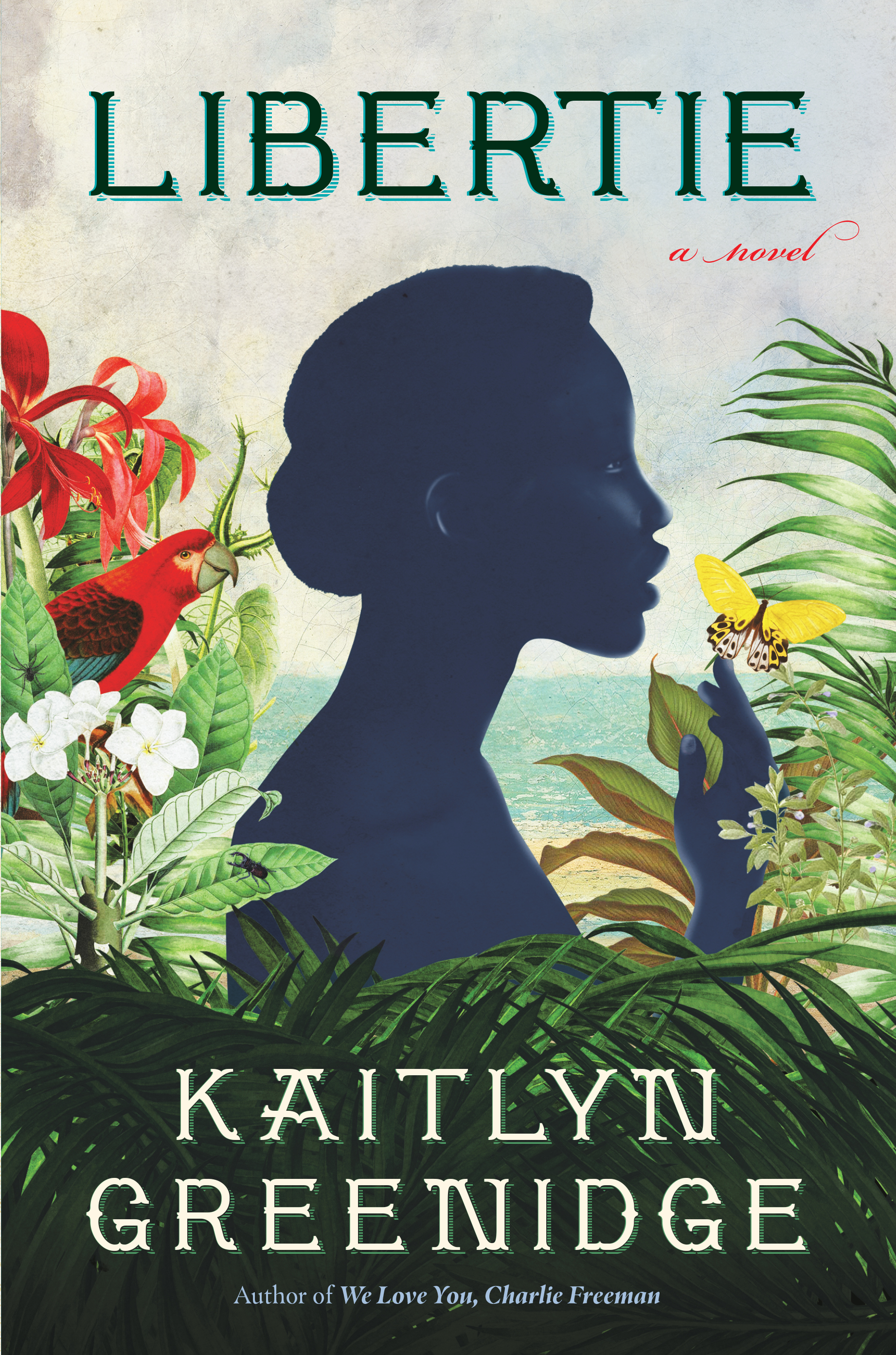
Libertie is an African-American girl growing up in pre-Civil War Brooklyn. Her mother, Mrs. Sampson, practices as a homeopath and has been training Libertie in the use of plants. Her great desire is for Libertie to study medicine and become the first African-American woman doctor.
But Libertie seems to be a person who only knows what she doesn’t want. She doesn’t want to study medicine, but her mother arranges a course of study for her at a college in Ohio for African-American students, without consulting her. She is the only girl in the science department. There she decides to punish her mother for sending her away by neglecting her studies. She spends her time trying to figure out how to fit in with one group or another and finally settles on girls nicknamed the Graces, two women with beautiful singing voices.
The novel is mostly concerned with the relationship between the two women—the mother constantly pushing, disapproving, eaten up with ambition for her daughter but with no regard for what her daughter wants, the daughter seeking approval but rebelling at the same time, with no ambitions for her own life. This relationship becomes even more difficult when Libertie comes home after a year at college, lying about her results, and meets Emmanuel Chase, her mother’s protégé from Haiti.
I was uncomfortable with this book, I think, partly because of its first-person point of view. I don’t like historical fiction that makes its heroines modern, and there is nothing 19th century about Libertie’s narrative, especially when it comes to sex. But even more than that, it didn’t help that neither Libertie nor her mother is a particularly appealing character or that all of Libertie’s life decisions are poor ones. A 21st century young person might fritter away the opportunity that her mother is struggling to provide her, for example, but I can’t imagine a 19th century one, with her knowledge of what her people have been through, would. Libertie behaves more like a spoiled 21st century child than someone who in the 19th century would be considered a young woman.
Finally, Greenidge says this novel was inspired by the first African-American woman doctor in the States, but I kept wondering who it was meant to be. Mrs. Sampson herself is not a qualified doctor, and Libertie purposefully sabotages her opportunity in pre-med.
I read this novel for my James Tait Black project.

Killingly is loosely based on the true story of a student’s disappearance from Mount Holyoke College in 1847.
Bertha Mallish has vanished, but the readers realize that her best friend Agnes Sullivan seems to know something about it. The river has been dragged, but no trace of Bertha can be found.
Bertha and Agnes are the campus misfits. They are hard workers who don’t socialize and are from poor families. However, the last few months they have become very close.
Dr. Hammond, who had been courting Bertha, has arrived at the college with Reverend Mallish, Bertha’s elderly grandfather, and Florence, her much older sister. Florence and Agnes don’t like Dr. Hammond, who quickly develops an obsession about the case, hires a private detective, and behaves as though he’s in charge of the investigation. He becomes suspicious of Agnes.
Beutner is very skillful in how she slowly unfolds the story and reveals what happened to Bertha. She draws you in to a story that is sometimes affecting, sometimes suspenseful. The novel is involving, and I look forward to reading more by Beutner.

Last Wednesday, Simon Thomas put up a Century of Books challenge, in which he selects 100 years and attempts to read a book published in each of those years. This time, he selected 1925-2024. I have insanely decided to join him, even though this challenge may determine 2/3 of my reading for the year.
As if I’m not doing enough challenges. We’ll see how I do! I’ll post a link under my Projects tab so you can watch my progress.

I tried to read Lament for Julia several times, but I just couldn’t do it. Taubes’s father was a psychoanalyst who believed writing is a disease and her husband disapproved of it for religious reasons, so it’s no wonder it’s quite bizarre.
Lament for Julia is a novella that takes up more than half of the NYRB edition. It is narrated by a disembodied spirit that seems to be part of and not part of a girl named Julia Klopps. Since Taubes believed that each person is a multiplicity of selves, I took it more as another self. Nothing much seemed to be happening in the novella except Julia growing up and the second self obsessing about her, but I didn’t really find any of it interesting. The writing is beautiful, and the second self’s obsessions are akin to those of Humbert Humbert in Lolita. But while I found that novel fascinating, I found the novella too sexualized, too perverse, too Freudian, and too interested in dreams for my taste.
I tried reading some of the short stories, but “The Patient,” about a mental patient who lacks an identity, is told by her psychotherapist that her name is Judy Kopitz, and we seemed to be in for a rehash of Lament for Julia.
The next one was “The Sharks,” about a boy who keeps dreaming he is being eaten by sharks. (Julia also dreams of being eaten.) Nope, couldn’t do it.
I received this book from the publishers in exchange for a free and fair review.
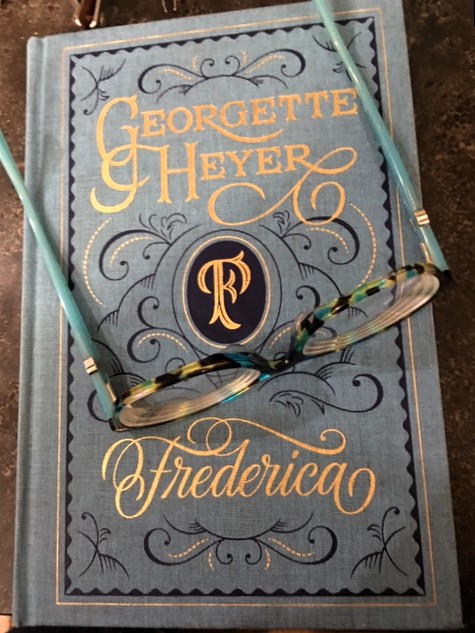
I didn’t set out to reread Frederica, but the Folio Society just brought out a couple of beautiful editions of some of Heyer’s books, so I had to buy them. My original review is here, but I thought I’d talk about some things that struck me this time around.
Heyer has a great sense of humor, and I was tickled by the situation that brings about the climax of the book. Frederica has spent a good deal of ill-afforded money and enlisted Lord Alverstoke’s help with the aim of making a good match for her beautiful but dim-witted sister, Charis. Unfortunately, Charis has fallen in love with Endymion Dauntry, Alverstoke’s handsome but stupid heir. Frederica is skeptical of Charis’s affections because she has fallen in love many times before. Endymion has convinced himself that Alverstoke would prevent the match by having him sent on a mission. Not only does Alverstoke have no power to do so, but he doesn’t really care who Endymion marries. He thinks Endymion isn’t serious because he hasn’t consulted him about getting married.

Endymion is friends with Harry, Charis’s and Frederica’s brother, and the two have been confiding their star-crossed misfortunes to him. Frederica makes him angry for some trivial reason, and he suddenly realizes he is Charis’s guardian. So, the three of them stage a totally unnecessary runaway marriage.
Felix and Jessamy, Frederica’s young brothers, are especially delightful characters. Heyer is an amusing writer and a master of silly situations such as the one that Charis and Endymion create for themselves.
Jónas Ebeneser has begun to think his life has no meaning. His wife Gúdrun has divorced him, and recently she told him his daughter Gúdrun Waterlily isn’t his. Aside from getting a lily tattooed on his chest, hanging out with his neighbor, and visiting his senile mother, he hasn’t been doing much, except fixing things, which he is good at.
He decides to kill himself, but he is worried that Gúdrun Waterlily will find his body. So, he decides to travel to a dangerous foreign country, feeling sure he can find a way to die. He travels to an unnamed country where a war has just finished, taking a shirt, his tool box, and his old diaries, and checks into Hotel Silence, formerly occupied by the famous and now run down with three guests.
This quietly quirky novel is another joy from Ólafsdóttir. It’s at times serious and sad but full of hope.
Book reviews of mainly modern & contemporary fiction
Writer and Historian
There is nothing more satisfying than reading a book while sipping a hot cup of tea.
A historical fiction book blog
Emerging as an artist
Liz Dexter muses on freelancing, reading, and running ...
For mostly adult, literary, fiction; focusing on historical, contemporary, biographical, and women.
"Well, there’s so much to read, and I’m so far behind." Wallace Stegner
Read to live and live to read
A bookish blog (mostly) about women writers of the nineteenth and twentieth centuries
A Celebration of Russian Literature
Reading: it's personal
Based in Romania, reading all over the world. Mostly fiction, some memoires and a little bit of poetry.
Adam Burgess
"Vivre le livre!"
"History is a vast early warning system." Norman Cousins
Scottish Book Blogger
"She had read novels while other people perused the Sunday papers" - Mary Elizabeth Braddon
A word after a word after a word is power. --Margaret Atwood
Books • Opera • Art • History
FOR DISCERNING READERS
Your online source for Jane Austen and her legacy
A Community of Classics Lovers
A blog about Irish books, writers, writing and everything in between.
 What? Me Read?