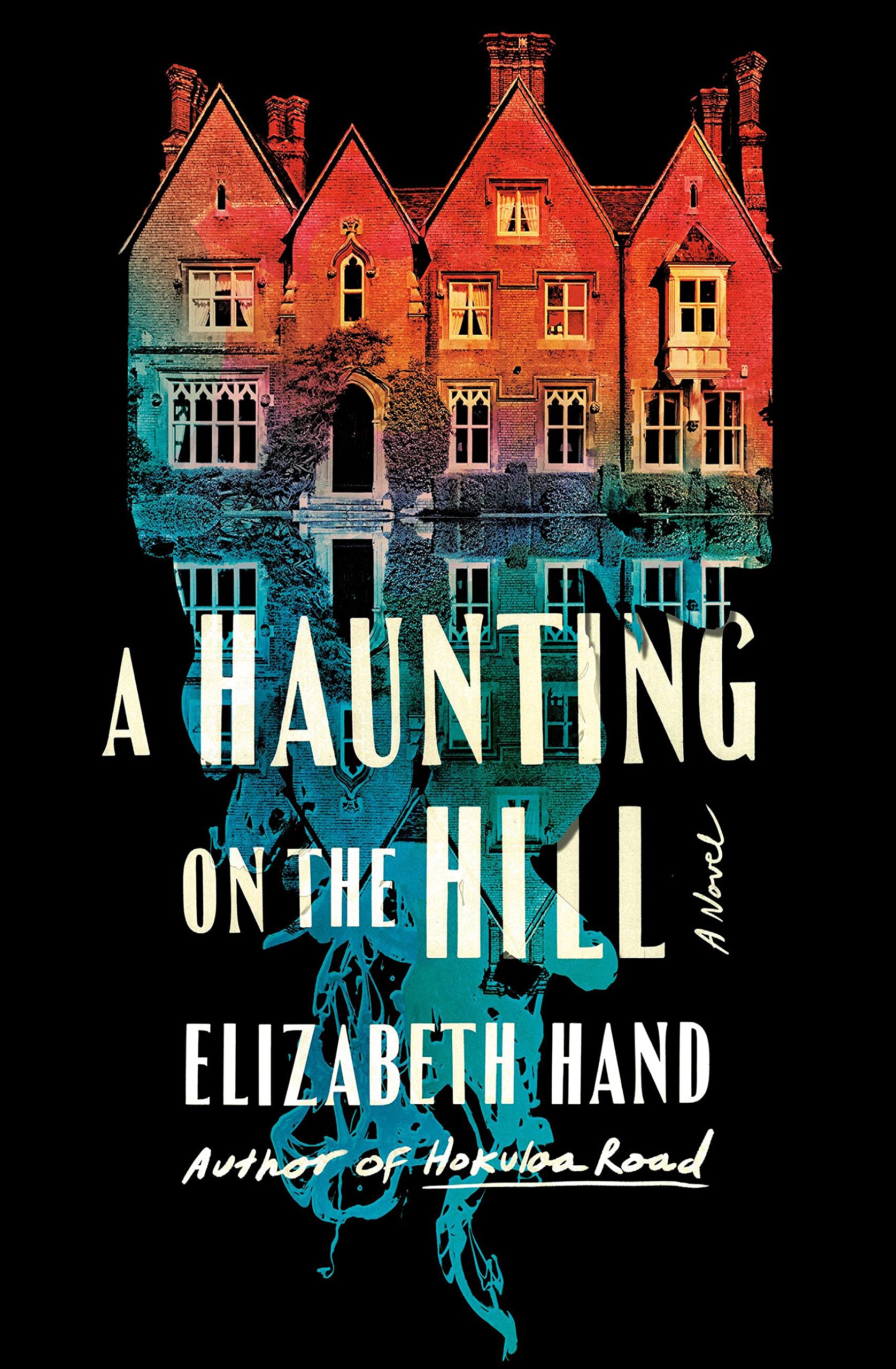
Review 2293: A Haunting on the Hill

I haven’t read a book by Elizabeth Hand in a while, but as I remember, the two I read involved the supernatural. That probably makes this homage to Shirley Jackson’s The Haunting of Hill House a natural fit for her.

Holly has recently won a grant that allows her to take leave from her school-teaching job for a semester and work on a play she’s written. She and her partner Nisa are celebrating by spending the weekend in a B & B in upstate New York when Holly goes for a drive and comes upon Hill House.

Holly decides that the mansion would make a perfect place to workshop and rehearse her play. She is barely able to afford it, and the rental agreement comes with all kinds of relinquishments of liability.

Holly assembles her small cast at the house. There is Nisa, who has written some haunting songs for the play and is going to perform them; Amanda Greer, an older actress who will play the main character, a woman who was burned as a witch in the 17th century; and Holly’s best friend Stevie, who will play a dog/Satan and do the sound. Although Amanda used to be a name, all of them have been struggling for success.

The house makes Nisa and Stevie uncomfortable, and odd things happen right away, but Holly is too obsessed with her play to pay them much heed. And she has spent too much of her money to back out.

Nisa is resentful, because Holly always talks about her play and seems to be jealous when attention is paid to the music. Also, Holly doesn’t know, but Nisa has slept with Stevie repeatedly. Amanda hasn’t worked much since her costar fell to his death from a catwalk while arguing with her. She is inclined to think the others are mocking her. Stevie is a fragile soul who struggles with drug and sex addictions.

At first there are just the huge black hares outside and sounds that might be talking. But each character experiences odd things that he or she dismisses. As the tension builds, it becomes clear that they need to leave.

This is a creepy novel, although not as creepy as the original. But it’s involving and sometimes scary.

Related Posts

Wylding Hall

Mortal Love

The Bird’s Nest

What’s Your First Book This Year?

I frankly stole this idea from Book Journey after reading about it on This Reading Life. She has folks submit photos of themselves holding the first book they’re reading for 2024. A really cute idea. I couldn’t submit my photo, because my flip-around feature on my very old phone doesn’t work anymore, but I sent her a picture of the book cover for my first book, which is Homestead by Melinda Moustakis.

I see now as I look back at Book Journey’s original post that I missed the deadline, because she asks people to submit their first books between December 17 and 31. But I’m not that good a planner, so I would have had to know about this on December 31, which was when I started this book, and I didn’t see Brona’s post until today.

So, just for fun, for all you nonplanners like me, what was your first book to read in 2024? Are you still reading it, or have you already finished?

Review 2292: Pomegranate

I have to admit that Pomegranate was a slog for me, even though I liked that central image. A review called it a fresh look at the problems faced by newly released prisoners, but that does not reflect my problem. It all seemed very predictable and trite to me.

Ranita is a Black woman who has recently been released from four years in prison on a drug charge. Although her Aunt Jessie has offered her a temporary place to stay, she faces the challenges of staying clean, getting a job, getting her own place, and regaining custody of her children. Her social worker expects her to fail, and although her therapist seems more open, she is not ready to open up. She also is having difficulty with her sexual identity, having had her first meaningful relationship in prison with a woman.

The novel flashes back to incidents in her life that explain how she ended up in jail, starting with a cold and disapproving mother.

As compelling as I feel this story could have been, it was not. I didn’t really feel pulled into it. Even the revelatory moments seemed contrived.

Related Posts

The Sentence

The Panopticon

The Mars Room

Review 2291: Stories for Winter and Nights by the Fire

Here’s an appropriate book for the first day of the new year!

Stories for Winter is British Library Women Writers’ seasonal collection of 14 stories set in winter. They are arranged chronologically (sort of), starting with a story from 1902 by Edith Wharton and ending with one by Angela Carter for which a date is not given but may have been published in 1974. Most of them deal in some way with changes to society that affect women.

In “The Reckoning” (1902) by Edith Wharton, Mrs. Clement Westall has noticed a disturbing change in her husband’s behavior. He has begun lecturing on his radical views of marriage—views the couple agreed on when they married—when before he preferred not to discuss them. The problem is that Jula no longer thinks the same way—that if one of a couple finds they no longer are happy together, they should part.

In “My Fellow Travellers” (1906) by Mary Angela Dickens, Miss Lanyon tells a girl a story about why she believes in spiritual things. This story fits right into the Christmas tradition begun by Dickens’s grandfather, Charles.

In “The Woman Who Was So Tired” (1906) by Elizabeth Banks, “the little reporter” writes an article about a poor woman supporting a large family and then becomes embarrassed when it becomes very popular. Her boss thinks she made the situation up, but that’s not exactly what’s going on.

In “A Cup of Tea” (1923) by Katherine Mansfield, Rosemary Fell thinks she’s doing a charitable act by inviting a poor woman to tea. But she soon decides she’s made a mistake, highlighting the divide between rich and poor.

In “A Motor” (1922) by Elizabeth Bibesco, Eve spots her ex-lover’s car on the street and knows he is visiting his current lover.

In “Ann Lee’s” (1926) by Elizabeth Bowen, two women visit an expensive hat store only to have a slightly disreputable man insistently interrupt their shopping.

I couldn’t really get on the same wavelength with Elizabeth in “The Snowstorm” (1935) by Violet M. McDonald. A stranger talks her into a dubious adventure even though she has only met him once and found him irritating. I couldn’t really understand what he wanted to confide in her or why he wanted to handle it the way he did or why she even agreed to go, much less what happens afterward.

“November Four/Ffair Goeaf” (1937) by Kate Roberts follows a group of Welsh workers to town for the fair, and two women also try to buy a hat, with less success than the women in “Ann Lee’s.”

“My Life with R. H. Macy” (1941) shows a different side of New York than Wharton’s story—a satiric look at Shirley Jackson’s brief employment at Macys, where the workers are so degraded that they’re known by their employee numbers rather than their names.

“The Cold” (1945) by Sylvia Townsend Warner shows how different the staff who are ill are treated from the family.

As Simon Thomas points out in the Introduction, tea is very important to the British, and it is the offer of a cup of tea that begins an acquaintance in “The Prisoner” (1947) by Elizabeth Berridge. Miss Everton offers tea to a German prisoner of war, a young man who is part of a crew digging ditches near her house.

In “The Cut Finger” (1948) by Frances Bellerby, five-year-old Julia makes an upsetting discovery when she seeks help from her mother for her cut finger.

In “The Thames Spread Out” (1959) by Elizabeth Taylor, a mistress has an adventure that leads her to reconsider her relationship with her married lover while her house is flooded by the Thames.

Frankly, I had no idea what was going on with “The Smile of Winter” (1974?) by Angela Carter except someone is depressed.

Except really for one story, I very much enjoyed this collection. I received it from the publishers in exchange for a free and fair review.

Related Posts

Stories for Christmas and the Festive Season

Good Evening, Mrs. Craven: The Wartime Stories of Mollie Panter-Downes

:Let Me Tell You

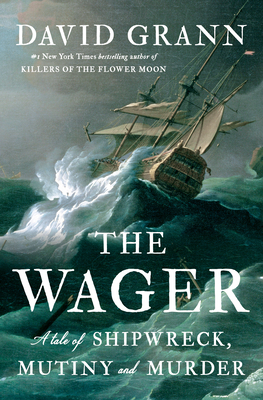
Review 2290: The Wager: A Tale of Shipwreck, Mutiny, and Murder

In 1740, a small fleet of ships set out from Portsmouth on a mission to try to capture Spanish ships laden with treasure in the Pacific Ocean. This poorly conceived and executed mission was part of the War of Jenkin’s Ear, essentially an excuse to try to gain wealth by pillaging Spanish ships.

Because of delays in refurbishing and equipping the ships, they left late. They were trying to round Cape Horn during the southern hemisphere’s summer, which they thought was the calmest time to venture through those dangerous waters. By the time they got to the Horn, the Wager, the smallest ship, had already experienced a bout of typhus and another of scurvy. The loss of officers to illness had given them a new leader, newly promoted Captain David Cheap. They made it around the Horn but lost contact with the other ships and then were shipwrecked.

Nearly a year after they were last sighted at the tip of South America, a few of the sailors made it back to England. Six months after that, a few more appeared, including Captain Cheap, accusing the first group of mutiny and other crimes. Two more appeared even later, accusing the first group of abandoning them on the coast of Patagonia.

Using the widely varying accounts in the journals and memoirs of some of the survivors, David Grann has attempted to reconstruct a fair account of what happened. One of these survivors was the sixteen-year-old midshipman, John Byron, who became the grandfather of the poet, Lord Byron. It’s a fascinating account, with some of the thrills of fictional naval adventure. Yet its all true.

Related Posts

Killers of the Flower Moon: The Osage Murders and the Birth of the FBI

The Lost City of Z

Fatal Journey: The Final Expedition of Henry Hudson

Review 2289: Heat Lightning

Amy travels back to her childhood home in Michigan from New York ostensibly to recover from surgery but really to think about the situation with her husband, Geoffrey. There is tension among her relatives. The Westovers are a wealthy family, but it is 1930. Her father Alfred’s farm machinery factory doesn’t have many orders, but his brother DeWitt made some bad investments and is asking him for help.

Amy’s cousin Tom is drinking too much and soon has a more serious problem. Her redoubtable grandmother is managing her fortune but is dealing with requests for help from Tom and DeWitt.

Amy watches everyone’s interactions carefully, because she is looking for some inspiration. She feels that her generation has no code for behavior and is trying to formulate its own. She doesn’t know how she feels about Geoff and is looking for guidance in her parents’ loving interactions.

Although a lot of this novel is about family interactions, some of the dinner conversations are about scientific discoveries that came earlier than I expected, for example, about entropy. On the other hand, the idea of race expressed in the novel is not scientifically based (or perhaps language is not carefully used). Amy, for example, considers the European immigrant working class characters to be of a different race than her family and friends. They’re Italians and Swedes.

A distressing topic for modern audiences is what the family should do with Curly, the mentally disabled gardener.

Overall, I found this a thoughtful and interesting look at family dynamics.

Related Posts

The Tree of Heaven

Family Roundabout

Family Furnishings

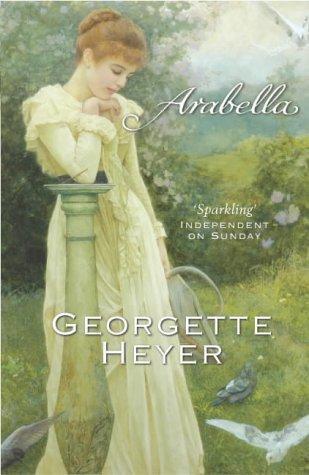
Review 2288: Arabella

Merry Christmas, everyone! Here’s a romp for Christmas Day.

The vicarage children are excited to learn whether their mother’s best friend will invite their sister Arabella for a season in London, in the hopes she can make an eligible match. The invitation arrives from Lady Bridlington, and then the worry is that the upright Reverend Tallant will not allow her to go.

Soon Arabella is on her way to London from Yorkshire. But the perch of her uncle’s old carriage breaks, and she sees nothing wrong with going to the nearest house for shelter. Unfortunately, it is the hunting box of Robert Beaumarais, a leading figure in society and a very wealthy man, who assumes she is one of many girls trying to make his acquaintance. When she hears him saying this to his friend Lord Fleetwood, she says she is the rich Arabella Tallant, who hoped to be unrecognized in London.

Beaumarais sees through this lie but maliciously lets the indiscreet Lord Fleetwood think he knows about her. He also decides to make her debut a sensation. Soon, Arabella is a success but doesn’t dare accept anyone’s proposal because she realizes that they all think she is rich, whereas she has no money at all.

Although she is in an awkward position, she is enjoying herself. But then her brother Bertram, who is supposed to be at Oxford, arrives and begins to get himself into financial difficulties. To make things worse, Arabella has begun to realize she cares for Beaumarais and is afraid to admit her deceit.

Arabella is an adorable heroine, and Beaumarais a likable hero, as he fondly watches her dig herself deeper into trouble, hoping she will confide in him. Heyer is at her best and funniest with these absurd plots.

Related Posts

Cotillion

Frederica

Friday’s Child

Review 2287: In the Country of Others

In the Country of Others tells the fictionalized story of Slimani’s own grandparents during a time of turmoil. During World War II, Amine Belhaj is a Moroccan soldier stationed in the Alsacian region of France. There he meets and marries his French wife Mathilde, and after the war, they go to live in Meknes, Morocco.

Mathilde finds it difficult to adjust to Moroccan life, especially once they move 15 miles out of town to live on the land Amine’s father bought and that he has dreamed of cultivating. Mathilde struggles to fight the total loss of power expected of an Arab wife. Amine can sometimes be physically abusive. Also, he works hard and spends all his time and money on the orchards. Mathilde would like to go into town and have some fun sometime. As what is considered a mixed-race couple, they are mocked on the street.

The narrative shifts mostly to her daughter Aïcha when she is a young girl starting school. Her parents send her to a Catholic school where she is mocked by her French schoolmates. She hates her kinky hair and is terrified when her parents leave her at school the first day.

As it gets into the 50s, the Moroccans move closer to war when France ignores their desire for independence. French people and homes are attacked.

This is a novel about sex and power. Although Mathilda doesn’t want Aïcha to be raised as a submissive woman, she finds herself forcing her sister-in-law Selma into marriage with an old man when Selma is deserted by her young French lover. It is also about power in terms of who will control the country.

It is an interesting story that’s told in a dispassionate way, keeping me from totally identifying with any of the characters. It’s clear toward the end that Aïcha is identifying with the native Moroccans rather than the French, even though she is half and half, but Slimani herself doesn’t seem to take any sides, either in war or in sexual politics, even though she clearly wants more for Moroccan women.

Related Posts

The Happy Marriage

Song of a Captive Bird

The Parisian

Review 2286: #DeanStreetDecember! Because of Sam

I could fairly easily guess the main plot of Because of Sam from about page 3, but that didn’t make it any less enjoyable to read.

Mild-mannered Millie Maitland has not had an easy life. Her feckless husband died leaving her badly off when her daughter Amabel was a child, and she has had a financial struggle ever since. When a relative died and left money for the use of Amabel, Millie was only delighted that she could provide for her daughter. Even though her lawyer believed she could fairly spend some of the money for her own benefit, or rather for the benefit of both of them, she refused. She has done everything for Amabel, so that her daughter has no idea of how hard Millie has worked. The result is that Amabel, now in her late twenties, is a little spoiled, plain-spoken, used to being waited on, and inconsiderate.

The farmer Martin Heriot catches sight of Millie looking young and pretty at a wedding and decides he wants to get to know her better. She makes a little money taking care of people’s dogs, so he soon makes arrangements for her to board Sam, a Labrador puppy he says belongs to his cousin. This gives him an excuse to visit Millie. But Millie, with no idea of her own attractions, gets it into her head that he is coming to see Amabel.

On another front, a new arrival to this small post-World War II Scottish village is causing problems. Mrs. Noble is a predatory blond whose husband is stationed abroad. She first goes after Martin and then after a young husband of a new mother.

Although Clavering’s books are similar to those of D. E. Stevenson, her friend and neighbor, I think that without becoming at all heavy reading, they go a little more below the surface. I enjoy them very much.

Related Posts

Mrs. Lorimer’s Quiet Summer

Near Neighbors

Dear Hugo