At the beginning of The Painted Veil, Kitty Fane is a beautiful but shallow woman. At 25, she had turned down some opportunities for marriage and finally realized she must do it soon. She actually accepted Walter Fane because he had to return to Hong Kong, so she was able to miss her younger sister’s more suitable wedding.
And in fact, the book begins with her affair with a married man, Charlie Townsend, being discovered by Walter when they’ve been married less than a year. She is infatuated by Townsend, who is handsome, polished, popular, everything that Walter is not.
Walter doesn’t say anything at first. Then he gives her a choice—either come with him into the interior of China to an area rife with cholera or if Townsend’s wife will give him a divorce, he will let Kitty go. Kitty is sure that Townsend will divorce and marry her, but it is clear he won’t and that he isn’t the man she thought he was.
Kitty is convinced she will die, but she sets off with Walter for the interior where, as a doctor and bacteriologist, he thinks he can help. On this journey, Kitty begins to grow up. She finds that Walter is highly regarded because of his untiring work with the ill, and she herself begins helping out by working in an orphanage run by French nuns.
Although I disliked Kitty at the beginning of this novel, as she becomes more aware and empathetic, I began to like her. At first heartbroken, she begins to see both men for what they are—Townsend selfish and irresponsible, Walter much more estimable. I ended up liking the novel quite a bit.
My second book for the 1925 Club is The Secret of Chimneys. I usually don’t enjoy Christie’s political mysteries as much, but this one is a romp. It’s got everything—a missing jewel, impersonations and secret identities, secret passages, an arch-criminal, Italian gangsters, kidnapping, and Balkan assassinations.
In Zimbabwe, Anthony Cade is leading a bunch of old ladies on a guided tour when he runs into Jimmy McGrath, an old friend. Jimmy is about to depart on a gold-mining expedition, so he asks Anthony to do two favors for him. Jimmy once saved the life of Count Stylptitch, prime minister of Herzoslavakia, and the Count had his memoirs shipped to Jimmy after his death with a promise of £1000 if he gets them to the publisher before a specific date. Jimmy offers Anthony a cut if he will take them to England for him. Jimmy also came by a collection of letters that someone has kept with the idea of blackmailing the writer. He wants to return them so that the writer, Virginia Revel, addressing the letter from Chimneys, will feel safe. Anthony takes on both tasks and returns to England, traveling under Jimmy’s name.
It turns out that lots of parties want the memoirs. England is about to help the heir to the throne of Herzoslavakia, Prince Michael, ascend to the throne after a period of anarchy. As a friend to the monarchy, England will get an important oil concession. But perhaps the memoirs say something embarrassing about Prince Michael. Anthony is approached by Baron Lolopretjzyl asking to buy them. Anthony refuses. Then he hands them on to a man who says he’s a representative of the publisher.
Next thing he knows, the Italian waiter at his hotel has stolen the packet of letters, along with the newspaper clipping he found about Virginia Revel. He goes to see her and gets to her house just after she discovers the body of the Italian waiter in her study. She explains that he had come the day before and even though she knew the letters weren’t hers, she gave him some money just to see what it would feel like and told him to come back the next day. She is due at Chimneys, so Anthony disposes of the body for her and follows her.
The reluctant Lord Caterham and his daughter Bundle, who also appear in The Seven Dials Mystery, are entertaining important political guests at Chimneys—Prince Michael and Count Lolopretjzyl; the millionaire Herman Isaacstein, who is involved in the oil deal; Mr. Fish, an American collector of books; and Virginia. Anthony arrives late at night and approaches the house only to hear a gun shot. The next morning, Prince Michael is found dead. Inspector Battle has been summoned, and Anthony recognizes the prince as the man he handed the manuscript to. Anthony’s boot prints have been found outside, so he has some explaining to do.
And in all this, I forgot about the jewel, the Koh-i-noor, which King Nicholas last had at Chimneys and hid somewhere before he returned to Herzoslavakia and was killed.
The novel has two engaging protagonists in Anthony and Virginia and is lots of fun. There are several characters in disguise, and although I guessed the identity of one of them as soon as I heard of that person, the others fooled me. I also didn’t guess at all who killed Prince Michael.
This is a ridiculously unlikely but entertaining early book by Christie. Note, though, that there are several anti-Semitic comments as unfortunately isn’t unusual for the time.
Twice a year, Simon of Stuck in a Book and Kaggsy of Kaggsy’s Bookish Ramblings host a year club, and this October the year is 1925. For this club, participants read a few books from that year and all post their reviews on the same week. Just by coincidence, this year the books also qualify for Neeru’s Hundred Years Hence Club.
Previous Books from 1925
As usual for my first post for the year club, I’ll start out by listing books I have already read for that year with links to my reviews, if I read them while blogging:
I picked The Informer for the 1925 Club without knowing anything about it or about Liam O’Flaherty. It was a winner of the James Tait Black award, written in the style of Naturalism and set after the Irish Civil War.
Francis Joseph McPhillip is a wanted man. He was a member of the Revolutionary Organization when he murdered the president of the Farmer’s Union during a strike. He and his friend, Gypo Nolan, were booted out of the Organization as a result, and Frankie has been on the run with a price on his head. But he has become tired of running and has returned to Dublin. The first thing he does is search out Gypo to ask if his parents’ house is being watched, and then he goes home.
Gypo is a brute—huge, strong, ugly, and very stupid. He has always done what Frankie told him to do. But ever since he got thrown out of the Organization, he can’t get work. He has no home, and no one will help him. He doesn’t have anywhere to sleep that night. He gets an idea. If he turns Frankie in to the police, he’ll have the reward money. So, he does.
The word is soon out that Frankie is dead, shot by the police at his parents’ home. Being an idiot, Gypo is running around town spending money on liquor and women. He just manages to come up with a story that he robbed an American sailor.
Even as an ex-member of the Organization, Frankie is still in its sights, as it is clear someone informed against him. Commandant Dan Gallagher is already looking at Gypo, because Frankie told his parents he had seen Gypo. Gypo is not very good at thinking, but he makes up a story that he saw Rat Mulligan skulking after Frankie in the street. But Rat has an alibi.
Naturalism isn’t my thing, and true to the literary movement, many of these characters are the dregs of society. It’s hard to empathize with a stupid fool who turns in his friend for a few bucks. Other characters are mostly street people—hookers, addicts, and so on—and those in the Organization who have a philosophy spit out half-digested rhetoric. Also, the ending of the book is over the top. A powerful book in its time, but not my thing.
The Manticore is the second volume in Robertson Davies’ Deptford Trilogy. The trilogy itself is about the ramifications through several people’s lives of one malicious act—a snowball with a rock in it thrown by Boy Staunton at Dunstan Ramsey when they were children.
Davies takes up this story again in The Manticore with the next generation, specifically David Staunton, Boy’s son. At the end of Fifth Business, Boy was found dead, having apparently driven himself off the end of a pier, but oddly found with a stone in his mouth. David is a successful, much-feared criminal attorney, but he realizes he drinks too much when he finds himself shouting during a magic show, “Who killed Boy Staunton?” This scene has all kinds of ramifications that David himself doesn’t know about but we do, because we learned in the previous book that the magician, Magnus Eisengrim, was the self-reinvented baby who was prematurely born after the throwing of that stone and may somehow be responsible for Boy’s death.
Davies uses the device of having David seek therapy to develop the story more, in particular what a horrible father Boy was despite David’s continued regard for him. (In fact, it’s fairly clear that Boy was a horrible person in many respects, despite the general respect for his wealth and accomplishments.) In this way, David is an unreliable narrator because there are so many things he doesn’t understand that others, including the readers, do.
To keep his therapy a secret, David goes to Switzerland and seeks the help of Jungian psychiatrist Dr. Johanna van Hallen. This therapy begins on page 7 and lasts for most of the book, so David tells story after story and Dr. van Hallen talks him through therapy. I have no idea if these discussions truly reflect Jungian therapy or if the therapist would indeed go into discussions of archetypes and so on, but the stories were far more interesting than the revelations of Jungian techniques.
The ending of this book I found a little too symbolic and fantastic—in a mild way. I’m not sure how I feel about this book overall.
It’s time for another Classics Club Spin. To participate, post a numbered list of 20 books from your Classics Club list (here’s mine)before Sunday, October 19. Classics Club will announce a number on that day, and that determines the book to read before the 21st of December.
I no longer have 20 books left on my list, although I have neglected it shamefully, so I have to repeat titles. In fact, I have exactly 10 books left to read. Here’s my list for this spin:
The Tavern Knight by Raphael Sabatini
Love’s Labour’s Lost by William Shakespeare
The Deepening Stream by Dorothy Canfield Fisher
Tis Pity She’s a Whore by John Ford
The Methods of Lady Walderhurst by Frances Hodgson Burnett
The Princess of Cleves by Madame de la Fayette
Les Misérables by Victor Hugo
Cecilia, Memoirs of an Heiress by Frances Burney
The Three Musketeers by Alexandre Dumas
Our Mutual Friend by Charles Dickens
The Three Musketeers by Alexandre Dumas
Cecilia, Memoirs of an Heiress by Frances Burney
Les Misérables by Victor Hugo
The Princess of Cleves by Madame de la Fayette
The Methods of Lady Walderhurst by Frances Hodgson Burnett
Tis Pity She’s a Whore by John Ford
The Deepening Stream by Dorothy Canfield Fisher
Love’s Labour’s Lost by William Shakespeare
The Tavern Knight by Raphael Sabatini
Good luck to everyone! I hope you get a book you enjoy.
The Art Thief is a nonfiction book about the most prolific art thief ever known. Stéphan Breitwieser, aided by his girlfriend Ann-Catherine Kleinklaus, stole hundreds, maybe thousands of paintings and objets d’art while only in his 20s.
Breitwieser was a young man who grew up wealthy and spoiled by his mother until a traumatic divorce that broke with his father and left him and his mother quite poor. Not that he went out and got a job. Instead, he lived with his mother, received some money from his father, and was supported by the state.
He loved the beautiful things that filled his father’s house, though, and he read extensively about art and antiques, becoming very knowledgeable. Then one day while visiting a museum, he swiped a lovely ivory statue of Adam and Eve. It was easy.
Breitwieser seemed compelled to steal these beautiful things, not to sell them but to decorate his two attic rooms and to be admired and touched. Kleinklaus participated in his thefts—it seems, because she won’t talk about it—mostly to keep him from doing something reckless.
This is a fascinating story of obsession gone wrong. It manages to build a fair amount of suspense along the way and is written in more of a novelistic style.
One thing that disturbed me slightly was a hint of not exactly admiration but in any case just a bit of the kind of attention that fuels some people to do heinous acts. I say this despite the book’s deprecations of Breitwieser’s actions. It particularly grated when I learned what became of the more fragile items in his collection once he was caught.
Nevertheless, it is an interesting true crime book.
Iain MacGillivray was badly injured at Culloden and shipped off to work in indentured servitude in the Americas. In 1752, six years later, he is back and running a bookshop in Inverness. The town is full of British soldiers.
One evening he sees a grubby man who looks vaguely familiar looking through some books that came from Lord Lovat’s estate. It’s closing time, so he forces him out.
Iain hasn’t seen his father, Hector MacGillivray, for years. Hector has been serving King James in France and Italy. He is proscribed, but Iain has believed his father is dead. Now he finds he is in town.
Hector is searching for a book that has been rumored to exist, one that contains a list of traitors to the Jacobite cause. King James is planning another attempt to take back the throne from the Hanoverian king, and they want to make sure they know it’s not going to be betrayed.
By looking through the remaining books from Lord Lovat, they figure out which book it was. Hearing that there is a copy, Iain goes to Lovat’s castle, now occupied by British soldiers, on the pretext of buying some of the books. There he has an unpleasant encounter with the cruel Captain Dunne, who burns part of the book, but Iain is able to get away with the rest.
Hector starts trying to decode the text for names, but before he figures out each of six names, that person is murdered. The killer could be someone getting revenge, or it could be a traitor trying to cover his back.
I found this to be an interesting, fast-moving adventure that seems well researched and steeped in its time. I enjoyed it quite a bit.
I’ve enjoyed a couple of books by Kate Grenville, but Restless Dolly Maunder seemed different, written in a stripped-down style and very matter of fact. It wasn’t until I got to the end that I realized Grenville was writing about her own grandmother. That explained things to me, because I’ve noticed the tendency in some historical fiction writers to be a little too careful when writing about people who actually lived, afraid to take liberties, maybe (while other have no trouble telling outright lies).
Dolly is born in 1831 to a hard-working farmer and a mother who married down and seems to be disappointed about it. Although Dolly is the baby of the family, she doesn’t feel any particular affection from anyone. She is very intelligent and plans to become a teacher, but her father has been waiting for her to reach the legal age to quit school, 14, as he sees no benefit in educating girls. Soon, she has to face up to the fact that if she doesn’t marry, she’ll be a spinster stuck on her father’s farm all her life.
Twice she thinks she’ll be asked by men she cares about, but she is not because she’s not Catholic in one instance or from a good enough family in the other. She waits a long time, but finally settles on Bert Russell, her only choice, really, a pleasant, outgoing handsome man whom she doesn’t really like, but he’s a hard worker.
Her anger about her lack of options follows her throughout her life, affecting her relationships with other people. It is intensified when she learns a few months after the wedding that Bert had a daughter out of wedlock with her family’s servant girl while he was courting her and that her family had to have known it.
Dolly stays with Bert, but it is her ideas that take the couple off the sheep farm and from one opportunity to another, amassing money as they go. This novel follows her through World War I, the Depression, and World War II.
I liked this novel well enough, but the entire time I was reading it, I felt as if it was the bones of a longer, more satisfying novel. We don’t really get to know any of the characters except Dolly, for example. Once I understood this was about a real person, I realized that Grenville didn’t want to play loose with her family history.
In a month, Novellas in November is starting up again, hosted by Cathy of 746 Books and Beck of Bookish Beck. Last year, I think I just plunged into Novellas in November by reading a bunch of novellas, but this year, I see Beck has already launched a Linky for planning posts. (Maybe they did this last year, too, and I just didn’t notice.) So, here I am throwing together a planning post.
I tend to read well before I publish unless something unexpected comes up, so I have already started reading for this event. Aside from a general post about what novellas I’ve read through the year, I have so far read two novellas that I will review in November, and I plan to read five more.
Here are the ones I have finished with a brief description:
The Sweet Dove Died by Barbara Pym: a woman of a certain age becomes a little too close with a much younger man.
Seascraper by Benjamin Wood: a young man is the only person left carrying on a traditional way of shrimping when he meets a film maker.
The novellas I haven’t read yet but plan to review in November are
The Buddha in the Attic by Julie Otsuka: in the early 19th century, a group of women are brought from Japan as “picture brides.”
For Thy Great Pain Have Mercy on My Little Pain by Victoria Mackenzie: two women meet in 1413 Norwich, one of whom has visions considered heretical.
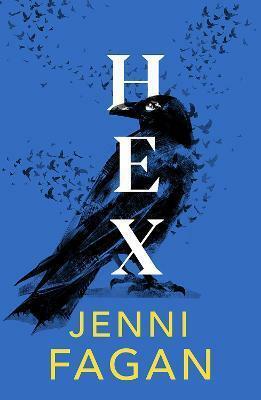
Hex by Jenni Fagan: In 1591, Geillis Duncan, a convicted witch, receives a visit from a mysterious woman.
A Pale View of the Hills by Kazuo Ishiguro: a Japanese woman relives the events at the end of World War II.
Why Did I Ever by Mary Robinson: a woman is barely keeping it under control in this dark comedy.
Some of the best stories of my life begin with an orphaned child. Here is another one.
Norah is a crippled girl, probably from polio, but at seven she is loved and taken care of. Then her mother dies, and her father, who soon will be traveling to South America for business, gets Aunt Rose to take her home. Norah, who doesn’t even understand that her mother is dead, thinks she is going for a visit. And it’s clear right away that no one wants her at her aunt’s home in central New York State.
Aunt Rose is beautiful, but she is cold and aloof. Nevertheless, she makes people love her. She lives a life of barely hidden dislike with Uncle John, yet he loves her. The children are Paul, who tries to please Rose but never does; Mary Anne, who is so beautiful that Norah can’t help staring at her; Jed, who calls Norah “Toad”; and Dosie, who comes right out and tells Norah she doesn’t like her. The children make it clear they aren’t interested in her, and only Paul is kind but removed. Aunt Poll, John’s sister, is so direct that Norah at first hates her, but it is Poll who will help her become strong, independent, and brave. At first, though, she spends most of her time alone crying.
This is a story about how a lonely, neglected orphan slowly becomes an integral and valued member of the family. But it is also about a cold, selfish, beautiful woman who attracts love without effort and without deserving it and does her best to destroy that family. It is about self-determination and growth but also about family secrets.
I absolutely loved this novel and thank the brand new imprint, Quite Literally Books, for sending me the book in exchange for a free and fair review. The first thing I did after I finished this book was look for another one by Nelia Gardner White, a new name to me.